
Key Takeaways
- KPV is not FDA-approved and lacks robust human clinical trials; current evidence is limited to lab and animal studies, making it investigational only with unknown dosing, long-term safety, and drug interaction risks.
- Before trying any KPV product, verify third-party testing for purity, confirm medical supervision, and ask about human clinical trials—most online supplements cannot provide clear answers to these safety questions.
- KPV should never replace evidence-based medical treatment for inflammatory bowel disease, eczema, or autoimmune conditions; consult a primary care provider for proper diagnosis and proven therapeutic options.
- Products sold as KPV supplements, compounded preparations, or research chemicals have minimal regulatory oversight and no guaranteed safety or effectiveness compared to FDA-approved treatments.
Wellness clinics across Tampa and Riverview are seeing more patients ask about a KPV peptide supplement. Many people find it online while searching for gut health or skin inflammation relief. But before you try one, it helps to know what science actually says about it. This article breaks down what KPV is, what research shows, and why a conversation with a primary care provider matters more than a product label.
What Is a KPV Peptide Supplement?
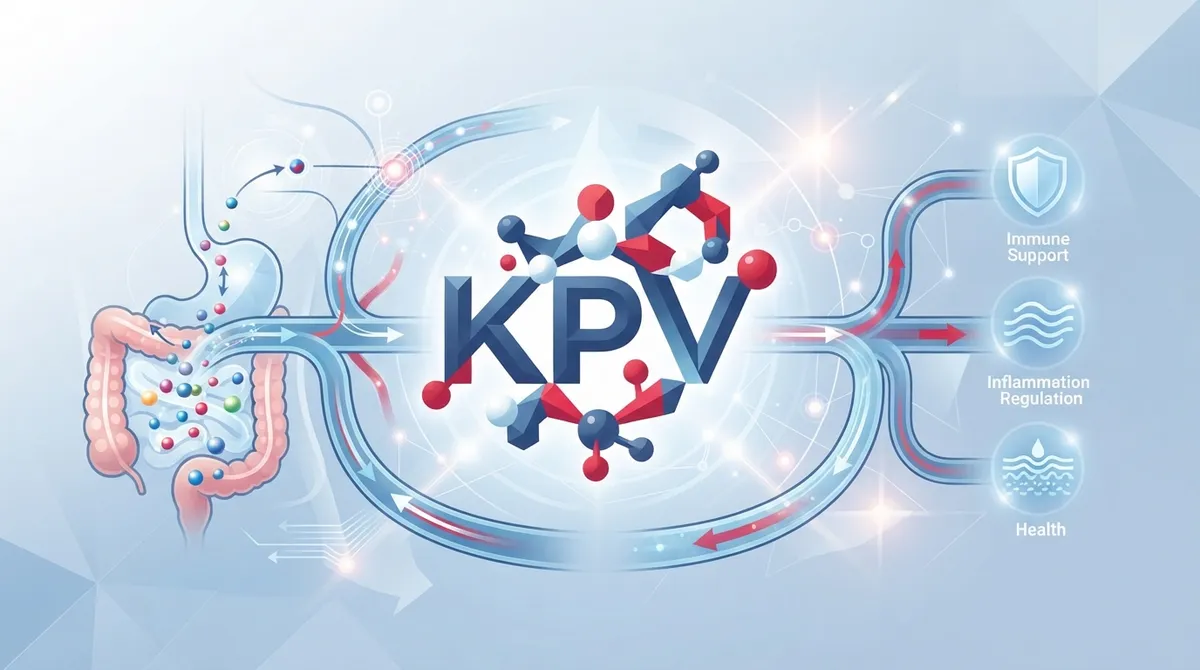
KPV stands for lysine-proline-valine. It is a tiny fragment made of three amino acids. This fragment comes from a larger hormone called alpha-melanocyte-stimulating hormone, or α-MSH. Researchers first became interested in KPV because of its possible anti-inflammatory effects.
Most of what we know about KPV comes from lab studies and animal research. Scientists have tested it in cultured cells and in mice with induced colitis. These early studies are useful, but they do not prove that a KPV peptide supplement works the same way in humans.
It's important to understand this distinction clearly. Preclinical research helps scientists form hypotheses. It does not replace large human clinical trials. No such trials currently confirm that KPV treats any human disease.
How Does KPV Work in Lab Studies?
In cell and mouse studies, KPV appeared to calm certain inflammatory pathways. Researchers looked closely at NF-κB signaling and pro-inflammatory cytokines. Some studies also point to a transporter called PepT1, found in the gut, as a way KPV may enter cells.
A 2008 study published in Gastroenterology found that KPV uptake through PepT1 reduced inflammatory signaling in mouse models of colitis. Another 2008 study in Inflammatory Bowel Diseases reported similar anti-inflammatory patterns in murine models. These are meaningful early findings. But they were conducted in mice, not people.
What Conditions Has KPV Been Studied For?
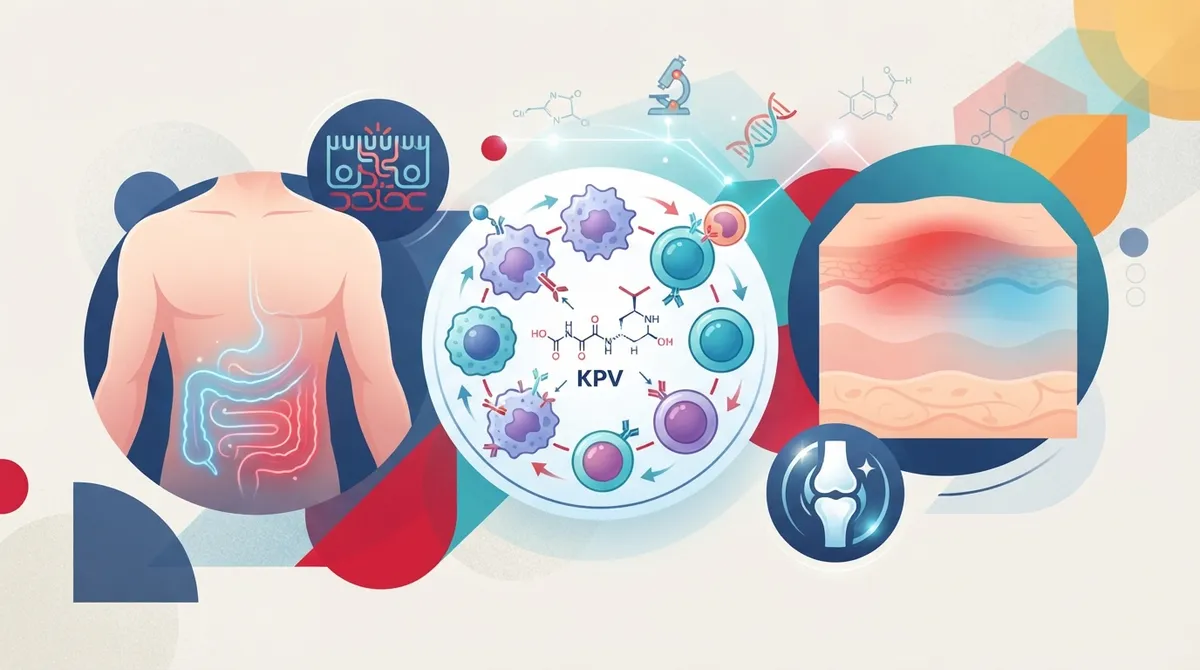
Researchers have explored KPV for several potential uses. None of these applications are proven or approved treatments in humans. They remain investigational only.
- Intestinal inflammation and inflammatory bowel disease models
- Skin inflammation in laboratory settings
- Antimicrobial activity against certain bacteria
- General immune system modulation in cell studies
KPV is not an established treatment for Crohn's disease, ulcerative colitis, eczema, or psoriasis. If you have one of these conditions, an evidence-based evaluation from a primary care provider is the safer first step.
Is KPV FDA Approved?
No. KPV is not an FDA-approved drug. It is also not recognized as an approved dietary supplement ingredient for treating any medical condition. Products sold online may be labeled as research chemicals, compounded preparations, or supplements. None of these labels guarantee safety, purity, or effectiveness.
This matters because supplement labeling laws differ greatly from drug approval standards. A product can be sold legally as a "research compound" without any proof it works or is safe for human use. Patients often assume a product available online has been vetted. That assumption is not accurate for KPV.
KPV Supplements vs. Compounded KPV vs. Research-Grade KPV
Patients often ask about the difference between these three product types. Understanding these categories can help you make safer, more informed choices.
|
Product Type |
Typical Source |
Regulatory Oversight |
Human Safety Data |
|---|---|---|---|
|
Online "supplement" |
Direct-to-consumer websites |
Minimal to none |
Not established |
|
Compounded KPV |
Compounding pharmacy, often via prescriber |
State pharmacy board oversight |
Limited; not FDA-reviewed for this use |
|
Research-grade KPV |
Labeled "not for human use" |
Sold for lab research only |
None; not intended for consumption |
None of these categories currently offer the kind of rigorous, large-scale human clinical evidence that primary care providers rely on when recommending a treatment.
What Are the Safety Concerns With KPV?
There is not enough high-quality human evidence to establish safe dosing for KPV. Long-term risks, drug interactions, and contraindications remain largely unknown. Claims that KPV is "steroid-like without side effects" or "proven safe for gut health" are not supported by solid clinical trials.
Here are the main gaps in current knowledge:
- No standard human dosing has been established through clinical research
- Long-term safety data does not exist for regular use
- Pregnancy and breastfeeding safety has not been studied
- Potential interactions with other medications are unknown
- Purity and contamination risks vary widely between suppliers
Because of these unknowns, treating KPV as an investigational substance is the most responsible approach. It should never replace a proper diagnosis or a prescribed treatment plan for ongoing digestive, skin, or inflammatory symptoms.
Why Route of Administration Matters
Some sellers market KPV as an oral capsule, a topical cream, or an injectable solution. Each of these delivery methods raises different questions about absorption and safety. Research using hyaluronic acid-based oral delivery systems for KPV has been explored in preclinical settings, but this technology has not been validated for consumer products. A patient using an unverified injectable or topical product faces added risk since sterility and correct dosing cannot be confirmed outside a regulated setting.
What Should You Do Instead of Self-Treating With KPV?
If you are dealing with persistent digestive discomfort, skin flare-ups, or ongoing inflammation, the safest path is a proper medical evaluation. A qualified provider can identify the actual cause of your symptoms rather than guessing based on an unproven supplement.
At InCare, our providers take a whole-body approach to wellness that includes lab testing, symptom review, and evidence-based treatment options. For patients interested in general wellness optimization, our clinic also offers DNA gene testing and body composition analysis to build a clearer picture of your health.
If you are exploring peptide-based wellness options more broadly, it helps to speak with a clinic that understands both the science and the limits of current research. Learn more about how peptide therapy is approached responsibly in Tampa before considering any unregulated product.
Questions to Ask Before Trying Any Peptide Supplement
Before purchasing any peptide product, including KPV, consider asking these questions:
- Has this compound been tested in large human clinical trials?
- Is the source third-party tested for purity and contamination?
- Does a licensed medical provider supervise the use of this product?
- What are the known risks if I have an existing health condition?
- Could this interact with medications I already take?
If you cannot get clear answers to these questions, it is best to pause and consult a healthcare professional first.
How InCare Approaches Investigational Supplements Like KPV
Patients sometimes come to our Tampa and Riverview clinics already using a KPV peptide supplement they found online. We encourage open conversations about this. Our team asks about the source, the route of administration, and any symptoms you have noticed. This helps us monitor for interactions or complications and guide you toward evidence-based alternatives when appropriate.
InCare combines advanced diagnostic technology with real medical expertise to help patients make informed decisions. Whether you need a cancer screening, a personalized weight loss plan, or simply want to understand your options for gut and skin health, our team is ready to help. You can also see what patients say about their experience by visiting our InCare location on Google.
We share regular wellness updates and educational content on Facebook, Instagram, and TikTok to help patients stay informed about emerging wellness trends like peptide therapy.
Final Thoughts on KPV Peptide Supplements
A KPV peptide supplement may sound promising based on early lab and animal research. But promising early data is not the same as proven human safety or effectiveness. The current evidence is limited to cell cultures and mouse models, with no robust clinical trials in people.
If you are dealing with gut inflammation, skin issues, or general wellness concerns, working with a trusted clinic is a safer and more effective path forward. Our team at InCare is here to help you sort fact from marketing hype. Book an appointment today to discuss your health goals with a provider who puts your safety first.
FAQs
Q: What is a KPV peptide supplement?
A: KPV is a three-amino-acid fragment of alpha-MSH studied for anti-inflammatory effects. Most research comes from lab and animal studies, not human clinical trials, so it should be viewed as investigational rather than a proven wellness supplement.
Q: Does KPV help with gut inflammation or inflammatory bowel disease?
A: Some animal studies suggest KPV reduces inflammatory signaling in colitis models. However, there is no robust human clinical evidence confirming it treats Crohn's disease, ulcerative colitis, or other inflammatory bowel conditions.
Q: Is KPV peptide FDA approved?
A: No. KPV is not an FDA-approved drug or recognized dietary supplement ingredient for treating any medical condition. Products labeled as supplements or research chemicals do not carry FDA safety or efficacy approval.
Q: Is KPV safe to take orally or by injection?
A: There is insufficient human safety data to confirm safe dosing, long-term effects, or proper administration methods for KPV. Anyone considering it should speak with a primary care provider first to discuss risks and safer alternatives.
Q: Should people with Crohn's disease, eczema, or autoimmune conditions use KPV?
A: These conditions require evidence-based diagnosis and treatment from a qualified provider. KPV should not replace prescribed therapy, since current research does not establish it as an effective or approved treatment for these conditions.