
Key Takeaways
- A $10 primary care copay (KP-10) covers only the office visit itself, not lab work, imaging, procedures, or medications, which are billed separately based on your plan.
- Always verify your actual copay amount through your insurance portal and confirm your provider is in-network before your appointment, as copay amounts vary significantly by plan.
- Kisspeptin-10 sold online is not FDA-approved for human use and carries real risks including inconsistent dosing and lack of safety testing, despite vendor purity claims.
- Preventive care visits may be fully covered with no copay, but if your visit shifts to addressing a new health concern, it may change from preventive to problem-focused and increase your out-of-pocket cost.
- Unregulated kisspeptin-10 peptide prices range from $29 to $180 per vial with no government oversight, reflecting a highly unstable market unlike regulated insurance copays.
- For hormone health or fertility concerns, consult a licensed primary care provider who can order proper testing and recommend approved treatments rather than purchasing unregulated research chemicals online.
Searching for "kp-10 price" can lead to confusing results. This short phrase actually points to two very different things in health and wellness. One meaning relates to a low-cost primary care copay listed on some insurance plans. The other refers to kisspeptin-10, a research peptide sold online. Mixing these up could cost you time, money, or even your health. This guide breaks down both meanings clearly, so you know exactly what you are paying for and why it matters.

What Does KP-10 Mean in Health Insurance?
In many insurance conversations, "KP-10" is shorthand for a $10 copay for a primary care visit. This is not an official insurance code. It is simply a quick way people describe a low-cost office visit benefit. Every plan handles this differently, so the actual price you pay depends on your specific coverage.
Your copay amount depends on several factors, including your insurer, your employer's plan design, your location, and whether your doctor is in-network. A $10 copay style benefit on one plan may look completely different on another. This is why checking your plan documents matters more than relying on shorthand terms.
If you want a deeper breakdown of how this copay term works, our detailed guide on KP-10 cost and what this health plan term really means explains the full picture.
What a $10 Copay Actually Covers
A low copay usually applies only to the office visit itself. It does not always cover everything that happens during your appointment. Here is what a $10 style primary care copay typically includes and excludes:
- Covers the base cost of seeing your primary care doctor
- May not include lab work, like bloodwork or urine tests
- May not include imaging, such as X-rays or ultrasounds
- May not include in-office procedures or injections
- May not include prescription medication costs
- May not include separate facility fees at some locations
This is why patients sometimes feel surprised by a bill that seems higher than expected. The visit itself may have been $10, but added services often carry separate charges.
How Preventive Care Fits Into KP-10 Pricing
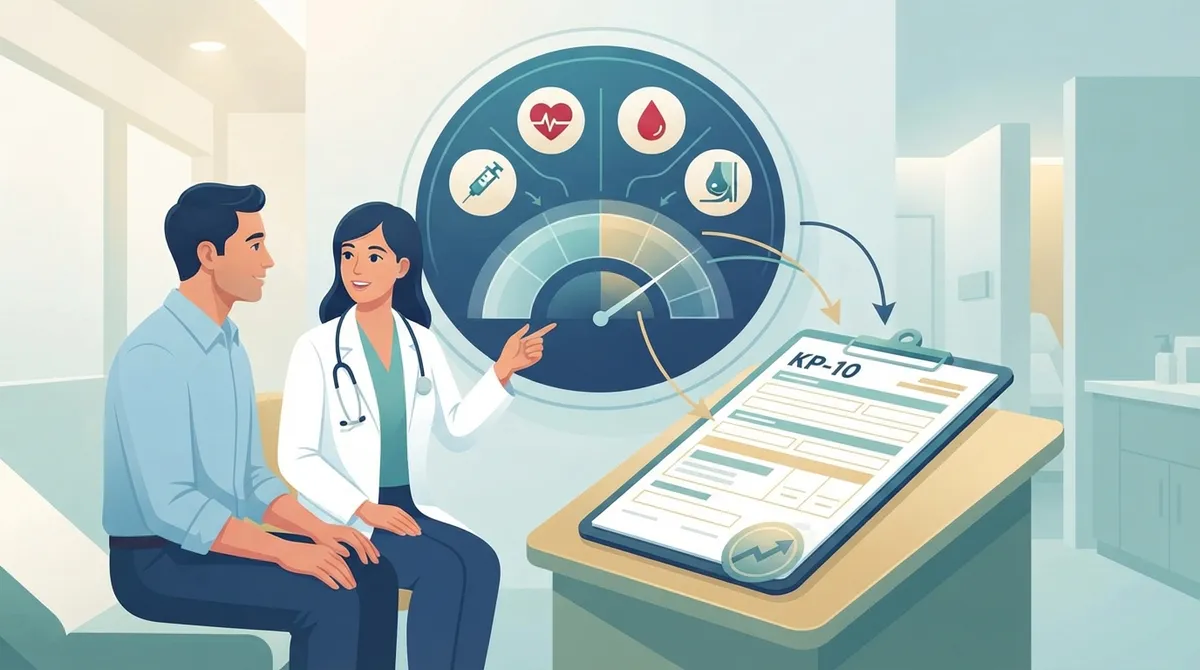
Many plans treat preventive care differently than problem-focused visits. Annual wellness visits, vaccines, and certain screenings may be fully covered with no out-of-pocket cost. This benefit usually applies only when you use an in-network provider and follow your plan's specific rules.
If your visit turns into a discussion about a new health concern, it may shift from preventive to problem-focused. That change can affect what you owe. Understanding this difference helps you plan ahead financially, especially if you are managing a family budget or juggling multiple appointments.
To learn more about how preventive visits work, check out our article on what happens during an annual wellness visit.
Comparing Typical Visit Costs Across Care Types
Understanding how a primary care copay compares to other types of visits can help you make smarter healthcare choices. The table below shows general examples of cost ranges for different visit types. These are illustrative figures, not guaranteed prices, since every plan varies.
|
Visit Type |
Typical Cost Range |
What It Usually Covers |
|---|---|---|
|
Primary Care (KP-10 style copay) |
Around $10 |
Office visit only |
|
Specialist Visit |
$30–$60 |
Office visit with a specialist |
|
Urgent Care Visit |
$50–$100 |
Same-day treatment for non-emergency issues |
|
Emergency Room Visit |
$150–$500+ |
Emergency-level care and testing |
Choosing the right level of care can save you money and time. For many common illnesses and injuries, an urgent care visit is often faster and more affordable than an emergency room trip.
Steps to Verify Your Own KP-10 Copay
Never assume your copay matches what you read online. Insurance terms and benefits change often, sometimes every contract year. Follow these steps to confirm your actual cost before your appointment.
- Log into your insurance member portal and locate your Summary of Benefits and Coverage.
- Search for the primary care visit section to find your exact copay amount.
- Confirm whether your appointment is preventive, problem-focused, or a mix of both.
- Check if your provider is in-network to avoid surprise charges.
- Ask the front desk staff to verify your benefits before you are seen.
- Request a cost estimate if you expect labs, imaging, or procedures during your visit.
Our team can also help you understand your benefits before you come in. Feel free to reach out to our team with any questions about your coverage.
What Is Kisspeptin-10 (KP-10)?
The second meaning of "KP-10 price" relates to kisspeptin-10, a peptide studied for its role in reproductive hormone signaling. It is involved in pathways connected to gonadotropin-releasing hormone, which affects fertility and hormone balance. Researchers have studied this peptide in lab and academic settings.
It is important to understand that kisspeptin-10 sold online is not an approved treatment. These products are typically labeled "for research use only." This means they are not meant for human use, and they have not gone through the same safety testing as approved medications.
To learn more about how this peptide connects to fertility research, read our article on kisspeptin explained and its role in fertility.
Why Vendor Pricing Does Not Equal Medical Safety
Some online sellers list certificates of analysis or claim high purity levels. These documents do not mean a product is approved for human use. They also do not prove the product is sterile or safe. A lab report is not the same as government approval or clinical testing.
Buying peptides labeled for research only carries real risks. There is no guarantee of consistent dosing, safety, or quality control across vendors. Anyone considering hormone-related therapy should speak with a licensed provider instead of relying on unregulated online listings.
How Much Does Kisspeptin-10 Cost Online?
Research-vendor pricing for kisspeptin-10 varies widely based on dose size and supplier. The table below reflects general 2026 market listings gathered from public vendor pages. These numbers are examples only and do not represent medical treatment costs.
|
Product Size |
Typical Price Range |
|---|---|
|
2 mg vial |
$30–$65 |
|
5 mg vial |
$50–$110 |
|
10 mg vial |
$90–$180 |
Some individual product listings show prices between $54.95 and $89.95 for kisspeptin-10 vials. A separate vendor comparison page tracked prices ranging from $29.15 to $121.50 per vial, or roughly $2.92 to $12.15 per milligram. Other listings show a 10 mg product priced around $50, while a similar product from another seller costs closer to $64.97. These wide price swings show how unregulated this market really is.
Key Differences Between KP-10 Insurance Pricing and Kisspeptin Pricing
Because both terms share the same short name, confusion is common. Here is a simple breakdown to help you tell them apart.
- KP-10 insurance pricing refers to a copay for a doctor visit
- Kisspeptin-10 pricing refers to a research chemical sold online
- Insurance copays are regulated by your health plan contract
- Peptide vendor prices are set by individual sellers with no government oversight
- A copay pays for medical care from a licensed provider
- A peptide purchase does not include any medical supervision
Why Work With a Licensed Primary Care Provider
If you are exploring hormone health, fertility concerns, or general wellness goals, a licensed primary care provider is the safest place to start. A doctor can order proper testing, review your health history, and recommend treatments that are actually approved for your needs.
At InCare, our providers focus on whole-body wellness through evidence-based care. Whether you need help understanding your insurance benefits or want guidance on hormone health, our team at our Tampa and Riverview locations can walk you through your options. You can also explore related services like DNA gene testing or body composition analysis to get a fuller picture of your health.
Common Mistakes to Avoid
Many patients run into problems when they mix up insurance terms with product names, or when they buy unregulated peptides expecting medical-grade safety. Avoid these common mistakes:
- Assuming your KP-10 copay covers labs and procedures automatically
- Skipping verification of your actual plan benefits before a visit
- Buying kisspeptin-10 online expecting it to be a approved treatment
- Trusting a vendor's purity claims as proof of safety
- Avoiding a licensed provider when dealing with hormone or fertility concerns
How InCare Supports Your Wellness Journey
InCare combines modern technology with personalized care across primary care, urgent care, and advanced wellness services. From cancer screenings to IV hydration therapy, our providers focus on prevention and long-term health. Patients across Tampa and Riverview trust our team for clear answers and honest guidance, whether that means explaining insurance benefits or discussing wellness options backed by real evidence.
You can also follow our latest health tips and clinic updates on Facebook, Instagram, and TikTok. Many patients also share their experiences online. You can visit us on Google — InCare to read real reviews from people across the Tampa Bay area.
Take the Next Step With Confidence
Understanding the true meaning behind "KP-10 price" helps you avoid confusion and make smarter healthcare choices. Whether you are checking your copay or researching hormone-related peptides, always confirm details with a trusted source. If you have questions about your insurance benefits or want to explore wellness services that are backed by real medical guidance, our team is ready to help. You can get in touch with our team today, or go ahead and schedule your appointment now to start your care journey with confidence.
FAQs
Q: What does KP-10 mean in health insurance?
A: KP-10 usually refers to a $10 copay for a primary care office visit. It is an informal term, not a standardized insurance code, so actual coverage depends on your specific plan.
Q: Does a $10 primary care copay include lab tests and medications?
A: Not always. A $10 copay typically covers only the office visit itself. Lab tests, imaging, procedures, and medications are often billed separately based on your plan's rules.
Q: Is kisspeptin-10 approved for human use?
A: No. Kisspeptin-10 sold by online vendors is generally labeled for research use only. It has not been approved as a clinical treatment and should not be treated as a safe wellness product.
Q: How much does kisspeptin-10 cost per vial?
A: Reported 2026 market prices range from about $29 to $180 depending on dose size and vendor. These prices reflect unregulated research-chemical listings, not approved medical treatments.
Q: How can I verify my KP-10 copay before a doctor's appointment?
A: Check your insurance plan's Summary of Benefits and Coverage, confirm your provider is in-network, and ask your clinic's front desk to verify your exact benefits before your visit.