Key Takeaways
- Kisspeptin is not FDA-approved and an advisory committee voted 0-11 against adding it to compounded substances; any online kisspeptin products carry risks of uncertain purity, incorrect dosing, and contamination.
- Kisspeptin is a brain signaling molecule that triggers the reproductive hormone cascade by activating GnRH, which controls puberty, ovulation, sperm production, and sex hormone release.
- Research on kisspeptin remains small, short-term, and mostly investigational; it is not part of standard medical practice anywhere and has not been proven safe or effective for fertility, libido, or hormone optimization.
- Standard reproductive hormone evaluation through primary care—including LH, FSH, testosterone, and thyroid testing—is far more reliable than kisspeptin testing, as circulating kisspeptin has no accepted clinical reference range.
- Kisspeptin shows promise as a potential IVF trigger for patients at risk of ovarian hyperstimulation syndrome, but larger comparative studies are needed before it becomes a standard fertility treatment option.
- If experiencing irregular periods, low libido, or fertility concerns, seek proper medical evaluation and evidence-based treatment rather than self-administering unregulated peptide products without medical supervision.
Many people searching online for hormone answers stumble across the term "kisspeptin hormone" and wonder if it could explain their fertility struggles, low libido, or hormone imbalance. This peptide has generated real excitement in medical research, but it has also been surrounded by exaggerated claims on social media and wellness forums. Understanding what kisspeptin actually does, and what it does not yet do, can help you make safer decisions about your reproductive and hormonal health.
At InCare, patients in Tampa and Riverview often ask about trending hormone topics like kisspeptin during wellness visits. This guide breaks down the science in plain language, explains where the research currently stands, and shows you how to get proper evaluation instead of relying on unproven treatments.
What Is Kisspeptin Hormone?
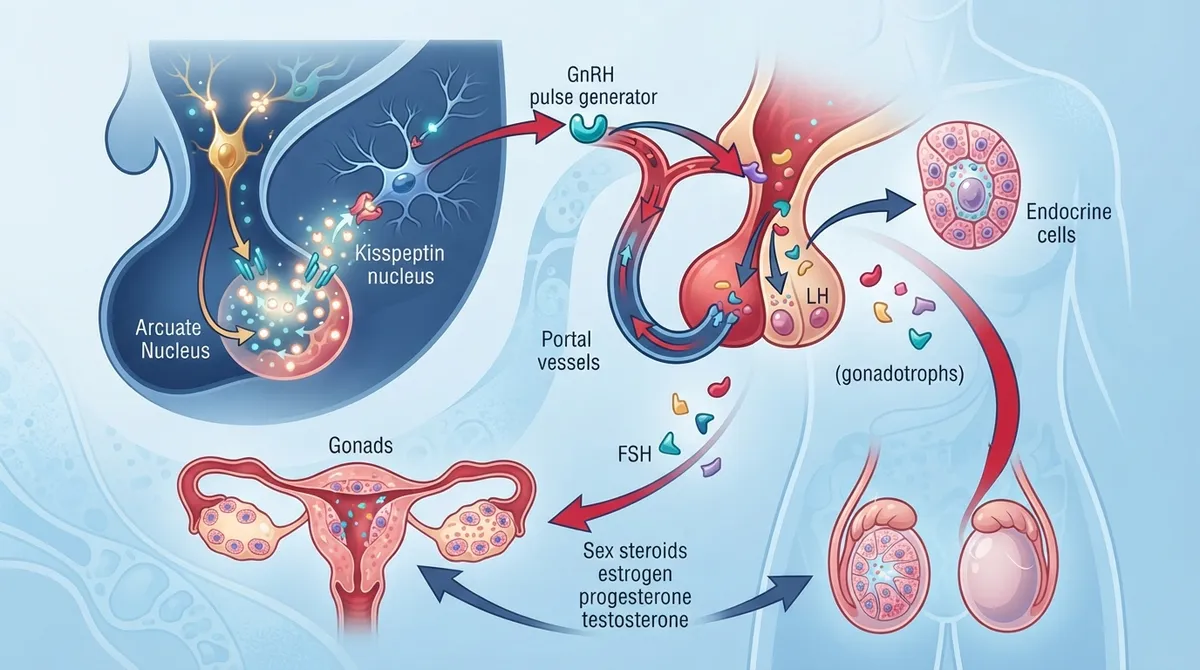
Kisspeptin is a type of signaling molecule made in the brain. It comes from a gene called KISS1 and works by activating a receptor called KISS1R, also known as GPR54. This connection sits at the very top of your reproductive hormone system.
When kisspeptin activates its receptor, it triggers the release of gonadotropin-releasing hormone, or GnRH. GnRH then tells your pituitary gland to release two other hormones: luteinizing hormone (LH) and follicle-stimulating hormone (FSH). These two hormones control ovulation in women, sperm production in men, and the release of sex hormones like estrogen and testosterone.
In simple terms, kisspeptin is like the first domino in a long chain of hormone signals. Without it, the rest of the reproductive system struggles to function properly.
Why Kisspeptin Matters for Reproductive Health
Research published in a 2025 review in Physiological Reviews describes kisspeptin, along with a related molecule called neurokinin B, as key regulators of reproductive hormone activity. These molecules influence:
- The timing of puberty in both boys and girls
- Regular menstrual cycles in women
- Ovulation each month
- Sperm production in men
- Release of sex hormones like testosterone and estrogen
- Bone health, which is tied to hormone balance
When the KISS1 gene or the KISS1R receptor does not work correctly, it can lead to a condition called hypogonadotropic hypogonadism. This condition can cause delayed puberty or an absence of puberty altogether. Patients with this concern should seek a full evaluation through primary care services before considering any hormone-related treatment.

Is Kisspeptin Approved for Medical Treatment?
This is one of the most important facts to understand. Kisspeptin is not an FDA-approved drug. It is also not a legal dietary supplement or an approved hormone replacement therapy.
In October 2024, the FDA Pharmacy Compounding Advisory Committee reviewed whether kisspeptin-10 should be added to the approved list of compoundable substances. The vote was 0 in favor and 11 against. Committee members cited a lack of convincing evidence for both safety and effectiveness.
This means any kisspeptin product sold online, through compounding pharmacies advertising "research use only," or through unregulated wellness shops carries real risk. These products may have unclear purity, incorrect dosing, or contamination. Self-injecting research-grade peptides without medical supervision is not a safe choice.
What the Research Actually Shows
Scientists have studied kisspeptin in several human trials, but most of these studies are small and short-term. They are not large clinical trials that prove long-term safety or benefit. Here is a quick summary of what has been studied so far:
|
Research Area |
What Was Studied |
Current Status |
|---|---|---|
|
IVF Trigger Shot |
Using kisspeptin instead of standard triggers to mature eggs |
Experimental, not standard practice |
|
Hypothalamic Amenorrhea |
Restoring menstrual cycles in women with missed periods |
Early-stage research only |
|
Male Hypogonadism |
Boosting LH, FSH, and testosterone levels |
Small acute-response studies |
|
Low Libido |
Effects on sexual desire |
Limited and inconclusive data |
|
Delayed Puberty |
Triggering onset of puberty in adolescents |
Investigational |
A 2025 fertility-focused review confirmed that kisspeptin-based infertility protocols have not been standardized. They are not part of routine IVF care anywhere in the world right now. If you are exploring fertility options, working with a qualified provider is the safer and more effective path forward.
Kisspeptin-10 vs. Kisspeptin-54: What Is the Difference?
You may see two different names used in kisspeptin research: kisspeptin-10 and kisspeptin-54. Understanding the difference can help you make sense of studies and marketing claims.
- Kisspeptin-10 is a shorter, synthetic peptide. It contains only 10 amino acids and represents the active portion of the full kisspeptin molecule.
- Kisspeptin-54 is the longer, naturally occurring form found in the body. It comes directly from the same precursor protein.
- Both forms activate the same receptor, KISS1R, but they may behave differently in terms of how long they last in the body and how strongly they trigger hormone release.
- Most human research trials have focused on kisspeptin-54 for injectable studies, while kisspeptin-10 is more common in compounding discussions and online products.
Conditions Linked to Kisspeptin Signaling
Researchers have studied altered kisspeptin activity in several health conditions. It is important to understand that finding a link does not mean kisspeptin treatment works for these conditions. The conditions studied include:
- Functional hypothalamic amenorrhea (missed periods from stress or low body weight)
- Polycystic ovary syndrome (PCOS)
- Primary ovarian insufficiency
- Hyperprolactinemia
- Male hypogonadism
- Delayed puberty
- Menopause-related hormone changes
- Sexual desire disorders
If you have symptoms related to any of these conditions, the safest approach is a thorough evaluation rather than self-treatment. A visit for an annual wellness visit is a good place to start this conversation with your doctor.
How Primary Care Evaluates Reproductive Hormone Concerns
If you suspect a hormone imbalance related to fertility, menstrual cycles, or low testosterone, your primary care provider has a clear, evidence-based process to follow. Here are the typical steps:
- A detailed medical history, including menstrual cycle patterns, symptoms, and family history
- A physical examination to check for signs of hormone imbalance
- Pregnancy testing when relevant to rule out pregnancy-related causes
- Blood tests for LH, FSH, estradiol, or testosterone levels
- Prolactin testing to rule out pituitary gland issues
- Thyroid function testing, since thyroid problems can mimic reproductive hormone issues
- Additional targeted testing based on your specific symptoms
- Referral to an endocrinologist or reproductive specialist if a central hormone disorder is suspected
This structured approach is far more reliable than trying unproven peptides. The team at InCare, including providers like Dr. Naveen Paddu and Dr. Pramjeet Ahluwalia, can walk you through this evaluation process at either the Tampa or Riverview location.
Why Circulating Kisspeptin Levels Are Not a Standard Test
You might wonder if a simple blood test can measure your kisspeptin hormone levels. Right now, there is no widely accepted reference range for circulating kisspeptin in routine primary care. Testing methods remain mostly used for research purposes, not everyday diagnosis.
This means that even if a lab offers to test your kisspeptin levels, the results may not have a clear, standardized way to interpret them. Standard hormone panels like LH, FSH, estradiol, and testosterone remain the more reliable tools for diagnosing reproductive hormone issues today.
Risks of Unregulated Kisspeptin Products
Because kisspeptin is not FDA-approved, some online sellers market it as a research chemical or a compounded peptide. This creates several serious risks for anyone considering it:
- Uncertain purity and possible contamination
- Incorrect or inconsistent dosing
- Lack of sterility, which raises infection risk with injections
- No medical oversight during use
- Unknown long-term side effects since studies are short-term
- Potential drug interactions with other medications you take
Acute studies have shown that kisspeptin can temporarily raise LH and sometimes FSH and testosterone. However, a short-term hormone spike does not prove long-term safety or lasting benefit. This distinction matters a great deal when evaluating any wellness trend.
Kisspeptin and IVF: What Patients Should Know
One of the more promising research areas involves using kisspeptin as a trigger for egg maturation during IVF. Because kisspeptin works further upstream through GnRH rather than acting directly on the ovaries, some researchers believe it might be gentler for the body.
This approach has drawn interest particularly for patients at higher risk of ovarian hyperstimulation syndrome (OHSS), a serious complication of standard IVF triggers. However, larger comparative studies are still needed before this becomes a standard option. If you are considering fertility treatment, discuss all current, proven options with a reproductive specialist rather than pursuing experimental peptides on your own.
Questions to Ask Your Doctor
Before considering any hormone-related peptide therapy, bring these questions to your next appointment:
- What standard tests can identify the cause of my symptoms?
- Are there FDA-approved treatments available for my specific condition?
- What are the risks of waiting versus starting treatment now?
- Should I see a specialist for further evaluation?
- How can I safely manage symptoms while pursuing a diagnosis?
These questions help keep the conversation focused on proven, safe strategies rather than unregulated trends.
Building a Long-Term Hormone Health Plan
Reproductive and hormone health rarely improves through one single treatment. A comprehensive plan usually includes lifestyle factors alongside medical evaluation. Consider these areas:
- Nutrition and body weight, which strongly affect hormone signaling
- Sleep quality, since poor sleep disrupts hormone rhythms
- Stress management, because chronic stress can suppress reproductive hormones
- Regular exercise, in moderation, to support metabolic health
- Routine screenings and lab work to track progress over time
Services like body composition analysis and DNA gene testing can offer additional insight into your overall metabolic and genetic health picture, supporting a more complete wellness strategy alongside standard hormone testing.
For patients dealing with fatigue, low energy, or general wellness concerns tied to hormone shifts, IV hydration and vitamin therapy may also support overall well-being as part of a broader care plan.
Why Choose InCare for Hormone-Related Concerns
Patients across Tampa and Riverview trust InCare because the practice combines modern technology with careful, evidence-based medicine. Rather than jumping to trendy, unapproved treatments, the team focuses on accurate testing, clear explanations, and referrals to specialists when needed.
You can read what real patients say by visiting InCare on Google, where the practice holds a strong reputation built on hundreds of patient reviews. Many patients highlight the friendly staff and the thorough, unhurried approach to care that Tampa and Riverview residents have come to expect.
InCare also stays active on social media, where you can see wellness tips and patient education content on Facebook, Instagram, and TikTok. These channels offer another way to stay informed about emerging wellness topics like kisspeptin without falling for exaggerated claims.
Final Thoughts on Kisspeptin Hormone Research
Kisspeptin plays a fascinating and important role in human reproductive health. It sits at the top of a hormone chain that controls puberty, ovulation, fertility, and sex hormone production. But despite the excitement in research circles, kisspeptin remains an investigational tool, not an approved treatment.
If you are dealing with symptoms like irregular periods, low libido, fertility struggles, or signs of low testosterone, the safest and most effective step is a proper medical evaluation. Skip the unregulated peptide products and start with trusted, evidence-based care instead.
Ready to talk to a provider about your hormone health? Reach out to our team today, or go ahead and schedule your appointment online at our Tampa or Riverview location. Our providers will help you find real answers backed by science, not internet trends.
FAQs
Q: What is kisspeptin hormone and what does it do?
A: Kisspeptin is a signaling molecule made in the brain that activates the KISS1R receptor to trigger GnRH release. This process controls puberty, ovulation, sperm production, and sex hormone levels throughout the body.
Q: Does kisspeptin increase testosterone in men?
A: Small human studies have shown that kisspeptin can temporarily raise LH and testosterone levels after administration. However, these acute responses do not prove long-term safety or sustained clinical benefit, and kisspeptin is not an approved testosterone treatment.
Q: Can kisspeptin help with infertility or IVF?
A: Researchers are studying kisspeptin as a potential IVF trigger, especially for patients at risk of ovarian hyperstimulation syndrome. However, kisspeptin-based fertility protocols remain experimental and are not part of standard IVF practice today.
Q: Is kisspeptin approved by the FDA?
A: No, kisspeptin is not FDA-approved as a prescription drug, supplement, or hormone therapy. In October 2024, an FDA advisory committee voted 0 to 11 against adding kisspeptin-10 to the approved compounding list, citing insufficient safety and efficacy evidence.
Q: Is kisspeptin safe to use for low libido, menopause, or hormone optimization?
A: Kisspeptin has not been proven safe or effective for these uses in large clinical trials. Products sold online or through compounding pharmacies may have uncertain purity and dosing, so self-treatment carries real risk without medical supervision.