Key Takeaways
- Florida requires two linked steps: a physician certification entered in the state registry, and a separate state identification card issued by OMMU. You generally need both to buy from a licensed treatment center.
- The first certification visit must be an in-person physical exam with a Florida-licensed MD or DO; renewal evaluations may be done by telehealth under current law, subject to applicable rules.
- Track two deadlines: physician renewal evaluations are required at least once every 30 weeks, and the state identification card is renewed annually at $75 per year.
- The physician evaluation fee is set by each clinic and is separate from the state fee, so ask for all pricing and renewal policies in writing before booking.
Many Tampa residents are curious about medical cannabis but unsure where to begin. The process can feel confusing. Patients often ask what a physician certified cannabis card in Tampa really is, who can issue one, and what steps come first. Busy professionals and young families want a clear path, not a maze of paperwork.
In Florida, the process has two separate parts. First, a qualified physician evaluates you and decides whether you meet the legal and clinical criteria. Second, you apply to the state for an identification card. Florida had 941,650 registered medical marijuana patients in September 2026, so the system is well established and widely used.
This guide explains each step in plain language. You will learn who qualifies, what to expect at your visit, what it costs, and how renewals work. You will also see why a primary care approach matters. Medication review, risk screening, and ongoing follow-up all support safer decisions. Read on to build a simple plan you can follow with confidence.

What a Physician Certified Cannabis Card Means in Florida
The phrase "cannabis card" is often used loosely. In Florida, it actually refers to two linked items. Understanding both will save you time and prevent costly mistakes.
- Physician certification: A Florida-licensed physician evaluates you and enters a certification in the state's Medical Marijuana Use Registry.
- State identification card: The Office of Medical Marijuana Use (OMMU) issues the card after you apply.
You generally need both a current certification and a valid card to purchase from a licensed Medical Marijuana Treatment Center. One without the other will not work.
The certifying physician must be a Florida-licensed MD or DO with an active, unrestricted license and state-approved training. The physician makes the final call, not a card service or front desk. That is why choosing a medical practice with real clinical depth matters.
A card also does not give unrestricted access. The registry records the physician's order, including approved routes, forms, and amounts. Patients must follow those orders. Medical cannabis also remains unlawful under federal law, so the card is not valid in other states.

Who Qualifies for Medical Cannabis in Tampa
Eligibility depends on a qualifying medical condition and the physician's clinical judgment. Florida law lists specific conditions. A physician may also certify a condition comparable to those listed, or a terminal condition diagnosed by another physician, when statutory requirements are met.
Conditions Named in Florida Law
- Cancer
- Epilepsy
- Glaucoma
- HIV or AIDS
- Post-traumatic stress disorder (PTSD)
- Amyotrophic lateral sclerosis (ALS)
- Crohn's disease
- Parkinson's disease
- Multiple sclerosis
A 2026 research study using Florida registry data found that PTSD, chronic pain, and multiple sclerosis were among the most common qualifying-condition categories. Those figures describe registry patterns, not how common each illness is in the general population.
Having a listed condition does not guarantee approval. The physician reviews your history, symptoms, current treatments, and potential risks. Some patients are not good candidates. A responsible clinic will say so plainly.
Step-by-Step: How to Get Your Card in Tampa
The path is straightforward when you know the order. Follow these steps to keep the process smooth.
- Gather your records. Collect past diagnoses, imaging, specialist notes, and a list of current medications and supplements.
- Book an in-person evaluation. Choose a Florida-licensed physician who is approved to certify medical cannabis.
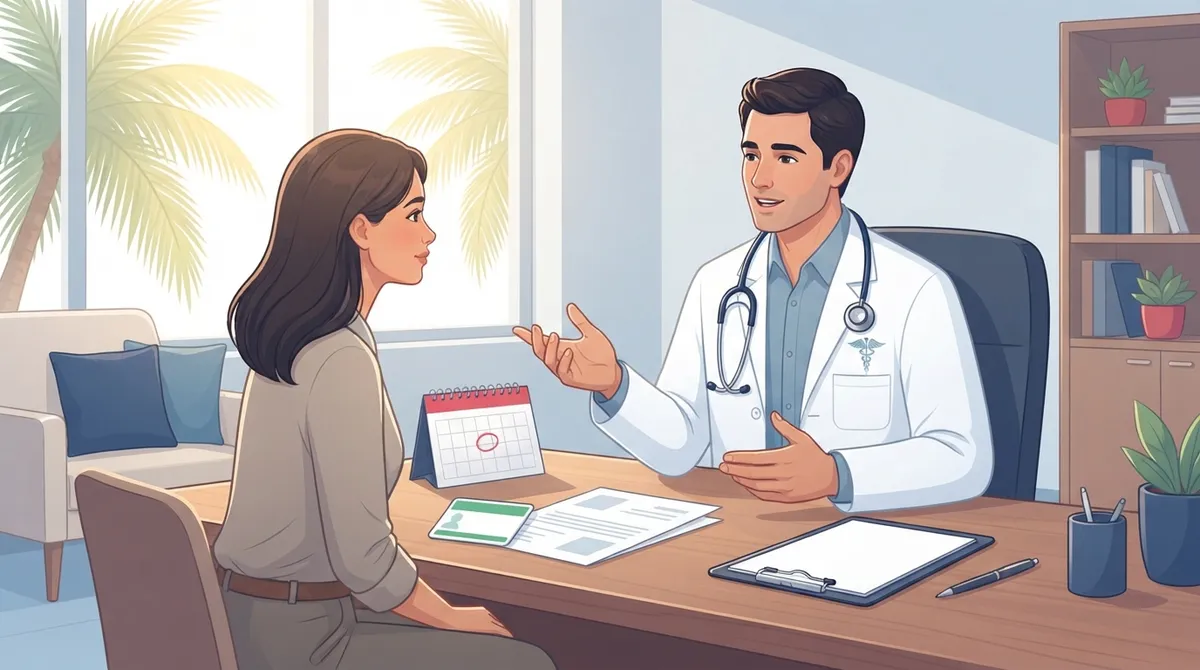
- Complete the initial examination. The physician must perform a physical examination in person, in the same room as you.
- Receive your certification decision. If you qualify, the physician enters the certification into the state registry.
- Apply to OMMU for your identification card. Submit the application online or by mail with the required identity, Florida residency, photograph, and payment documents.
- Follow your physician's order. Purchase only from licensed treatment centers and stay within the authorized forms and amounts.
Always follow OMMU's current instructions for documents, since requirements can change. Your clinic can guide you, but you remain responsible for the state application.
What to Bring to Your Evaluation
Preparation helps the physician make a safe, informed decision. It also shortens your visit. Bring the following items:
- A valid government-issued photo ID
- Proof of Florida residency
- Medical records or recent test results related to your condition
- A complete medication and supplement list
- Notes on symptoms, triggers, and treatments you have already tried
- Questions about risks, side effects, and daily-life concerns
If you are new to a clinic, it also helps to read a guide on how to prepare for a medical marijuana evaluation in Tampa before you arrive.
Costs: State Fee vs. Clinic Fee
Patients often confuse the two charges. They are separate, and each is paid to a different party. The table below shows the difference.
|
Cost Item |
Paid To |
Typical Detail |
|---|---|---|
|
State identification card |
Florida OMMU |
$75 per year, per current state rule |
|
Physician evaluation |
Your clinic |
Set by the provider; confirm before booking |
|
Renewal evaluation |
Your clinic |
Varies; ask about renewal pricing and policy |
|
Medical cannabis products |
Licensed treatment center |
Not included in either fee above |
Before you book, ask the clinic to explain every fee in writing. Ask whether the price includes a follow-up visit or any registry work. Clear pricing is a sign of a trustworthy practice.
Renewals and Follow-Up Timing
A card is not a one-time event. Both your physician certification and your state card need to stay current. Missing a deadline can interrupt your access.
Renewal certifications require a physician evaluation at least once every 30 weeks. Under current law, subsequent examinations may be conducted by telehealth, subject to applicable rules. That flexibility helps busy adults who cannot easily take time off work.
The state card itself is renewed annually. Set calendar reminders for both dates. If you want details, read this walkthrough on how to renew a medical marijuana card in Tampa.
Regular follow-up also gives your physician a chance to check how you are doing. They can review side effects, adjust the plan, and confirm that cannabis is still appropriate for you.
Why a Primary Care Approach Matters
Cannabis is not a stand-alone decision. It can interact with prescriptions, affect sleep, alter alertness, and carry added risks for certain people. A primary care setting looks at the whole picture, not just the card.
A thoughtful evaluation should include several safety topics:
- Medication review: Some drugs may interact with cannabis. Your physician should check your full list.
- Impairment and driving: Cannabis can affect reaction time. Discuss work and driving expectations openly.
- Pregnancy and breastfeeding: These situations call for careful risk discussion.
- Mental health history: Certain conditions may raise concerns that need monitoring.
- Existing treatment plans: Cannabis should support, not replace, evidence-based care for serious conditions.
This is where primary care adds real value. A physician who already knows your history can spot red flags quickly. At InCare, our Tampa and Riverview team combines medical expertise with personalized planning. You can also explore our guide to a medical cannabis doctor in Tampa to see how we approach these visits.
No responsible clinic will promise approval or guarantee a health result. Cannabis may help some patients and not others. Honest counseling is part of good care.
How to Choose the Right Tampa Provider
Not every office offers the same level of care. Use this short checklist to compare options and protect your time and money.
- Verify the license. Confirm the physician holds an active, unrestricted Florida license and is approved to certify.
- Ask about the exam. The first visit must be in person. Be cautious of anyone who says otherwise.
- Look for clinical depth. Choose a practice that also offers primary care, labs, and ongoing follow-up.
- Request clear pricing. Get every fee in writing, including renewals.
- Check patient feedback. Read recent reviews. You can visit us on Google and see what InCare patients say.
Convenience matters too. Our Tampa clinic at 1213 N Franklin St serves downtown patients, and our Riverview clinic at 11922 Boyette Rd serves the southeast side of the county. Both locations offer personalized, technology-supported care.
Common Mistakes to Avoid
A few missteps cause most delays. Avoid these, and your process will move faster.
- Assuming the certification and the state card are the same thing
- Skipping the state application after the physician visit
- Letting your 30-week certification window lapse
- Forgetting to bring proof of Florida residency
- Buying from unlicensed sources instead of a treatment center
- Ignoring your physician's authorized forms and amounts
Patients who treat the card as one part of a larger health plan tend to have a better experience. Pair it with regular checkups, and keep your medication list updated. If you want to understand the product side, our overview of what medical cannabis is is a helpful starting point.
Take the Next Step Toward Safe, Informed Care
Getting a physician certified cannabis card in Tampa comes down to a clear sequence. Meet with a qualified Florida physician, complete the in-person exam, apply to the state, and keep up with renewals. Along the way, prioritize safety, honest counseling, and a provider who sees your whole health picture.
InCare brings together primary care, advanced wellness, and personalized planning under one roof. Whether you are exploring options for the first time or renewing, our team will review your history and answer your questions with care. We encourage you to follow us on Instagram, Facebook, and TikTok for health updates.
Ready to talk with a physician? Book your appointment with InCare today, or contact our team with any questions before you visit.
FAQs
Q: Do I need an in-person appointment for my first Florida medical marijuana certification?
A: Yes. For an initial certification, the physician must conduct a physical examination in person, in the same room as you. After that, renewal examinations may be done by telehealth under current law, subject to applicable rules.
Q: How much does a Florida medical marijuana card cost, including the doctor visit?
A: The state identification card application fee is $75 per year. The physician evaluation fee is separate and set by each provider, so confirm the clinic's current price and renewal policy before you book.
Q: How often do I need to renew my certification and state card?
A: Your physician certification requires a renewal evaluation at least once every 30 weeks. The state identification card is renewed annually, so track both dates to avoid a gap in access.
Q: Can a primary care physician certify me for medical cannabis in Tampa?
A: Yes, if the physician is a Florida-licensed MD or DO with an active, unrestricted license and the required state-approved training. The physician decides whether you meet the legal and clinical criteria.
Q: Can I use a Florida medical marijuana card in another state?
A: No. The Florida card is issued under state law and does not authorize use elsewhere. Medical cannabis also remains unlawful under federal law, so patients should not travel across state lines with it.