Key Takeaways
- Consult a primary care provider before using GHK-Cu to identify underlying causes of hair loss such as thyroid disease, iron deficiency, or hormonal imbalances, which topical products alone cannot fix.
- GHK-Cu has weak human clinical evidence and should be viewed as a possible add-on treatment, not a replacement for FDA-approved options like minoxidil or finasteride with decades of proven efficacy.
- If you try GHK-Cu, apply it consistently for at least three months while monitoring for scalp irritation, and combine it with lifestyle factors like nutrition, stress management, and sleep for better long-term results.
- GHK-Cu is most suitable for people with early-stage, mild thinning who want a gentle topical option; those with significant hair loss or patchy bald spots need medical evaluation rather than cosmetic serums alone.
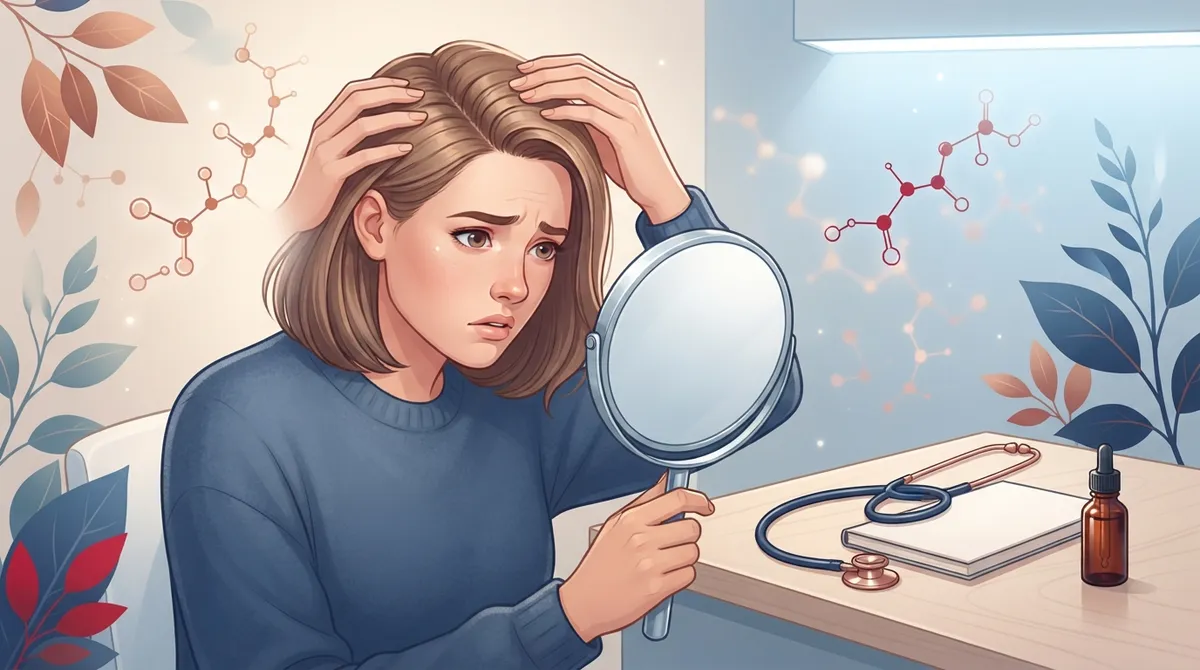
Thinning hair sends many people searching online for quick fixes. One name that keeps popping up in wellness circles is GHK-Cu, a copper peptide found in some scalp serums and hair products. Before spending money on this ingredient, it helps to understand what the science actually says and how it fits into a bigger picture of hair health. This guide breaks down the facts in plain language, so you can make an informed choice with support from a trusted primary care team.
At InCare, our providers in Tampa and Riverview see patients every week who are frustrated by hair thinning. Many have already tried serums and supplements without knowing why their hair is falling out in the first place. Understanding GHK-Cu, along with the medical reasons behind hair loss, gives you a clearer path forward.
What Is GHK-Cu and Why Is It Linked to Hair Health
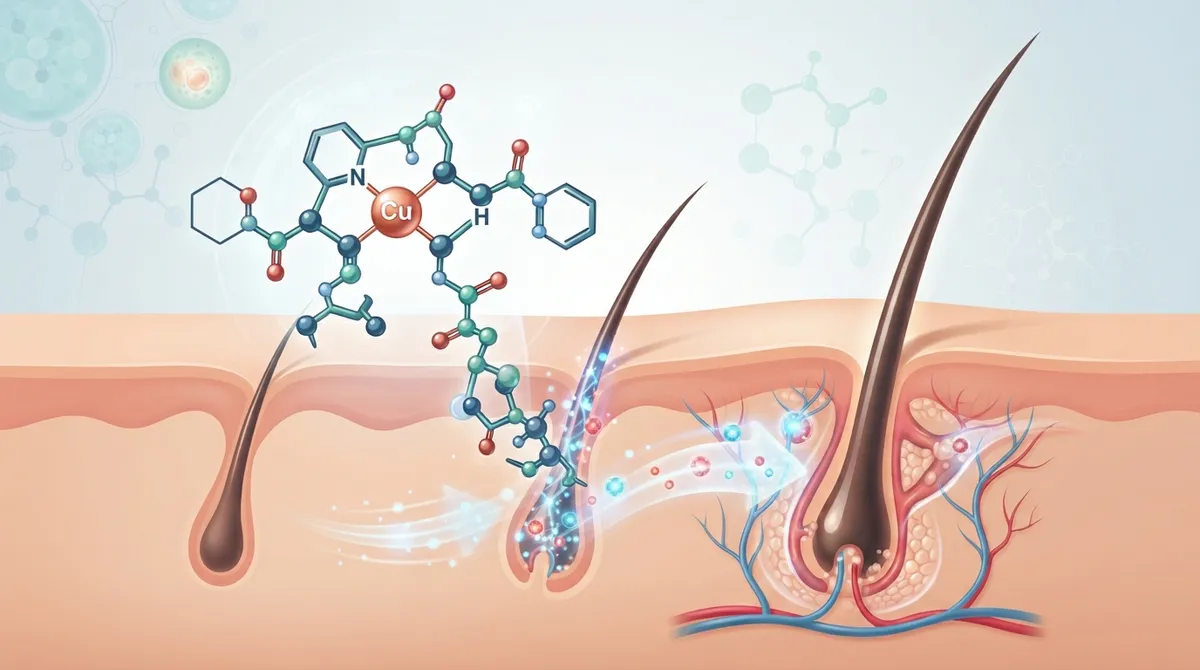
GHK-Cu stands for glycyl-L-histidyl-L-lysine copper. It is a small peptide bound to copper that occurs naturally in the body. Levels of this peptide tend to drop as people age, which has led researchers to study it for skin repair, wound healing, and tissue renewal.
For hair loss, GHK-Cu shows up mostly as a topical ingredient. You will find it in scalp serums, shampoos, and leave-in treatments rather than in pills or injections. The idea is that applying it directly to the scalp may support the tiny blood vessels and tissue around hair follicles.
How GHK-Cu Is Thought to Work
- Supports collagen and tissue remodeling around hair follicles
- May help calm inflammation on the scalp
- Could support blood flow to areas where follicles are shrinking
- Acts as an antioxidant that may protect skin cells from stress
- Has been studied for general wound healing and skin repair
What the Research Actually Shows
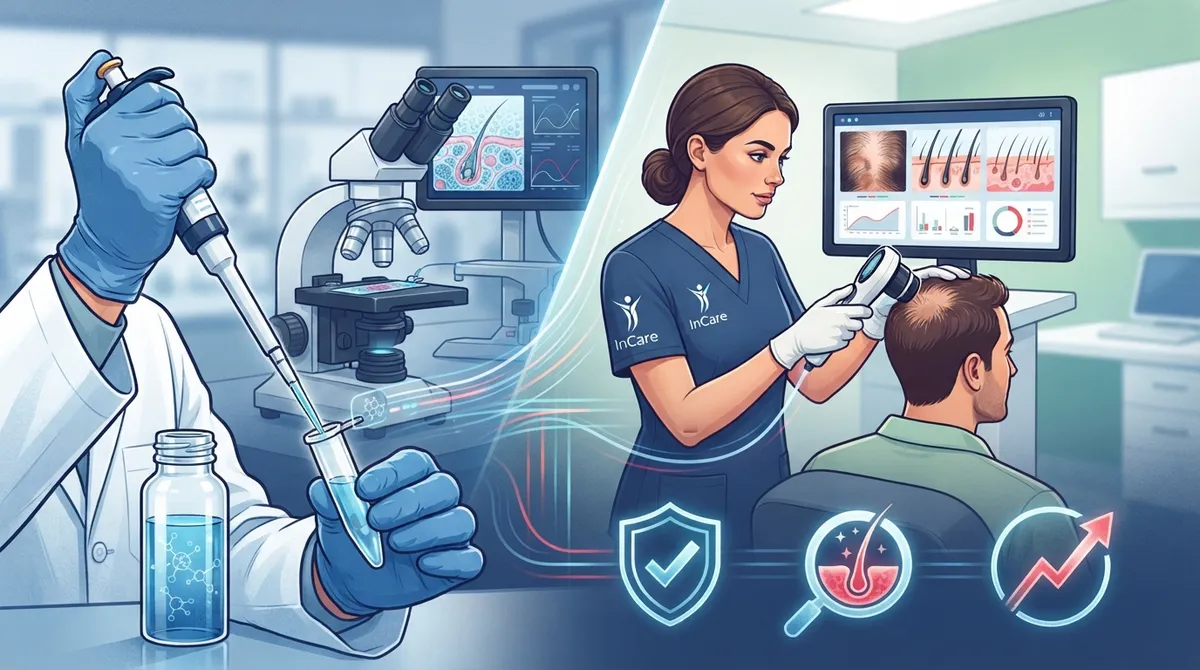
Most of the strong evidence for GHK-Cu comes from lab studies and animal research, not large human trials. These early studies show promising effects on wound healing, inflammation, and tissue repair. However, that is different from proving it regrows hair in people.
As of 2026, there is still no large body of high-quality human trials that confirms GHK-Cu as a standalone hair loss treatment. Some product reviews report less shedding within four to six weeks of daily use, with visible density changes over three to six months. These claims come mostly from user reports and smaller studies, not from strong, consensus-backed clinical trials.
Evidence Quality Compared to Standard Treatments
|
Treatment |
Evidence Level |
Approved Use for Hair Loss |
|---|---|---|
|
Topical Minoxidil |
High |
Yes, FDA approved |
|
Oral Finasteride |
High |
Yes, FDA approved for men |
|
GHK-Cu Topical Serums |
Low to Very Low |
No, not a guideline-endorsed treatment |
|
Scalp Care & Nutrition |
Moderate |
Supportive, not a standalone cure |
This does not mean GHK-Cu is useless. It simply means it should be viewed as a possible add-on, not a replacement for treatments with stronger backing. Our team at InCare's hair restoration program looks at the whole picture before recommending any single ingredient.
Why Primary Care Should Be Your First Step
Hair loss is often a symptom, not a stand-alone problem. Before trying any peptide or serum, it makes sense to find out what is actually causing the shedding. A visit to a primary care provider can uncover issues that a topical product alone will never fix.
Common Underlying Causes of Hair Loss
- Iron deficiency or anemia
- Thyroid disease, including hypothyroidism and hyperthyroidism
- Chronic stress or recent major life events
- Certain medications, including some blood pressure and mood drugs
- Autoimmune conditions such as alopecia areata
- Hormonal shifts from pregnancy, menopause, or PCOS
A simple blood panel and physical exam can rule out many of these causes. This is one reason our providers recommend a full workup, including options like DNA gene testing, before jumping straight to cosmetic products.
How to Evaluate GHK-Cu Products Step by Step
If you decide to try a GHK-Cu product after speaking with your doctor, following a clear process helps you track results and stay safe.
Step-by-Step Approach
- Schedule a visit with a primary care provider to check for underlying causes of hair loss
- Ask about baseline labs, including iron, thyroid, and hormone panels
- Discuss whether GHK-Cu could work alongside proven treatments like minoxidil
- Choose a topical product with clear ingredient labeling and reasonable copper concentration
- Apply consistently for at least three months before judging results
- Watch for scalp irritation, redness, or itching during the trial period
- Follow up with your provider to reassess hair density and overall scalp health
This structured approach keeps expectations realistic while still allowing you to explore newer options responsibly.
Safety and Side Effects to Know
Topical GHK-Cu is generally well tolerated. Most reported issues are mild and limited to the scalp itself.
Commonly Reported Side Effects
- Local scalp irritation or redness
- Itching or dryness at the application site
- Contact dermatitis in sensitive individuals
- Rare allergic reactions to copper or other ingredients
Systemic toxicity from topical cosmetic use is not commonly reported. Still, anyone with a known copper allergy or sensitive skin should talk to a provider before starting. This is especially important for patients managing other health conditions through ongoing chronic illness care.
GHK-Cu Compared to Established Hair Loss Treatments
|
Factor |
Minoxidil |
Finasteride |
GHK-Cu Serum |
|---|---|---|---|
|
Form |
Topical |
Oral |
Topical |
|
Best Suited For |
Androgenetic alopecia |
Male pattern baldness |
Adjunct scalp support |
|
Typical Time to See Results |
3-6 months |
3-6 months |
3-6 months (less proven) |
|
Prescription Needed |
No (OTC available) |
Yes |
No |
|
Common Side Effects |
Scalp irritation, unwanted facial hair |
Sexual side effects, mood changes |
Mild scalp irritation |
Many wellness-focused patients like to combine approaches. GHK-Cu may be used alongside minoxidil or other scalp treatments, but it should not replace therapies with stronger clinical support unless your doctor advises otherwise.
Who Might Benefit Most From GHK-Cu
GHK-Cu is often discussed as a supportive option for people dealing with early, mild thinning rather than advanced hair loss. It may appeal to those looking for a gentle addition to their existing routine.
Good Candidates May Include
- People with early-stage thinning who want a lower-risk topical option
- Patients already using minoxidil who want added scalp support
- Individuals focused on general scalp health and skin quality
- Those who have ruled out major medical causes with their doctor
People with significant hair loss, patchy bald spots, or sudden shedding should see a provider promptly rather than relying on cosmetic serums alone.
Building a Complete Hair Health Plan
Hair health connects to overall wellness in ways many people overlook. Nutrition, stress, sleep, and hormone balance all play a role. Our body composition analysis and wellness screenings can help identify factors that quietly affect hair growth.
Patients who combine medical evaluation with lifestyle changes tend to see better long-term outcomes than those who focus on a single product. Support from IV hydration and vitamin therapy can also help address nutrient gaps that contribute to shedding, when appropriate for your health profile.
Why Choose InCare for Hair Loss Evaluation
InCare combines primary care expertise with advanced wellness tools at our Tampa and Riverview locations. Our providers take time to look at the full picture, from bloodwork to lifestyle factors, before recommending any treatment path. You can learn more about our approach on our provider team page or explore our Tampa and Riverview locations to find the office nearest you.
Patients consistently share positive experiences with our team. You can visit us on Google — InCare to read real reviews from people who have trusted us with their primary care and wellness needs. We also share wellness tips and patient stories on Facebook, Instagram, and TikTok.
Final Thoughts on GHK-Cu and Hair Loss
GHK-Cu is an interesting ingredient with real biological activity, but it is not a proven cure for hair loss. The current evidence supports it as a possible adjunct, not a first-line treatment. Working with a knowledgeable primary care team helps you separate real solutions from marketing claims.
If thinning hair has you concerned, do not guess your way through serums and supplements. Our team can check for underlying causes, discuss proven options like minoxidil, and help you decide if GHK-Cu fits into your plan. Reach out to our care team today or book your appointment now to start your personalized hair health evaluation.
FAQs
Q: Does GHK-Cu actually help with hair loss?
A: Current evidence is limited. Lab studies show promising effects on tissue repair and inflammation, but large human trials confirming hair regrowth are still lacking as of 2026. It is best viewed as a possible adjunct rather than a proven standalone treatment.
Q: How does GHK-Cu compare with minoxidil for hair growth?
A: Minoxidil has decades of clinical research and FDA approval for hair loss, while GHK-Cu has much weaker human evidence. Many patients use GHK-Cu alongside minoxidil rather than as a replacement for it.
Q: Is GHK-Cu safe to use on the scalp?
A: Topical GHK-Cu is generally well tolerated. The most common side effects are mild scalp irritation, redness, or itching, with systemic toxicity rarely reported from cosmetic use.
Q: Should I see a doctor before using GHK-Cu for thinning hair?
A: Yes. Hair loss can signal underlying issues like thyroid disease, iron deficiency, or hormonal changes. A primary care visit helps identify the real cause before you invest in any topical product.
Q: How long does it take for GHK-Cu to work on hair?
A: Some users report less shedding within four to six weeks, with possible density changes appearing over three to six months. These timelines come mostly from product reports rather than rigorous clinical trials.