
Key Takeaways
- Epithalon is not FDA-approved for any indication, and human evidence for longevity, anti-aging, or insomnia claims is very limited, with no adequately powered trials confirming benefits.
- FDA reviewers reportedly found no human pharmacokinetic data, insufficient safety information for proposed routes, and possible immune reactions linked to impurities or peptide aggregation.
- Ask any Riverview provider to verify their license, explain Epithalon's regulatory status, disclose product sourcing and quality testing, and cite specific human studies rather than testimonials.
- Red flags include calling Epithalon 'FDA-approved' or 'proven,' promising to reverse aging, skipping a physical exam, or pushing prepaid bundles; proven options like sleep apnea screening and CBT-I should come first.
Searches for epithalon peptide therapy in Riverview are rising, and the claims can sound exciting. Epithalon is marketed for longevity, deeper sleep, and "anti-aging." But marketing and medical proof are not the same thing. In 2026, Epithalon is still not FDA-approved for any use, and strong human evidence is limited.
This guide shows you how to evaluate epithalon peptide therapy in Riverview with clear eyes. You will learn what the peptide is, what the science does and does not show, and which questions to ask any provider. You will also see safer, evidence-based options for sleep and healthy aging.
Whether you are a busy parent, a wellness-minded professional, or simply curious about prevention, the goal is the same: make a decision based on facts. A licensed clinician should guide that decision, not an online ad.
What Epithalon Is and What Marketers Claim
Epithalon, also spelled Epitalon, is a synthetic peptide. It is sometimes confused with Epithalamin, which is a distinct preparation derived from the pineal gland. Some wellness providers promote Epithalon for longevity, sleep support, and general anti-aging.
Common claims include:
- Lengthening telomeres, the protective caps on chromosomes
- Improving sleep by supporting circadian rhythm
- Slowing biological aging
- Boosting overall vitality
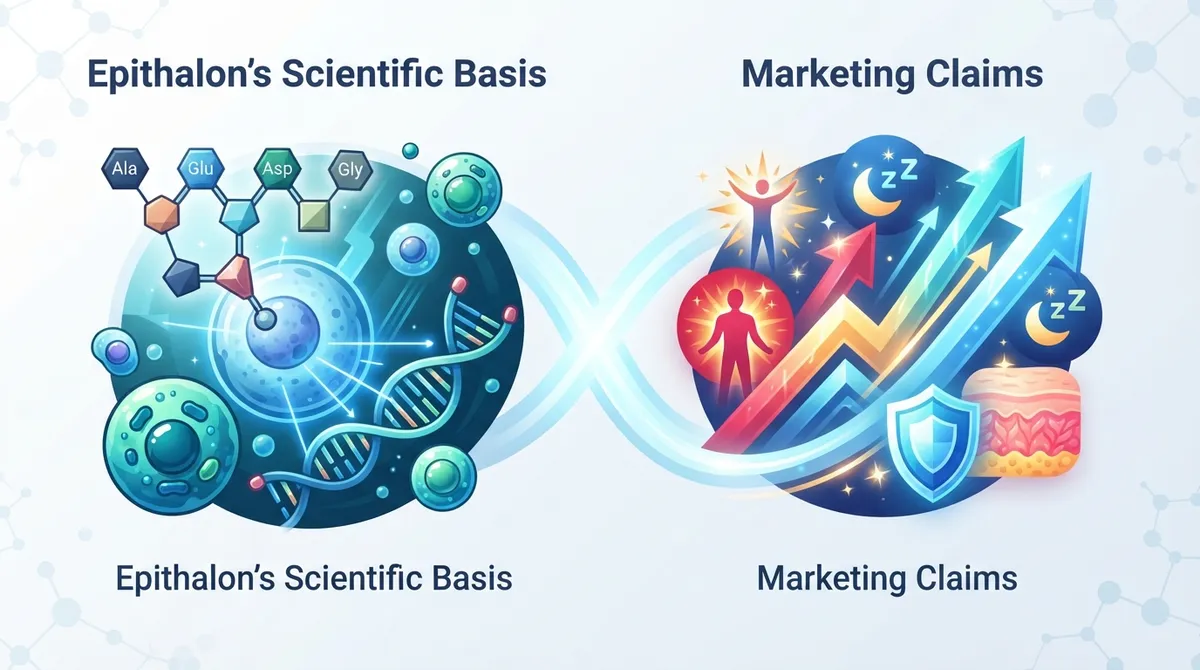
These claims often rest on laboratory work and small studies. They do not prove that the therapy improves health in real people. That gap between promise and proof is the most important thing to understand before you consider treatment.

What the Evidence Actually Shows in 2026
Human evidence for Epithalon is thin. A 2026 narrative review described the human data as small physiological or biomarker studies, plus an older controlled report in retinitis pigmentosa. It also noted that long-term safety and dose-ranging data remain inadequate.
No adequately powered, independently replicated trial has shown that Epithalon extends lifespan, reverses aging, or treats insomnia. The proposed mechanisms involve telomerase, telomeres, and circadian rhythms. These ideas come mostly from lab research. A mechanism seen in a dish does not guarantee a benefit in a patient.
|
Claim |
What Is Known |
Evidence Strength |
|---|---|---|
|
Extends lifespan |
No adequately powered human trial shows this |
Very limited |
|
Reverses aging |
Biomarker changes only; no proven health outcomes |
Very limited |
|
Improves sleep |
No robust trial establishes this for insomnia |
Very limited |
|
Supports telomere health |
Mostly laboratory or limited research |
Preliminary |
|
Long-term safety |
Human safety and dose-ranging data are lacking |
Not established |
Regulatory Status: What "Not FDA-Approved" Means
Epithalon is not FDA-approved for any indication. This point is often blurred online, so it helps to be precise.
In 2026, the FDA has considered Epithalon in the context of the 503A bulk drug substances list, which governs compounding eligibility. That review is a separate process from drug approval. Being discussed, reviewed, or even recommended for a compounding list does not prove a substance is safe or effective for a medical condition.
FDA reviewers have also raised concerns. They reportedly found no human pharmacokinetic data for Epithalon free base or acetate. They noted insufficient clinical safety information for proposed routes of administration. They also flagged possible immune reactions linked to peptide aggregation or impurities.
If a clinic describes Epithalon as an approved treatment, treat that as a red flag.
Known Unknowns: Safety, Dosing, and Cancer Questions
Safety is not well characterized. There is no standard, FDA-approved dose. Product quality also varies, because compounded or research-grade peptides may differ in purity and sourcing.
Key safety gaps
- Dosing: No validated human dosing schedule exists.
- Purity: Impurities or aggregation may raise the risk of immune reactions.
- Long-term data: Studies lasting years in large groups are missing.
- Route of administration: Evidence for injections or other routes is incomplete.
The telomerase question
Telomerase activity is linked to cell growth, so a theoretical cancer concern exists. This is unresolved. It is not proof that Epithalon causes cancer. Long-term human studies have not established either a cancer risk or long-term cancer safety. That uncertainty alone is a good reason to be cautious and to talk with a physician first.
How to Evaluate Epithalon Peptide Therapy in Riverview: 7 Steps
If you are still curious, use this checklist. It helps you separate responsible care from hype.
- Confirm who is treating you. Ask for the clinician's name, license, and specialty. Verify the license through the Florida Department of Health.
- Ask about regulatory status. A trustworthy provider will say plainly that Epithalon is not FDA-approved and is considered investigational.
- Request sourcing details. Ask where the product comes from, whether it is compounded, and what quality testing exists.
- Ask for the evidence. Request specific human studies, not testimonials. Be wary of providers who cite only animal or lab data.
- Review your health history first. A real evaluation includes your medical history, medications, labs, and personal and family cancer history.
- Discuss risks and alternatives. You should hear about unknowns, not just benefits. You should also hear about proven options.
- Avoid pressure and guarantees. No one can guarantee anti-aging results. Walk away from prepaid packages and urgency tactics.
This process takes time. That is fine. A good clinician welcomes your questions.
Red Flags and Green Flags When Choosing a Provider
Use this quick comparison when you research clinics in the Riverview area.
|
Red Flags |
Green Flags |
|---|---|
|
Calls Epithalon "FDA-approved" or "proven" |
States clearly that it is investigational |
|
Promises to reverse aging or cure insomnia |
Sets realistic expectations and explains uncertainty |
|
No physical exam or lab review |
Begins with a full medical evaluation |
|
Vague about product source |
Explains sourcing and quality testing |
|
Sells prepaid bundles with pressure |
Gives you time to decide |
|
Dismisses cancer or safety questions |
Discusses risks openly and documents consent |
Evidence-Based Options for Sleep and Healthy Aging
Many people look into Epithalon because they want better sleep or a longer healthspan. Several approaches have far stronger support. A primary care visit is the best place to start.
For better sleep
- Screening for sleep apnea, which is common and treatable
- Reviewing medications, caffeine, alcohol, and stress
- Cognitive behavioral therapy for insomnia, a first-line approach
- Checking thyroid, vitamin, and hormone levels when symptoms suggest it
For healthy aging
- Regular blood pressure, cholesterol, and blood sugar management
- Age-appropriate cancer screening
- Strength training, aerobic fitness, and balanced nutrition
- Preventive care built around your personal risk
Advanced testing can also help you act on real data. Options such as DNA gene testing, metabolic breath analysis, and body composition analysis show how your body is working today. Those results can guide a plan far better than a trend on social media.
Where Peptides Fit in a Responsible Wellness Plan
Peptides are a broad category. Some are well-established medicines, and others remain experimental. A careful clinician treats them differently. If you want to understand the landscape, read InCare's overview of what peptides are and how they relate to longevity and wellness. You can also review how to get started with peptide therapy in a safe, structured way.
The best approach is simple. Start with your goals, check your baseline health, and choose options backed by evidence. Experimental therapies, if considered at all, should come after that conversation and with full informed consent.
Questions to Bring to Your Primary Care Visit
Before you consider any investigational peptide, bring a short list of questions to a licensed clinician:
- Is there good human evidence for this therapy and my goal?
- What are the known and unknown risks for someone with my history?
- Are there proven treatments I should try first?
- How will we measure whether it is working, and when would we stop?
- How does this interact with my current medications?
These questions put you in control. They also help your doctor build a plan that fits your life, whether you are managing a busy family schedule or optimizing your health proactively.
Why Start With a Primary Care Partner in Riverview
A trusted primary care clinic can sort real opportunities from hype. At InCare, care is built around prevention and whole-body optimization. The team combines modern technology with medical expertise to help patients in Riverview and Tampa understand their health, not just chase trends. You can learn more about the practice on the About Us page, meet the providers, or see the locations.
If you are weighing options, you can also see what other patients say. Read InCare feedback or visit us on Google — InCare to get a sense of the patient experience in Riverview.
For continued updates on healthy living and wellness education, you can follow InCare on Instagram, Facebook, and TikTok.
Conclusion: Choose Evidence Over Hype
Epithalon peptide therapy in Riverview may sound appealing, but the facts are clear. It is not FDA-approved, human evidence is limited, and long-term safety is unknown. The telomerase and cancer question remains unresolved. None of that means you cannot ask about it. It means you should ask carefully, with a licensed clinician, and with realistic expectations.
The smartest path starts with a thorough evaluation and proven strategies for sleep, prevention, and healthy aging. If you want a clear, personalized plan, our team is ready to help. Book Now to schedule a visit, or contact InCare with your questions. Your health deserves evidence, not hype.
FAQs
Q: What is Epithalon peptide therapy, and what is it claimed to do?
A: Epithalon is a synthetic peptide promoted by some wellness providers for longevity, sleep, and anti-aging. These claims are based largely on laboratory and limited research. They have not been confirmed by adequately powered human trials.
Q: Is Epithalon FDA-approved in the United States?
A: No. Epithalon is not FDA-approved for any indication. FDA consideration of a substance for the 503A compounding list is a separate process and does not prove safety or effectiveness.
Q: What are the known risks of Epithalon injections?
A: Safety is not well characterized, and human dose-ranging and long-term data are lacking. Reviewers have raised concerns about immune reactions linked to impurities or peptide aggregation. A theoretical cancer concern tied to telomerase is unresolved, not proven.
Q: How can I evaluate a peptide therapy provider in Riverview?
A: Verify the clinician's license, ask about regulatory status and product sourcing, and request human evidence. A responsible provider begins with a full medical evaluation, discusses risks openly, and avoids guarantees or pressure.
Q: What evidence-based alternatives exist for sleep and healthy aging?
A: Proven options include sleep apnea screening, cognitive behavioral therapy for insomnia, and managing blood pressure, cholesterol, and blood sugar. Regular cancer screenings, exercise, and balanced nutrition also have strong support. A primary care clinician can tailor these to your needs.