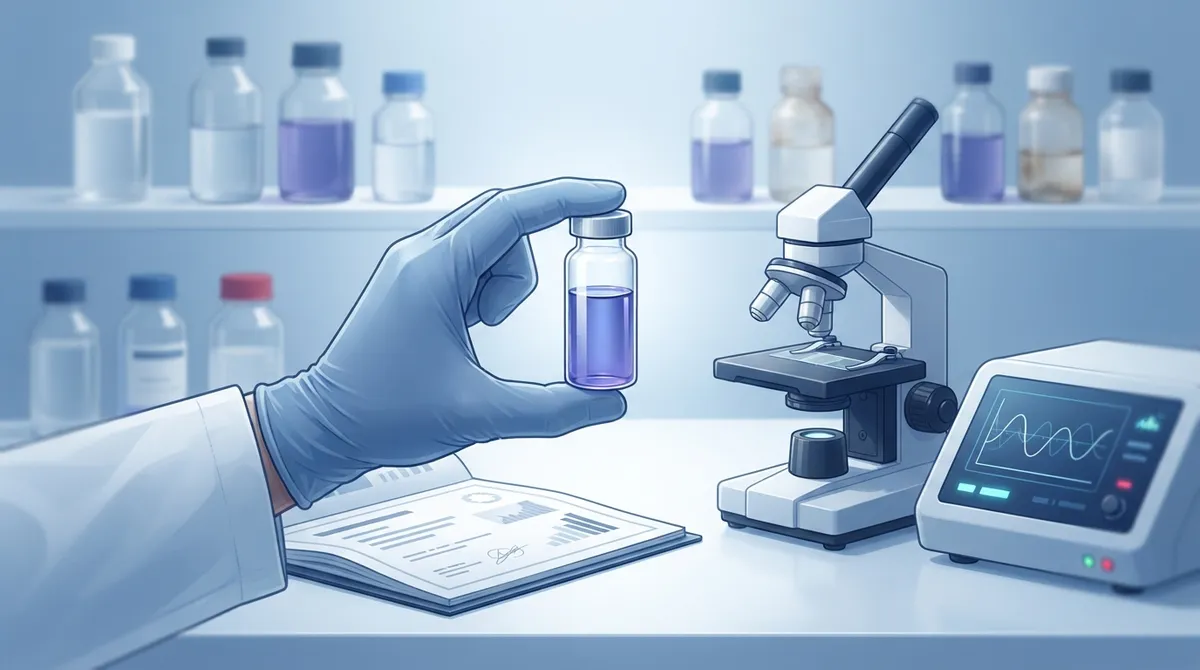
Key Takeaways
- Demand a batch-specific certificate of analysis (COA) from an independent third-party lab showing HPLC purity of 98%+ and ICP-MS copper-to-peptide ratio near 0.95-1.05 before purchasing any GHK-Cu product.
- Poor manufacturing can result in products with incorrect peptide amounts, wrong copper ratios, or leftover chemical byproducts, making quality verification essential to ensure results match label claims.
- Properly formulated GHK-Cu products require correct concentration (0.01%-1%), pH balance, opaque airtight packaging, and appropriate delivery vehicles—raw peptide purity alone doesn't guarantee real-world effectiveness.
- Red flags include missing COAs, unspecified lab testing methods, off-color products (should be blue-purple), vague marketing claims without numbers, and suspiciously low prices compared to research-grade standards.
Copper peptide products are everywhere in wellness clinics and skincare shelves today. But not every GHK-Cu product on the market is made the same way. Some are tested carefully. Others are not tested at all. If you are thinking about trying a copper peptide product for skin health or wellness support, you need to know how to judge quality before you spend your money.
This guide breaks down the real factors that separate a high-quality GHK-Cu product from a weak one. You will learn what purity numbers actually mean, why copper content matters, and how lab testing protects you. Whether you are a busy parent looking into skin recovery options, a wellness-focused professional exploring advanced care, or simply curious about peptide-based products, this article will help you make a smart, informed choice.
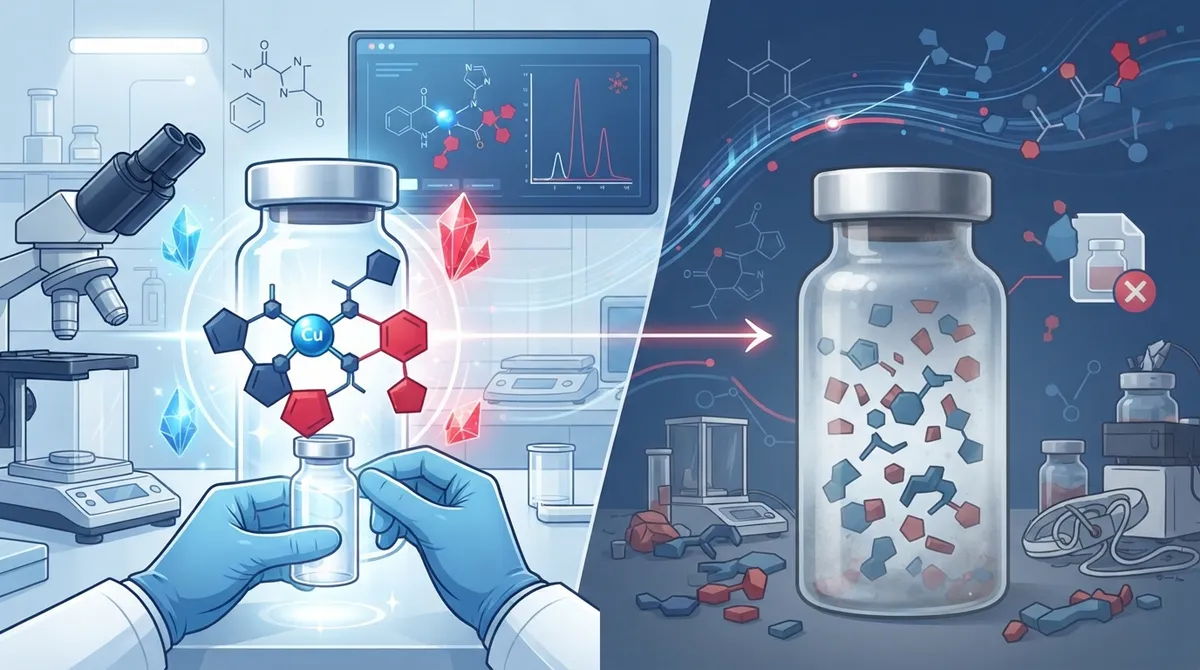
What Is GHK-Cu and Why Does Quality Matter
GHK-Cu is a small copper peptide. Your body makes it naturally, but levels drop as you age. It is used in topical skincare and wellness formulas because of its role in skin support and tissue health. Because it involves a copper complex bound to a peptide chain, the way it is made really matters.
Poor manufacturing can lead to a product that does not match its label. It might have less peptide than promised. It might have the wrong copper ratio. It might even contain leftover chemicals from the manufacturing process. This is why quality comparison is not just a nice extra step. It is essential for anyone who wants results that match expectations.
At InCare, our approach to wellness always starts with education. We believe patients deserve to understand what goes into any product before it becomes part of their routine. If you want to talk through wellness options with a licensed provider, our team of providers is here to help.
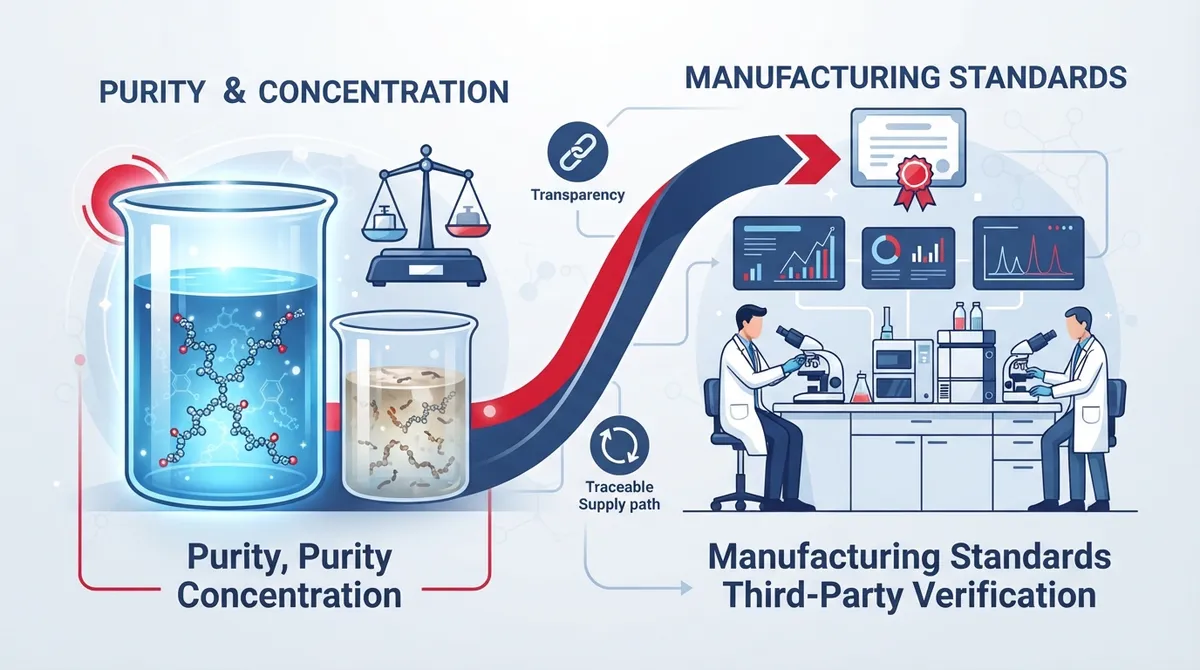
The Core Factors in a GHK-Cu Quality Comparison
When comparing GHK-Cu products, focus on these main categories. Each one tells you something different about the product's reliability.
1. Peptide Purity (HPLC Testing)
Purity tells you how much of the sample is actually the GHK-Cu peptide, versus leftover byproducts from synthesis. Reversed-phase HPLC (high-performance liquid chromatography) is the standard method used to measure this.
- 92% to 99% purity is common across research-grade and cosmetic-grade material.
- 98% or higher is generally seen as the minimum for research-grade quality.
- 99% or higher is often treated as premium or reference-grade material.
- Purity below 90% often signals incomplete synthesis or degradation.
2. Identity Confirmation (Mass Spectrometry)
Purity alone does not prove the substance is actually GHK-Cu. Mass spectrometry (often called LC-MS) confirms the molecular identity. This step checks that the peptide chain and copper are structured correctly, not just that the sample is "clean."
3. Copper-to-Peptide Ratio (ICP-MS Testing)
Copper content is measured separately from peptide purity. A product could have excellent peptide purity but too much or too little copper attached. ICP-MS (inductively coupled plasma mass spectrometry) is the common method used to check this ratio.
- A target molar ratio of 0.95 to 1.05 (copper to peptide) is used in many testing specifications.
- Ratios far outside this range suggest the copper complex did not form correctly.
4. Visual Color Check
A properly made GHK-Cu product should show a blue to blue-purple color. This color comes directly from the copper complex binding correctly to the peptide. If a product looks off-color, pale, or brownish, that can be an early warning sign of poor coordination or degradation.
Step-by-Step Guide to Comparing GHK-Cu Products
- Ask for a certificate of analysis (COA). A real COA shows batch-specific results, not just general marketing claims.
- Check the purity percentage. Look for HPLC results at or above 98%, with 99%+ considered premium.
- Confirm identity testing was done. Mass spectrometry results should confirm the correct molecular structure.
- Review the copper ratio. ICP-MS results should fall near the 0.95 to 1.05 target range.
- Inspect the color. The product should show the expected blue-purple hue.
- Evaluate the formulation. For topical products, check concentration, pH, and packaging quality.
- Confirm third-party testing. Independent labs, not just internal company reports, add real credibility.
Comparing Purity Grades: A Quick Reference Table
|
Purity Range |
Quality Classification |
What It Means |
|---|---|---|
|
Below 90% |
Low Quality |
Signals incomplete synthesis or significant degradation |
|
90% - 97% |
Acceptable / Cosmetic-Grade |
May be usable for general cosmetic formulas but not ideal for research |
|
98% - 98.9% |
Research-Grade Minimum |
Common minimum standard cited in quality guides |
|
99% and above |
Reference / Premium Grade |
Treated as the gold standard for high-end material |
One cited batch certificate reported 99.72% purity, with an impurity range between 99.21% and 99.90%. This kind of detailed reporting is exactly what you should look for when comparing products. If a supplier cannot provide numbers like these, treat that as a red flag.
Why Formulation Still Matters Beyond Raw Peptide Quality
Even a perfectly pure peptide can underperform if the final product is poorly made. Formulation factors affect how well a topical GHK-Cu product works in real life.
- Concentration: Clinical studies commonly use concentrations between 0.01% and 1%, though consumer products sometimes use higher amounts.
- pH balance: Copper peptides are sensitive to pH changes, which can affect stability.
- Delivery vehicle: The base cream, serum, or solution affects how well the peptide penetrates skin.
- Packaging: Light and air exposure can degrade copper peptides over time, so opaque, airtight packaging matters.
This is why a full quality comparison should never stop at the certificate of analysis. The finished formulation is just as important as the raw ingredient testing behind it.
Common Quality Red Flags to Watch For
Some warning signs can help you avoid low-quality GHK-Cu products before you buy.
- No certificate of analysis available upon request.
- Purity claims with no lab name or method listed.
- Off-color product that does not match the expected blue-purple shade.
- Vague marketing language with no specific numbers.
- Prices that seem unusually low compared to typical research-grade products.
How InCare Approaches Wellness Product Quality
At InCare, we understand that patients want more than promises. They want real answers backed by data and clinical experience. Our primary care team works with patients across Tampa and Riverview to build wellness plans grounded in evidence, not hype.
We also offer services that support whole-body health alongside any topical or peptide-based wellness approach, including DNA gene testing, body composition analysis, and IV hydration and vitamin drips. If skin health and hair support are part of your wellness goals, our hair restoration services may also be worth exploring alongside your skincare routine.
Our patients across Tampa and Riverview consistently share positive experiences with our team. You can visit us on Google — InCare to read real reviews from people who have trusted us with their health goals.
Comparing Testing Methods at a Glance
|
Testing Method |
What It Measures |
Why It Matters |
|---|---|---|
|
HPLC |
Peptide purity percentage |
Confirms how much of the sample is actual GHK-Cu peptide |
|
Mass Spectrometry (LC-MS) |
Molecular identity |
Confirms the substance matches the expected structure |
|
ICP-MS |
Copper-to-peptide ratio |
Confirms correct copper binding, separate from peptide purity |
|
Visual Inspection |
Color consistency |
Offers a quick, practical check for coordination quality |
Questions to Ask Before Choosing a GHK-Cu Product
Before committing to any copper peptide product, it helps to ask a few direct questions. This keeps the process simple and puts the responsibility on the seller to prove quality.
- Can you provide a current, batch-specific certificate of analysis?
- What third-party lab performed the purity testing?
- What is the confirmed copper-to-peptide ratio?
- How is the product stored and packaged to prevent degradation?
- What concentration is used in the final formulation?
If a seller cannot answer these questions clearly, that is a strong signal to look elsewhere. Wellness decisions should always be based on real data, not guesswork.
Bringing It All Together
Comparing GHK-Cu quality does not have to be complicated once you know what to look for. Purity testing, identity confirmation, copper ratio checks, and proper formulation all work together to determine whether a product is trustworthy. A high number on a label means little without proof behind it.
If you want expert guidance on wellness options that fit your health goals, our team can help you sort fact from marketing. You can follow our updates and patient stories on Facebook, see behind-the-scenes wellness tips on Instagram, or catch quick health insights on TikTok.
Ready to talk to a provider about your wellness goals? Reach out to our team today or book your appointment now to start building a wellness plan backed by real expertise, not guesswork.
FAQs
Q: What is GHK-Cu and what is it used for?
A: GHK-Cu is a naturally occurring copper peptide used in topical skincare and wellness formulations. It is often included in products aimed at supporting skin health, and its use has expanded into broader wellness and recovery-focused applications.
Q: How do you compare the quality of GHK-Cu products?
A: Quality comparison relies on checking HPLC purity results, confirming identity through mass spectrometry, verifying the copper-to-peptide ratio with ICP-MS, and reviewing the product's color and formulation. A proper certificate of analysis should include all of this data.
Q: What purity should a GHK-Cu peptide have?
A: Most quality guides treat 98% or higher HPLC purity as the practical minimum for research-grade material, with 99% or higher considered premium or reference-grade. Purity below 90% often points to incomplete synthesis or degradation.
Q: How can you tell if GHK-Cu is authentic?
A: Authentic GHK-Cu should show a blue to blue-purple color from its copper complex and come with a batch-specific certificate of analysis. Off-color material or vague purity claims without lab data are signs the product may not be authentic or properly made.
Q: Is copper content the same as peptide purity in GHK-Cu?
A: No, they are two separate quality measures. Peptide purity is measured through HPLC, while copper content is measured separately using ICP-MS to confirm the copper-to-peptide ratio falls within an expected range.