

Key Takeaways
- Poor sleep affects energy, mood, weight, blood pressure, and focus, so persistent sleep trouble warrants a medical evaluation rather than just a new mattress.
- Start by tracking symptoms for one to two weeks, noting bedtimes, wake times, snoring, gasping, leg discomfort, and nighttime waking to bring to your appointment.
- Check your health plan's referral and prior authorization rules before booking a sleep study, and request an itemized cost estimate from both the clinic and your insurer.
- Home sleep apnea tests are convenient but mainly evaluate suspected obstructive sleep apnea, while in-lab polysomnography can assess a wider range of sleep disorders.
- Warning signs include loud snoring, breathing pauses, waking up gasping, morning headaches, daytime sleepiness, and falling asleep while driving or at work.
- Verify a clinic's AASM accreditation and confirm which services it offers, including follow-up care such as PAP titration and mask fitting, before committing.
Poor sleep rarely stays a sleep problem. It affects energy, mood, weight, blood pressure, and focus. If you wake up tired, snore loudly, or lie awake for hours, you may need more than a new mattress. You may need a sleep clinic in Tampa that can evaluate the cause and guide treatment.
Choosing a clinic can feel confusing. Some offer overnight studies. Others offer home tests. Some focus on one condition, while others look at the whole picture. This guide walks you through each step, from spotting symptoms to comparing clinics and preparing for your visit.
You will also learn why your primary care team is often the best place to start. A coordinated approach saves time, reduces repeat testing, and keeps your overall health in view.
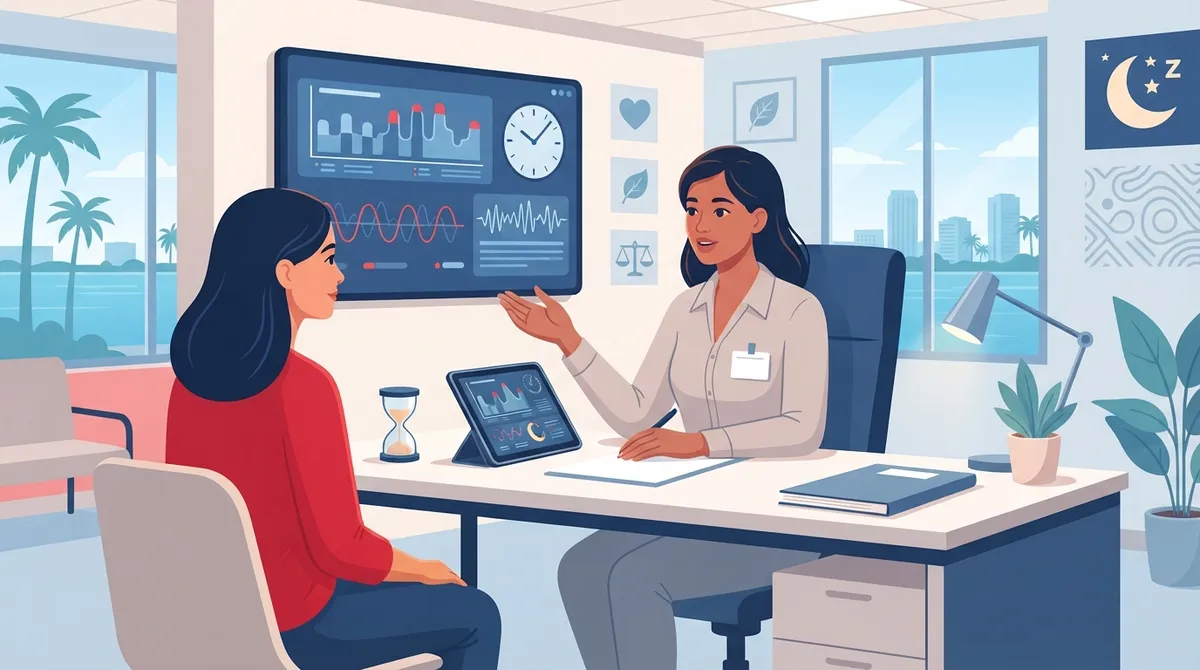
Why Sleep Health Belongs in Primary Care
Sleep affects nearly every system in the body. Long-term sleep trouble is linked with high blood pressure, weight gain, blood sugar problems, low mood, and trouble with memory. For that reason, sleep is part of whole-body wellness, not a separate issue.
A primary care clinician can review your symptoms, medications, and health history. They can also check for related conditions, such as thyroid problems, anxiety, or reflux. Many people first learn they may have a sleep disorder during a routine visit. If you are unsure where to begin, read why having a primary care provider matters.
InCare takes this whole-person view. Our team helps patients in Tampa and Riverview understand how sleep fits with weight, hormones, stress, and heart health. That context helps a sleep specialist make a better diagnosis.

What a Sleep Clinic in Tampa Actually Does
A sleep clinic does more than run an overnight test. A full visit usually includes several parts:
- Evaluation: A sleep-medicine clinician reviews your symptoms, habits, and medical history.
- Diagnostic testing: This may be an overnight lab study or a home sleep test, depending on your needs.
- Interpretation: A specialist reads the data and explains the results.
- Treatment planning: You receive a plan based on your diagnosis.
- Follow-up: The team checks progress and adjusts treatment as needed.
Tampa-area providers describe care for obstructive sleep apnea (OSA), insomnia, narcolepsy, restless legs syndrome, and other sleep-related conditions. Services vary by clinic, so always confirm what each location offers.
How to Choose a Sleep Clinic in Tampa: Step by Step
Follow these steps to find the right fit and avoid delays.
- Track your symptoms for one to two weeks. Note when you go to bed, when you wake up, and how you feel during the day. Write down snoring, gasping, leg discomfort, and nighttime waking.
- Book a primary care visit. Your clinician can rule out other causes and decide whether a sleep specialist is needed.
- Check your insurance rules. Some health plans require a referral or prior authorization before a sleep study. Call your plan first.
- Compare clinics. Look at accreditation, test options, appointment wait times, and follow-up care.
- Ask for a cost estimate. Request an itemized estimate from both the clinic and your insurer.
- Prepare for your visit. Bring your sleep notes, medication list, and questions.
Signs You May Need a Sleep Evaluation
Many people live with poor sleep for years before seeking help. Consider an evaluation if you notice any of these signs:
- Loud snoring or pauses in breathing that a partner has noticed
- Waking up gasping or choking
- Morning headaches or a dry mouth
- Daytime sleepiness, even after a full night in bed
- Trouble falling asleep or staying asleep at least three nights a week
- Strong urges to move your legs at night
- Falling asleep at work or while driving
Any one of these can have more than one cause. That is why a proper medical review matters before you buy supplements or gadgets. Sleep problems can also overlap with common sleep mistakes that quietly affect your health, so it helps to review your habits alongside your symptoms.
Home Sleep Test vs. In-Lab Sleep Study
Tampa-area providers offer several testing options. These include in-lab polysomnography, home sleep apnea testing, positive airway pressure (PAP) titration, Multiple Sleep Latency Testing (MSLT) for conditions such as narcolepsy, and Maintenance of Wakefulness Testing (MWT). Availability differs by clinic.
The right test depends on your symptoms and history. A clinician should make that choice, not the patient alone. Here is a general comparison:
|
Feature |
In-Lab Polysomnography |
Home Sleep Apnea Test |
|---|---|---|
|
Where it happens |
Overnight at a sleep center |
In your own bed |
|
What it measures |
Sleep stages, breathing, and related body signals |
Mainly breathing patterns |
|
Conditions it can assess |
A wider range of sleep disorders |
Primarily suspected OSA |
|
Best suited for |
Complex symptoms or other suspected disorders |
Clear signs of OSA when a clinician considers it appropriate |
|
Comfort |
Unfamiliar room, staff monitoring |
Familiar setting, less disruption |
A home test is not a universal substitute for a lab study. It is more limited and is mainly used to evaluate OSA. Tampa General Hospital reports that more than half of its sleep studies are conducted at home, but that figure applies to that provider only, not to the whole city.
What to Expect During an Overnight Sleep Study
Many people worry about the lab experience. Knowing the process can ease that stress.
- Arrival: You check in during the evening and are shown to a private room.
- Setup: A technologist places small sensors on your head, chest, and legs. These record brain activity, breathing, heart rate, and movement.
- Sleep: You go to bed at your usual time. Staff monitor you from another room.
- Morning: The sensors come off, and you go home.
- Results: A sleep specialist reviews the data and discusses findings at a follow-up visit.
The sensors are painless. Most people sleep well enough to give useful data, even if they feel slightly awkward at first.
Factors to Compare When Choosing a Clinic
Not every clinic is the same. Use this checklist to compare options.
Accreditation
Accreditation from the American Academy of Sleep Medicine (AASM) is one quality marker. For example, the AASM directory lists Tampa Bay Sleep Center as accredited for clinic services, in-lab testing, and home sleep apnea testing, with accreditation shown through December 14, 2027. One third-party directory lists 30 Tampa-area sleep clinics, with 17 marked as AASM-accredited. Treat that count as a snapshot, since listings change. Always verify current status yourself.
Services and Follow-Up
Ask whether the clinic handles diagnosis only or also provides treatment support. Some local providers describe PAP titration, CPAP and BiLevel follow-up, mask fitting, and patient education. Ongoing support matters because many people need help adjusting to treatment.
Referral and Insurance Rules
Requirements depend on your health plan. Some plans want a primary care referral. Others require prior authorization. Verify this before you schedule so you avoid surprise bills. If you have Medicare, our guide to what a Medicare doctor does for you explains how coverage and referrals often work.
Cost
Prices vary widely. A third-party directory reports sleep-study prices from under $200 to over $5,000, depending on test type, setting, and insurance. This is a broad estimate, not a verified Tampa quote. Ask for an itemized estimate before you book.
Examples of Tampa-Area Sleep Providers
Several well-known providers offer sleep services in the Tampa area. Examples include Tampa Bay Sleep Center, AdventHealth Tampa Sleep Care, Tampa General Hospital's Sleep Disorders Center, and Pulmonary & Sleep of Tampa Bay. Confirm current services, locations, age limits, appointment availability, and insurance participation directly with each provider before you commit.
Treatment Options After a Diagnosis
Treatment depends on what the testing finds. Common paths include:
- PAP therapy for OSA: A machine delivers air pressure to keep the airway open during sleep.
- Equipment support: Mask fitting and education help you stay comfortable and consistent.
- Behavioral and lifestyle measures: Sleep schedules, evening routines, and cutting back on late caffeine or alcohol can help.
- Additional evaluation: Some patients are referred for further testing or specialist care.
Weight can also play a role in sleep apnea for some people. If that applies to you, a supervised plan may help. Learn more about medical weight loss support and how it fits into whole-body care.
How InCare Supports Your Sleep Health
InCare is a personalized primary care and wellness clinic with locations in Tampa and Riverview, Florida. We do not replace a sleep specialist when one is needed. We help you take the first and most important steps.
Our team can review your symptoms, check related health risks, and coordinate next steps. We also look at the bigger picture, including blood pressure, metabolism, and stress. Tools such as metabolic breath analysis and body composition testing can give extra insight into factors that may affect sleep and energy.
This approach suits busy professionals, young families, and anyone who wants fewer appointments and clearer answers. You can learn more about our primary care services or read how we keep care connected in coordinated care versus fragmented care.
Patients rate us 4.8 out of 5 on Google. You can read InCare reviews on Google to see what our Tampa and Riverview patients say. You can also follow our updates on Instagram, Facebook, and TikTok.
Questions to Ask Before Your First Sleep Appointment
Come prepared. Bring these questions to your visit:
- Which test do you recommend for my symptoms, and why?
- Will I need a referral or prior authorization?
- What is the estimated cost with my insurance?
- How long until results are ready?
- What treatment support do you offer after diagnosis?
- Is the clinic accredited, and for which services?
Clear answers up front prevent delays and help you plan around work and family schedules.
Take the First Step Toward Better Sleep
Good sleep is not a luxury. It supports your heart, mind, mood, and long-term health. Finding the right sleep clinic in Tampa starts with understanding your symptoms and choosing a clinic that offers accurate testing, clear communication, and real follow-up.
Start with a conversation. A primary care visit can sort out likely causes and point you to the right next step. Book your InCare appointment now or contact our team with questions. We are here to help you wake up feeling like yourself again.
FAQs
Q: What does a sleep clinic in Tampa treat?
A: A sleep clinic typically evaluates and treats conditions such as obstructive sleep apnea, insomnia, narcolepsy, and restless legs syndrome. Care usually includes an evaluation, diagnostic testing, treatment planning, and follow-up. Services vary by provider, so confirm what each clinic offers.
Q: Do I need a referral to see a sleep specialist in Tampa?
A: It depends on your health plan. Some plans require a referral or prior authorization, while others do not. Verify requirements with your insurer and the clinic before scheduling, and ask your primary care clinician to help coordinate the referral if needed.
Q: How do I choose between a home sleep test and an in-lab sleep study?
A: A clinician should choose based on your symptoms and medical history. Home tests are mainly used to evaluate suspected obstructive sleep apnea. In-lab studies can assess a broader range of sleep disorders and are often used for more complex cases.
Q: How much does a sleep study cost in Tampa, and will insurance cover it?
A: Costs vary widely by test type, setting, and coverage. One directory reports prices from under $200 to over $5,000, but that is a broad estimate rather than a Tampa quote. Request an itemized estimate from the clinic and your insurer before you book.
Q: What are common signs of sleep apnea or another sleep disorder?
A: Common signs include loud snoring, pauses in breathing, waking up gasping, morning headaches, and daytime sleepiness. Trouble falling or staying asleep and restless legs at night may also point to a sleep disorder. A medical evaluation can identify the cause.


