
Key Takeaways
- Compare all-in yearly costs, not advertised monthly prices—generic injectable testosterone ranges $20-$100/month for medicine alone, while full programs cost $100-$250+/month with labs and visits often billed separately.
- Verify your insurance covers all three components separately: medication, office visits, and lab work, as coverage varies by plan and may require documented symptoms, confirmed low testosterone levels, and prior authorization.
- Ensure proper diagnosis with repeat morning testosterone testing and clinical evaluation before starting treatment; avoid providers offering prescriptions without comprehensive evaluation or required follow-up monitoring.
- Factor in ongoing monitoring costs as part of safe TRT—follow-up labs and visits within 3-12 months and yearly thereafter are essential to catch side effects early and adjust doses, making skipping monitoring a false economy.
- Request an itemized written estimate covering the first year including medicine, supplies, labs, visits, and any contracts requiring minimum terms or upfront payments before committing to a TRT program.
- Consider that TRT can suppress sperm production and may not suit those planning children soon; discuss alternatives and full health context with a clinician who knows your complete medical history.
You hear about testosterone replacement therapy from friends, podcasts, and social media. Then you start looking for prices, and the numbers are all over the place. One ad says $79 a month. Another says $250. A third says nothing until you book a call. So how much does TRT cost, and what do you actually get for the money?
The honest answer is that it depends on what the price includes. A low monthly fee may cover only the medicine. A higher fee may include visits, lab work, and ongoing care. In 2026, comparing the all-in cost is the only fair way to shop.
This guide breaks down every part of the bill. You will learn typical price ranges, what drives costs up or down, how insurance fits in, and what to ask before you sign up. TRT is a prescription treatment for confirmed low testosterone, so safe care also includes testing and follow-up. Those parts matter just as much as the price tag.

What Does TRT Cost on Average in 2026?
There is no single national price. The cost of TRT changes with the treatment type, the provider, your location, and your insurance. Still, you can use a few planning ranges to get started.
Generic injectable testosterone is often the lowest-cost option. When paid in cash, the medicine alone may run roughly $20 to $100 or more per month. Clinic and telehealth programs usually advertise higher monthly fees, often about $100 to $250 or more. These two numbers are not the same thing, so do not compare them side by side.
A 2026 review of online TRT providers found advertised program prices from about $79 to $249 per month. In many cases, labs or medicine were billed on top. These are provider-specific offers, not a national average.
|
Cost Type |
Typical Range (Cash) |
What It Usually Covers |
|---|---|---|
|
Generic injectable testosterone only |
$20 to $100+ per month |
Medicine only |
|
Clinic or telehealth program |
$100 to $250+ per month |
Varies: may include visits, medicine, or both |
|
Initial lab work and consultation |
Varies by provider |
Diagnosis and baseline testing |
|
Follow-up labs and visits |
Varies by provider |
Safety monitoring and dose changes |
Use these figures as a starting point only. Always ask for a written, itemized quote.
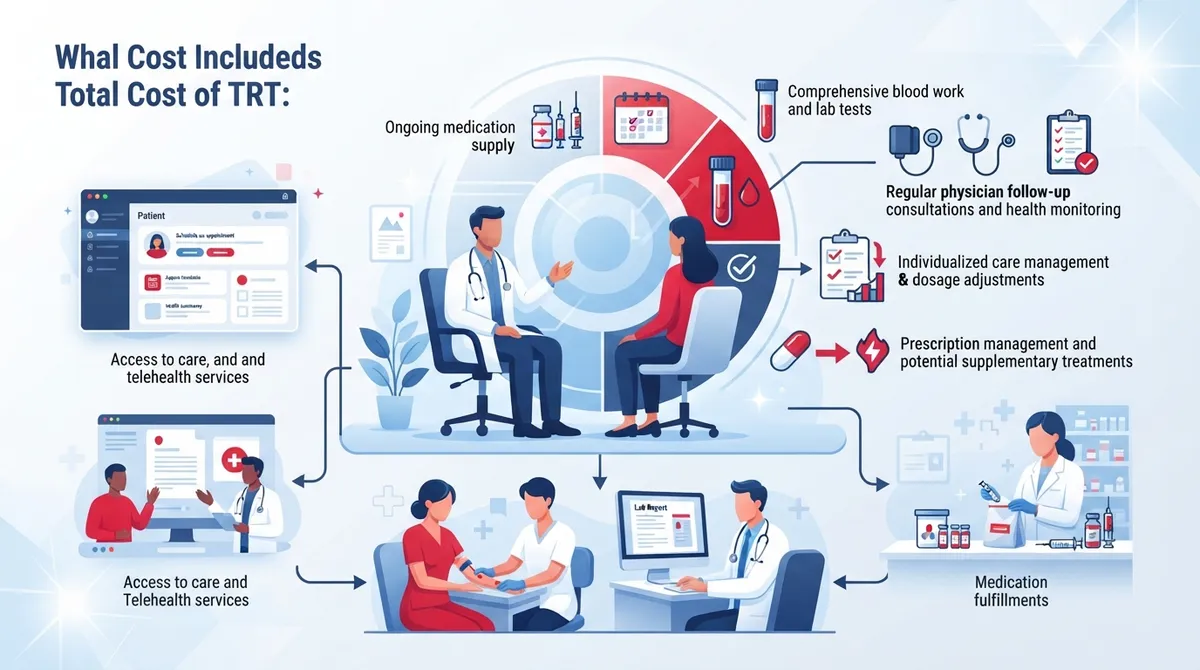
What Is Included in the Total Cost of TRT?
TRT is more than a prescription. Good care includes several steps, and each one can add to your bill. When you ask how much TRT costs, make sure you count all of them.
- Initial consultation: A clinician reviews your symptoms, history, and goals.
- Diagnostic blood tests: Testing confirms whether your testosterone is truly low.
- Medication: Injections, gels, patches, or other forms.
- Supplies and shipping: Needles, syringes, alcohol wipes, and delivery fees.
- Follow-up visits: Check-ins to review how you feel and adjust your dose.
- Repeat monitoring labs: Ongoing blood work to keep treatment safe.
Some clinics bundle all of this into one monthly fee. Others bill each piece separately. A bundled price can be easier to budget for, but only if it truly includes labs and visits. Ask directly.
Why Do TRT Prices Vary So Much?
Several factors explain the wide price range. Knowing them helps you spot a fair deal.
Treatment Type
Generic injectable testosterone is often cheaper than gels, patches, or other branded products. However, the best choice depends on your needs, comfort with injections, side effects, and coverage. A cheaper form is not always the right form.
Provider Type
A primary care clinic, a specialty men's health clinic, and an online-only service all price differently. Online programs may advertise low entry prices. Primary care practices may offer broader care at a similar total cost, along with in-person exams.
Commitment Terms
Watch for contracts. One 2026 comparison reported a $79 per month offer that required a 12-month commitment, or $948 upfront, with labs charged extra. That example shows why a headline monthly number may not match your true cost.
Compounded Products
Compounded products and non-testosterone alternatives have different pricing. They are not interchangeable with FDA-approved testosterone products. Ask your clinician which type is being offered and why.
Does Insurance Cover Testosterone Replacement Therapy?
Coverage depends on your plan. Many plans can cover TRT when it is medically necessary. Others limit coverage or require extra steps first.
Insurers often ask for the following:
- Documented symptoms that fit low testosterone.
- Blood tests that confirm a low level.
- Prior authorization before the medicine is filled.
- Use of a specific covered form of testosterone.
Wellness or optimization programs may not bill insurance at all. In that case, you pay cash. Check three benefits separately: the medicine, the office visit, and the lab work. One may be covered while another is not.
Call your insurer before you start. Ask what they require and which products are on your plan's list. Then ask the clinic if they bill insurance for each part of care.
How Is Low Testosterone Diagnosed?
A diagnosis should never rest on symptoms alone or on a single test. The Endocrine Society recommends diagnosing hypogonadism only when symptoms or signs are present and testosterone is clearly and consistently low. The level should be confirmed with repeat morning testing.
This matters for your wallet too. A proper workup costs money, but it protects you from paying for treatment you may not need. Be cautious of any provider who offers a prescription without an evaluation or required follow-up. That is a red flag for both safety and value.
Common signs that lead to testing include low energy, reduced sex drive, mood changes, and loss of muscle. These symptoms can have other causes, such as poor sleep, thyroid problems, or stress. A careful clinician looks at the full picture first.
What Does TRT Monitoring Cost and Why Does It Matter?
Monitoring is part of safe TRT, and it is part of the cost. Treatment is not a set-it-and-forget-it plan. Your clinician needs to check how your body responds.
The Endocrine Society guidance includes these key steps:
- Check your response and any side effects within 3 to 12 months of starting, then once a year.
- Test testosterone levels about 3 to 6 months after you begin.
- Measure hematocrit, which is the share of red blood cells in your blood, at baseline, at 3 to 6 months, and then yearly.
- Stop treatment if hematocrit goes above 54% until it returns to a safe level, look for causes, and consider restarting at a lower dose.
- Tailor prostate monitoring to your age, risk, and personal choices.
These checks add lab fees and visit costs over time. A program that skips them may look cheaper, but it can put your health at risk. When you compare prices, confirm that monitoring is built in or clearly priced.
Is TRT Right for Everyone?
No. TRT is not appropriate for every person, and it carries real tradeoffs. One important point is fertility. TRT can lower sperm production, so it may not suit someone who plans to have children soon. Your clinician should talk through alternatives if that applies to you.
A good provider will also review risks, other options, and the monitoring plan before you start. If a clinic skips that conversation, look elsewhere. The cheapest option is not the best value if it ignores safety.
How to Compare TRT Prices Without Getting Misled
Use this simple process to compare offers fairly.
- Ask for an itemized estimate. Request a written list of every charge for the first year.
- Confirm what the monthly fee covers. Does it include medicine, supplies, labs, and visits?
- Check for contracts. Ask about minimum terms, upfront payments, and cancellation rules.
- Verify the diagnosis process. Look for repeat morning testing and a real clinical exam.
- Ask about the product. Is it FDA-approved testosterone or a compounded product?
- Add up the yearly total. Multiply the monthly cost, then add any labs or visit fees billed separately.
This method turns confusing ads into one clear number. It also shows you which provider is truly the better deal.
Can a Primary Care Doctor Prescribe TRT?
Yes. Many primary care clinicians can evaluate low testosterone, order labs, and manage treatment when it is appropriate. This is a real advantage for many patients. Your primary care team already knows your health history, your medicines, and your other conditions. That context helps them treat you safely.
For busy professionals and families, one team that handles testing, treatment, and follow-up saves time. It also lowers the risk of gaps in care. A broader look at your health can catch related issues, such as blood pressure, weight, or sleep, that affect how you feel.
Why Choose InCare for Testosterone Care in Tampa and Riverview?
InCare is a personalized primary care and wellness clinic with locations in Tampa and Riverview, Florida. Our team combines modern technology with medical expertise to focus on prevention and whole-body health. That approach fits TRT well, because safe treatment depends on careful testing and steady follow-up.
Patients who want to learn more can start with our guide on what testosterone replacement therapy is at InCare. You can also read about TRT for men over 40 and how testosterone therapy works to restore vitality. If you are comparing local options, see our overview of a testosterone clinic in Tampa.
Our clinic also supports your wider health goals. We offer primary care, weight loss programs, and DNA gene testing, so your care plan can address the whole picture. You can learn more about our team on the providers page or find the closest office on our locations page. See what patients say, and read InCare reviews on Google, where we hold a 4.8 out of 5 rating.
You can also follow our health tips on Instagram, TikTok, and Facebook.
Tips to Keep TRT Costs Manageable
A few smart habits can help you control spending without cutting corners on safety.
- Ask whether a generic injectable option fits your needs, since it is often the lowest-cost form.
- Check your insurance benefits for medicine, visits, and labs before you start.
- Choose a provider that bundles monitoring into a clear price.
- Avoid long contracts until you know the treatment works for you.
- Keep your follow-up labs on schedule, so problems are caught early and cheaply.
Skipping monitoring to save money can backfire. Catching a problem early is almost always less costly than treating it later.
Final Thoughts on What TRT Really Costs
So, how much does TRT cost? For many people paying cash, the medicine alone can be as low as $20 to $100 per month, while full clinic or telehealth programs often range from about $100 to $250 or more. The true cost depends on labs, visits, supplies, and what your insurance covers.
The best move is to compare the all-in yearly cost, not the headline monthly price. Make sure your plan includes a real diagnosis and steady monitoring. TRT works best when it is safe, personalized, and supervised by a clinician who knows your full health picture.
Ready to find out whether TRT makes sense for you? Book your visit with InCare today for a clear, itemized plan, or contact our team with your questions. We will help you understand your options and your costs before you commit.
FAQs
Q: How much does TRT cost per month without insurance?
A: Generic injectable testosterone alone may cost roughly $20 to $100 or more per month when paid in cash. Clinic and telehealth programs commonly advertise about $100 to $250 or more per month. Labs, visits, and supplies may be billed separately, so ask for an itemized quote.
Q: Does insurance cover testosterone replacement therapy?
A: Coverage depends on your plan. Insurers often require documented symptoms, confirmed low testosterone, prior authorization, and use of a covered formulation. Wellness or optimization programs may not bill insurance, so verify medicine, visit, and lab benefits separately.
Q: How often do you need lab work while on TRT?
A: The Endocrine Society recommends checking testosterone and hematocrit about 3 to 6 months after starting treatment. Hematocrit is then measured yearly, and your response and side effects are reviewed within 3 to 12 months and annually after that. Your clinician may adjust the schedule based on your needs.
Q: Can a primary care doctor prescribe testosterone therapy?
A: Yes. Many primary care clinicians can evaluate low testosterone, order the right labs, and manage treatment when it is medically appropriate. A primary care team also knows your full health history, which supports safer, more coordinated care.
Q: Does TRT affect fertility?
A: Yes, TRT can suppress sperm production, so it may not be suitable for anyone planning to have children soon. Talk with your clinician about alternatives and risks before you start treatment.


