
Key Takeaways
- There is no proven, standard timeline for BPC-157 therapy because human research is extremely limited; a 2025 review found only three published human studies, all small and early-stage.
- Reported relief in a small knee-pain study (7 of 12 people, lasting 6 months to 1 year) is uncontrolled and cannot prove the peptide caused the improvement.
- BPC-157 is not FDA-approved, and the FDA has flagged concerns about compounded versions, including possible immune reactions and impurities.
- Online treatment cycles like "two to four weeks on, then a break" are anecdotal and not validated by clinical evidence; avoid copying research dosing schedules at home.
- Recovery time depends on tissue type, injury severity, age, health, activity level, and underlying conditions, so an accurate diagnosis matters more than any product.
- Evidence-based options such as physical therapy, load management, nutrition, sleep, and lab testing offer clearer expectations and measurable progress with follow-up care.
If you have been researching recovery options, you have likely seen BPC-157 mentioned online. Many posts promise fast healing. So it is natural to ask: how long does BPC-157 therapy take? The honest answer may surprise you. There is no proven, standard timeline for BPC-157 therapy, because human research on this peptide is still very limited.
This matters for anyone who wants to optimize their health with care and confidence. In this guide, we explain what the science says, what it does not say, and why a clear plan from a trusted clinician beats any online promise. We also cover safer, evidence-based ways to support injury recovery and whole-body wellness in 2026.
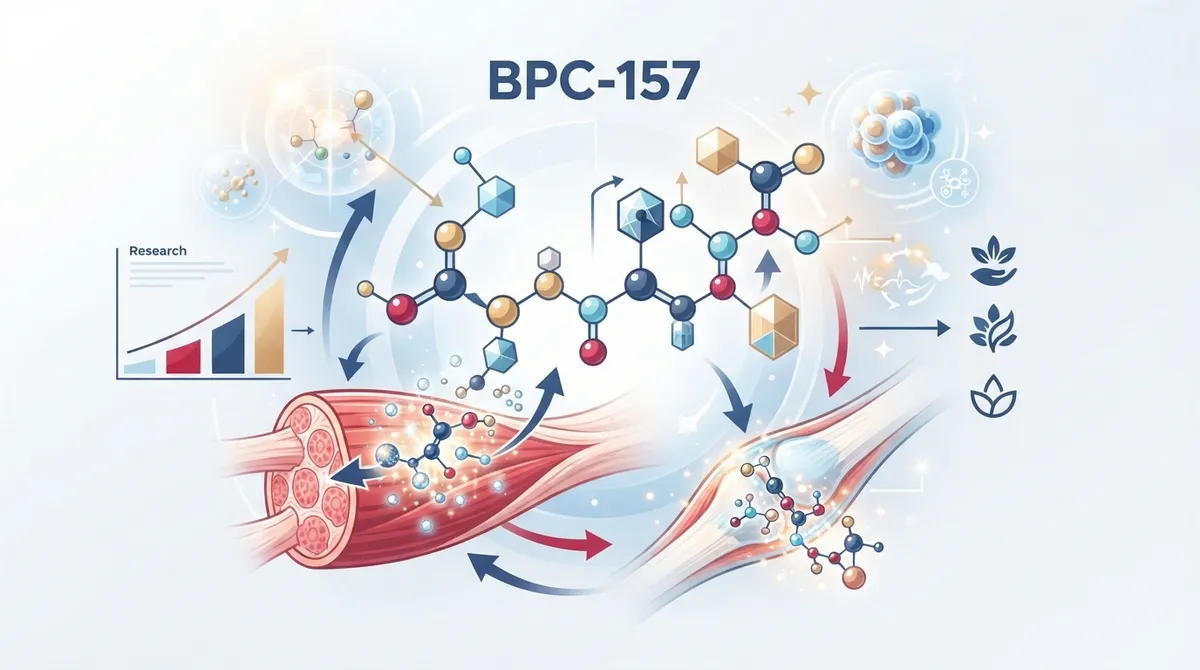
What Is BPC-157, and Why Is Everyone Talking About It?
BPC-157 is a lab-made peptide. It is a short chain of amino acids based on a protein found in stomach fluid. Social media, fitness forums, and some wellness sellers describe it as a tool for healing tendons, muscles, joints, and the gut.
Most of the excitement comes from animal and lab studies. Those studies are interesting, but they do not tell us how a person will respond. Animals and humans heal differently, and doses used in animal work do not translate neatly to people.
Before asking how long BPC-157 therapy takes, it helps to know where the compound stands today:
- BPC-157 is an experimental peptide, not an FDA-approved treatment.
- Strong human clinical trials are missing.
- The FDA has raised safety concerns about compounded versions of the peptide.
How Long Does BPC-157 Therapy Take? The Short Answer
No one can give you a reliable number. A 2025 narrative review found only three published human studies of BPC-157. They covered knee pain, interstitial cystitis, and an intravenous safety and pharmacokinetics study. All were small, early-stage investigations.
Because of this, the research does not define a standard dose, a best route, or a treatment course. It also does not tell us when a person should expect to feel a benefit. Anyone who quotes you a firm timeline, such as "results in two weeks" or "a six-week cycle," is going beyond the evidence.
Think of it this way. When a medication is approved, large trials show how long it takes to work and how long to use it. BPC-157 has not reached that stage.
What the Small Human Studies Actually Report
Some reported timeframes do exist. They are worth understanding, but they should not be treated as a promise. The table below summarizes what the limited human reports describe and why each has limits.
|
Study Focus |
What Was Reported |
Key Limitation |
|---|---|---|
|
Knee pain (injection into the joint) |
7 of 12 people receiving BPC-157 alone reported relief lasting 6 months to 1 year |
Small, uncontrolled, so it cannot show the peptide caused the relief |
|
Interstitial cystitis (bladder pain) |
Symptom improvement reported as early as 2 weeks |
Supporting data for this timing were not provided; evidence is preliminary |
|
Intravenous safety study |
Looked at safety and how the body processes the peptide |
Not designed to test healing or set a treatment length |
Notice what these reports measure. The knee study describes how long relief lasted for some people. It does not prove a healing timeline. The bladder study mentions early improvement, but it does not apply to tendon, muscle, or gut problems.
Why Small Reports Cannot Set a Timeline
Small studies without a comparison group have a few built-in problems:
- People often feel better over time on their own, so improvement may not come from the peptide.
- The placebo effect can be strong, especially with pain.
- A handful of participants cannot represent the wider population.
- Different doses and routes make results hard to compare.
For these reasons, clinicians treat such reports as a reason to study further, not as a basis for a treatment schedule.
What About Treatment Schedules You See Online?
You may find cycles such as "two to four weeks on, then a break." These come from forums, sellers, and anecdotes. They are not validated schedules.
FDA briefing materials do describe short exposure periods in small studies. For example, rectal enema use was given once daily for 8 days in 24 healthy subjects and once daily for 2 weeks in about 26 people with ulcerative colitis. A registered phase 1 oral study planned dosing every 8 hours for 2 weeks, but no posted results or published study were identified.
These details describe how researchers tested the compound in narrow settings. They are not recommended courses for injury care or general wellness. Copying them at home would be a mistake.
Safety and Regulatory Concerns You Should Know
A timeline question is really a safety question too. How long you use something matters less if the product itself is uncertain. Here is what the FDA has flagged:
- Compounded BPC-157 may carry a risk of immune reactions.
- Peptide-related impurities are a possible problem in unregulated products.
- Available safety information is considered insufficient.
- The FDA has not established that BPC-157 is safe or effective for routine clinical use.
Products sold online as "research chemicals" add another layer of risk. Purity, dose accuracy, and sterility are often unverified. Injectable products bypass many of the body's natural defenses, so quality matters a great deal.
If you are curious about related topics, you can read our overview on BPC-157 facts every wellness patient should know and our guide to whether BPC-157 is safe.
Why Recovery Timelines Vary So Much Between People
Even with approved treatments, healing time is personal. Several factors shape how quickly an injury or symptom improves:
- Type of tissue: Muscle often heals faster than tendon or ligament, because it has more blood flow.
- Severity: A mild strain and a partial tear follow very different paths.
- Age and overall health: Sleep, nutrition, blood sugar, and hormones all affect repair.
- Activity level: Returning to training too soon can slow healing.
- Underlying conditions: Diabetes, inflammation, and poor circulation can extend recovery.
This is why a good clinician looks at the whole picture rather than relying on one product. A primary care visit can uncover the real reason healing is slow, such as a vitamin deficiency or a metabolic issue. Learn more about the primary care services that make this possible.
A Smarter Plan: What to Do Instead of Chasing a Timeline
If you want to recover well, a clear, step-by-step approach works better than guessing at a peptide cycle. Here is a simple path many patients follow:
- Get an accurate diagnosis. Pain in the knee, shoulder, or gut can have many causes. Treatment depends on knowing which one.
- Review your history and medications. Your clinician checks for risks, allergies, and interactions.
- Start with established care. This may include rest, guided movement, physical therapy, and proven medications when needed.
- Check the basics. Labs, sleep, nutrition, and hormone levels often explain slow recovery.
- Set follow-up points. A good plan includes check-ins so progress is measured, not guessed.
For injury recovery, options with stronger evidence include structured rehabilitation, load management, and addressing nutrition. For overall wellness, tools such as DNA gene testing and body composition analysis can help personalize your plan with real data.
Comparing BPC-157 With Evidence-Based Recovery Support
The table below shows how an experimental peptide compares with approaches that clinicians can describe with more confidence.
|
Approach |
Evidence Level |
Timeline Clarity |
Regulatory Status |
|---|---|---|---|
|
BPC-157 |
Very limited human data |
No established timeline |
Not FDA-approved |
|
Physical therapy and guided rehab |
Strong, widely studied |
Typically weeks to months, based on the injury |
Standard of care |
|
Nutrition and sleep optimization |
Well supported |
Gradual, measurable with follow-up |
Standard of care |
|
Lab testing for hormones and vitamins |
Well supported |
Results in days; plan adjusts over time |
Standard of care |
Notice that even proven care has ranges rather than guarantees. The difference is that those ranges come from large bodies of research and clinical experience.
Who Should Be Especially Careful?
Some people have extra reasons to avoid experimental peptides without medical guidance:
- People who are pregnant or breastfeeding
- Anyone with a history of cancer or a family history of cancer
- People with autoimmune conditions or allergies to peptides
- Competitive athletes who are subject to drug testing
- Anyone taking multiple medications
If you fall into any of these groups, talk with a clinician before trying any unapproved compound. Honest conversations about risk help you decide with clear eyes.
How InCare Approaches Recovery and Wellness
At InCare, our approach is built on prevention and whole-body optimization. We combine modern technology with medical expertise to find the cause of a problem, not just chase a symptom. Our team in Tampa and Riverview offers primary care, urgent care, and advanced wellness services under one roof.
If you are weighing peptide options, our team can explain what is known, what is not, and what regulated choices exist. You can also read about our approach to peptide therapy in Tampa and our related guide on how long peptides take to work. Patients can also see what others say by reading reviews: see what our InCare patients say on Google.
We also share health updates and clinic news on Instagram and Facebook, and you can follow short wellness tips on TikTok.
Questions to Ask Before Considering Any Peptide
Whether you are curious about BPC-157 or another compound, these questions protect you:
- Is this product FDA-approved for my condition?
- What human evidence supports it, and how strong is it?
- Who makes it, and how is purity tested?
- What are the known risks, and who should avoid it?
- How will we measure whether it is working?
- What is the plan if it does not help?
A trustworthy clinician will welcome these questions and answer them plainly. If a seller dodges them, that is a warning sign.
Conclusion: Plan for Evidence, Not Promises
So, how long does BPC-157 therapy take? Right now, no one can answer with confidence. Human studies are few, small, and early. Some people in small reports described relief lasting months, and one study noted possible improvement in two weeks, but none of this establishes a reliable timeline or proves the peptide works. Add the FDA's safety concerns about compounded products, and caution makes sense.
The better path is to find the real cause of your pain or slow recovery and treat it with proven tools. That means an accurate diagnosis, a clear plan, and regular follow-up. If you want a personalized recovery and wellness plan built on evidence, book your visit with InCare today, or contact our team with questions. We are here to help you heal safely and feel your best in 2026.
FAQs
Q: How long does BPC-157 take to work?
A: There is no established answer. Human research is too limited to say when, or whether, a person will notice a benefit. One small bladder-pain study reported improvement as early as two weeks, but those data were not fully supported and do not apply to other conditions.
Q: How long does a BPC-157 treatment course last?
A: No standard course has been proven in humans. Schedules found online come from anecdotes, not clinical trials. Short exposure periods in small FDA-described studies, such as 8 days or 2 weeks, were research settings and are not validated treatment plans.
Q: Is BPC-157 FDA-approved?
A: No. BPC-157 is an experimental peptide and is not FDA-approved. The FDA has raised safety concerns about compounded versions, including possible immune reactions and impurities, and has not established that it is safe or effective for routine use.
Q: What are safer alternatives for injury recovery?
A: Established options include an accurate diagnosis, guided physical therapy, load management, proper nutrition, sleep, and lab testing to find underlying issues. A primary care clinician can build a plan around the condition and measure progress with follow-up visits.