

Key Takeaways
- Plan for 30 to 60 minutes with your care team at the clinic; total time including check-in, paperwork, and lab work can be longer depending on your health history and complexity.
- Complete intake forms online before arrival and bring a current medication list to save 10+ minutes; preparation significantly reduces appointment length and improves efficiency.
- New patients and those with multiple health conditions, medications, or added testing will experience longer visits; call ahead to ask about expected duration and whether extra time is needed.
- An annual physical differs from a Medicare Annual Wellness Visit: physicals include hands-on exams while wellness visits are prevention-focused conversations without routine physical exams.
- Inform your clinic when booking if you want to address new symptoms or health problems during your physical, as combining preventive and problem-focused care requires separate time allocation.
- Write down questions ranked by importance and note recent health changes before your appointment to maximize visit efficiency and ensure all concerns are addressed.
You block off an hour on your calendar, then wonder if that is too much or too little. It is a fair question. Most people want to fit a checkup between work, school pickups, and everything else on the schedule. So how long does an annual physical take? In most primary care offices, the answer is about 30 to 60 minutes with the care team. The total time at the clinic can run longer once check-in, paperwork, and lab work are added.
The exact length depends on your health history, the clinic's process, and what you want to cover. A healthy 28-year-old with no medications will usually move faster than someone managing several conditions. In 2026, many clinics also use technology to make visits smoother and more useful.
This guide explains what fills the appointment, what can make it longer or shorter, and how to prepare. It also covers how a Medicare Annual Wellness Visit differs from a physical. You will leave knowing how much time to set aside and how to get the most from it.

How Long Does an Annual Physical Take?
The short answer: plan on 30 to 60 minutes. Cleveland Clinic describes a physical exam as taking about 30 minutes. Several primary care practices estimate 30 to 60 minutes. One health system gives an estimate of about 40 minutes, including check-in and time with the clinician.
Here is a quick look at how that time often breaks down:
|
Part of the Visit |
Typical Time |
|---|---|
|
Check-in and paperwork |
5 to 15 minutes |
|
Vital signs and intake with the nurse or medical assistant |
5 to 10 minutes |
|
Time with the clinician (history, exam, discussion) |
20 to 40 minutes |
|
Lab draw or screening tests, if ordered |
5 to 20 minutes |
Keep one point in mind. Appointment length is not always the same as total time at the clinic. Waiting, specimen collection, and extra services can stretch the visit. Ask your clinic what to expect before you book.
What Happens During an Annual Physical
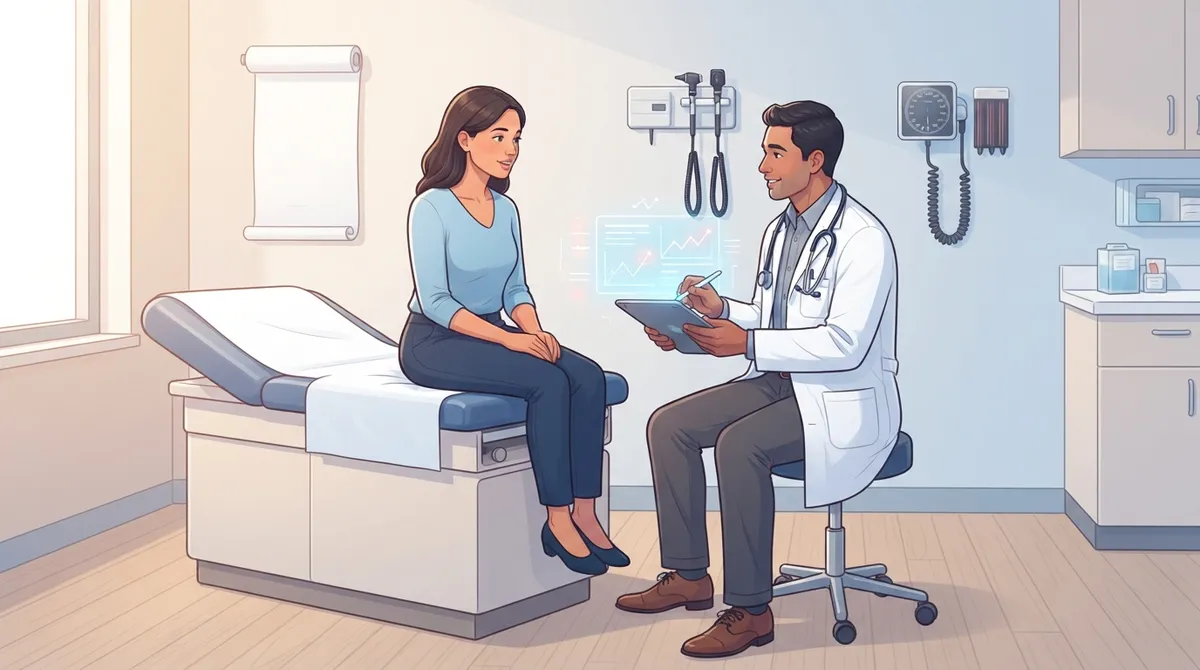
An annual physical is a prevention-focused visit. The goal is to catch small problems early, update your health plan, and answer your questions. Knowing the steps helps you see where the time goes. For a deeper walkthrough, read our guide on what happens during an annual physical exam.
1. Check-In and Intake
You confirm your insurance, update your contact details, and complete any forms. Many clinics let you fill out forms online ahead of time. That can save you 10 minutes or more.
2. Vital Signs
A nurse or medical assistant checks your blood pressure, heart rate, temperature, height, and weight. Some clinics also check oxygen levels.
3. Medical History and Medication Review
Your clinician asks about your health, family history, sleep, stress, diet, and activity. They also review your medications and supplements. This step takes longer if you take many prescriptions.
4. The Physical Exam
The clinician listens to your heart and lungs, checks your abdomen, and looks at your head, neck, skin, and reflexes. The hands-on exam is often shorter than people expect. It may take only 10 to 15 minutes.
5. Prevention and Screening Talk
This is where the visit becomes personal. You discuss vaccines, cancer screenings, cholesterol, blood sugar, and goals such as weight loss or better energy. The clinician may recommend age- and risk-appropriate screenings or tests.
What Can Make Your Physical Longer or Shorter
No two visits are identical. These factors shape the clock.
Factors That Add Time
- Several health concerns: Multiple questions need more discussion.
- Complex medical conditions: Conditions like diabetes, heart disease, or lung disease need closer review.
- Detailed medication review: More prescriptions mean more checks for safety and fit.
- Added testing: Lab work, imaging, or other screenings can extend the visit beyond the clinician's time.
- Care coordination: Referrals or records from other providers take extra effort.
- New patient status: A first visit often takes longer because the clinician builds your full history.
Factors That Save Time
- Completing forms online before you arrive
- Bringing a current medication list
- Having recent lab results on hand
- Writing down your questions in advance
- Being an established patient with a complete record
For context, a 2022 study found that the average primary care office visit lasted about 21 minutes across the studies it reviewed. That number covers all office visits, not annual physicals specifically. It shows why a preventive visit is usually booked longer than a routine problem visit.
Annual Physical vs. Medicare Annual Wellness Visit
Many adults confuse these two visits. They are not the same, and the difference affects how long you should plan to stay.
|
Feature |
Annual Physical |
Medicare Annual Wellness Visit |
|---|---|---|
|
Main purpose |
Head-to-toe check and health review |
Prevention planning and health-risk assessment |
|
Hands-on exam |
Usually yes |
Not a routine physical exam |
|
Typical focus |
Current health and screenings |
Personalized prevention plan |
|
Frequency |
Often yearly |
Covered once every 12 months for eligible beneficiaries |
Medicare describes its Annual Wellness Visit as a prevention-focused conversation to create or update a personalized prevention plan. It is not a routine physical exam. If you have a specific health problem, you may need a separate appointment. Seniors can learn more in our guide to Medicare wellness visit mistakes to avoid, or see what happens during an annual wellness visit.
Can You Discuss Health Problems at Your Physical?
Yes, but plan ahead. A preventive visit and a problem-focused visit are not the same. If you want to address new symptoms or ongoing conditions during your physical, tell the clinic when you book. Ask whether you need extra time or a separate appointment.
Combining preventive and problem-oriented care can change the visit's scope, length, and billing. A quick phone call can prevent a rushed visit. It also helps you avoid being told to come back for the issue that worries you most.
How InCare Makes Your Visit Efficient and Useful
Time matters, especially for busy professionals and parents. At InCare, we combine state-of-the-art technology with medical expertise so your visit is thorough without feeling drawn out. Our primary care team focuses on prevention and whole-body health, with locations in Tampa and Riverview, Florida, plus virtual options.
Because everything happens under one roof, you can often move from your exam to related services without extra trips. These can include cancer screenings, DNA gene testing, body composition analysis, and weight loss programs. That coordination saves time and gives your clinician a fuller picture of your health.
Our patients describe the experience in their own words. InCare holds a 4.8 out of 5 rating on Google, and you can read InCare reviews on Google to see what people say about the friendly staff and quality of care. Follow us on Instagram for health tips, or connect with us on Facebook and TikTok.
How to Prepare So Your Annual Physical Runs Smoothly
A little preparation can shorten your visit and improve it. Follow these steps.
- Call ahead. Ask how long to plan for and whether you need to fast or have labs drawn first.
- Gather your records. Bring your insurance card, photo ID, and any recent test results. Our guide on requesting medical records can help.
- List your medications. Include doses, vitamins, and supplements. See our tips on prescription management.
- Write down your questions. Rank them so the most important ones come first.
- Note changes in your health. Track new symptoms, sleep problems, mood changes, or weight shifts.
- Know your family history. Update any new diagnoses among close relatives.
- Arrive a few minutes early. This helps if you still need to finish forms.
For more ideas, see our article on getting the most out of your health screening.
Do You Need to Fast or Get Labs First?
It depends on what your clinician plans to check. Some blood tests, such as fasting glucose or a lipid panel, may require you to skip food and drinks other than water for several hours. Other tests do not. Always confirm with your clinic, because fasting rules vary by test.
If labs are drawn at your visit, add some time for the draw and for any waiting. If you complete labs before the appointment, your clinician can review the results with you in the same visit. That approach often makes the conversation richer and more efficient.
How Often Should You Get a Physical?
Many adults benefit from a yearly preventive visit. The right schedule depends on your age, health history, and risk factors. A healthy young adult may need fewer tests, while someone with a chronic condition may need closer follow-up. Your clinician can set a plan that fits you.
Regular visits also build a relationship with a doctor who knows you. That continuity helps your care team spot changes quickly. If you are not sure whether you need a regular provider, read do you need a PCP. You can also see why preventive health care supports a longer life.
Plan Your Next Physical With Confidence
So, how long does an annual physical take? Plan for 30 to 60 minutes with your care team, and add a little buffer for check-in and lab work. The visit may run longer if you have complex conditions, several concerns, or extra testing. It may run shorter if you come prepared.
Your annual physical is one of the best investments you can make in your long-term health. A little planning turns a quick visit into a meaningful one. Ready to get started? Book your annual physical with InCare today, or contact our team with questions about timing and preparation. We are here to make your visit simple, thorough, and worth your time.
FAQs
Q: How long does an annual physical take at a doctor's office?
A: Most annual physicals take about 30 to 60 minutes with the care team. Check-in, waiting, and lab work can extend your total time at the clinic. Your health history and any added tests also affect the length.
Q: Is an annual physical the same as a Medicare Annual Wellness Visit?
A: No. A physical usually includes a hands-on exam, while a Medicare Annual Wellness Visit is a prevention-focused conversation to build or update a personalized prevention plan. Medicare covers the wellness visit once every 12 months for eligible beneficiaries.
Q: Can I discuss health problems during my annual physical?
A: Yes, but let the clinic know when you book. New symptoms or ongoing conditions may need extra time or a separate problem-focused appointment. Asking ahead helps you avoid a rushed visit.
Q: Do I need to fast or get blood tests before an annual physical?
A: It depends on the tests your clinician plans to order. Some blood tests, such as a lipid panel or fasting glucose, may require fasting. Call your clinic ahead of time to confirm the preparation rules.
Q: What should I bring to an annual physical appointment?
A: Bring your insurance card, photo ID, a list of medications and supplements, and any recent test results. Also bring a list of questions and notes about changes in your health. These items help your visit run smoothly.


