
Key Takeaways
- KPV has zero identified human clinical trials and no FDA approval, making it fundamentally different from proven peptides like semaglutide and tirzepatide which have extensive human trial data and regulatory clearance.
- Animal and lab studies showing KPV's potential anti-inflammatory or gut-protective effects cannot be translated to humans without clinical trials; basic questions about safe dosing, absorption, and long-term effects remain completely unanswered.
- Before considering any peptide therapy, consult a licensed provider about your actual diagnosis and proven treatment options first, as unregulated peptide products carry real risks including contamination, infection, and unknown drug interactions.
- KPV ranks behind even other experimental peptides like BPC-157 and TB-500 in available evidence; unproven peptides should not replace established primary care treatments for inflammation or gut disorders.
Peptide therapy has become a hot topic in wellness circles across Tampa and Riverview. Patients ask about KPV, BPC-157, and other short protein chains almost every week. But not all peptides are created equal, and understanding the real differences matters for your health and your wallet. This guide breaks down how KPV stacks up against other peptides, using facts instead of hype, so you can make informed choices with your care team.
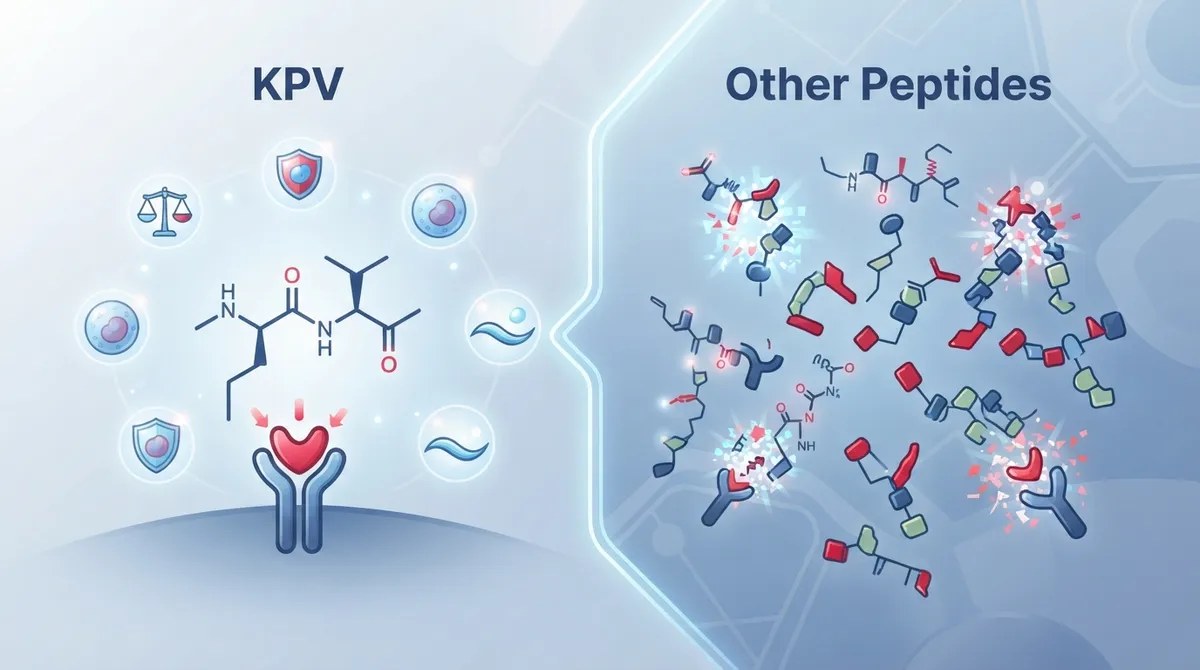
KPV is a tripeptide made of three amino acids: lysine, proline, and valine. It comes from a small piece of a larger hormone called alpha-melanocyte-stimulating hormone. Researchers have studied KPV mostly in cells and animals. They looked at whether it might calm inflammation, protect the gut lining, or fight bacteria. The problem is simple: none of this has been proven in people yet.
What Makes KPV Different from Other Peptides
KPV stands out for one big reason. According to FDA briefing material, no clinical studies or human-exposure data exist for KPV, whether given as a free base or as KPV acetate, no matter how it's administered. This means we don't know the right human dose. We don't know how it moves through the body. We don't know if it's safe long-term.
Compare that to peptides like semaglutide or tirzepatide. These have gone through large, randomized trials in real patients. The FDA reviewed years of data before approving them for specific uses. That's a completely different evidence standard than what exists for KPV.
Here's a simple breakdown of where KPV fits compared to other peptides discussed in wellness settings:
|
Peptide |
Human Clinical Trials |
FDA Approval Status |
Typical Evidence Source |
|---|---|---|---|
|
KPV |
None identified |
Not approved |
Cell and animal studies only |
|
BPC-157 |
Very limited early data |
Not approved |
Mostly animal studies, some early human reports |
|
TB-500 / Thymosin Beta-4 |
Very limited |
Not approved |
Preclinical and lab research |
|
Semaglutide |
Multiple large randomized trials |
FDA approved for specific indications |
Peer-reviewed human clinical trials |
|
Tirzepatide |
Multiple large randomized trials |
FDA approved for specific indications |
Peer-reviewed human clinical trials |
This table shows why lumping all peptides together is a mistake. Some, like semaglutide, have strong human evidence behind them. Others, like KPV, are still purely experimental. If you're exploring peptide therapy in Tampa, this distinction should guide your conversation with a provider.

Why the Lack of Human Data Matters
You might wonder why animal studies aren't good enough. Here's the thing: what works in a mouse doesn't always work the same way in a person. Body size, metabolism, and biology differ a lot between species.
Without human trials, we can't answer basic questions such as:
- What dose actually works without causing harm?
- How does the body absorb and break down the peptide?
- Are there dangerous drug interactions?
- What happens with long-term use over months or years?
- Do injectable, oral, nasal, or topical forms behave the same way?
None of these questions have solid answers for KPV right now. This is very different from established treatments used in primary care, where dosing and safety profiles are backed by years of research.
KPV Compared to BPC-157 and TB-500
People often mention KPV alongside BPC-157 and TB-500 in wellness discussions. All three are experimental peptides. None have FDA approval for routine treatment. But their evidence levels aren't identical.
BPC-157 has some very early human reports, though still limited and not from large controlled trials. TB-500, also known as thymosin beta-4, has mostly animal and lab data too. KPV, based on the FDA review cited in current research, has no identified human clinical evidence at all. This puts KPV a step behind even these other unproven peptides in terms of documented human experience.
If you're comparing options, it helps to think of these peptides as different stages of early research rather than proven therapies ready for everyday use. Our team at InCare can walk you through what the science actually shows before you consider any peptide option. You can get in touch with our team to ask specific questions about your situation.
How KPV Compares to GLP-1 Peptides Like Semaglutide
Some people confuse all peptides as being similar in safety and effectiveness. This is a mistake. GLP-1 receptor agonists such as semaglutide and tirzepatide are also peptides. But they've been tested in large human trials for weight loss and diabetes care.
These medications went through years of regulatory review. Doctors know the correct doses. They know the common side effects. They know how these drugs interact with other medications. None of this applies to KPV. You can learn more about how these evidence-based options work in our guide on medical weight loss programs at InCare.
Can KPV Treat Inflammation or Gut Problems?
Marketing materials sometimes claim KPV helps with inflammation, leaky gut, or inflammatory bowel disease. These claims come from lab and animal studies, not from tested human results. The FDA briefing material found no clinical studies proving these effects in people.
This doesn't mean KPV has zero potential. It means the science isn't there yet. Patients dealing with real gut or inflammation issues need proven care, not products marketed as instant fixes. A visit with your primary care physician can help identify the actual cause of your symptoms and the right treatment path.
Steps to Take Before Considering KPV or Similar Peptides
- Talk to a licensed medical provider about your actual diagnosis first.
- Ask if there are proven, guideline-supported treatments for your condition.
- Request clear information on what human data exists for any peptide you're considering.
- Understand that products sold online as "research peptides" are not medical treatments.
- Discuss possible risks, including contamination, infection, and unknown interactions.
- Review your full health history with your doctor before starting anything new.
Following these steps helps protect your health and your wallet. It also keeps you from relying on unproven products when real solutions may already exist.
Risks to Understand Before Trying Unproven Peptides
Because human safety data is missing for KPV, doctors cannot give you a reliable risk profile. Still, some general risks apply to unregulated peptide products:
- Product contamination or incorrect labeling from unregulated sellers
- Infection risk from improper injection technique
- Unknown immune system reactions
- Possible drug interactions that haven't been studied
- Unrecognized effects on organs or reproductive health
These risks are real even if rare. Working with a licensed clinic that reviews your diagnosis first is always safer than buying products online without medical guidance. Our providers, including Dr. Pramjeet Ahluwalia and Dr. Teshy John, focus on evidence-based care rather than unproven trends.
Why Primary Care Should Guide Your Peptide Questions
It's easy to get peptide information from social media or wellness blogs. But your primary care doctor knows your full health picture. They can tell you honestly what's proven and what's still experimental.
At InCare, we believe in whole-body optimization built on real science. Whether you're curious about DNA gene testing, body composition analysis, or peptide therapy, our approach starts with your actual health data, not marketing claims. We serve patients across Tampa and Riverview with the same commitment to careful, personalized care.
Many of our patients also explore complementary services like IV hydration and vitamin drips or cancer screenings as part of a broader prevention strategy. These services have far more established safety and effectiveness data than experimental peptides like KPV.
What This Means for Riverview and Tampa Patients
If you live near our Riverview location and you're curious about peptide therapy, the smartest first step is a conversation with a provider who knows the current research. The same goes for our Tampa clinic. Our team stays updated on FDA guidance and clinical evidence so you don't have to sort through confusing online claims alone.
You can also see what real patients say about their experience with our care team. Many share their stories on our social channels, including Facebook and Instagram. We also post educational wellness content on TikTok to help patients separate fact from fiction.
For those wanting to check patient feedback before scheduling, you can also visit us on Google — InCare to read reviews from people who have used our primary care and wellness services.
Making an Informed Decision About Peptide Therapy
The bottom line is straightforward. KPV remains an unproven peptide with no identified human clinical trials. Other peptides discussed alongside it, like BPC-157 and TB-500, also lack FDA approval, though they have slightly more early human information. FDA-approved peptide medications like semaglutide and tirzepatide sit in a completely different category, backed by extensive human trials and regulatory review.
Before trying any peptide product, talk with a qualified provider about your specific health goals and concerns. Our team of providers is ready to review your health history and guide you toward options supported by real evidence.
Ready to talk with a provider about your wellness goals? Book your appointment today and get answers grounded in real science, not marketing hype.
FAQs
Q: What is KPV peptide, and what is it supposed to do?
A: KPV is a short tripeptide made of three amino acids: lysine, proline, and valine. It comes from a piece of a natural hormone and has been studied in labs and animals for possible anti-inflammatory, gut-protective, and antimicrobial effects. However, none of these effects have been confirmed in human clinical trials.
Q: Is KPV FDA approved or legal to use in the United States?
A: KPV is not FDA approved and is not a component of any approved drug. FDA briefing material confirmed no applicable drug-substance monograph exists for KPV, meaning it has not gone through the regulatory review required for approved medications.
Q: How does KPV compare with BPC-157 and TB-500?
A: All three peptides lack FDA approval for routine treatment, but their evidence isn't identical. BPC-157 has some very limited early human data, while KPV has no identified human clinical evidence according to current FDA review materials. TB-500 also relies mainly on animal and lab research.
Q: How does KPV compare with GLP-1 peptides such as semaglutide or tirzepatide?
A: Semaglutide and tirzepatide have been tested in multiple large randomized human trials and received FDA approval for specific health conditions. KPV has no equivalent human trial data, making it a very different category of peptide with far less established safety and effectiveness information.
Q: What are the known side effects and risks of KPV peptide?
A: Because human safety data doesn't exist, doctors cannot give a reliable list of side effects for KPV. General risks with unregulated peptide products include contamination, injection site infection, unknown immune reactions, and possible interactions with other medications or health conditions.