Key Takeaways
- Ipamorelin activates the GHSR-1a receptor to stimulate the pituitary gland to release stored growth hormone in short pulses (peaking 40-60 minutes after administration), rather than supplying GH directly like hormone replacement therapy.
- Ipamorelin is not FDA-approved for wellness, anti-aging, weight loss, or muscle gain; the FDA has flagged safety concerns about compounded ipamorelin including immunogenicity risks and insufficient safety data for certain injectable routes.
- A 2014 phase 2 clinical trial of intravenous ipamorelin for postoperative ileus failed to meet its primary efficacy endpoints, demonstrating that a plausible biological mechanism does not guarantee proven clinical health benefits.
- Current clinical evidence for ipamorelin's specific wellness claims—weight loss, muscle gain, faster recovery, and anti-aging—remains limited despite widespread online marketing of these benefits.
- The ghrelin receptor that ipamorelin targets influences appetite and metabolism pathways, but this connection to weight management outcomes has not been firmly established in controlled human studies focused on weight loss.
- Before considering ipamorelin therapy, consult a licensed provider about your health history, FDA approval status, known risks, monitoring requirements, and evidence-based alternatives that may achieve your wellness goals with less risk.
Ipamorelin has become a buzzword in wellness circles across Tampa and Riverview. Many patients ask their primary care provider about it after seeing claims online about muscle growth, anti-aging, and better sleep. But before considering any peptide, it helps to understand what ipamorelin actually does inside the body. This article breaks down the ipamorelin mechanism of action in plain language, backed by current research and FDA guidance, so you can make an informed decision with your doctor.
At InCare, our providers believe patients deserve clear, honest information rather than marketing hype. Understanding how a compound works in your body is the first step toward safe, evidence-based care. Whether you are a busy parent researching wellness trends or someone exploring peptide therapy in Tampa, this guide covers the science, the limits of current evidence, and the safety concerns you should know before moving forward.
What Is Ipamorelin and How Was It Developed
Ipamorelin is a synthetic pentapeptide. That means it is a small chain of five amino acids built in a lab. Scientists designed it as a growth-hormone secretagogue, a substance meant to trigger the body's own release of growth hormone (GH).
Ipamorelin was created to be more selective than earlier compounds in its class. Early studies suggested it caused less disruption to other hormones like cortisol and prolactin compared to older secretagogues. However, this early selectivity data does not equal proven long-term safety or effectiveness for weight loss, muscle building, or anti-aging goals.
The Core Ipamorelin Mechanism of Action
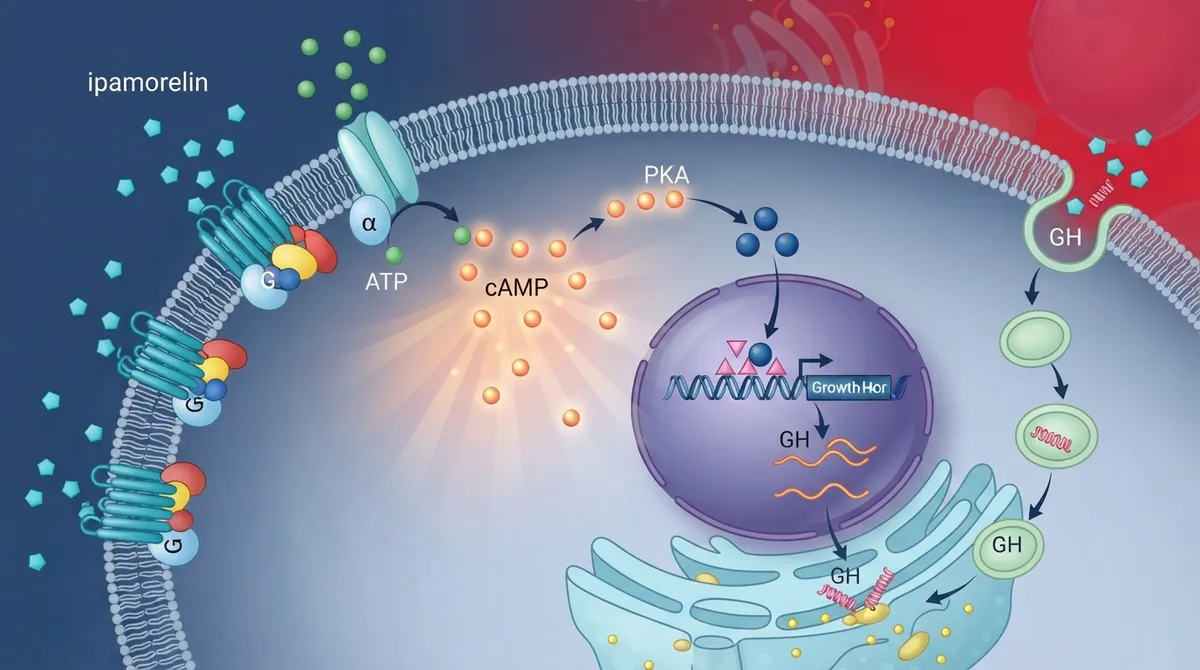
Understanding the ipamorelin mechanism of action starts with a receptor called GHSR-1a, also known as the ghrelin receptor. This receptor sits in the hypothalamic-pituitary system, a control center in your brain that manages many hormone functions.
Here is how the process is believed to work, step by step:
- Ipamorelin enters the bloodstream and travels to receptors in the pituitary gland.
- It binds to and activates the GHSR-1a receptor, the same receptor that ghrelin (the "hunger hormone") normally activates.
- This activation signals the pituitary gland to release stored growth hormone into the bloodstream.
- The body experiences a short, pulse-like rise in GH levels rather than a steady, sustained increase.
This is a key difference from taking growth hormone directly. Ipamorelin does not supply GH to your body. Instead, it prompts your own pituitary gland to release GH that is already stored there. This distinction matters because it changes how the body responds and how long the effects may last.
Why the GHSR-1a Receptor Matters
The ghrelin receptor does more than manage hunger signals. It also plays a role in metabolic and appetite-related pathways. Some researchers believe ipamorelin's action on this receptor may influence appetite or metabolism, though this connection is not fully proven in humans.
A GH response alone does not confirm that a person will lose weight, build muscle, or slow aging. These are separate outcomes that require their own dedicated research, and right now, that evidence is limited.
How Fast Does Ipamorelin Raise Growth Hormone Levels
One phase I human pharmacology study found that GH levels peaked roughly 40 to 60 minutes after ipamorelin was administered. This timing can vary based on the study, the dose, and the route of administration.
It is important to understand that this is a single study's observation. It does not guarantee the same response in every person or every clinical setting. The GH pulse described in this research is short-lived, not a constant elevation throughout the day.
Ipamorelin vs. Other Growth Hormone Approaches
The table below compares different approaches related to growth hormone regulation, based on general mechanism differences rather than approved treatment recommendations.
|
Approach |
How It Works |
FDA Approval Status for Wellness |
|---|---|---|
|
Direct GH supplementation |
Supplies growth hormone directly to the bloodstream |
Approved only for specific diagnosed medical conditions |
|
Ipamorelin (GH secretagogue) |
Stimulates the pituitary to release the body's own stored GH |
Not FDA-approved for wellness, anti-aging, or body composition use |
|
Lifestyle-based support |
Sleep, exercise, and nutrition support natural GH release |
Not a drug; supported by general wellness guidance |
What the Clinical Research Actually Shows
Much of the public interest in ipamorelin centers on wellness claims: weight loss, muscle gain, faster recovery, and anti-aging benefits. The clinical evidence for these specific outcomes remains limited.
One of the more notable human trials involved intravenous ipamorelin for postoperative ileus, a condition where bowel function slows after surgery. This was not a wellness study. It was investigating a specific medical problem.
- The 2014 phase 2 trial enrolled 114 participants in its modified intent-to-treat analysis.
- Intravenous ipamorelin did not significantly improve the primary or secondary efficacy endpoints compared to placebo.
- This result highlights an important lesson: a plausible mechanism of action does not always translate into a proven clinical benefit.
This distinction is central to how InCare's providers approach patient education. Understanding how something works biologically is only the first step. Confirming that it actually delivers a specific health outcome requires rigorous, well-designed studies.
FDA Safety Concerns With Compounded Ipamorelin
Ipamorelin is not FDA-approved for growth hormone deficiency, anti-aging, weight management, or any other wellness use. This is an important point for anyone considering it through a compounding pharmacy.
The FDA has flagged several safety concerns related to compounded ipamorelin acetate, including:
- Possible immunogenicity risks from peptide aggregation or impurities during compounding.
- Serious adverse events, including deaths, reported in an intravenous gastric-motility study.
- Insufficient safety information to support certain injectable routes of administration.
- Placement in Category 2 for 503B outsourcing-facility compounding, reflecting the agency's caution around this substance.
FDA compounding policies can change over time, so anyone considering this substance should review current FDA materials and speak with a licensed medical provider before proceeding.
Why the Appetite and Metabolic Connection Is Still Unclear
Because ipamorelin acts on the same receptor as ghrelin, some assume it must strongly affect hunger or metabolism. This connection is plausible based on the receptor's biology, but it has not been firmly established in controlled human studies focused on weight outcomes.
Patients exploring weight management should understand that a GH-related mechanism is not the same as a proven weight-loss tool. If you are looking for evidence-based weight support, InCare's medical weight loss programs use approaches with more established clinical backing.
How Primary Care Providers Approach Peptide Questions
When patients bring up ipamorelin or similar peptides during a visit, primary care providers typically walk through several considerations:
- Reviewing the patient's current health history and medications for potential interactions.
- Explaining the difference between a proposed mechanism and proven clinical outcomes.
- Discussing FDA approval status and any relevant safety warnings.
- Identifying safer, evidence-based alternatives that address the patient's actual health goal.
- Recommending appropriate lab work or screenings before considering any hormone-related therapy.
This structured approach protects patients from making decisions based on incomplete information. It also reflects the broader philosophy behind comprehensive primary care, where prevention and whole-body health take priority over quick fixes.
Questions to Ask Before Considering Any Peptide Therapy
If you are researching ipamorelin or any similar compound, bring these questions to your next appointment:
- What specific health outcome am I hoping to achieve, and is there stronger evidence for another approach?
- Is this compound FDA-approved for my situation, or is it being used off-label?
- What are the known risks, including the FDA's compounding safety concerns?
- How will my provider monitor my labs and symptoms if I proceed?
- Are there lifestyle changes that could achieve similar goals with less risk?
These questions help separate marketing claims from medically sound decisions. A trustworthy clinic will welcome this kind of scrutiny rather than avoid it.
Why Whole-Body Wellness Matters More Than a Single Compound
Many patients who ask about ipamorelin are really looking for more energy, better sleep, improved body composition, or a general sense of feeling younger. These are valid goals, but a single peptide is rarely the full answer.
InCare's approach to wellness looks at the whole picture, including nutrition, hormone balance, sleep quality, and metabolic health. Services like DNA gene testing, body composition analysis, and metabolic breath analysis give a clearer, more personalized picture than any single peptide could offer on its own.
For patients in the Tampa Bay area, our Tampa and Riverview locations offer in-person consultations where these tools come together into one coordinated wellness plan. You can also see what current patients say about their experience by visiting our InCare location on Google.
Staying Informed With Credible Sources
Peptide research changes quickly, and not every online source reflects the most current science. The FDA regularly updates its guidance on substances that may present significant safety risks in compounding, and this is a valuable resource for anyone considering ipamorelin therapy.
Peer-reviewed journals also track emerging research on performance-enhancing peptides, including detailed reviews of how these compounds work and where evidence gaps remain. Staying informed through credible channels, rather than social media trends, protects your health and your wallet.
You can also follow InCare's ongoing wellness education on Facebook, Instagram, and TikTok, where our team shares updates on primary care topics, wellness trends, and safety alerts relevant to Tampa Bay patients.
Making a Safe, Informed Decision
The ipamorelin mechanism of action is genuinely interesting from a scientific standpoint. It offers a window into how the body regulates growth hormone through receptor signaling. But interesting biology does not automatically mean a safe or effective wellness treatment.
Before considering ipamorelin or any peptide therapy, talk with a licensed provider who can review your full health picture. This includes your medical history, current medications, and specific wellness goals. A qualified provider can help you understand realistic expectations and potential risks.
If you have questions about peptide therapy, hormone health, or building a personalized wellness plan, our team is ready to help. Reach out to InCare today to schedule a consultation, or book your appointment online to start your wellness journey with a provider who prioritizes your safety first.
FAQs
Q: How does ipamorelin work in the body?
A: Ipamorelin activates the GHSR-1a ghrelin receptor in the pituitary gland, which signals the body to release its own stored growth hormone. It does not supply growth hormone directly; instead, it prompts a short-lived, natural GH pulse.
Q: Does ipamorelin increase growth hormone or provide it directly?
A: Ipamorelin stimulates the pituitary gland to release endogenous growth hormone rather than supplying GH itself. This makes its mechanism fundamentally different from direct growth hormone therapy.
Q: How quickly does ipamorelin raise growth hormone levels?
A: One phase I study found peak GH levels roughly 40 to 60 minutes after administration. This timing can vary by dose, route, and individual, and it does not guarantee the same effect for every patient.
Q: Is ipamorelin FDA-approved for wellness or anti-aging use?
A: No. Ipamorelin is not FDA-approved for growth hormone deficiency, anti-aging, body composition, or other wellness purposes. The FDA has also raised safety concerns about compounded ipamorelin acetate.
Q: What clinical evidence supports ipamorelin for weight loss or muscle gain?
A: Current evidence for these specific wellness outcomes is limited. A 2014 phase 2 trial testing intravenous ipamorelin for postoperative ileus did not meet its primary efficacy endpoint, showing that a plausible mechanism does not guarantee clinical benefit.