Key Takeaways
- GHK-Cu is a naturally occurring copper-binding peptide that stimulates fibroblasts to produce collagen and elastin, but most evidence comes from laboratory studies with limited human clinical trials.
- Injectable GHK-Cu products are not FDA-approved and lack standardized sterility, purity, and dosing protocols, requiring consultation with qualified clinicians before use.
- Topical GHK-Cu shows modest potential for skin texture and wrinkles through collagen support, but evidence remains weaker than established treatments like retinoids and sunscreen.
- GHK-Cu appears to work through multiple mechanisms including anti-inflammatory activity, antioxidant enzyme activation, and extracellular matrix remodeling in wound healing models.
- Laboratory findings of effects on thousands of genes do not automatically translate to proven health benefits; gene expression changes require confirmation through large human clinical trials.
- Working with established healthcare providers ensures safe sourcing, realistic expectations, and monitoring for adverse reactions when exploring GHK-Cu or other peptide wellness options.
If you have spent time researching skin health or wellness peptides, you may have come across GHK-Cu. This copper-binding peptide has become a popular topic in dermatology and wellness circles. But what does the science actually say about how it works? Understanding the real mechanism behind GHK-Cu can help you make informed decisions about your skin and overall wellness goals, rather than relying on marketing claims alone.
At InCare, patients in Tampa and Riverview often ask about peptides, copper compounds, and other wellness trends they discover online. This guide breaks down the science behind GHK-Cu in simple terms, so you can separate proven facts from unproven promises. We will also look at where this peptide fits into a broader wellness picture, and why working with a qualified provider matters when exploring these options.
What Is GHK-Cu?
GHK-Cu, also called copper tripeptide-1, is a small protein made of three amino acids bound to copper. The three amino acids are glycine, histidine, and lysine. This combination occurs naturally in the human body, including in blood plasma, saliva, and urine.
Researchers first noticed GHK-Cu decades ago while studying human plasma. They found that levels of this peptide tend to drop as people age. This discovery led scientists to study whether restoring GHK-Cu levels topically could support skin health and healing.
Key Facts About GHK-Cu
- It is a naturally occurring peptide-copper complex found in human tissues and fluids.
- It has been studied mainly in laboratory and animal models, with limited human trials.
- Most credible evidence supports topical use for skin, not systemic or injectable use.
- It is not an FDA-approved drug for anti-aging, wound healing, or hair growth.
- Quality and purity vary widely between products, especially compounded or online sources.
How Does GHK-Cu Work on the Skin?
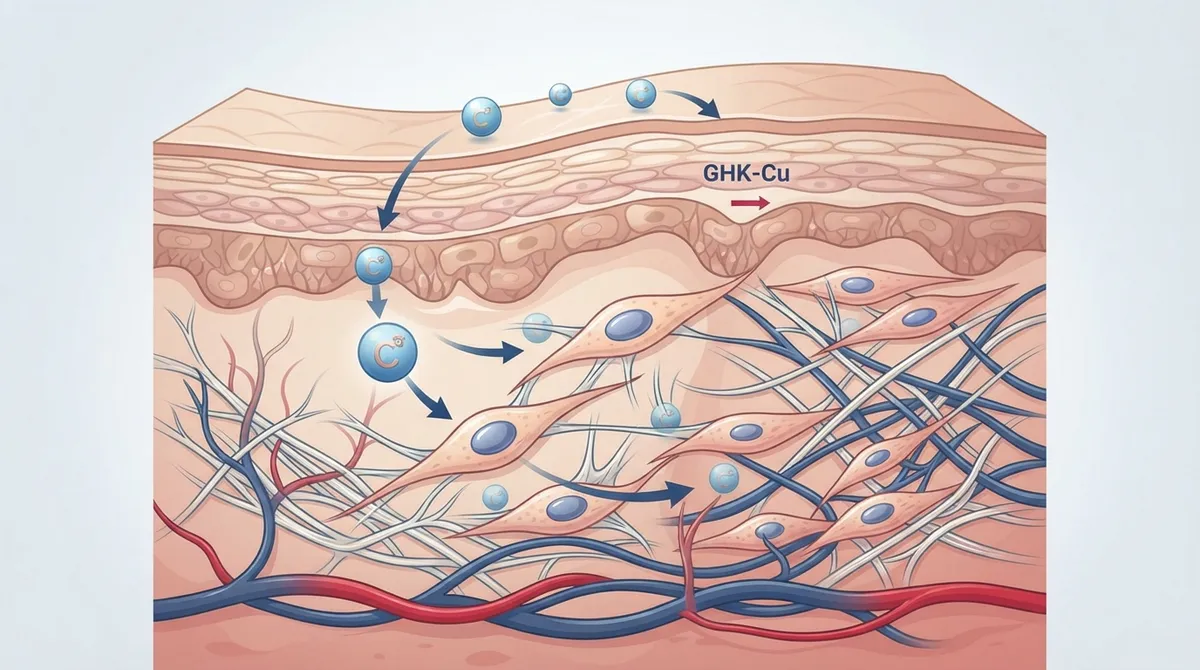
The proposed mechanism behind GHK-Cu is complex, and research is still ongoing. Scientists believe it works through several pathways in the skin's deeper layers.
1. Fibroblast Stimulation
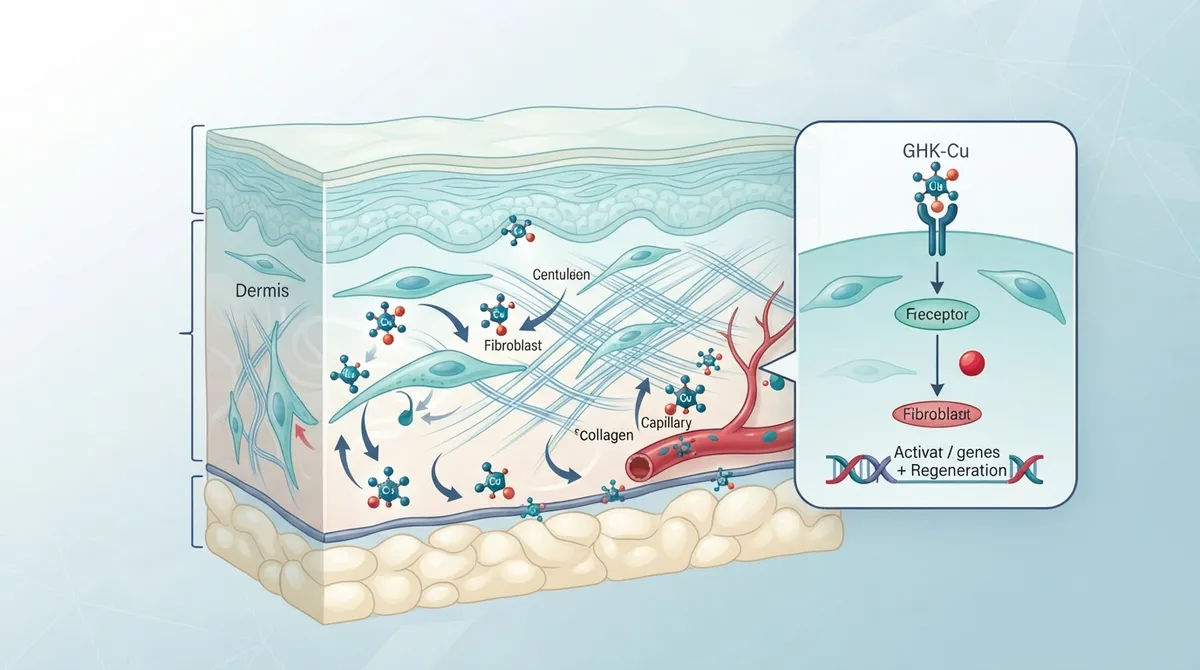
Fibroblasts are cells in the dermis that produce collagen and other supportive proteins. Laboratory studies suggest GHK-Cu may stimulate these cells, encouraging them to produce more collagen, elastin, and glycosaminoglycans.
2. Extracellular Matrix Support
The extracellular matrix is the scaffolding that holds skin cells together. GHK-Cu appears to help regulate this matrix, supporting decorin production and helping tissue remodel itself after damage.
3. Anti-Inflammatory Activity
Some laboratory research points to anti-inflammatory effects, including changes in inflammatory signaling pathways. This may explain why GHK-Cu has been studied for its potential role in calming irritated or damaged skin.
4. Antioxidant Enzyme Activity
Studies have also reported increased activity of antioxidant enzymes in tissue exposed to GHK-Cu. Antioxidants help protect cells from damage caused by unstable molecules called free radicals.
|
Proposed Mechanism |
What It May Do |
Evidence Level |
|---|---|---|
|
Fibroblast stimulation |
Support collagen and elastin production |
Preclinical, limited human data |
|
Matrix remodeling |
Regulate MMPs and TIMPs for tissue repair |
Preclinical |
|
Anti-inflammatory action |
Modulate inflammatory signaling |
Laboratory and animal studies |
|
Antioxidant support |
Increase activity of protective enzymes |
Laboratory studies |
|
Angiogenesis promotion |
Support new blood vessel formation in wounds |
Animal studies |
The Role of GHK-Cu in Wound Healing
Beyond skin appearance, GHK-Cu has also been studied for wound healing. Researchers believe it may attract immune and endothelial cells to injured tissue. This process can support angiogenesis, which is the formation of new blood vessels needed for healing.
GHK-Cu may also help with re-epithelialization, the process where skin cells migrate to cover a wound. Additionally, it appears to modulate matrix metalloproteinases, known as MMPs, along with their natural inhibitors TIMP-1 and TIMP-2. These enzymes control how tissue breaks down and rebuilds during healing.
However, it is important to understand that most of this wound-healing evidence comes from animal or laboratory models. Human clinical data remains limited, including studies involving diabetic foot ulcers. GHK-Cu should never replace proper medical evaluation for wounds related to infection, poor circulation, diabetes, or pressure injuries. If you have a nonhealing wound, a visit to urgent care or your primary care provider is essential.
Genetic and Cellular Research Findings
Some reviews have described GHK-Cu's potential influence on gene activity, with estimates suggesting effects on more than 4,000 human genes. While this sounds impressive, it is important to understand what this actually means.
- This research comes from cell culture and mechanistic studies, not large clinical trials.
- Gene expression changes do not automatically translate into proven health benefits.
- Much of this data explores biological pathways rather than measurable patient outcomes.
- More human research is needed before these findings can guide medical recommendations.
- Patients should view these statistics as interesting science, not clinical proof.
This distinction matters. Laboratory findings often generate exciting headlines, but they represent early-stage research rather than confirmed treatments.
Concentration and Dosing in Research
Experimental studies have examined GHK-Cu at very specific concentrations. Research by Maquart and colleagues, summarized in a 2015 review, found effects on collagen and glycosaminoglycan metabolism at roughly 1 to 10 nanomolar concentrations.
Other studies have reported activity starting at picomolar concentrations, with peak effects in the nanomolar range. These are extremely small measurements used in laboratory settings. They should never be interpreted as recommended doses for human use. Concentrations studied in a petri dish do not automatically apply to skincare products or injectable formulations.
Topical Use Versus Injectable Products
One of the most important distinctions in understanding GHK-Cu is the difference between topical and injectable use.
Topical Applications
Small human studies have looked at topical GHK-Cu for skin texture, elasticity, and wrinkle appearance. Some participants reported modest improvements. However, the overall evidence base remains smaller than that supporting established treatments like sunscreen and retinoids.
Injectable and Compounded Forms
Injectable GHK-Cu products are a different matter entirely. These are not FDA-approved, and their sterility, purity, and dosing can vary significantly depending on the source. A 2018 review noted that much of the wound-healing evidence for GHK-Cu came from animal models, not confirmed injectable protocols in humans.
Before considering any injectable peptide, it is essential to speak with a qualified clinician. Our peptide therapy team in Tampa can help you understand what is medically appropriate and what carries unnecessary risk.
Comparing GHK-Cu to Other Skin Ingredients
|
Ingredient |
FDA Status |
Evidence Strength |
Common Use |
|---|---|---|---|
|
GHK-Cu |
Not FDA-approved as a drug |
Preclinical, limited human data |
Topical cosmetic products |
|
Retinoids |
FDA-approved for several skin conditions |
Strong clinical evidence |
Anti-aging, acne treatment |
|
Sunscreen |
FDA-regulated |
Extensive clinical evidence |
Sun protection, aging prevention |
|
Copper supplements |
Regulated as dietary supplement |
Established for deficiency treatment |
Nutritional support |
Common Questions About GHK-Cu Effectiveness
Many patients want to know if GHK-Cu can address specific concerns like hair thinning, wrinkles, or scarring. Here is what the research currently supports.
Skin Texture and Wrinkles
Limited human studies suggest topical GHK-Cu may support collagen production, which could translate into modest improvements in skin texture. However, these findings are not as robust as those supporting retinoids or professional treatments.
Hair Growth
Some laboratory research has explored GHK-Cu's effect on hair follicles, but human evidence remains sparse. If hair thinning is a concern, exploring proven options through hair restoration services may offer more reliable results.
Wound Care
As discussed earlier, GHK-Cu shows promise in animal wound models. It should never replace evaluation of underlying causes like poor circulation or diabetes-related complications.
Why Medical Guidance Matters
The wellness industry moves quickly, and new peptides often gain popularity before enough human research exists. This is why working with an established primary care provider matters so much.
- A qualified provider can review your health history before recommending any peptide.
- Providers can help you avoid unregulated or poorly sourced injectable products.
- Medical guidance ensures you understand realistic expectations, not exaggerated claims.
- Your provider can suggest evidence-based alternatives when appropriate.
- Ongoing monitoring helps catch any adverse reactions early.
At InCare, our providers, including Dr. Pramjeet Ahluwalia and Dr. Naveen Paddu, take a thoughtful approach to wellness trends. We believe in combining innovation with sound medical judgment, so patients receive care that is both current and responsible.
Steps to Take Before Trying GHK-Cu
- Schedule a consultation with a licensed healthcare provider to discuss your skin or wellness goals.
- Ask about the evidence supporting any specific product or delivery method.
- Request information about product sourcing, purity testing, and manufacturing standards.
- Discuss your full medical history, including any allergies or sensitivities.
- Set realistic expectations based on current research, not marketing claims.
- Follow up with your provider to monitor results and any side effects.
This step-by-step approach helps protect your health while still allowing you to explore wellness options that interest you.
Where GHK-Cu Fits in a Broader Wellness Plan
Skin health and healing do not happen in isolation. Nutrition, hydration, sleep, and overall metabolic health all play a role. Many InCare patients pair their skin goals with services like IV hydration and vitamin drips or DNA gene testing to better understand their individual needs.
Whole-body wellness means looking at the full picture rather than chasing a single ingredient. Our team can help you build a plan that addresses skin concerns alongside your broader health goals, whether that includes weight management, hormone balance, or preventive screenings like cancer screenings.
You can also follow our latest wellness updates and patient education content on Facebook, Instagram, and TikTok, where we share evidence-based information about emerging wellness trends.
Choosing a Trusted Provider in Tampa and Riverview
Not every clinic offering peptide products has the same level of medical oversight. When considering something like GHK-Cu, it helps to work with a clinic that prioritizes safety, transparency, and evidence-based care.
InCare has built a reputation across Tampa and Riverview for combining advanced wellness services with genuine medical expertise. Patients consistently rate our clinics highly, and you can visit us on Google — InCare to read real patient experiences before your visit.
What Sets Our Approach Apart
- Providers who stay current on peptide research and regulatory guidance.
- Honest conversations about what is proven versus what remains experimental.
- A whole-body approach that connects skin health to overall wellness.
- Locations in both Tampa and Riverview for convenient access.
- Virtual consultation options for patients with busy schedules.
Final Thoughts on GHK-Cu
GHK-Cu is a fascinating example of how a naturally occurring compound can inspire years of scientific study. The laboratory research is genuinely interesting, showing potential effects on collagen production, wound healing, and antioxidant activity. However, human clinical evidence remains limited compared to established treatments.
If you are curious about GHK-Cu or other wellness trends, the safest first step is a conversation with a knowledgeable provider. Our team at InCare can help you separate solid science from marketing hype, so you make choices that truly support your health.
Ready to discuss your skin and wellness goals with our team? Reach out to our care coordinators today or schedule your appointment online to start building a personalized, evidence-based wellness plan.
FAQs
Q: What is GHK-Cu and what is it used for?
A: GHK-Cu, also known as copper tripeptide-1, is a naturally occurring peptide-copper complex found in human tissues and fluids. It is studied mainly for topical skin applications and wound healing support, though most evidence comes from laboratory and animal research rather than large human trials.
Q: How does GHK-Cu work on the skin and collagen?
A: GHK-Cu may stimulate dermal fibroblasts, cells responsible for producing collagen, elastin, and other supportive proteins. It also appears to help regulate the extracellular matrix, which supports overall tissue structure and remodeling in the skin.
Q: Is injectable GHK-Cu safe and FDA approved?
A: No FDA-approved indication exists for injectable GHK-Cu, and its sterility, purity, and dosing can vary depending on the source. Patients should always consult a qualified clinician before considering any injectable peptide product.
Q: Can GHK-Cu help wounds heal faster?
A: Animal and laboratory studies suggest GHK-Cu may support angiogenesis, re-epithelialization, and matrix remodeling during wound healing. However, human clinical evidence is limited, and it should not replace proper medical evaluation for nonhealing wounds.
Q: Is GHK-Cu effective for hair growth or hair loss?
A: Some early laboratory research has explored GHK-Cu's potential effect on hair follicles, but human evidence remains limited. Patients interested in proven hair loss solutions may benefit more from established hair restoration treatments.