Key Takeaways
- IV glutathione requires clinical oversight and carries serious risks including dosing errors, contamination, and allergic reactions when poorly compounded, making it unsafe for routine outpatient COVID-19 treatment.
- Only one small randomized trial supports IV glutathione for COVID-19, showing 37% reduced hospitalization risk, but this single study cannot outweigh decades of research backing FDA-approved antivirals like nirmatrelvir-ritonavir and remdesivir.
- Glutathione should never replace guideline-directed COVID-19 treatment; it may only serve as a possible adjunct discussed with your doctor, not a standalone therapy.
- Oral and liposomal glutathione have no standardized dosing, inconsistent absorption, and lack proven effectiveness for COVID-19, unlike prescription antivirals with established protocols.
- Before considering glutathione supplementation, patients taking Paxlovid, those with kidney/liver conditions, or anyone considering IV therapy must consult a doctor to check for medication interactions and safety.
- Follow evidence-based care first: get tested, contact your provider promptly, discuss approved antivirals if eligible, monitor oxygen levels, and seek emergency care for breathing difficulty, chest pain, or confusion.
When COVID-19 first swept through Florida communities, many patients started asking their doctors about antioxidants like glutathione. Search interest in glutathione for COVID has stayed strong ever since, especially among wellness-focused patients who want every possible edge against illness. But how does this antioxidant actually stack up against proven, guideline-based COVID-19 treatment? This question matters for anyone weighing wellness trends against medical evidence.
At InCare, patients in Tampa and Riverview often bring up glutathione during primary care visits and wellness consultations. This article compares what the science actually says about glutathione versus standard, guideline-directed COVID-19 care. We will look at the research, the risks, and where glutathione may fit into a broader wellness plan — without ever replacing proven medical treatment.

What Is Glutathione and Why Does It Matter for COVID-19?
Glutathione (GSH) is a natural antioxidant made by your own cells. It plays a role in fighting oxidative stress, supporting detox pathways, and helping regulate immune signals. Because severe COVID-19 can involve heavy oxidative stress, inflammation, and damage to blood vessels, researchers wondered if boosting glutathione might help the body fight back.
This idea is called biological plausibility. It means the theory makes sense on paper. But a theory is not the same as proof. Much of the current research on glutathione and COVID-19 relies on small studies, case reports, or mechanistic research rather than large, well-designed clinical trials.
The Body's Natural Antioxidant System
Your body uses glutathione to neutralize harmful molecules called free radicals. During serious infections, your antioxidant reserves can become depleted. This has led some clinicians to explore whether raising glutathione levels through IV therapy or supplements might ease symptoms during illness.
Glutathione vs. Standard COVID-19 Care: Head-to-Head Comparison
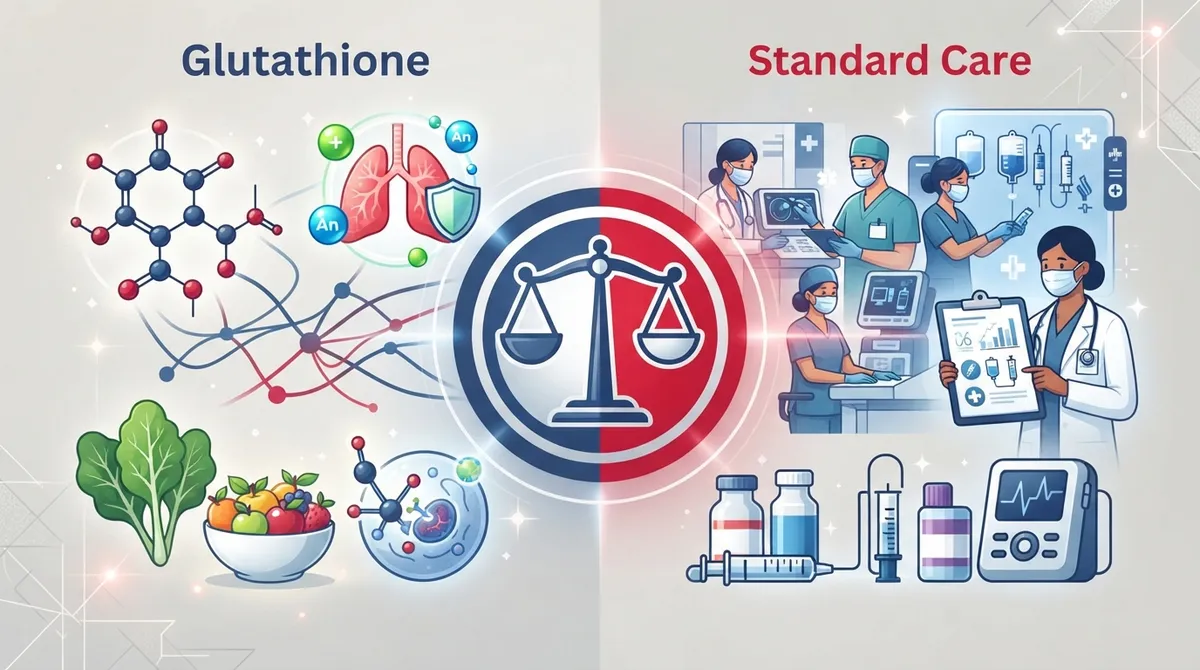
Here is how glutathione compares to the antiviral treatments recommended by national health authorities.
|
Factor |
Glutathione |
Standard Antiviral Care |
|---|---|---|
|
Evidence Level |
Small studies, case reports, reviews |
Large randomized clinical trials |
|
NIH Guideline Status |
Not recommended as standard care |
Preferred treatment for eligible patients |
|
Delivery Method |
Oral, liposomal, or IV (requires oversight) |
Oral pills or IV infusion under prescription |
|
Regulatory Approval |
Not FDA-approved for COVID-19 |
FDA-authorized or approved options available |
|
Role in Care Plan |
Possible adjunct, not a replacement |
First-line, evidence-based treatment |
The takeaway is simple. Glutathione may have a supportive role, but it should never replace guideline-directed treatment. The National Institutes of Health names ritonavir-boosted nirmatrelvir and intravenous remdesivir as preferred options for eligible high-risk patients, with molnupiravir as a backup choice.
What Does the Research Actually Show?
Let's break down the real data behind glutathione and COVID-19, without hype.
The Small IV Glutathione Study
A randomized, placebo-controlled study looked at intravenous glutathione as an add-on treatment for patients with moderate COVID-19 and respiratory distress. The results, published in the Journal of Advances in Medicine and Medical Research in 2022, were interesting but limited.
- Patients received a 7-day IV glutathione regimen alongside standard care.
- The glutathione group showed a 37% reduced risk of remaining hospitalized compared to placebo.
- Researchers reported the treatment was well tolerated during the study period.
- The study sample size was small, and follow-up time was short.
- Larger, independently repeated trials are needed before this becomes routine care.
This study offers a hopeful signal, not a final answer. One small trial cannot outweigh decades of research behind approved antiviral therapies.
The 2021 Review on Glutathione Deficiency
A widely cited 2021 review examined the idea that glutathione deficiency might worsen COVID-19 outcomes. The review proposed oral liposomal glutathione doses between 500 mg and 2,000 mg daily. However, the authors were clear: there was no agreed-upon dose, and the supporting evidence was mostly anecdotal.
Ongoing Clinical Trials
A registered study (NCT04703036) is testing glycine plus N-acetylcysteine (NAC), a glutathione precursor, against placebo. Researchers are measuring red blood cell glutathione levels at several time points. This kind of ongoing research reflects genuine scientific curiosity, not proof that glutathione treats COVID-19.
Oral vs. IV Glutathione: What's the Difference?
Patients often ask which form of glutathione might work best. Here is a simple breakdown.
- Oral or liposomal glutathione: Taken as capsules or liquid, absorption varies and doses are not standardized.
- N-acetylcysteine (NAC): A precursor that may help the body make more glutathione, but it is not the same as glutathione itself.
- Glycine plus NAC (GlyNAC): Studied in older adults for general antioxidant support, but not specifically proven for COVID-19.
- Intravenous glutathione: Requires clinical supervision and carries risks like dosing errors, contamination, and allergic reactions if not properly administered.
None of these formulations should be treated as interchangeable. Just because a precursor raises glutathione levels does not mean it improves COVID-19 outcomes. This is an important distinction for anyone considering IV hydration and vitamin drips as part of a wellness routine.
Why IV Glutathione Is Not a Routine Outpatient COVID Treatment
Some wellness clinics market IV glutathione as a quick fix for viral illness. This approach comes with real concerns.
Safety Considerations
Unapproved or poorly compounded injectable glutathione products can carry serious risks. These include:
- Dosing errors from inconsistent formulations
- Contamination risks in non-sterile settings
- Allergic reactions in sensitive patients
- Interactions with existing medications or health conditions
Because of these risks, IV glutathione requires proper clinical oversight. A qualified provider should review your kidney and liver function, current medications, and overall health history before considering any IV therapy.
Steps to Take If You Suspect COVID-19
Rather than turning to unproven remedies first, follow this sequence for safer, evidence-based care.
- Get tested to confirm your COVID-19 status as soon as symptoms appear.
- Contact a primary care provider promptly, especially if you are high-risk or have symptom onset within the treatment window.
- Discuss antiviral options like ritonavir-boosted nirmatrelvir or remdesivir if you qualify.
- Monitor your oxygen levels and watch for warning signs of worsening illness.
- Ask your provider about interactions between any supplements, including glutathione, and your current medications.
- Seek emergency care immediately if you experience difficulty breathing, chest pain, or confusion.
This approach keeps proven treatment at the center of your care plan while leaving room for supportive discussions about wellness strategies.
Who Should Talk to a Doctor Before Trying Glutathione?
Certain patients need extra caution before considering glutathione supplementation during or after COVID-19 illness.
- Patients taking Paxlovid or other prescribed antivirals
- Individuals with kidney or liver conditions
- People managing long COVID symptoms
- Patients with known allergies to sulfur-containing compounds
- Anyone considering IV therapy without a documented medical evaluation
A visit to a trusted provider can help sort out whether glutathione makes sense as part of a broader recovery plan, or whether it should be avoided altogether.
How InCare Approaches Wellness and Prevention
InCare takes a whole-body approach to health, blending traditional primary care with advanced wellness services. Patients in Tampa and Riverview can access cancer screenings, DNA gene testing, and body composition analysis alongside standard primary and urgent care.
When it comes to viral illness like COVID-19, InCare providers focus first on evidence-based treatment. This includes proper testing, antiviral evaluation when appropriate, and close monitoring of symptoms. Supplements and IV therapies may be discussed as supportive options, but never as a substitute for guideline-directed care.
Physicians such as those featured on the Naveen Paddu MD and Pramjeet Ahluwalia MD provider pages bring years of clinical experience to these conversations, helping patients separate wellness trends from proven medicine. You can also learn more about the practice on the About Us page.
Comparing Wellness Trends to Evidence-Based Medicine
It helps to see the bigger picture when weighing glutathione against standard care.
|
Consideration |
Wellness Trend Approach |
Evidence-Based Approach |
|---|---|---|
|
Basis for Use |
Anecdotal reports, theory-driven |
Peer-reviewed clinical trials |
|
Dosing Standard |
No consensus, varies widely |
Established, tested dosing protocols |
|
Regulatory Oversight |
Often minimal for supplements |
FDA-reviewed for approved therapies |
|
Risk of Delay |
May delay proper antiviral care |
Timely treatment reduces complications |
This comparison shows why glutathione should be viewed as a possible complement to care, discussed openly with your doctor, rather than a stand-alone treatment choice.
Practical Tips for Discussing Glutathione With Your Doctor
If you are curious about glutathione, come prepared for a productive conversation.
- List any current medications, including antivirals like Paxlovid.
- Share your kidney and liver health history.
- Mention any known allergies or past reactions to supplements.
- Ask about the specific formulation being considered, whether oral, liposomal, or IV.
- Request clarity on realistic expectations based on current evidence.
This kind of open dialogue helps your provider give tailored, safe advice rather than a one-size-fits-all answer.
Patients who want a deeper dive into general wellness testing can also explore metabolic breath analysis or read more about what happens during an annual wellness visit to understand how preventive care fits into the bigger picture.
Why Choose InCare for Primary Care and Wellness Guidance
InCare has built a strong reputation across Tampa and Riverview for combining modern technology with attentive, personalized care. Patients consistently mention the warm, responsive staff and thorough attention from physicians during visits. You can visit us on Google — InCare to see what real patients say about their experience.
InCare also stays active on social platforms, sharing wellness tips and clinic updates. Follow along on Facebook, Instagram, or TikTok for more health information you can trust.
Whether you are dealing with active COVID-19 symptoms, recovering from long COVID, or simply curious about antioxidant support, a conversation with a knowledgeable primary care team makes all the difference. Explore urgent care options if you need same-day evaluation, or check out locations to find the clinic nearest you.
Final Thoughts on Glutathione and COVID-19
Glutathione shows promise as a topic of ongoing research, but it is not a proven treatment for COVID-19. The strongest, most reliable path forward remains evidence-based antiviral therapy, oxygen monitoring, and prompt medical evaluation. Wellness-minded patients can still explore antioxidant support as part of a broader health plan, but only with proper medical guidance.
If you have questions about COVID-19 treatment options, antioxidant therapies, or general wellness planning, our team is ready to help. Reach out to our care team today or schedule your appointment now to start a conversation grounded in real science and personalized care.
FAQs
Q: Can glutathione treat or prevent COVID-19?
A: No, current evidence does not support glutathione as an effective standalone treatment or preventive measure for COVID-19. Most supporting research consists of small studies, case reports, and reviews rather than large, definitive clinical trials. It should only be considered as a possible adjunct alongside guideline-directed care.
Q: Is intravenous glutathione safe to use for COVID-19 symptoms?
A: IV glutathione requires clinical oversight and is not a routine outpatient treatment. Unapproved or poorly compounded products may carry risks like dosing errors, contamination, and allergic reactions. Always discuss IV therapy with a qualified provider before considering it.
Q: Can NAC raise glutathione levels and help with COVID-19?
A: NAC is a glutathione precursor and may help support natural glutathione production, but this does not prove it treats COVID-19. A registered clinical trial is currently studying NAC combined with glycine, though results are not yet conclusive.
Q: Is glutathione safe to take with Paxlovid or other COVID-19 medicines?
A: Patients should always discuss supplement use with their doctor before combining glutathione with prescribed antivirals like Paxlovid. Your provider can review potential interactions based on your health history and current medications.
Q: When should someone with COVID-19 seek urgent or emergency medical care?
A: Seek emergency care immediately if you experience difficulty breathing, chest pain, confusion, or bluish lips or face. These symptoms require prompt medical evaluation and should never be managed with supplements alone.