
Key Takeaways
- Semaglutide and tirzepatide are FDA-approved GLP-1 medicines, while 'peptide therapy' is a broad term covering products with very different evidence and approval status. Ask any clinic for the exact product name and FDA status.
- Compounded GLP-1 products are not FDA-approved and have not been reviewed for safety, effectiveness, or quality. The FDA has warned about dosing errors and adverse-event reports tied to them.
- Typical eligibility for FDA-labeled weight-management GLP-1 medicines is a BMI of 30 or higher, or 27 or higher with a weight-related condition. A clinician must confirm eligibility and screen for contraindications like thyroid cancer history or pregnancy.
- Avoid clinics that guarantee weight loss, prescribe without reviewing your history or labs, or lack ongoing follow-up. Quality care includes gradual dose increases and regular monitoring.
If you are searching for GLP-1 and peptide therapy in Tampa, you will find many clinics making big promises. Some of those promises are backed by strong science. Others are not. Knowing the difference is the first step toward safe, effective care.
GLP-1 medicines such as semaglutide and tirzepatide are FDA-approved options for chronic weight management and type 2 diabetes. Peptide therapy is a much broader term. It can describe products with very different evidence, uses, and regulatory status. A trustworthy Tampa provider should explain that distinction clearly.
This guide walks through what GLP-1 care involves, how it differs from peptide therapy, who may qualify, what the risks are, and how to choose a qualified clinic. It is written for busy adults, young families, and wellness-minded patients who want straight answers before they start treatment.

What GLP-1 Therapy Means in a Primary Care Setting
In a primary care and wellness clinic, GLP-1 therapy means clinician-supervised use of FDA-approved medicines. The two most common are semaglutide and tirzepatide. A prescriber uses them for eligible patients, alongside nutrition, activity, and ongoing follow-up.
These medicines are not interchangeable. Semaglutide acts on the GLP-1 receptor. Tirzepatide acts on both the GIP and GLP-1 receptors. Both are given by injection, and both are meant to be part of a larger care plan, not a stand-alone fix.
For a deeper look at how the two compare, see our guide to Tampa tirzepatide vs. semaglutide weight loss injections.
Brand Names You May Hear
The same active ingredients are sold under different brand names, depending on the use. This often confuses patients.
|
Active Ingredient |
Weight Management Brand |
Diabetes Brand |
Receptors Targeted |
|---|---|---|---|
|
Semaglutide |
Wegovy |
Ozempic |
GLP-1 |
|
Tirzepatide |
Zepbound |
Mounjaro |
GIP and GLP-1 |
Ask your clinician which product and indication apply to you. Labeling and coverage can differ by brand.
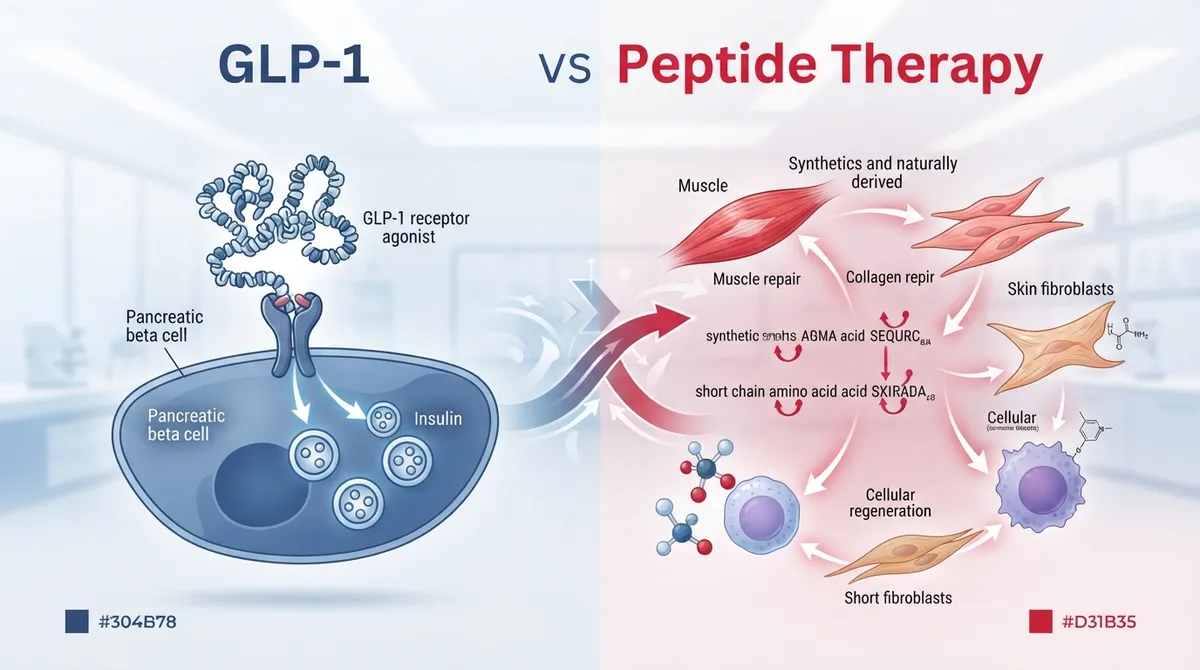
GLP-1 vs. Peptide Therapy: Not the Same Thing
Many Tampa clinics list GLP-1 and peptide therapy together. That is fine for marketing, but the two are not the same.
- GLP-1 medicines: A specific drug class with FDA-approved products, defined indications, and published safety data.
- Peptide therapy: A broad, non-standard term. It may refer to substances with very different evidence, approval status, and sourcing.
A peptide is simply a short chain of amino acids. Some peptide medicines are FDA-approved. Many products sold as wellness peptides are not. Before you accept any peptide, ask for its exact name, intended use, evidence, FDA status, source, risks, and monitoring plan.
Be cautious of claims that an unapproved peptide can reverse aging, build muscle, or treat disease. A responsible clinic will not promise results. To learn more about the topic, read what peptides are and how they relate to wellness.
Who May Qualify for GLP-1 Treatment
Eligibility starts with a medical evaluation. FDA labeling for chronic weight-management medicines generally uses these thresholds:
- A body mass index (BMI) of 30 or higher, or
- A BMI of 27 or higher with at least one weight-related condition, such as high blood pressure, type 2 diabetes, or high cholesterol.
These are general guides. Product labels and patient circumstances vary, so a clinician must confirm whether treatment is appropriate. Tools such as body composition analysis can add useful context beyond BMI alone.
Who Should Not Use These Medicines
Semaglutide and tirzepatide carry a boxed warning about thyroid C-cell tumors seen in rodents. They are not for people with a personal or family history of medullary thyroid carcinoma or MEN 2. Pregnancy, plans to become pregnant, breastfeeding, and severe gastrointestinal disease also require careful review. Always check the specific product label with your prescriber.
What a Responsible GLP-1 Program Looks Like
Good care is more than a prescription. A quality program in Tampa should follow a clear path.
- Medical evaluation. Your clinician reviews your health history, current medicines, weight-related conditions, and goals.
- Exam and labs. Relevant physical and laboratory review helps confirm safety and eligibility.
- Personalized plan. The plan includes medication, nutrition, physical activity, and realistic targets.
- Gradual dose changes. Doses are raised step by step to help limit side effects.
- Regular follow-up. Your care team tracks progress, side effects, and overall health over time.
This is how a medical weight loss program differs from quick-fix offers. It is also why many patients choose a primary care practice, where one team can manage weight, blood pressure, blood sugar, and preventive screenings together. Our article on what makes medical weight loss different from dieting explains this in more detail.
Side Effects and Warning Signs
Every medicine has risks. Knowing them ahead of time helps you act early.
Common Side Effects
The most common effects are digestive. They often appear during dose increases and may ease with time.
- Nausea and vomiting
- Diarrhea or constipation
- Abdominal discomfort
Serious Concerns
Less often, GLP-1 medicines are linked to more serious problems. These include pancreatitis, gallbladder problems, delayed stomach emptying, and dehydration that can lead to kidney injury. Seek medical attention if you have severe or lasting stomach pain, repeated vomiting, or signs of dehydration. If you have trouble managing nausea, our guide on managing semaglutide's gastrointestinal side effects offers practical tips.
Compounded GLP-1 Products: What to Know
This is one of the most important topics for Tampa patients. Compounded drugs are not FDA-approved. The FDA has not reviewed them for safety, effectiveness, or quality. A compounded product should never be described as equal to an approved medicine.
The FDA has warned about dosing errors, storage and handling problems, and adverse-event reports tied to compounded GLP-1 products. As of May 31, 2026, the agency's public page listed 990 adverse-event reports linked to compounded semaglutide and more than 730 tied to compounded tirzepatide. These are reports, not incidence rates, and may be underreported. Rules also change, so verify the current FDA guidance on unapproved GLP-1 drugs before you decide.
If a clinic offers a compounded product, ask these questions:
- Is there a documented, patient-specific medical need?
- Which pharmacy prepares it, and how is quality verified?
- How is the dose measured and stored?
- Why is an FDA-approved option not appropriate for me?
Cost is often a driver of this choice. Review what to expect for weight loss injection costs in 2026 so you can compare options with clear eyes.
How to Choose a GLP-1 and Peptide Provider in Tampa
Local clinic pages show that many Tampa-area providers advertise GLP-1 and peptide services. Those listings prove availability. They do not prove quality or results. Use this checklist to vet any clinic.
- Verify credentials. Confirm that a licensed physician or qualified clinician prescribes and supervises care. You can meet our providers to see what that looks like.
- Ask for the exact product. Get the drug name, FDA status, and source in writing.
- Expect a real evaluation. Be wary of clinics that prescribe without reviewing your history or labs.
- Look for follow-up. Ongoing monitoring is a sign of quality care.
- Avoid guarantees. No honest provider can promise a set amount of weight loss.
For peptides specifically, see our guide to what to look for in a peptide therapy clinic in Tampa and our overview of peptide therapy benefits and safety.
Why Primary Care Is a Smart Home for GLP-1 Care
GLP-1 medicines affect more than weight. They can interact with other medicines, change blood sugar, and influence blood pressure. That is why coordinated care matters. A primary care team sees the whole picture, from your cancer screenings to your chronic conditions.
InCare is a personalized healthcare clinic with locations in Tampa and Riverview, Florida. Our team combines medical expertise with technology such as metabolic breath analysis, body composition scanning, and DNA gene testing to build plans around the individual. We focus on prevention and whole-body optimization, not one-size-fits-all injections. Patients can also learn how we approach peptide therapy in Tampa.
Our practice holds a 4.8 out of 5 rating on Google across 359 reviews. See what patients say when you visit us on Google. You can also follow our health tips on Instagram, connect with us on Facebook, or watch short videos on TikTok.
Realistic Expectations
GLP-1 medicines can be a powerful tool when used correctly. They work best alongside better nutrition, regular movement, sleep, and stress care. Results vary from person to person. Some patients lose weight steadily. Others see slower change or stop due to side effects.
It is also wise to plan for the long term. Weight can return if treatment stops without a maintenance plan. Talk with your clinician early about how to sustain progress.
Take the Next Step
GLP-1 and peptide therapy in Tampa can be safe and useful when guided by a qualified clinician who explains the evidence, the risks, and the exact product. Start with a medical evaluation, ask direct questions, and choose a team that offers real follow-up.
Ready to talk with a care team that puts your whole health first? Book your visit with InCare today, or contact our team with questions about our Tampa and Riverview locations.
FAQs
Q: What does GLP-1 therapy involve at a Tampa primary care clinic?
A: It involves a medical evaluation, review of your history and labs, and a prescription for an FDA-approved medicine such as semaglutide or tirzepatide if you qualify. Your care team then adjusts the dose gradually and follows your progress alongside nutrition and activity support.
Q: Is peptide therapy the same as GLP-1 therapy?
A: No. GLP-1 therapy uses a specific class of FDA-approved medicines with defined uses. Peptide therapy is a broad term that can include products with very different evidence and approval status, so ask for the exact name, FDA status, and source of any peptide.
Q: Are compounded semaglutide and tirzepatide FDA-approved?
A: No. Compounded drugs have not been reviewed by the FDA for safety, effectiveness, or quality. They should not be treated as equivalent to approved products and should only be considered when there is a documented patient-specific need.
Q: Who may qualify for semaglutide or tirzepatide for weight management?
A: Labeling generally supports use for adults with a BMI of 30 or higher, or 27 or higher with a weight-related condition. A clinician must confirm eligibility, since contraindications such as certain thyroid cancer histories and pregnancy apply.
Q: What side effects should I watch for with GLP-1 medicines?
A: Common effects include nausea, vomiting, diarrhea, constipation, and abdominal discomfort, often during dose increases. Seek prompt care for severe or lasting stomach pain, repeated vomiting, or signs of dehydration, which can signal more serious problems.