Key Takeaways
- GHK-Cu is a naturally occurring copper peptide that stimulates collagen and elastin production at the cellular level, with clinical studies showing 20-30% firmness gains after 12 weeks of consistent topical use.
- Results require patience: expect early texture improvements at 2-4 weeks, noticeable smoothing at 6-8 weeks, and significant firmer skin with reduced fine lines at 8-12 weeks of daily application.
- Clinical trials demonstrate measurable improvements in photoaging, mottled hyperpigmentation, and skin roughness, but GHK-Cu works gradually through tissue repair rather than providing overnight transformations.
- GHK-Cu causes generally mild side effects compared to retinol, making it suitable for sensitive skin, though product quality matters significantly and patch testing is recommended before full-face application.
- Combine GHK-Cu with foundational health habits like daily hydration, antioxidant-rich diet, consistent sun protection (SPF), quality sleep, and regular wellness checkups for optimal complexion results.
- Work with a healthcare provider before starting GHK-Cu, especially if you have copper sensitivities, existing skin conditions, or are pregnant/breastfeeding, and choose products from reputable sources with clear ingredient percentages.
Many people search for ways to fix dull skin, fine lines, and uneven tone. One name keeps popping up in wellness circles: GHK-Cu. This copper peptide has become a topic of real interest for people who want healthier-looking skin without harsh treatments. But does it actually work, and how does it fit into your overall wellness plan?
This guide breaks down what GHK-Cu is, what the research shows, and how it connects to whole-body health. Whether you are a busy parent looking for simple skincare answers or someone who tracks every wellness trend, this article gives you clear, honest facts. At InCare, our team believes good skin health starts with understanding your body, not just applying products.
What Is GHK-Cu and Why Does It Matter for Skin?
GHK-Cu stands for glycyl-L-histidyl-L-lysine copper. It is a small peptide that naturally occurs in the human body. Copper peptides like this one help support skin repair and renewal processes.
As we age, natural GHK-Cu levels in the body decline. This drop is linked to slower healing, thinner skin, and visible signs of aging. That is why researchers have studied topical GHK-Cu as a way to support the skin from the outside in.
- GHK-Cu is a copper-binding peptide studied for skin repair and wound healing.
- It plays a role in signaling pathways that support collagen and elastin production.
- Most skin-related research focuses on topical creams and serums, not oral supplements.
- It is often included in serums, creams, and other skincare formulas at wellness clinics and stores.
How GHK-Cu Works in the Skin
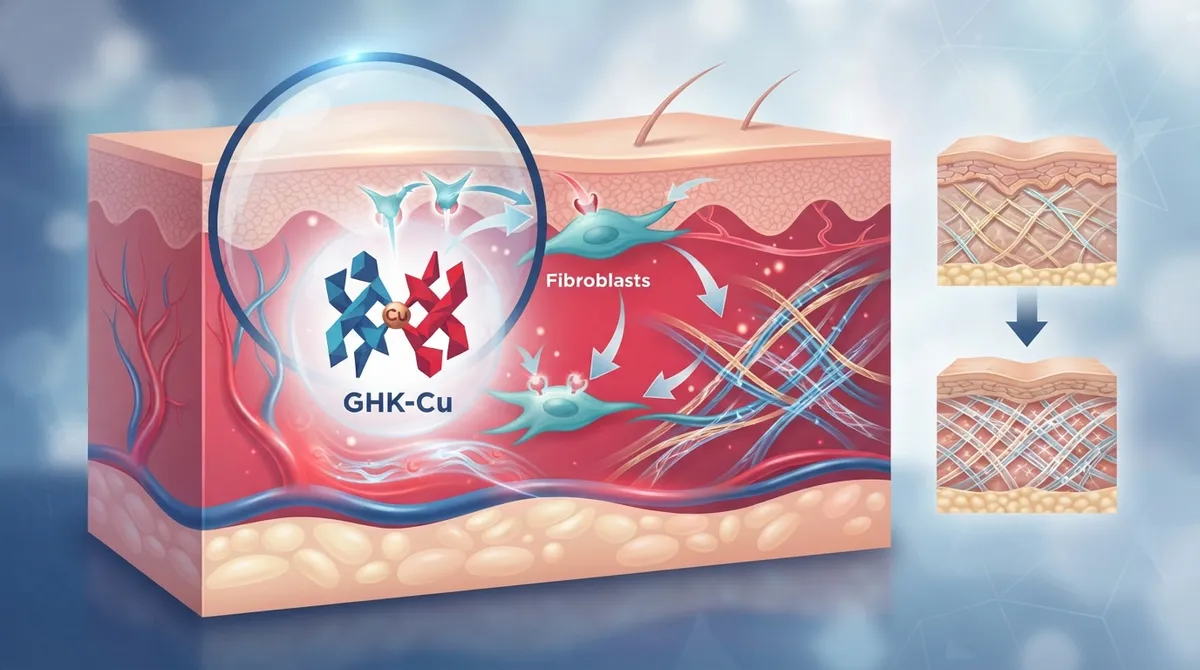
GHK-Cu appears to support several natural processes in skin tissue. It may help stimulate collagen and elastin, two proteins that keep skin firm and smooth. It has also been studied for its role in reducing oxidative stress on skin cells.
These actions combined may explain why users report smoother texture and firmer skin over time. This is different from simple moisturizers, which only sit on the surface. GHK-Cu is thought to work at a deeper, cellular level.

What Does the Research Say About Complexion Improvement?
Clinical studies on GHK-Cu focus mostly on topical use for photoaging. Photoaging refers to skin damage caused by years of sun exposure. This shows up as fine lines, rough texture, and uneven pigmentation.
Several published studies give us useful data points:
- A 12-week facial cream study involving 71 women showed improved skin density, thickness, laxity, clarity, fine lines, and wrinkle depth.
- A placebo-controlled study reviewed in 2015 reported better skin elasticity, density, firmness, and reduced signs of photodamage.
- A more recent 2026 clinical summary described a 67-woman photoaging trial showing real improvement in facial lines, skin laxity, mottled hyperpigmentation, and roughness after 12 weeks.
- Some 2026 summaries report measurable firmness gains of about 20 to 30 percent after 12 weeks of consistent topical use.
These numbers suggest GHK-Cu is not just a passing trend. It has a track record backed by real clinical observation, though most studies remain small in size.
Timeline: How Long Does It Take to See Results?
Patience matters with GHK-Cu. This is not a product that gives overnight results. Most studies report a gradual timeline for visible changes.
|
Time Frame |
Typical Changes Reported |
|---|---|
|
2 to 4 weeks |
Early texture and hydration improvements |
|
6 to 8 weeks |
Noticeable smoothing and better skin clarity |
|
8 to 12 weeks |
Firmer skin, reduced fine lines, improved elasticity |
|
12+ weeks |
Sustained results with continued use |
Consistency is the key factor. Skipping days or stopping early may slow down or reverse progress.
GHK-Cu vs. Other Common Anti-Aging Ingredients
People often ask how GHK-Cu compares to more familiar options like retinol. Both target signs of aging, but they work in different ways and have different side effect profiles.
|
Feature |
GHK-Cu |
Retinol |
|---|---|---|
|
Mechanism |
Supports collagen remodeling and tissue repair |
Speeds up cell turnover |
|
Common Side Effects |
Generally mild; rare irritation |
Dryness, peeling, sun sensitivity |
|
Time to See Results |
8 to 12 weeks |
4 to 12 weeks |
|
Best For |
Firmness, texture, mild pigmentation |
Fine lines, acne, deeper wrinkles |
Some people use both ingredients together, applying them at different times of day to avoid overlap. Anyone unsure about combining active ingredients should speak with a healthcare provider before starting a new routine.
Does GHK-Cu Help With Hyperpigmentation?
Hyperpigmentation, including dark spots and mottled pigmentation, is one area researchers have studied closely. Some clinical trials report visible improvement in mottled hyperpigmentation after consistent topical use over 12 weeks.
This does not mean GHK-Cu erases dark spots completely. Instead, studies show a gradual evening out of skin tone alongside other improvements like reduced roughness and better clarity. Results vary from person to person based on skin type, sun exposure history, and consistency of use.
Who Might Benefit Most?
- Adults with visible signs of sun damage or photoaging.
- People looking for gentler alternatives to stronger topical treatments.
- Those wanting to support skin firmness as part of a broader wellness routine.
- Anyone interested in preventive skin care alongside regular health checkups.
Safety Considerations for Topical GHK-Cu Use
Current safety summaries suggest no major serious safety concerns have been identified for topical copper peptide use. However, formulation quality matters a great deal. Not all products on the market are created equally.
Here are some safety points to keep in mind:
- Choose products from reputable sources with clear ingredient lists.
- Patch test any new skincare product before applying it to your full face.
- Avoid combining too many active ingredients at once without guidance.
- Stop use and consult a provider if you notice redness, itching, or irritation.
- Talk to a healthcare provider if you have sensitive skin or existing skin conditions.
Product quality is especially important with peptide-based skincare. Because GHK-Cu is a newer category compared to standard moisturizers, sourcing from a trusted wellness provider matters. This is one reason many people prefer guidance from a clinical setting rather than picking products at random.
Who Should Avoid GHK-Cu?
While generally considered safe for topical use, some groups should be more cautious. People with known copper sensitivities or certain skin allergies should talk to a provider first. Pregnant or breastfeeding individuals should also check with their doctor before adding any new active skincare ingredient to their routine.
If you already manage a chronic skin condition, it makes sense to bring up GHK-Cu during your next primary care visit. A provider can help you weigh the evidence against your specific skin history.
How GHK-Cu Fits Into a Whole-Body Wellness Plan
Skin health does not exist in isolation. It reflects what is happening inside your body, including hydration, nutrition, and cellular health. This is why many wellness-focused clinics look at complexion improvement as one piece of a larger picture.
At InCare, we connect skin and wellness goals to broader health services. For example, our IV hydration and vitamin drips support hydration levels that also affect skin appearance. Our DNA gene testing service can reveal how your body naturally processes nutrients tied to skin repair. And our body composition analysis gives a fuller view of your overall health trends over time.
Simple Daily Habits That Support Skin Health
- Stay hydrated throughout the day, not just when you feel thirsty.
- Eat a diet rich in antioxidants, like leafy greens and berries.
- Protect skin from sun damage with daily SPF.
- Get consistent, quality sleep to support cellular repair.
- Schedule regular wellness checkups to track changes early.
What Concentration Is Used in Skincare Products?
Most topical GHK-Cu products use low percentages, often in the range of small fractions of a percent. This is intentional. Copper peptides are potent even at low doses, and higher concentrations do not always mean better results.
Product labels should clearly state active ingredient percentages. If a product does not disclose this information, it is worth asking questions before purchase. A trusted wellness provider can help you understand what concentration might suit your skin type and goals.
Steps to Start a GHK-Cu Skincare Routine Safely
- Talk to a healthcare provider about your skin goals and history.
- Choose a reputable, well-formulated GHK-Cu product.
- Patch test on a small area of skin first.
- Apply consistently, usually once daily, based on product instructions.
- Track changes over 8 to 12 weeks and adjust as needed.
- Pair with sun protection and good hydration habits.
- Schedule a wellness check-in to review your progress and overall health.
Following these steps helps you get the most out of GHK-Cu while staying safe. It also helps you set realistic expectations, since results build gradually rather than overnight.
Why Choose a Wellness-Focused Clinic for Skin and Health Goals
Many people try skincare trends on their own without professional guidance. But when it comes to ingredients like GHK-Cu, working with a knowledgeable provider adds real value. A wellness clinic can look at your full health picture, not just your skin.
InCare offers a range of services in Tampa and Riverview, Florida, that support this kind of whole-body approach. From cancer screenings to weight loss programs, our providers focus on prevention and long-term results. This same philosophy applies to skin health and complexion goals.
You can also see what current patients say about their experience by visiting our InCare location on Google, where reviews highlight our friendly staff and attentive care. We also share wellness tips and updates on Facebook, Instagram, and TikTok for those who want to stay informed between visits.
Bringing It All Together
GHK-Cu offers a science-backed option for people looking to improve their complexion over time. Studies show real, measurable benefits for firmness, texture, and mottled hyperpigmentation when used consistently over 8 to 12 weeks. It is not a magic fix, but it is a promising tool grounded in clinical research.
Pairing any skincare routine with strong foundational health habits gives you the best chance at lasting results. Hydration, nutrition, sleep, and regular checkups all play a role in how your skin looks and feels. Skin health is simply one reflection of your overall wellness.
If you want to talk through your skin and wellness goals with a knowledgeable provider, our team is ready to help. Reach out to our care team today to start the conversation, or go ahead and book your appointment now to take the next step toward healthier, more confident skin.
FAQs
Q: What is GHK-Cu and how does it work for skin?
A: GHK-Cu is a naturally occurring copper peptide that supports skin repair and renewal. It works by helping stimulate collagen and elastin production, which are key proteins for firm, smooth skin.
Q: Does GHK-Cu really improve complexion?
A: Clinical studies show measurable improvements in skin firmness, texture, and hyperpigmentation after consistent topical use. Results are gradual, typically appearing over 8 to 12 weeks of regular application.
Q: How long does GHK-Cu take to show results on skin?
A: Most people notice early texture changes within 2 to 4 weeks. Firmer, more even-looking skin is generally reported after 8 to 12 weeks of consistent use.
Q: Is GHK-Cu safe for daily topical use?
A: Current safety data suggests no major serious concerns for topical copper peptide use. Product quality matters, so choosing a well-formulated product and patch testing first is recommended.
Q: How does GHK-Cu compare with retinol for anti-aging?
A: GHK-Cu supports collagen remodeling with generally mild side effects, while retinol speeds up cell turnover but can cause dryness or sun sensitivity. Some people use both together under professional guidance.