Key Takeaways
- KISS1R mutations cause congenital hypogonadotropic hypogonadism (CHH) by disrupting brain signals that control puberty, menstrual cycles, and fertility; this condition affects roughly 1 in 8,000 people with KISS1R mutations accounting for about 2% of normosmic CHH cases.
- Diagnosis requires a structured step-by-step evaluation starting with primary care (hormone testing, physical exam, family history) before specialist referral and genetic testing, not routine blood work alone.
- KISS1R-related CHH is inherited in an autosomal recessive pattern, meaning affected individuals typically carry mutated gene copies from both parents; carriers with one copy are usually healthy but may have subtle reproductive effects.
- Normal sense of smell does not rule out genetic causes—normosmic CHH is the typical presentation, unlike related conditions such as Kallmann syndrome where anosmia occurs.
- Many people with KISS1R mutations can achieve biological children and normal hormone function through specialist-guided treatments like gonadotropin injections or pulsatile GnRH therapy, even after genetic diagnosis.
- A single rare genetic variant does not always predict symptom severity, and variants of uncertain significance require genetic counselor interpretation to understand clinical implications for treatment planning.
Delayed puberty, missing periods, and unexplained infertility can feel confusing and isolating. Many patients spend years searching for answers before anyone mentions kisspeptin genetic variation as a possible cause. This inherited change in how your body signals reproductive hormones is rare, but understanding it can finally connect the dots for some patients and families.
At its core, kisspeptin genetic variation refers to changes in the KISS1 gene or its receptor gene, KISS1R. These genes help control puberty, menstrual cycles, testosterone production, and fertility. When something goes wrong here, the effects can ripple through the entire hormone system. This article breaks down what genetic causes look like compared to acquired hormone problems, so you know when to ask your primary care provider for deeper testing.
What Is Kisspeptin and Why Does It Matter?
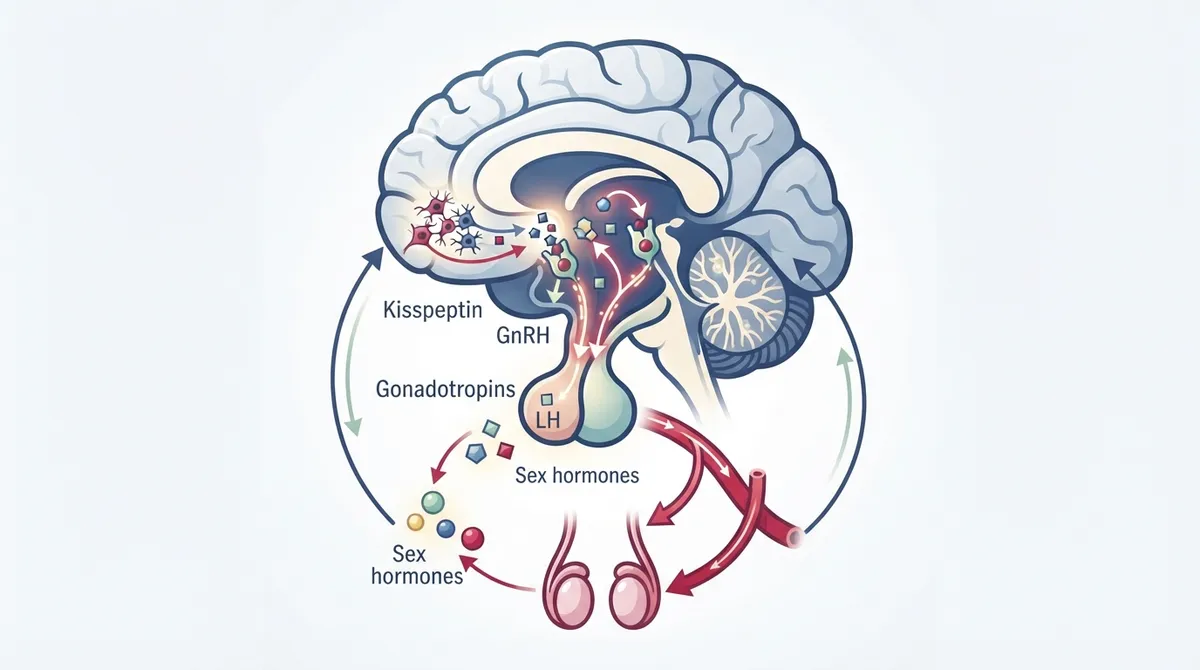
Kisspeptin is a signaling molecule made in the brain. It is encoded by the KISS1 gene. Its job is to activate a receptor called KISS1R, sometimes known as GPR54. This receptor sits on special brain cells that release gonadotropin-releasing hormone, or GnRH.
GnRH controls two other hormones: luteinizing hormone (LH) and follicle-stimulating hormone (FSH). These hormones tell the ovaries or testes to produce sex hormones like estrogen and testosterone. In short, kisspeptin sits at the very top of the reproductive hormone chain. Without it working correctly, puberty, ovulation, and testosterone production can all stall.
How Genetic Variation Differs from Acquired Hormone Problems
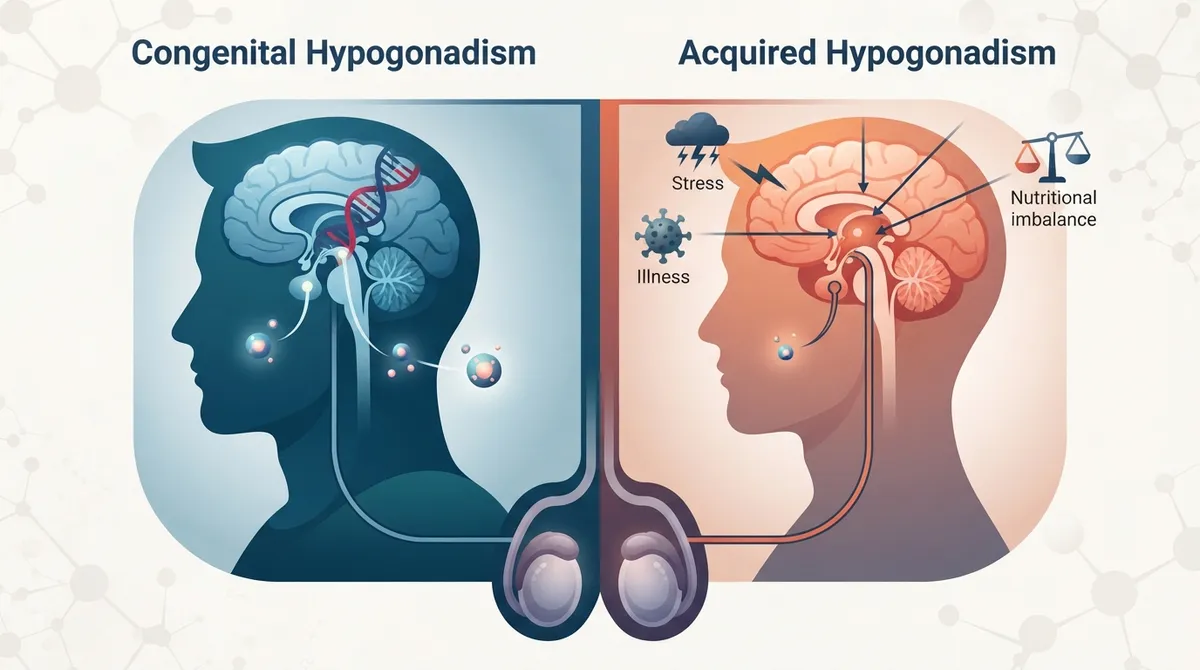
Not all hormone issues come from genetics. Many patients have acquired problems caused by stress, nutrition, thyroid disease, or pituitary tumors. Genetic variation is different because it is present from birth, even if symptoms show up later.
Here is a simple comparison to help clarify the difference:
|
Feature |
Genetic Kisspeptin Variation |
Acquired Hormone Dysfunction |
|---|---|---|
|
Cause |
Inherited KISS1 or KISS1R mutation |
Stress, illness, nutrition, tumors, medications |
|
Onset |
Present from birth, symptoms often noticed at puberty |
Can develop at any age |
|
Sense of Smell |
Usually normal (normosmic) |
Not typically affected |
|
Inheritance Pattern |
Usually autosomal recessive |
Not inherited |
|
Reversibility |
Often lifelong, but treatable |
May resolve once cause is treated |
Congenital Hypogonadotropic Hypogonadism Explained
The clinical term for the condition caused by KISS1R mutations is congenital hypogonadotropic hypogonadism, or CHH. It happens when the brain fails to send the right signals to the reproductive organs. This is not the same as damage to the ovaries or testes themselves.
Research suggests CHH affects roughly 1 in 8,000 people, though estimates vary depending on how the condition is defined and diagnosed. Within that group, KISS1R mutations account for a small slice, estimated around 2% of normosmic CHH cases according to a molecular case report published in 2017.
Because CHH is genetically complex, more than 40 different genes have been linked to it. KISS1R is just one piece of a much bigger puzzle. Other genes include GNRHR, GNRH1, TAC3, TACR3, and genes tied to Kallmann syndrome.
Key Symptoms That May Point to a Genetic Cause
Symptoms vary depending on age, sex, and how much the mutation affects receptor function. Some common signs include:
- Delayed or absent puberty in teenagers
- Small testes or undescended testicles in males
- Absent or irregular periods in females
- Low libido or reduced sexual function
- Difficulty conceiving without an obvious cause
- Lower bone density due to low sex hormone levels
One detail that often surprises patients is that a normal sense of smell does not rule out a genetic cause. This is why it's called "normosmic" CHH. Many people assume smell problems always go along with these conditions, but that's only true for a related condition called Kallmann syndrome.
How Is a Genetic Cause Diagnosed?
Diagnosing kisspeptin genetic variation is not a routine blood test. It requires a step-by-step evaluation, often starting in a primary care setting and moving toward specialist involvement. Here is a general sequence used in evaluation:
- Detailed history of puberty timing, menstrual cycles, and family history
- Physical examination checking for signs of delayed development
- Morning hormone testing, including LH, FSH, and sex hormones like testosterone or estradiol
- Ruling out other causes such as thyroid disease, high prolactin, or nutritional deficiencies
- Referral to endocrinology or reproductive medicine for specialized testing
- Genetic testing and counseling when a hereditary cause is suspected
- Ongoing monitoring and treatment planning based on results
This is one reason a strong relationship with a primary care provider matters so much. They are often the first to notice patterns that justify deeper investigation, and they can help coordinate referrals when needed.
What Genetic Testing Can and Cannot Tell You
Genetic testing for KISS1R or KISS1 mutations is not part of a standard wellness visit. It is generally reserved for specific situations, such as unexplained delayed puberty or infertility with no other clear cause.
Reported variants include missense, nonsense, frameshift, and splice-site mutations. Some examples found in medical literature include p.P147L, p.Tyr313His, and p.L102P. However, these results can be complicated. A single rare variant does not always predict how severe someone's symptoms will be.
This is why interpretation matters just as much as the test itself. A genetic counselor or specialist can help explain what a result means, especially when it comes back as a "variant of uncertain significance." This term means the change was found, but its effect is not yet clearly understood.
Inheritance Pattern: What Families Should Know
KISS1R-related CHH is usually inherited in an autosomal recessive pattern. This means a person typically needs a mutated copy of the gene from both parents to be affected. Carriers who have just one copy are often healthy, though some studies suggest subtle reproductive effects in certain families.
This inheritance pattern is important for family planning conversations. If one child is diagnosed, parents may want genetic counseling to understand risks for future children or extended family members.
Common Questions Families Ask
- Can two unaffected parents have a child with this condition? Yes, if both carry one copy of the mutated gene.
- Does this condition affect other body systems? Generally, no. It is specific to the reproductive hormone pathway.
- Is this the same as early menopause? No, it is a different mechanism involving brain signaling, not ovarian aging.
- Can siblings be affected differently? Yes, due to variable expression of the gene mutation.
Treatment Options After Diagnosis
Good news: a genetic diagnosis does not mean fertility or normal hormone function is out of reach. Many people with KISS1R-related CHH can still have biological children with the right treatment plan.
Options often include:
- Hormone replacement therapy to support puberty and bone health
- Gonadotropin injections to stimulate the ovaries or testes directly
- Pulsatile GnRH therapy in select cases to mimic natural hormone rhythms
- Fertility treatment coordinated with reproductive endocrinology specialists
One published family report described a woman who regained regular periods, began ovulating, and became pregnant after starting gonadotropin treatment. This shows that even with a genetic cause, meaningful outcomes are possible with the right medical support.
Why Whole-Body Evaluation Matters
Hormone problems rarely exist in isolation. A thorough evaluation should also consider metabolic health, nutrition, and overall wellness. Tools like body composition analysis and metabolic breath analysis can help paint a fuller picture of how the body is functioning, especially when hormone imbalances are suspected.
For patients exploring their genetic health more broadly, DNA gene testing services can offer insight into inherited traits and predispositions beyond reproductive hormones. While this is different from specialized KISS1R testing, it reflects a similar philosophy: understanding your biology helps guide smarter health decisions.
When to See a Specialist vs. Your Primary Care Doctor
Your primary care doctor is often the right first stop for symptoms like delayed puberty, irregular periods, or fertility concerns. They can order initial hormone panels and rule out common causes. If results point toward a rarer condition, they will refer you to endocrinology, reproductive medicine, or genetics.
Here is a simple way to think about it:
|
Situation |
Best First Step |
|---|---|
|
Delayed puberty with no known cause |
Primary care evaluation and hormone testing |
|
Irregular or absent periods |
Primary care visit, possible referral to specialist |
|
Unexplained infertility |
Primary care workup, then reproductive endocrinology |
|
Confirmed genetic mutation |
Genetic counseling plus specialist-guided treatment |
Choosing the right care team makes a real difference. Learn more about how primary doctors help manage chronic illnesses and why building this relationship early can speed up diagnosis when something feels off.
Steps to Take If You Suspect a Hormone Problem
If you or your child show signs of delayed puberty, irregular cycles, or fertility struggles, consider these steps:
- Schedule a comprehensive wellness visit to discuss symptoms in detail
- Request baseline hormone testing, including LH, FSH, and sex hormones
- Ask about family history of similar reproductive issues
- Follow through with specialist referrals if initial results are abnormal
- Discuss genetic testing only after other common causes are ruled out
- Seek genetic counseling if a variant is found, especially one of uncertain significance
Patients across Tampa and Riverview trust InCare for exactly this kind of layered, patient-first evaluation. The clinic's providers, including Dr. Pramjeet Ahluwalia and Dr. Naveen Paddu, focus on connecting symptoms to root causes rather than treating issues in isolation.
What Makes InCare a Trusted Partner in This Process
Navigating a rare hormone condition takes patience, clear communication, and a care team that listens. InCare combines advanced diagnostic tools with a personalized approach across its Tampa and Riverview locations. Whether you need baseline hormone testing, referral coordination, or ongoing wellness support, the goal is always to give you clear next steps.
Many patients also turn to InCare for related wellness services once hormone health stabilizes, including IV hydration and vitamin drips to support energy levels during treatment. This whole-person approach reflects the same philosophy used by teams featured on platforms like SEO Rocket, where thorough, structured processes lead to better outcomes.
You can also see what real patients say about their experience by visiting InCare on Google, where the clinic maintains a strong reputation for attentive, thorough care. Many patients also follow updates and health tips through InCare's Facebook and Instagram pages, or catch quick wellness tips on Tik Tok.
Moving Forward with Confidence
Kisspeptin genetic variation is rare, but it can explain years of unanswered questions for some patients. The key is not jumping straight to genetic testing. Instead, start with a careful, structured evaluation that rules out more common causes first.
If you've noticed delayed puberty, irregular periods, or unexplained fertility struggles, don't wait to bring it up. A knowledgeable primary care team can guide you through the right testing sequence and refer you to specialists when needed. Ready to get answers? Book Your Appointment today and take the first step toward understanding your hormone health.
FAQs
Q: What is kisspeptin genetic variation?
A: Kisspeptin genetic variation refers to inherited changes in the KISS1 gene or its receptor gene, KISS1R. These genes control key hormone signals that regulate puberty, menstrual cycles, and fertility. Rare mutations in these genes can lead to a condition called congenital hypogonadotropic hypogonadism.
Q: Can a KISS1R mutation cause delayed puberty without loss of smell?
A: Yes, this is actually the typical presentation. It's called normosmic congenital hypogonadotropic hypogonadism because the sense of smell remains normal, unlike related conditions such as Kallmann syndrome.
Q: Should someone with unexplained infertility get KISS1R genetic testing?
A: Genetic testing is not a first step. It should only be considered after ruling out more common causes and consulting with a specialist in endocrinology or reproductive medicine. Genetic counseling is recommended alongside testing.
Q: What is the inheritance pattern of KISS1R variants?
A: KISS1R-related hormone disorders are generally inherited in an autosomal recessive pattern. This means a person usually needs a mutated gene copy from both parents to be affected, while carriers with a single copy are often unaffected.
Q: Can people with KISS1R mutations still have biological children?
A: Yes, many people can achieve pregnancy with specialist-guided treatment such as gonadotropin therapy or pulsatile GnRH treatment. Published case reports have documented successful pregnancies after appropriate hormone therapy.