

Key Takeaways
- FCSO (First Coast Service Options, Inc.) is a government contractor that processes Original Medicare claims in Florida, Puerto Rico, and the U.S. Virgin Islands—it is not an insurance plan and does not determine your doctor or coverage.
- FCSO only handles Original Medicare (Part A and B) claims; if you have Medicare Advantage, your claims go to your private insurance plan instead, so verify your coverage type on your Medicare card.
- Primary care clinics use FCSO's SPOT portal to submit claims, check eligibility, and manage appeals, which helps them answer your billing and coverage questions faster and more accurately.
- Keep organized Medicare paperwork in one folder, write down visit details and dates, and always verify coverage information directly with official CMS and FCSO resources since policies change annually.
- When you receive an Advance Beneficiary Notice (ABN), ask your provider why the service may not be covered and what the cost could be before signing, as this protects you from unexpected bills.
- Review your Medicare Summary Notice against your visit records, start claim follow-ups with your clinic's billing office, and contact Medicare directly at 1-800-MEDICARE only for general benefit questions.
If you live in Florida and have Original Medicare, you may have seen the name FCSO on a claim notice, a billing form, or a provider website. FCSO Medicare is a common search term, but many people are not sure what it means. It does not refer to a health plan or a doctor's office. It refers to a government contractor that handles Medicare claims behind the scenes.
Understanding FCSO helps you read your Medicare paperwork with more confidence. It also helps you ask better questions when you choose a primary care provider. This guide explains what FCSO Medicare is, which areas it serves, and what it does for clinics and patients. It also covers how a primary care practice like InCare fits into the picture. You will find clear definitions, practical tips, and answers to common questions.

What Is FCSO Medicare?
FCSO stands for First Coast Service Options, Inc. It is a Medicare Administrative Contractor, often called a MAC. The Centers for Medicare & Medicaid Services (CMS) hires MACs to process Original Medicare claims for Part A and Part B in set regions.
FCSO is not an insurance company. It does not sell plans, set your premiums, or decide which doctor you see. Its job is administrative. It processes claims, pays providers, answers billing questions, and shares education with clinics.
This is an important point. Many people think FCSO is a type of Medicare plan. It is not. It works only with Original Medicare, also called fee-for-service Medicare.
Key Facts at a Glance
|
Topic |
Detail |
|---|---|
|
Full name |
First Coast Service Options, Inc. |
|
Role |
Medicare Administrative Contractor for CMS |
|
Medicare type served |
Original Medicare (Part A and Part B) |
|
Jurisdiction |
Jurisdiction N (Florida, Puerto Rico, U.S. Virgin Islands) |
|
Main functions |
Claims processing, provider education, appeals, billing support |
|
Not responsible for |
Medicare Advantage plans, plan enrollment, premiums |
Which Areas Does FCSO Serve?
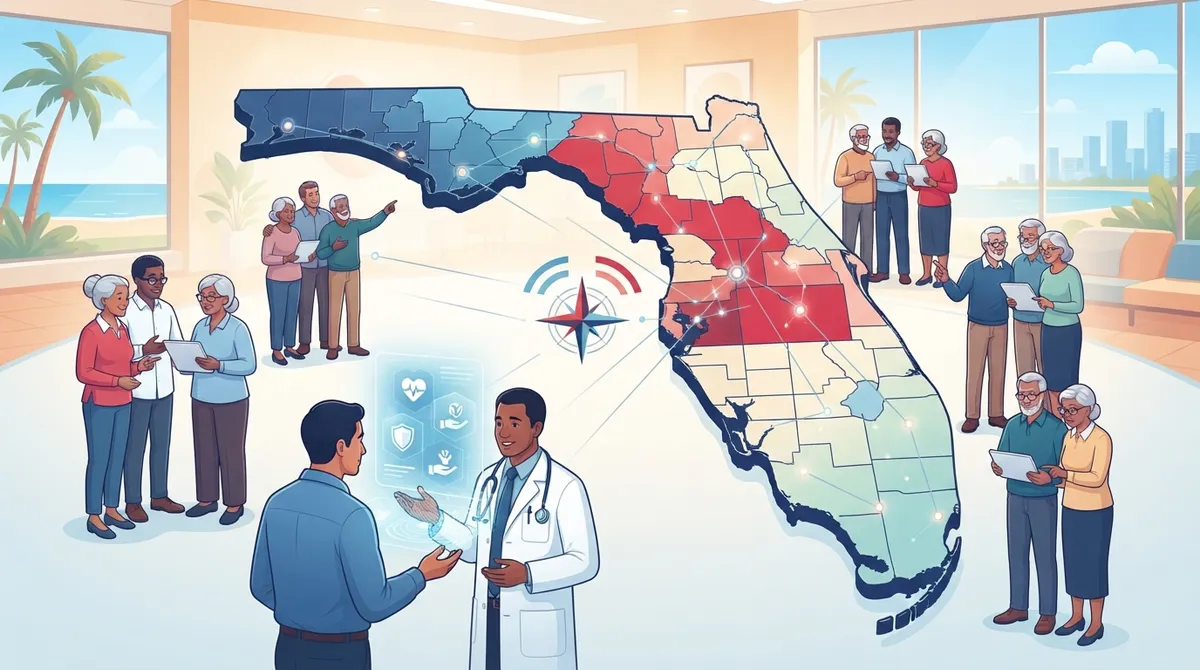
FCSO handles A/B Medicare claims in what CMS calls Jurisdiction N. This area includes Florida, Puerto Rico, and the U.S. Virgin Islands. If you live in Tampa or Riverview and use Original Medicare, FCSO is the contractor that processes your Part A and Part B claims.
CMS data shows the scale of this work. The Jurisdiction N page lists about 2.4 million fee-for-service beneficiaries, more than 82,000 physicians, and 277 Medicare hospitals. CMS also reports that this jurisdiction makes up roughly 8.1% of the national Part A and Part B workload. These figures come from CMS and may change over time, so check the CMS site for the latest numbers.
CMS lists First Coast Service Options as the contract awardee for this jurisdiction, with an expected contract end date in April 2029.
FCSO Medicare vs. Medicare Advantage
This is the most common point of confusion. FCSO processes claims for Original Medicare only. It does not process claims for Medicare Advantage plans.
Medicare Advantage plans, also called Part C, are run by private insurance companies. If you have one of these plans, your claims go to that insurer. Your billing and coverage questions also go to the plan.
Here is a simple way to compare the two paths.
|
Feature |
Original Medicare (FCSO area) |
Medicare Advantage |
|---|---|---|
|
Who processes claims |
FCSO (in Florida) |
Your private plan |
|
Who answers billing questions |
FCSO for providers; Medicare for patients |
Your plan's member services |
|
Provider network |
Any provider that accepts Medicare |
Often limited to plan network |
|
Appeals |
Handled through Medicare process |
Handled through the plan first |
If you are unsure which type of coverage you have, look at your Medicare card or plan card. A red, white, and blue Medicare card usually means Original Medicare. A separate plan card from an insurer usually means Medicare Advantage.
What FCSO Does for Primary Care Practices
For a primary care clinic, FCSO is a key resource. Clinics that bill Original Medicare rely on FCSO for several tasks.
- Claims processing: FCSO receives, reviews, and pays Part A and Part B claims.
- Billing and coding guidance: Providers can find help with office visit coding, preventive services, and documentation rules.
- Eligibility checks: Clinics can confirm whether a patient has active coverage and what benefits apply.
- Appeals and reopenings: If a claim is denied, providers can follow FCSO steps to appeal or ask for a review.
- Education: FCSO offers training, including on-demand courses for new providers.
- Fee schedule tools: Practices can look up payment amounts for specific services.
These tools help clinics bill correctly and avoid delays. Accurate billing also means fewer surprises for patients.
The SPOT Provider Portal
FCSO runs an online portal called SPOT. Providers use it to submit and check claims, review payment history, and look up eligibility and benefits. FCSO also describes SPOT as a way to send certain documents, appeals, and reopening requests.
Patients do not use SPOT. It is built for clinics and billing teams. But a clinic that uses it well can often answer your coverage questions faster.
What FCSO Medicare Means for Patients
Most patients never deal with FCSO directly. You may see the name on paperwork or hear it from a billing office. Here is what it means for you in daily life.
- Your claims are processed in Florida. When your provider bills Original Medicare, FCSO reviews that claim.
- Your Medicare Summary Notice may show it. This notice lists what was billed and what Medicare paid.
- Billing questions often start with your clinic. Your provider's billing team can check claim status through FCSO tools.
- General coverage questions go to Medicare. You can use Medicare.gov or call 1-800-MEDICARE for plan and benefit questions.
FCSO also offers resources for people with Medicare on its website. These pages can help you understand your rights and where to go for help. Always confirm details on official CMS and FCSO pages, since rules and forms can change.
How to Check a Medicare Claim
If you want to follow up on a claim, start with these simple steps.
- Review your Medicare Summary Notice or your online Medicare account.
- Compare the notice to your visit date and the service you received.
- Call your clinic's billing office and ask about the claim status.
- If the clinic needs more detail, they can check status through FCSO tools like SPOT.
- For general questions about your benefits, contact Medicare directly.
If a claim was denied, ask your provider what the reason code was. Many denials come from missing information or coding errors. These are often fixed with a corrected claim or an appeal.
Preventive Care and Your Medicare Benefits
Original Medicare covers many preventive services. These can include an annual wellness visit, certain cancer screenings, and other checks. Coverage rules depend on your age, risk factors, and how often you have had the service before.
FCSO provides billing information for preventive services so clinics can submit claims correctly. This matters because a small coding mistake can lead to a denied claim or an unexpected bill.
Preventive care is also the foundation of good primary care. A regular visit helps your doctor spot problems early, manage long-term conditions, and keep your medicines safe. If you want to learn more, read what happens during an annual wellness visit and what Medicare covers for seniors in primary care.
The Advance Beneficiary Notice
Sometimes a service may not be covered by Medicare. In that case, a provider may ask you to sign an Advance Beneficiary Notice of Noncoverage, often called an ABN. This form tells you that Medicare may not pay and that you may be responsible for the cost. FCSO provides guidance on ABNs for clinics.
If you receive an ABN, ask questions before you sign. Ask why the service may not be covered and what the cost could be.
Choosing a Primary Care Provider in the FCSO Area
If you have Original Medicare in Florida, you can usually see any doctor who accepts Medicare. That gives you flexibility. It also means the quality and style of care can vary a lot from clinic to clinic.
Here are signs of a strong Medicare-friendly primary care practice.
- The staff explains billing and coverage in plain language.
- The clinic offers preventive visits and screenings.
- Care is coordinated, so you do not repeat tests or tell your story many times.
- Appointments are easy to book, including same-day or virtual options.
- The team spends time listening and building a long-term plan.
For a deeper checklist, see 7 traits of the best Medicare provider for primary care and 4 key steps to find a doctor that accepts Medicare.
How InCare Supports Medicare Patients in Tampa and Riverview
InCare is a personalized primary care and wellness clinic with locations in Tampa and Riverview, Florida. The team combines modern technology with hands-on medical expertise. Care focuses on prevention and whole-body health, not just treating problems after they appear.
Patients can access primary care, urgent care, cancer screenings, and advanced wellness services. These include medical weight loss programs, DNA gene testing, and IV hydration therapy. The clinic also offers telemedicine for patients who prefer to visit from home.
For Medicare patients, a clear care plan matters. A trusted primary doctor can review your medicines, track chronic conditions, and schedule the right screenings at the right time. You can learn more about how primary doctors help manage chronic illnesses or explore our primary care services.
InCare holds a 4.8 out of 5 rating on Google across hundreds of reviews. Patients often mention the friendly staff and the quality of care. You can read InCare reviews on Google to see what real patients say. Insurance acceptance can vary, so please confirm your specific coverage with the clinic before your visit.
Tips for Staying Organized With Medicare Paperwork
Medicare paperwork can feel confusing. A few simple habits can make it easier.
- Keep every Medicare Summary Notice in one folder or digital file.
- Write down the date, provider, and reason for each visit.
- Bring your Medicare card and a photo ID to every appointment.
- Ask for a clear explanation of any charge you do not understand.
- Check official sources, such as CMS and FCSO, before relying on a coding or policy claim you read online.
If you ever need records from your doctor, our guide on how to make a medical records request can help.
Why Verifying Information Matters
Medicare coverage, coding, and payment rules change from time to time. A policy that applied last year may not apply in 2026. For that reason, both patients and providers should check current CMS and FCSO resources before acting on any billing or coverage detail.
FCSO separates its provider information by Part A and Part B. Clinics should confirm which line of business applies to a service. Patients should rely on official Medicare channels for benefit questions and use their provider's billing office for claim follow-up.
Take the Next Step With InCare
FCSO Medicare is the behind-the-scenes contractor that processes Original Medicare claims in Florida. It supports clinics with billing tools, education, and appeals. It does not choose your doctor or manage your care. That job belongs to a primary care team you trust.
If you are in Tampa or Riverview and want a practice that focuses on prevention, clear communication, and whole-body wellness, InCare is ready to help. Our team will listen, explain your options, and build a plan that fits your life. Book your appointment today or contact our team with questions. You can also follow InCare on Instagram, Facebook, and TikTok for health tips and updates.
FAQs
Q: What is FCSO Medicare?
A: FCSO stands for First Coast Service Options, Inc. It is a Medicare Administrative Contractor hired by CMS to process Original Medicare Part A and Part B claims. It is not an insurance plan and does not provide medical care.
Q: Which states and territories does FCSO Medicare serve?
A: FCSO serves Jurisdiction N, which includes Florida, Puerto Rico, and the U.S. Virgin Islands. Patients in Tampa and Riverview with Original Medicare fall within this jurisdiction.
Q: Does FCSO process Medicare Advantage claims?
A: No. FCSO handles Original Medicare fee-for-service claims only. Medicare Advantage billing and coverage questions should go to your private plan, and general Medicare questions can go to Medicare.gov or 1-800-MEDICARE.
Q: How can a primary care provider check a Medicare claim through FCSO?
A: Providers can use the FCSO SPOT portal to submit claims, check claim status, view payment history, and confirm eligibility. Patients should start by asking their clinic's billing office to review a claim.
Q: How can a provider appeal an FCSO Medicare claim denial?
A: Providers can follow the appeals and reopening steps listed on the FCSO website, and some requests can be sent through SPOT. Because rules can change, clinics should confirm current requirements on FCSO and CMS pages before filing.


