
Key Takeaways
- KP-10 has no FDA-approved dosing schedule for human use; any online protocol claiming daily or frequent use is either extrapolated from small research studies or unverified marketing, requiring consultation with a licensed physician instead.
- Daily or frequent KP-10 dosing may backfire due to receptor desensitization; kisspeptin signaling works best in natural, spaced-out pulses, and the peptide's 3-4 minute half-life means constant exposure reduces the intended effect over time.
- Research studies have used highly varied KP-10 protocols (single IV doses, infusions, or subcutaneous injections every 8-12 hours for 36-72 hours), but these narrow clinical contexts for specific hormone conditions should not be treated as templates for general wellness use.
- Online-purchased KP-10 carries serious uncontrolled risks including unverified product identity, lack of sterility guarantees, inconsistent concentration between batches, and contamination from non-pharmaceutical manufacturing standards.
- Before considering any hormone-related peptide therapy, obtain comprehensive bloodwork (LH, FSH, testosterone/estradiol, prolactin, thyroid function) and medical evaluation to identify root causes, as many hormone concerns have established evidence-based treatments.
- Kisspeptin-54 (used as an IVF ovulation trigger 36 hours before egg retrieval) and kisspeptin-10 are distinct compounds with different half-lives and mechanisms; confusing their dosing timelines leads to dangerous incorrect assumptions about safety and effectiveness.
If you have searched online for "how often KP-10" should be used, you have likely found conflicting answers. Some websites suggest daily injections. Others describe short research cycles lasting only a few days. This confusion is common because kisspeptin-10 (KP-10) has no official dosing schedule approved for human use. Understanding what the science actually shows can help you make safer, smarter decisions about your health.
At InCare, patients across Tampa and Riverview often ask about trending peptides and wellness compounds. Our primary care physicians believe you deserve clear, evidence-based answers rather than vague marketing claims. This article breaks down what research says about KP-10 frequency, why daily use is not automatically better, and how a qualified provider fits into any decision involving hormone-related peptides.
What Is Kisspeptin-10, and Why Does Frequency Matter?
Kisspeptin-10 is a small, lab-made piece of a larger hormone called kisspeptin. Kisspeptin helps control the hypothalamic-pituitary-gonadal (HPG) axis, the signaling system behind reproductive hormones like testosterone and estrogen. Researchers have studied KP-10 because it can trigger a rise in luteinizing hormone (LH), a key driver of sex hormone production.
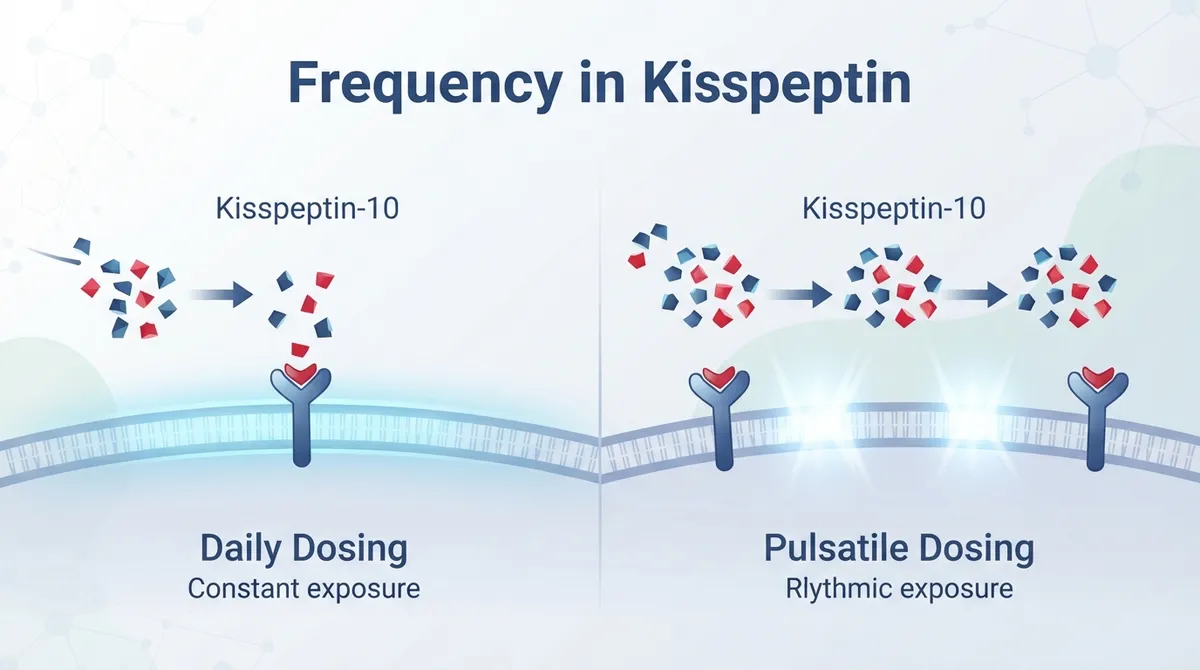
Dosing frequency matters because kisspeptin signaling in the body is naturally pulsatile, meaning it comes in short bursts, not a steady stream. This detail is central to understanding why more frequent dosing is not necessarily more effective, and may even work against the desired outcome.
There Is No FDA-Approved Schedule
As of 2026, there is no FDA-approved dose, frequency, or medical indication for KP-10 in humans. This means any schedule you see online, whether daily, twice daily, or cyclical, is not an official treatment protocol. It is either an extrapolation from small research studies or an unverified claim from a product seller.
Patients considering hormone-related therapies should discuss options with a licensed physician instead of following generic internet dosing charts. Our providers can walk you through what current research actually supports.
How Often Has KP-10 Been Used in Research Studies?
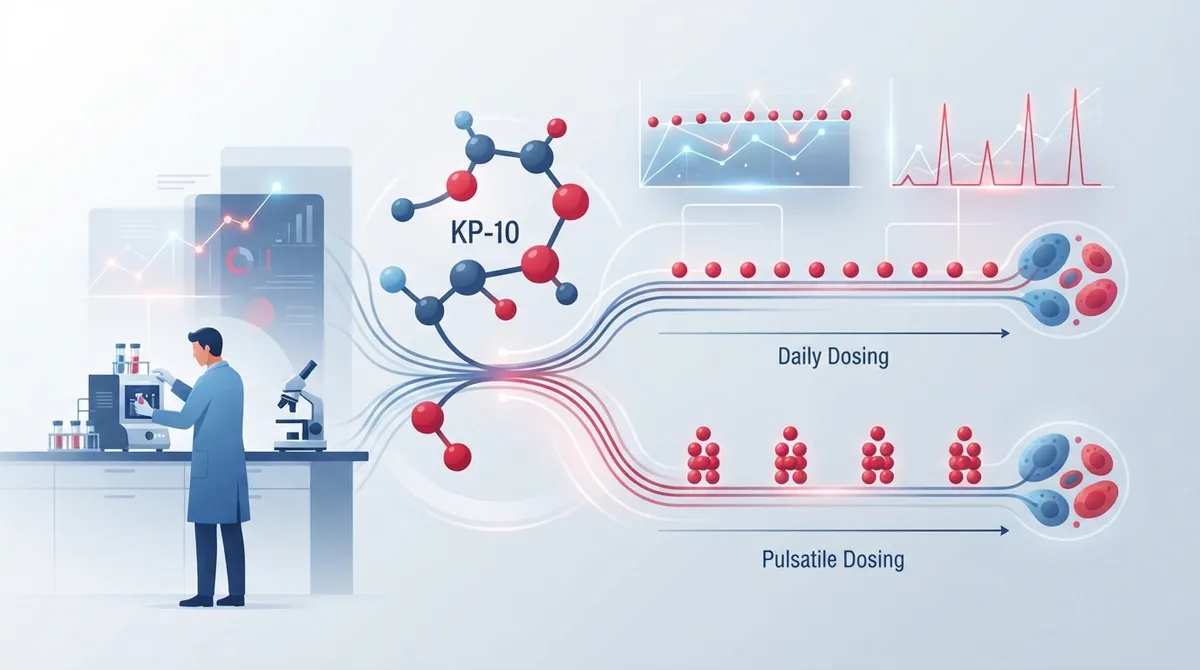
Clinical research on KP-10 has used several different approaches, depending on the study's goal. Here is a general breakdown of methods researchers have applied:
|
Administration Method |
Typical Research Use |
Reported Frequency |
|---|---|---|
|
Intravenous (IV) bolus |
Single acute dose to observe LH response |
One-time dose per session |
|
IV infusion |
Continuous or stepped dosing over hours |
Single session, varying duration |
|
Subcutaneous pulsatile injection |
Studying reproductive hormone stimulation |
Approximately every 8-12 hours for 36-72 hours |
These are research protocols, not general wellness recommendations. A study published by Topaloglu and colleagues in 2012 used short-term subcutaneous dosing of about 4 nmol/kg every 8 to 12 hours over 36 to 72 hours in men with a specific hormone condition called idiopathic hypogonadotropic hypogonadism. This is a narrow clinical context, not a template for general use.
Why Some Studies Use Higher Doses
Dose-escalation research has tested amounts ranging from about 0.3 to 10 nmol/kg in acute settings. One summary reported an LH increase of roughly 3.5 IU/L at 1 nmol/kg, compared to about 6.9 IU/L at 10 nmol/kg. These numbers describe short-term hormone spikes, not long-term health benefits or safety data.
Why Daily or Frequent Dosing May Backfire
Many people assume that using a compound more often will produce better or faster results. With KP-10, this assumption does not hold up well. Kisspeptin receptors, known as KISS1R, can become less responsive with constant or overly frequent exposure. This is called receptor desensitization.
Here is why this matters for anyone considering frequency questions:
- Kisspeptin signaling works best in short, spaced-out pulses, not continuous exposure.
- Overuse may reduce the body's response over time, weakening the intended effect.
- KP-10 has a very short half-life, reportedly around 3 to 4 minutes in humans, so its effects fade quickly.
- A single daily dose cannot maintain sustained blood levels due to this rapid clearance.
- More frequent use does not equal more benefit, and may increase risk instead.
This pattern is common in hormone-based therapies. Similar caution applies to other reproductive and metabolic treatments discussed on our page about what peptides are and how they support wellness.
KP-10 vs. Kisspeptin-54: A Common Point of Confusion
Another mix-up involves kisspeptin-54, a longer-acting relative of KP-10. Some fertility clinics have studied kisspeptin-54 as an ovulation trigger, sometimes administered about 36 hours before an egg retrieval procedure in IVF settings.
This timing applies only to kisspeptin-54 and only within a specific fertility protocol. It should never be used to guess how often KP-10 should be dosed. The two compounds behave differently in the body, and confusing them can lead to incorrect assumptions about safety or effectiveness.
Key Differences at a Glance
|
Feature |
Kisspeptin-10 (KP-10) |
Kisspeptin-54 |
|---|---|---|
|
Length |
Short fragment |
Longer peptide chain |
|
Half-life |
Very short (minutes) |
Longer duration of action |
|
Studied use |
HPG axis and LH response research |
Ovulation trigger research in fertility clinics |
|
Approved status |
Not FDA-approved |
Not FDA-approved for general use |
What Should You Do Before Considering KP-10?
Rather than searching for a dosing schedule online, the safer path starts with a proper medical evaluation. Hormone imbalances have many causes, and KP-10 is not a first-line treatment for most of them.
A thorough workup at a primary care clinic typically includes the following steps:
- Review your symptoms, medical history, and current medications with a licensed provider.
- Order bloodwork to check LH, FSH, testosterone or estradiol, and prolactin levels.
- Test thyroid function, since thyroid problems can mimic hormone symptoms.
- Rule out pregnancy when relevant, along with other common causes of symptoms.
- Discuss lifestyle factors like sleep, stress, and body composition that affect hormone health.
- Review evidence-based treatment options, which may or may not include experimental compounds.
- Set a follow-up plan to monitor progress and adjust care safely over time.
This process is far more reliable than following an unverified online protocol. Our team at InCare's primary care services in Tampa and Riverview specializes in exactly this kind of thorough, personalized evaluation.
Who Typically Asks About KP-10?
People usually raise this question when dealing with specific concerns. Common reasons include:
- Low testosterone symptoms such as fatigue or reduced muscle mass
- Fertility challenges or irregular ovulation
- Low libido or reduced sexual interest
- Menopause-related hormone changes
- General interest in wellness optimization and biohacking trends
- Curiosity sparked by online peptide communities or social media claims
If any of these describe your situation, a conversation with a physician is the safest starting point. Many of these concerns have well-established, evidence-backed treatments that do not carry the uncertainty of unregulated peptides.
The Risks of Buying KP-10 Online
Many so-called "research peptides" sold online are not regulated for human use. This creates several serious risks worth understanding before making any purchase decision.
- Product identity may not match the label, meaning you could be injecting something entirely different.
- Sterility cannot be guaranteed, raising the risk of infection at the injection site.
- Concentration may vary between batches, making dosing unpredictable and unsafe.
- Storage conditions are often unknown, which can degrade the product before it even reaches you.
- Contamination risk is real, since these products are not held to pharmaceutical manufacturing standards.
- Self-injection without medical guidance increases the chance of dosing errors and allergic reactions.
Given these risks, self-directed use of KP-10 is not something a responsible clinician can recommend. Instead, patients are better served by exploring supervised, evidence-based approaches to hormone health.
How InCare Approaches Hormone and Wellness Questions
At InCare, we combine advanced diagnostics with personalized medical guidance. Our Tampa and Riverview locations offer services like DNA gene testing and body composition analysis to help identify the real drivers behind your symptoms before recommending any treatment path.
We also provide IV hydration and vitamin therapy for patients seeking science-backed wellness support, along with comprehensive cancer screening services for proactive, whole-body care. Every recommendation is grounded in your actual lab results and health history, not internet trends.
Our physicians, including those featured on our provider team page, stay current on emerging research in hormone health and peptide therapy so patients receive accurate, up-to-date guidance rather than guesswork.
Questions to Ask Your Doctor
If you are still curious about kisspeptin research or hormone optimization more broadly, come prepared with clear questions. Consider asking:
- What is causing my current symptoms, based on my bloodwork?
- Are there FDA-approved treatments that address my specific concern?
- What are the realistic risks and benefits of experimental peptides like KP-10?
- How would you monitor my safety if we tried any new therapy?
- What lifestyle changes might improve my hormone health without medication?
These questions help you have a productive, honest conversation instead of relying on unverified online sources. Many patients also follow our team on Instagram and Facebook for wellness tips grounded in real medical expertise, and our short-form content on TikTok breaks down complex health topics in simple terms.
Why Local, In-Person Care Matters for Hormone Health
Hormone questions are rarely simple. They involve bloodwork, symptom tracking, and sometimes imaging or specialist referrals. This is why in-person primary care remains valuable, even in an age of online peptide communities and self-directed research.
Patients in the Tampa Bay area who want a trusted local option can explore our Tampa and Riverview locations for comprehensive evaluations. Many patients also check reviews of InCare on Google before booking their first visit, reflecting a strong track record of personalized, attentive care in the community.
Moving Forward Safely
The honest answer to "how often KP-10" should be used is that no safe, approved answer currently exists for general wellness purposes. Research protocols vary by study design, and results from small trials should not be treated as personal medical advice. If you are dealing with fertility issues, low testosterone, or other hormone-related concerns, the most responsible next step is a full evaluation with a licensed physician who can review your labs and history.
Our team at InCare is ready to help you sort through the noise and find real answers. Reach out to our care team today to schedule a consultation, or book your appointment online now to start your evaluation with a provider who puts your safety first.
FAQs
Q: How often should kisspeptin-10 (KP-10) be taken?
A: There is no approved or standardized frequency for KP-10 in humans. Research has used single doses, short infusions, and pulsatile subcutaneous dosing roughly every 8 to 12 hours for 36 to 72 hours in specific clinical studies, but these are not general wellness recommendations.
Q: Is KP-10 FDA approved for testosterone, fertility, or libido?
A: No, KP-10 does not have FDA approval for any medical use, including testosterone support, fertility treatment, or libido enhancement. Any protocol suggesting otherwise is not backed by regulatory approval.
Q: What is the difference between kisspeptin-10 and kisspeptin-54?
A: Kisspeptin-10 is a short fragment with a very brief half-life, while kisspeptin-54 is longer-acting and has been studied as a fertility trigger in IVF settings. Dosing timelines for one should never be applied to the other.
Q: Can KP-10 be taken daily or more than once a day?
A: Daily or frequent dosing is not supported by strong clinical evidence and may cause receptor desensitization, reducing the intended hormone response. Kisspeptin signaling works best in natural, spaced-out pulses rather than continuous exposure.
Q: What tests should be done before considering KP-10?
A: A qualified provider should check LH, FSH, testosterone or estradiol, prolactin, and thyroid function before any hormone-related treatment decision. This helps identify the true cause of symptoms rather than guessing based on unverified online information.