Key Takeaways
- MOTS-c is not FDA-approved and lacks adequate human safety data; most evidence comes from mouse studies, not proven human trials, making online products unregulated and risky.
- A Phase 2a clinical trial (NCT07505745) is currently testing MOTS-c in humans with prediabetes, but results are not yet available and completion is necessary before any claims can be made.
- Proven treatments like metformin, GLP-1 medications, and lifestyle changes (exercise, diet, sleep, stress management) have decades of clinical evidence and should remain your first-line approach.
- Online MOTS-c products raise serious red flags: purity and sterility are unverified, dosing is not based on human safety data, and you become an unsupervised research subject by using them.
- Primary care testing (fasting glucose, HbA1c, HOMA-IR, oral glucose tolerance test) provides a practical, evidence-based starting point to diagnose and monitor insulin resistance.
- Observational studies showing links between MOTS-c blood levels and insulin resistance markers do not prove cause-and-effect or that treatment would improve the condition in humans.
If you have searched online for new ways to manage insulin resistance, you may have come across MOTS-c. Social media posts and wellness forums often describe this peptide as a breakthrough for blood sugar control and metabolic health. But what does the actual science say? At InCare, we believe patients deserve honest, evidence-based answers, not hype. This article explains what MOTS-c is, what research actually shows, and why proven primary care strategies remain your best path to better insulin sensitivity.
Insulin resistance affects millions of adults across the country, often silently, for years before a diagnosis. Understanding your options, including what is proven and what remains experimental, helps you make smarter health decisions. Our team at InCare in Tampa and Riverview specializes in primary care services that focus on long-term metabolic wellness, not quick fixes.
What Is MOTS-c?
MOTS-c stands for mitochondrial open reading frame of the 12S rRNA-c. That is a mouthful, so here is the simple version. MOTS-c is a small peptide made of 16 amino acids. Your body produces it naturally, and it comes from DNA found inside your mitochondria, the energy-producing parts of your cells.
Scientists first identified MOTS-c in 2015. Since then, researchers have studied it for its possible role in energy metabolism, insulin sensitivity, exercise performance, and aging. The idea is exciting because your mitochondria play a central role in how your body uses glucose and burns fat.
How MOTS-c May Work in the Body
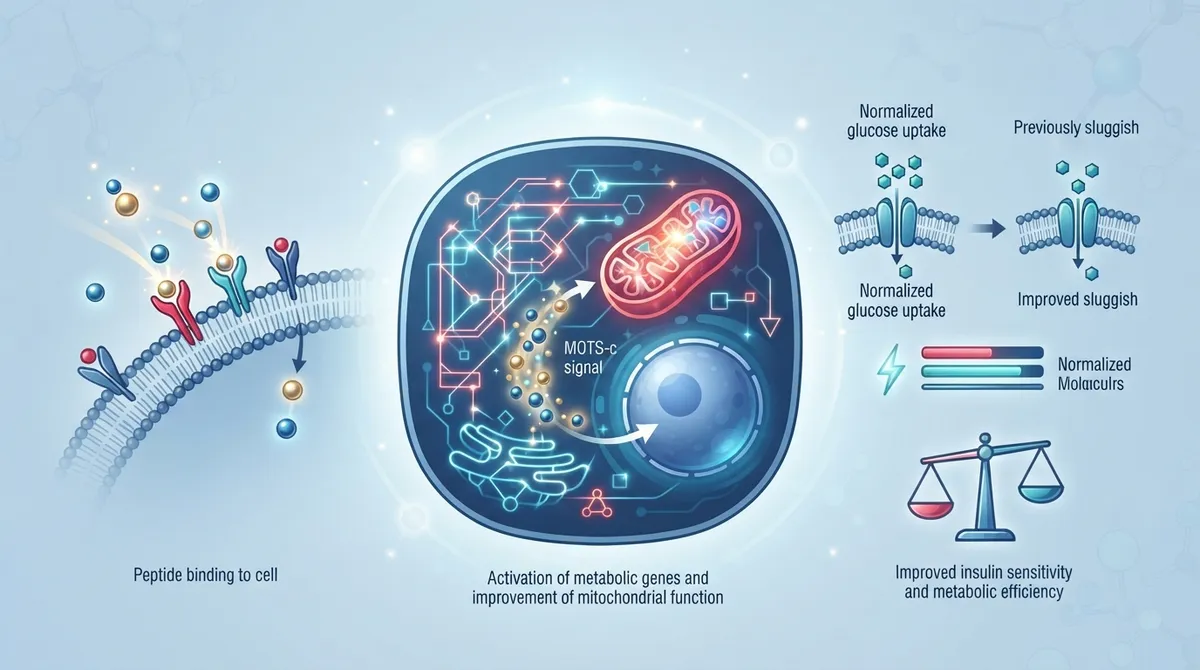
Early lab studies suggest MOTS-c might activate a cell pathway called AMPK. This pathway helps cells sense and manage energy. In theory, activating it could improve how muscle tissue takes up glucose, which would help with insulin resistance.
In the original 2015 mouse study, MOTS-c treatment prevented insulin resistance caused by diet and aging. Researchers found treated mice needed about 30% more glucose infusion to maintain normal blood sugar during insulin testing. This suggested improved insulin sensitivity in that animal model.
These findings sound promising. But mice are not humans, and lab results do not always translate into real-world treatments. This gap between animal data and human outcomes is where the current MOTS-c conversation gets complicated.

What Human Research Actually Shows
Human studies on MOTS-c exist, but they look very different from what marketing claims suggest. Most current research is observational. That means scientists measure MOTS-c levels in blood and compare them to health markers, rather than testing MOTS-c as a treatment.
A 2025 observational study found a link between blood MOTS-c levels and a measure called HOMA-IR, which estimates insulin resistance. The study also found that MOTS-c levels tend to drop as people age. This is interesting data, but it does not prove that giving someone MOTS-c would improve their insulin resistance.
Here is the key distinction patients need to understand:
- Observational studies show patterns and associations, not cause and effect
- Results can vary based on age, sex, body weight, and exercise habits
- Different labs use different testing methods, which can affect results
- No large human trial has confirmed that MOTS-c treatment reverses insulin resistance
The Ongoing Clinical Trial
There is one registered clinical trial worth mentioning. A Phase 2a study is currently testing subcutaneous MOTS-c in adults with prediabetes who are overweight or have obesity. This trial, listed under ClinicalTrials.gov as NCT07505745, plans to enroll about 120 participants.
The study will run for 12 weeks, with safety monitoring through week 16. Researchers will look at insulin sensitivity, HbA1c, fasting glucose, cholesterol levels, body weight, and waist size. This is a legitimate, structured effort to answer the question honestly.
As of now, results are not available. Until this trial and others like it are complete and published, we simply do not know if MOTS-c works safely in humans for insulin resistance.
Is MOTS-c FDA Approved?
No. This is one of the most important facts to understand. MOTS-c is not approved by the FDA for insulin resistance, prediabetes, diabetes, weight loss, or anti-aging purposes.
The FDA has reviewed MOTS-c through its Pharmacy Compounding Advisory Committee process. Briefing documents from this review stated clearly that MOTS-c is not an ingredient in any FDA-approved drug. The agency also noted a lack of adequate human safety and effectiveness data to support its use in compounded medications.
Even more concerning, FDA reviewers reported they could not find any clinical studies showing MOTS-c had ever been given to human subjects in a formal safety trial at the time of their review. This means the potential risks to humans remain largely unknown.
Why Online MOTS-c Products Raise Red Flags
Despite the lack of approval, MOTS-c is sold online as a "research peptide." These products often come with bold claims about weight loss, blood sugar control, and anti-aging benefits. Patients should approach these claims with serious caution.
Here are the main concerns with unregulated MOTS-c products:
- Purity and potency are not guaranteed, since these products are not manufactured under FDA oversight
- Sterility cannot be verified, which raises infection risk with injectable products
- Dosing information is not based on any confirmed human safety data
- Storage and handling issues can degrade the product without your knowledge
- Long-term safety data simply does not exist yet
- Immune reactions are possible and have not been studied in controlled settings
A product labeled "for research use only" is not meant for human consumption. When you buy these products for personal use, you are essentially becoming an unsupervised research subject. That is a serious risk to take with your health.
MOTS-c vs. Proven Insulin Resistance Treatments
It helps to see how MOTS-c compares to treatments your doctor may already discuss with you. The table below breaks down the differences.
|
Approach |
FDA Approved? |
Human Evidence |
Available Through |
|---|---|---|---|
|
MOTS-c |
No |
Limited, mostly observational |
Unregulated online sellers only |
|
Metformin |
Yes |
Decades of clinical trials |
Prescription through a doctor |
|
GLP-1 medications |
Yes (for specific uses) |
Large randomized trials |
Prescription through a doctor |
|
Nutrition and exercise changes |
Not applicable |
Extensive, well-established |
Guided by primary care team |
This comparison shows why our providers at InCare recommend sticking with treatments that have real clinical backing. If you are exploring options like medical weight loss programs, our team can walk you through choices supported by solid research.
What Actually Works for Insulin Resistance Today
The good news is that you do not need an unproven peptide to improve insulin sensitivity. Primary care medicine already offers effective, well-studied tools. Here is what your care team can offer:
Lifestyle Changes That Make a Real Difference
- Regular physical activity, especially strength training and aerobic exercise
- A balanced diet focused on whole foods and reduced refined sugar
- Consistent sleep schedules, since poor sleep worsens insulin resistance
- Stress management, because chronic stress raises cortisol and blood sugar
- Weight management when appropriate for your health goals
Medical Treatments With Strong Evidence
For many patients, lifestyle changes alone are not enough. That is where medications like metformin come in. Metformin has been used safely for decades and has a strong track record for improving insulin sensitivity in people with prediabetes and type 2 diabetes.
Other medications, including certain GLP-1 receptor agonists, have also shown strong results for blood sugar control and weight management. These options come with real clinical trial data behind them, something MOTS-c currently lacks.
How Primary Care Helps Manage Insulin Resistance
Managing insulin resistance is not a one-time fix. It requires ongoing monitoring, testing, and adjustments over time. This is exactly what a strong primary care relationship provides.
At our Tampa and Riverview locations, our providers use a step-by-step approach:
- Comprehensive lab testing to measure fasting glucose, HbA1c, and insulin levels
- Review of your health history, including family risk factors
- Discussion of lifestyle habits, including diet, sleep, and activity levels
- Personalized treatment planning based on your specific results
- Regular follow-up visits to track progress and adjust your plan
- Referrals to specialists when additional support is needed
Our providers, including Dr. Naveen Paddu, Dr. Pramjeet Ahluwalia, and Dr. Teshy John, take a whole-person approach to metabolic health. We also offer body composition analysis and metabolic breath analysis to give you a clearer picture of your metabolic health beyond a standard blood test.
Testing That Helps Diagnose Insulin Resistance
You cannot manage what you do not measure. Several tests help your provider understand your insulin sensitivity status:
- Fasting glucose test, which measures blood sugar after not eating for several hours
- HbA1c test, which shows your average blood sugar over the past three months
- Fasting insulin level, often used to calculate HOMA-IR
- Oral glucose tolerance test, which tracks how your body handles a sugar load over time
- Lipid panel, since insulin resistance often affects cholesterol levels too
These tests are widely available, well-validated, and covered by most insurance plans. This makes them a far more practical starting point than experimenting with unregulated peptides.
Should You Consider Peptide Therapy at All?
Peptide therapy is a growing field, and not every peptide carries the same level of uncertainty as MOTS-c. Some peptides have more established safety profiles and clinical backing for specific uses. If you are curious about peptide therapy options available in Tampa, it is worth having an open conversation with a qualified provider who can explain what is backed by evidence versus what remains experimental.
The right approach depends on your specific health history, goals, and current treatment plan. This is not a decision to make based on social media testimonials or online product descriptions.
Why Working With a Trusted Clinic Matters
Insulin resistance is a serious health concern that can lead to type 2 diabetes, heart disease, and other complications if left unmanaged. Choosing between an unproven peptide and evidence-based medical care is not a small decision.
At InCare, we combine advanced technology with real medical expertise. Our DNA gene testing services can also reveal genetic factors that may affect how your body processes glucose, giving your provider even more insight into your personalized care plan.
We understand that patients want options, and we respect your interest in staying informed about emerging treatments. But our responsibility is to guide you toward what is safe and proven. You can follow our updates and patient education content on Facebook, Instagram, and TikTok for more insights on metabolic health and wellness trends.
Many of our patients in Tampa and Riverview have shared their experiences managing insulin resistance and other metabolic conditions with our team. You can read InCare reviews on Google to see what real patients say about their care journey, or visit us on Google — InCare to explore our full patient feedback.
Moving Forward With Confidence
MOTS-c is a genuinely interesting area of scientific research. It may one day become a legitimate treatment option once proper human trials confirm its safety and effectiveness. For now, though, the evidence simply is not there. Relying on unregulated products sold online puts your health at unnecessary risk.
The smarter path forward is working with a primary care team that understands insulin resistance and has access to proven tools. Lifestyle changes, established medications, and regular monitoring remain the gold standard for managing this condition today.
If you are concerned about insulin resistance, prediabetes, or your overall metabolic health, do not wait for unproven treatments to catch up to the science. Our team is ready to help you build a personalized, evidence-based plan. Schedule your appointment today and take the first step toward better metabolic health with a team that puts your safety first.
FAQs
Q: What is MOTS-c and how might it affect insulin sensitivity?
A: MOTS-c is a small peptide made of 16 amino acids that your body produces naturally from mitochondrial DNA. Animal studies suggest it may activate energy-sensing pathways that improve glucose uptake in muscle tissue, but this effect has not been confirmed in large human trials.
Q: Does MOTS-c improve insulin resistance in humans or only in animal studies?
A: Most solid evidence for MOTS-c improving insulin resistance comes from mouse studies, not humans. Human research so far is mostly observational, meaning scientists have found associations between MOTS-c blood levels and insulin resistance markers, but no completed trial has proven that giving MOTS-c treats the condition in people.
Q: Is MOTS-c FDA approved for prediabetes, diabetes, or weight loss?
A: No. MOTS-c is not an FDA-approved medication for any of these conditions. The FDA has stated that MOTS-c is not an ingredient in any approved drug and that human safety and efficacy data remain insufficient.
Q: What are the risks of using MOTS-c injections or compounded products?
A: Products sold online as MOTS-c are typically unregulated research chemicals, not approved medications. Risks include uncertain purity, unknown dosing, sterility concerns, and a complete lack of long-term human safety data.
Q: How does MOTS-c compare with metformin or lifestyle treatment for insulin resistance?
A: Metformin and lifestyle changes like diet and exercise have decades of clinical research supporting their safety and effectiveness for insulin resistance. MOTS-c, by contrast, has limited human data and is not approved or recommended as a treatment at this time.