
Key Takeaways
- GHK-Cu is a naturally occurring copper peptide that declines with age; early research suggests it may support hair density by increasing dermal papilla cell activity and improving blood flow to follicles.
- Human evidence for GHK-Cu remains limited to small trials (38-45 subjects) showing modest improvements like +71.5 hairs/cm² versus placebo, making it an adjunctive option rather than a proven replacement for FDA-approved treatments.
- Visible results from GHK-Cu typically appear within 12-16 weeks of consistent use, aligning with natural hair growth cycles, but this timeline is not an established clinical benchmark.
- Product quality and dosing are not standardized across manufacturers, making medical supervision essential to ensure safe and appropriate use of copper peptide treatments.
- GHK-Cu works best combined with established treatments like minoxidil or finasteride, and alongside whole-body health approaches addressing nutrition, hormones, and stress that contribute to hair thinning.
- Ideal candidates for GHK-Cu include patients with early-stage thinning exploring supportive options, those already using proven treatments seeking adjunctive support, and wellness-focused individuals before considering invasive procedures.
Thinning hair sends many people searching online for answers long before they ever sit down with a doctor. If you have spent time reading about scalp health, you may have come across GHK-Cu follicle stimulation as a promising option. This copper peptide has become a popular topic in wellness circles, and for good reason. Early research suggests it may support hair density and follicle activity in ways that go beyond typical over-the-counter products.
At InCare, we believe patients deserve clear, honest information before trying any new treatment. This article breaks down what GHK-Cu is, how it may work on hair follicles, and what the current research actually shows. Whether you are a busy parent noticing more hair in the shower drain or someone proactively researching wellness options, understanding the science matters. Let's look at what makes this copper peptide worth discussing with your primary care provider.
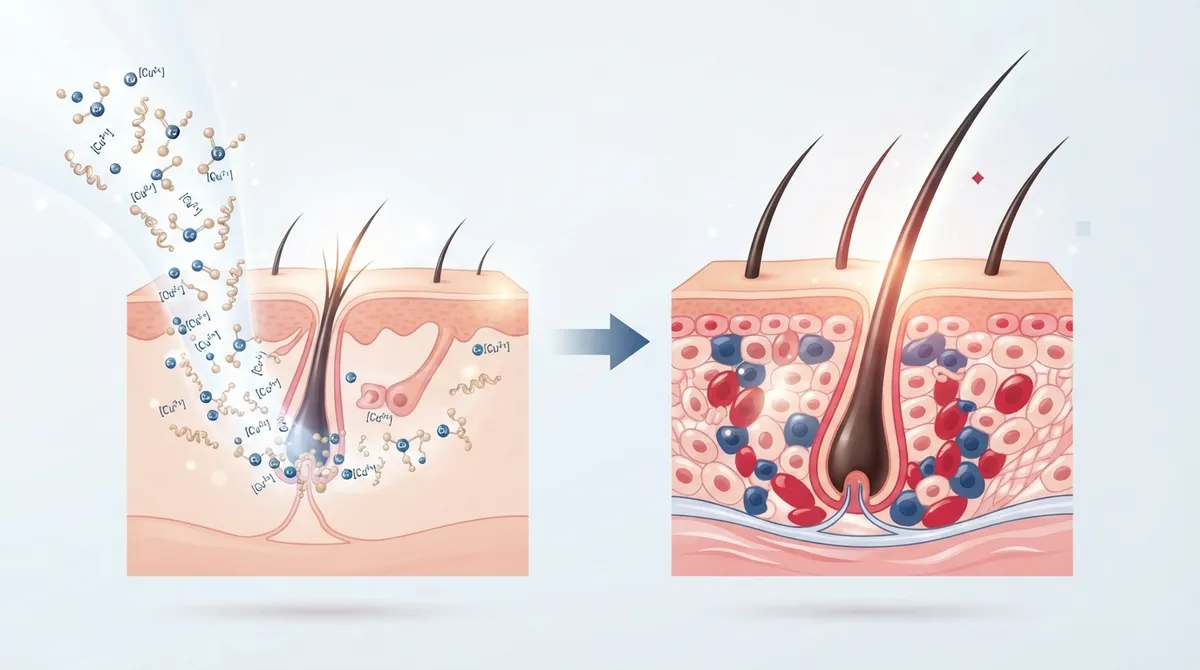
What Is GHK-Cu and Why Does It Matter for Hair?
GHK-Cu stands for glycyl-L-histidyl-L-lysine copper complex. It is a naturally occurring copper peptide found in human plasma, saliva, and urine. Researchers have studied it for decades because of its role in tissue repair and skin biology.
As people age, natural GHK-Cu levels in the body tend to decline. This drop has led scientists to explore whether replacing it topically could support tissue health, including the health of hair follicles. The idea is simple: if this peptide helps repair skin and connective tissue, it might also support the scalp environment where hair grows.
The Basic Science Behind Copper Peptides
Copper is an essential mineral for many body processes. It helps with wound healing, collagen production, and blood vessel formation. GHK-Cu carries copper to cells in a form the body can use efficiently.
This delivery system is what makes GHK-Cu different from simply taking copper supplements. The peptide structure helps target the compound to the right tissues, including the dermal layer of the scalp.
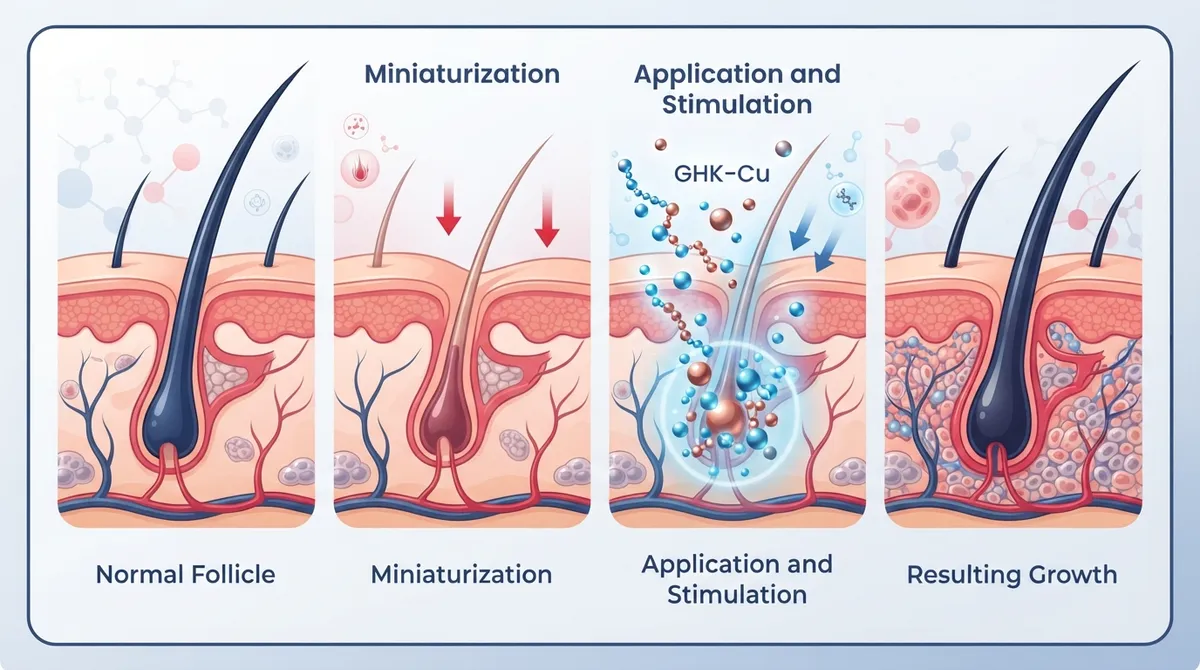
How GHK-Cu Follicle Stimulation May Work
Scientists have proposed several ways GHK-Cu might support hair growth. None of these mechanisms are fully proven in large human trials, but the laboratory evidence is fairly consistent.
- Dermal papilla cell activity: These cells sit at the base of each hair follicle and control the growth cycle. Some studies suggest GHK-Cu may increase their activity, which could support new hair growth.
- Increased VEGF signaling: Vascular endothelial growth factor helps grow new blood vessels. More blood flow to follicles may mean better nutrient delivery.
- Improved microcirculation: Better blood flow around the follicle may create a healthier growing environment.
- Collagen and extracellular matrix support: A healthy scalp structure may help follicles anchor and function properly.
- Wnt/beta-catenin pathway modulation: This pathway is closely tied to hair cycle regulation and follicle stem cell activity.
Together, these mechanisms paint a picture of a compound that could support the biological environment hair needs to grow. However, mechanism-level evidence is not the same as proof that a product works reliably for every patient.
What Does the Research Actually Show?
The strongest evidence for GHK-Cu comes from laboratory and animal studies. Human data exists, but it remains limited in scale. This distinction matters when deciding how much weight to give any single study.
|
Study Type |
Sample Size |
Key Finding |
|---|---|---|
|
6-month human trial (androgenetic alopecia) |
45 men |
+71.5 hairs/cm² vs +9.6 hairs/cm² with placebo |
|
24-week topical study |
38 alopecia subjects |
14.5% increase in follicle density, 12.6% increase in follicle diameter |
|
2016 randomized, double-blind trial |
Small cohort |
Supported hair-growth effects of a GHK-based spray, though not definitive |
|
Animal and ex vivo studies |
Various |
Repeated follicle stimulation and anagen-phase support |
These numbers are encouraging, but reviewers in the field are careful to note that copper peptides remain mechanistically plausible rather than clinically proven at a population scale. This is an important distinction for anyone considering treatment options.
How Long Before You See Results?
Consumer and clinical discussions often mention visible changes within 12 to 16 weeks of consistent use. This timeline is not an established clinical benchmark, but it lines up with the natural hair growth cycle, which typically requires several months to show measurable change.
GHK-Cu vs. Established Hair Loss Treatments
Patients often ask how GHK-Cu compares with treatments that have decades of clinical backing, like minoxidil or finasteride. The honest answer is that GHK-Cu should currently be viewed as an adjunctive or investigational option rather than a replacement for proven therapies.
|
Treatment |
Evidence Level |
Typical Use |
|---|---|---|
|
Minoxidil |
Strong, FDA-approved |
First-line topical treatment |
|
Finasteride |
Strong, FDA-approved |
First-line oral treatment for men |
|
GHK-Cu copper peptides |
Promising but limited |
Adjunctive or exploratory option |
|
PRP therapy |
Growing clinical support |
Procedure-based regenerative option |
If you are exploring options beyond traditional treatments, our hair restoration services at InCare can help you understand which approach fits your specific situation. Many patients benefit from combining evidence-based treatments with newer options under medical supervision.
Safety Considerations for Scalp Use
Available safety data on topical GHK-Cu use is generally reassuring, but there are still important factors to keep in mind before starting any new scalp treatment.
- Long-term safety data is still limited compared to established treatments
- Product quality varies widely between manufacturers
- Dosing consistency is not standardized across products
- Some individuals may experience mild skin irritation
- Products should be sourced from reputable, tested sources
- Medical supervision helps ensure safe and appropriate use
Because product quality and dosing are not standardized industry-wide, working with a knowledgeable provider matters. Our team can help you evaluate whether a copper peptide approach makes sense as part of your broader wellness plan.
Who Might Consider GHK-Cu Follicle Stimulation?
Certain patient groups tend to ask about GHK-Cu more often than others. Understanding where you fit can help guide the conversation with your provider.
- Patients with early-stage thinning who want to try supportive options before considering more intensive treatments
- Individuals already using minoxidil or finasteride who are curious about adjunctive support
- Wellness-focused patients interested in proactive, whole-body approaches to aging and tissue health
- Those exploring alternatives after limited results from other treatments
- Patients researching options before committing to more invasive procedures like transplants
If any of these describe your situation, scheduling a consultation is a smart next step. You can easily book an appointment online to discuss your scalp health and treatment goals with a provider who understands both the science and the practical realities of hair restoration.
Questions to Ask Your Provider
Before starting any new scalp treatment, it helps to come prepared with the right questions. This ensures you get personalized guidance rather than generic advice.
- What concentration of GHK-Cu is appropriate for my scalp condition?
- How does this fit with treatments I am already using?
- What results should I realistically expect, and by when?
- Are there any interactions with medications or supplements I take?
- How will we track progress over time?
These conversations are best had with a provider familiar with both dermatology basics and the broader wellness landscape. Our providers at InCare take time to walk through these details so you leave each visit with a clear plan.
Why Whole-Body Health Matters for Hair Growth
Hair health rarely exists in isolation. Nutritional deficiencies, hormone imbalances, and chronic stress can all contribute to thinning hair. This is why a comprehensive approach often works better than focusing on the scalp alone.
Our clinic offers DNA gene testing to help identify genetic factors that may affect hair growth patterns. We also provide IV hydration and vitamin drips for patients who need targeted nutritional support alongside topical treatments.
The Role of Preventive Care in Scalp Health
Regular wellness visits allow your provider to catch early warning signs before hair loss becomes more advanced. Learn more about what happens during an annual wellness visit and how it connects to broader health tracking, including hormone levels that can influence hair growth.
What Makes InCare Different
InCare combines advanced diagnostic tools with a personalized approach to wellness. Patients at our Tampa and Riverview, Florida locations benefit from a team that stays current with emerging research, including developing peptide therapies. You can read more about our approach on our About Us page.
We understand that patients researching GHK-Cu follicle stimulation want honest answers, not exaggerated marketing claims. Our providers, including those featured on our Naveen Paddu MD and Teshy John MD profiles, focus on evidence-based guidance tailored to each patient's needs.
Many patients also appreciate hearing from others who have gone through similar wellness journeys. You can find real patient feedback on our testimonials page, and see additional reviews by visiting Visit us on Google — InCare to read what our community has shared about their experience.
Staying Connected for Wellness Updates
Wellness science moves quickly, and new peptide research is published regularly. Following trusted sources helps you stay informed between visits. You can connect with us on Facebook for practice updates, or follow along on Instagram and TikTok for shorter wellness tips and behind-the-scenes looks at our Tampa and Riverview locations.
Making an Informed Decision
GHK-Cu follicle stimulation represents an exciting area of wellness research, but it is not a guaranteed fix. The science is promising at the laboratory level, with some encouraging small human studies. Still, it works best as part of a broader, medically guided strategy rather than a standalone miracle solution.
If you are dealing with thinning hair and want a clear-eyed, science-based conversation about your options, our team is ready to help. We can discuss whether copper peptide therapy, combined with proven treatments and whole-body wellness support, makes sense for your goals.
Ready to explore your hair health options with a provider who puts evidence first? Reach out to our team today to schedule a consultation and take the next step toward healthier hair and a healthier you.
FAQs
Q: Does GHK-Cu actually stimulate hair follicles?
A: Laboratory and animal studies show GHK-Cu may support dermal papilla cell activity and improve microcirculation around follicles. Human evidence is promising but still limited in scale, so it should be viewed as a supportive option rather than a proven standalone therapy.
Q: How does GHK-Cu compare with minoxidil for hair growth?
A: Minoxidil has decades of clinical research and FDA approval behind it, while GHK-Cu remains an investigational option with smaller studies. Many providers view copper peptides as an adjunctive treatment rather than a replacement for established therapies.
Q: Is GHK-Cu safe to use on the scalp?
A: Available safety data for topical use is generally reassuring, though long-term studies remain limited. Product quality and dosing consistency vary, so working with a medical provider helps ensure safe, appropriate use.
Q: How long does it take to see results from GHK-Cu?
A: Some consumer and clinical reports describe visible changes within 12 to 16 weeks of consistent use. This timeline is not an established clinical standard, and results can vary significantly between individuals.
Q: Can GHK-Cu help with androgenetic alopecia?
A: Small studies have shown measurable increases in hair density and follicle diameter in patients with androgenetic alopecia. However, sample sizes remain small, and larger trials are needed before it can be considered a first-line treatment.