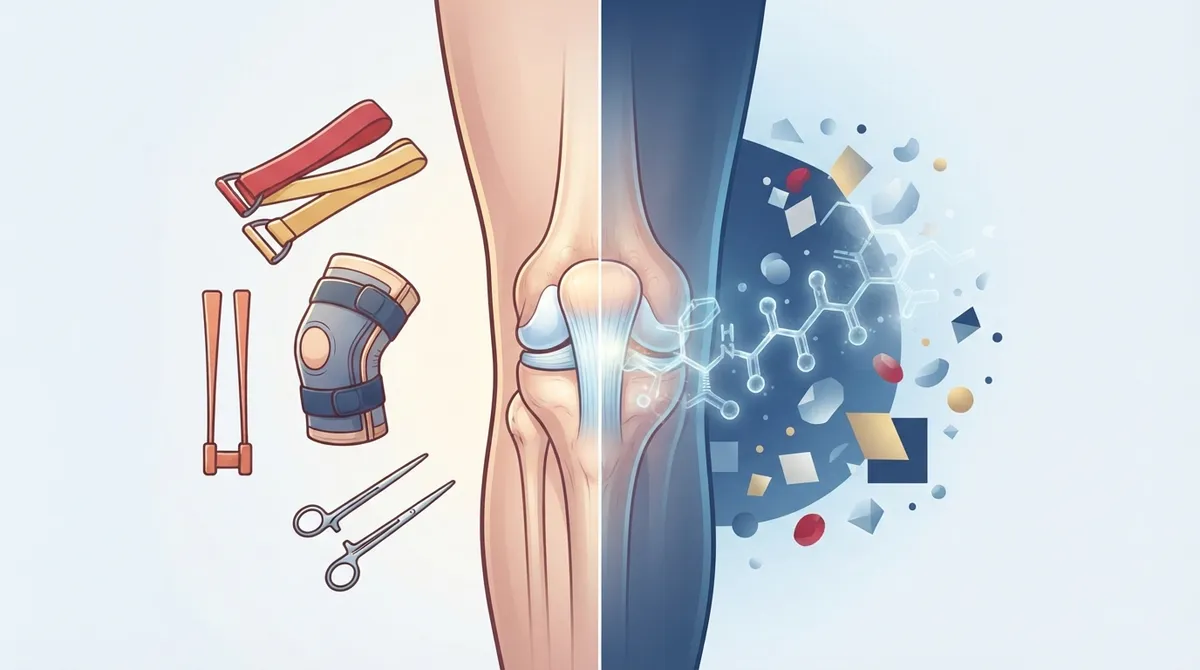
Key Takeaways
- BPC-157 lacks FDA approval and human clinical trials; current evidence comes almost entirely from animal studies, making its effectiveness for human ligament healing unproven despite promising rat model results.
- Standard ligament treatments like physical therapy, bracing, and surgery have decades of human clinical evidence and remain the recommended first-line approach before considering any investigational peptide therapy.
- The FDA classified BPC-157 as a Category 2 bulk substance in 2023, creating safety concerns with no standardized dosing, inconsistent product purity, and no established monitoring protocols for human use.
- Consult a licensed primary care provider before considering BPC-157, asking specifically about FDA status, proven alternatives, research limitations, and how progress will be tracked.
- Human safety data for BPC-157 is limited to one small pilot study; long-term safety, proper dosing guidelines, and product quality vary widely between suppliers, creating real risks outside medical supervision.
- Support your ligament recovery with proven whole-body wellness practices including proper hydration, balanced nutrition for collagen production, and comprehensive health evaluation rather than chasing unproven peptide trends.
Ligament injuries can sideline you for months. If you have searched for faster recovery options, you may have come across BPC-157, a peptide getting attention in wellness circles. Many people wonder if this compound can speed up healing after a sprain, tear, or ligament strain. This article breaks down what science actually shows, what remains unproven, and how patients should think about ligament recovery in 2026.
BPC-157 is a synthetic peptide made of 15 amino acids. It comes from a protective substance found in human gastric juice. Researchers have studied it mostly in animals, especially rats, to see if it helps ligaments heal faster and stronger. The results are interesting, but they come with real limits that every patient should understand before making decisions about their care.

What Is BPC-157 and Why Is It Linked to Ligament Healing
BPC-157 stands for Body Protection Compound-157. Scientists first isolated it from gastric juice because it seemed to protect and repair tissue in the stomach lining. Over time, researchers began testing it on other types of tissue, including tendons, muscles, and ligaments.
The idea behind BPC-157 is that it may help the body build new blood vessels, organize collagen fibers, and support tissue repair. These are all steps your body needs to heal a damaged ligament. This is why the compound caught the interest of athletes, wellness seekers, and researchers alike.
How BPC-157 Is Believed to Work
Animal studies suggest BPC-157 may support healing through several pathways:
- Improved blood vessel growth around injured tissue
- Better organization of collagen fibers in the ligament
- Reduced inflammation at the injury site
- Faster return of strength and flexibility in animal models
- Support for nerve signaling near the injury
These mechanisms sound promising. But it is important to know where this evidence actually comes from before drawing conclusions about human use.

What the Research Actually Shows
Most of what we know about BPC-157 and ligament healing comes from animal studies, not human trials. The most cited research involves rat models with medial collateral ligament (MCL) injuries. Scientists gave the peptide through different methods, including oral doses, local injections, and drinking water.
Key Findings from Animal Studies
Study DetailReported FindingRat MCL injury modelImproved functional and biomechanical healingIntraperitoneal dose (10 microg or 10 ng/kg)Better collagen organization and vascularizationOral delivery (0.16 microg/ml in water)Improved macroscopic and histological healingLocal injection at injury siteFaster recovery of ligament strength in rats
These findings are consistent across multiple rodent studies. A 2025 narrative review confirmed that preclinical research consistently shows accelerated tendon, muscle, and ligament healing in animals. However, the same review stressed that human confirmation is still missing.
The Gap Between Animal Data and Human Evidence
This is the most important point for anyone considering BPC-157 for ligament damage. There are no large, high-quality clinical trials in humans. A sports medicine review published in 2026 states clearly that no multicenter human trials have tested BPC-157 for safety, proper dosing, or long-term use.
This means we do not have solid proof that what works in a rat's knee will work the same way in a human ligament. Bodies are complex, and results from animal models do not always translate directly to people.
Is BPC-157 FDA-Approved for Ligament Injuries
No. BPC-157 does not have FDA approval for any medical condition, including ligament damage. In 2023, the FDA classified BPC-157 as a Category 2 bulk drug substance. This classification signals safety concerns and blocks certain forms of compounding.
This is a critical fact for patients to understand. Without FDA approval, there is no official dosing guide, no required safety testing, and no guarantee of product purity from every source. This creates real risk for anyone using it outside of careful medical guidance.
Why FDA Status Matters for Patient Safety
- No standardized dosing exists for ligament injuries in humans
- Product purity and sourcing can vary widely between suppliers
- Long-term safety data in people has not been established
- Legal and regulatory status can change compounding availability
- Quality control issues may lead to inconsistent or unsafe products
Patients considering any peptide therapy should discuss these concerns openly with a licensed provider. Our team at InCare reviews the latest research and regulatory updates to help patients make informed decisions about peptide therapy in Tampa and beyond.
Safety and Side Effects: What We Know So Far
Safety data on BPC-157 in humans remains limited. A small human pilot study exists, along with tolerability data from animal research. But this is far from the large-scale safety studies used for approved medications.
Reported Safety Signals
- Animal studies report general tolerability at tested doses
- A small human pilot study noted some tolerability, but sample sizes were very limited
- Long-term safety in humans has not been confirmed through large trials
- No standardized monitoring protocol exists for patients using the peptide
- Sourcing quality varies, which can affect purity and safety outcomes
Because of these gaps, primary care providers must approach BPC-157 conversations with caution. Patients deserve honest information, not hype, especially when a ligament injury already limits their daily life.
How BPC-157 Compares to Standard Ligament Care
Standard ligament treatment relies on approaches with decades of clinical evidence behind them. These options remain the foundation of care at most primary care and orthopedic practices.
Treatment ApproachEvidence LevelFDA StatusPhysical therapy and rehab exercisesStrong human clinical evidenceStandard of careBracing and activity modificationWell established in orthopedicsStandard of careSurgical repair (for severe tears)Extensive clinical outcome dataFDA-regulated proceduresBPC-157 peptideAnimal studies onlyNot FDA-approved; Category 2 bulk substance
This comparison shows why standard care remains the recommended path for most ligament injuries. Physical therapy, bracing, and in some cases surgery have years of human outcome data supporting their use.
Steps Patients Should Take Before Considering Any Peptide Therapy
If you are dealing with a ligament injury, taking the right first steps matters more than chasing trends. Consider this simple process:
- Get a proper diagnosis from a licensed medical provider
- Discuss imaging results, such as an MRI, to understand injury severity
- Review proven treatment options like physical therapy first
- Ask your provider about the current research status of any peptide therapy
- Understand the legal and safety concerns tied to unregulated compounds
- Make decisions based on your full health picture, not social media trends
Following these steps helps protect your health while still exploring all reasonable options for recovery. A trusted primary care provider can guide you through this process with clear, evidence-based advice.
Why Whole-Body Evaluation Matters
Ligament injuries rarely happen in isolation. Your overall health, including hydration, nutrition, and metabolic function, affects how well your body heals. This is why a comprehensive approach to wellness can support recovery, even while peptide research continues to develop.
- Proper hydration supports tissue repair and circulation
- Balanced nutrition provides building blocks for collagen production
- Body composition analysis can reveal factors affecting recovery speed
- DNA insights may highlight how your body processes inflammation
InCare offers services like IV hydration and vitamin drips and DNA gene testing that support overall wellness during recovery. These services do not replace proven ligament treatments, but they can complement a well-rounded care plan.
Questions to Ask Your Primary Care Provider
Before considering any investigational compound, bring these questions to your next visit:
- What does current research say about this treatment for my specific injury?
- Is this treatment FDA-approved, and what does that mean for safety?
- What are proven alternatives with stronger clinical evidence?
- How will we track progress and adjust the treatment plan?
- What are the risks if I choose to try an unregulated compound anyway?
A good provider will answer these questions honestly, even if the answer is "we do not have enough human data yet." This honesty protects your health and builds trust in your care team.
Why Working With a Trusted Clinic Matters
Ligament injuries deserve careful, evidence-based attention. Rushing into unproven treatments without guidance can waste time and money, or worse, cause harm. Working with a clinic that stays current on research helps you avoid these pitfalls.
InCare, with locations in Tampa and Riverview, Florida, combines medical expertise with advanced technology to support patients through injury recovery and long-term wellness. Our providers stay informed on emerging research, including peptide therapies, so you get honest, balanced guidance rather than marketing hype.
Patients consistently share positive experiences with our team. You can visit us on Google — InCare to read real patient reviews and see why so many Tampa Bay residents trust us with their primary care needs. You can also follow our updates on Facebook, Instagram, and TikTok for wellness tips and clinic news.
Looking Ahead: The Future of Peptide Research
Peptide science continues to evolve quickly. Researchers are working to close the gap between animal studies and human trials. Until stronger human data exists, patients should treat BPC-157 as an investigational compound rather than a proven treatment.
This does not mean the research is worthless. It means patience and caution matter. Reviewing published studies, understanding FDA classifications, and talking with a knowledgeable provider are the best steps you can take right now.
What Responsible Use Looks Like
- Rely on licensed providers for any peptide discussion
- Avoid unverified online sources for sourcing peptides
- Prioritize treatments with strong human clinical evidence first
- Stay updated as new research and FDA guidance emerges
- Combine any therapy discussion with a full wellness evaluation
This balanced approach protects your health while keeping the door open to future advances in ligament care.
Moving Forward With Confidence
Ligament injuries are frustrating, but you do not have to navigate recovery decisions alone. Proven treatments like physical therapy, bracing, and in some cases surgery remain the gold standard. BPC-157 remains an area of active research, not an approved solution, and patients deserve clear information before making choices about their care.
If you are dealing with a ligament injury or want to discuss safe, evidence-based recovery options, our team is ready to help. Reach out to our care team today to schedule a consultation, or book your appointment now to start your personalized recovery plan with InCare in Tampa or Riverview.
FAQs
Q: Does BPC-157 actually help ligament healing in humans?
A: Current evidence comes almost entirely from animal studies, particularly rat ligament models. No large-scale human clinical trials confirm that BPC-157 improves ligament healing in people, so its effectiveness in humans remains unproven.
Q: Is BPC-157 approved by the FDA for ligament injuries?
A: No, BPC-157 has no FDA-approved indication for any condition, including ligament damage. In 2023, the FDA classified it as a Category 2 bulk drug substance, which restricts certain compounding uses.
Q: What are the safety concerns with BPC-157?
A: Human safety data is limited to a small pilot study and animal research. Long-term safety, proper dosing, and product purity have not been established through large clinical trials, so caution is warranted.
Q: How does BPC-157 compare to standard ligament treatment?
A: Standard treatments like physical therapy, bracing, and surgery have decades of human clinical evidence supporting their use. BPC-157 lacks this level of proven human data, making it an investigational option rather than a standard treatment.
Q: Should I ask my primary care provider about BPC-157 for a sports injury?
A: Yes, it is wise to discuss any peptide therapy with a licensed provider before considering it. A knowledgeable primary care team can explain current research limits and recommend evidence-based recovery options first.