Key Takeaways
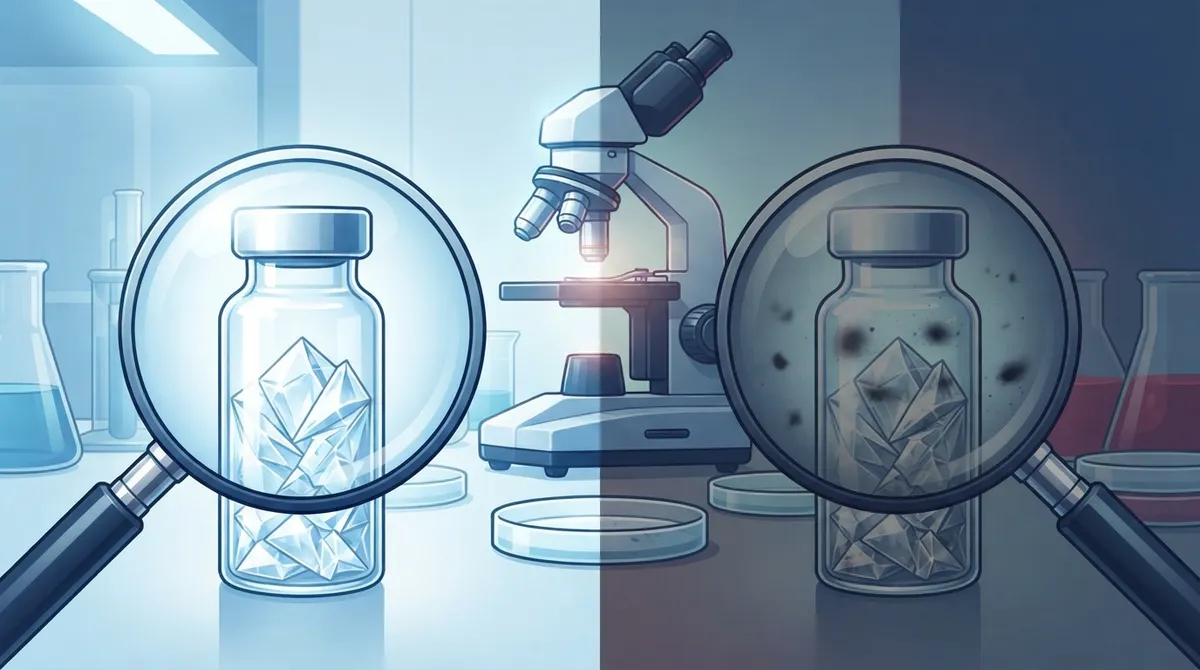
- Only 32% of tested CJC-1295 samples passed purity testing (64 out of 200), demonstrating widespread quality control failures across suppliers and emphasizing the need for independent third-party verification before purchase.
- High purity percentages (98-99.8%) do not guarantee safety—purity testing only measures chemical composition and does NOT check for sterility, endotoxins, or heavy metals, which require separate independent testing.
- A trustworthy Certificate of Analysis must include the independent lab name, matching batch number, recent test date, visible chromatogram, and mass spectrometry confirmation; missing any of these details signals potential credibility issues.
- Request full COAs directly and verify batch numbers match your actual product, as some sellers post outdated or unrelated certificates to create false credibility without confirming the tested sample matches what you receive.
Peptide therapy has become a popular topic among wellness-focused patients looking to optimize energy, recovery, and body composition. But before anyone considers a peptide like CJC-1295, one question matters more than most people realize: how do you know what's actually in the vial? CJC-1295 purity testing answers that question, and understanding it can protect your health and your wallet.
This guide breaks down exactly what purity testing measures, why it matters, and what red flags to watch for. Whether you are a tech-savvy professional researching wellness trends or a parent trying to make sense of what you read online, this article will walk you through the facts in plain language. At InCare, our providers in Tampa and Riverview believe patients deserve clear, honest information before making any decision about their health.

1. What CJC-1295 Purity Testing Actually Measures
CJC-1295 purity testing checks how much of a sample is the actual peptide versus leftover chemicals, byproducts, or degraded material. Labs use this process to confirm that what is labeled as CJC-1295 truly matches its chemical structure. This step is separate from checking whether a product is safe to use in the body.
Purity results are usually shown as a percentage. A higher percentage means fewer impurities are present in the sample. This number gives researchers and quality-focused suppliers a way to compare one batch to another.

2. How Labs Test CJC-1295 for Purity
The main method used is called High-Performance Liquid Chromatography, or HPLC. This technique separates a sample into its different parts and measures how much of it is the main peptide peak compared to smaller, unwanted peaks.
Many labs pair HPLC with mass spectrometry. This second test confirms the identity of the molecule, not just its purity level. Together, these two methods give a clearer picture of what is actually in a sample.
Steps Involved in a Standard Purity Test
- A small sample of the peptide is dissolved and prepared for testing.
- The sample is run through an HPLC machine to separate its components.
- A chromatogram is generated showing peaks for the main peptide and any impurities.
- Mass spectrometry may be used to confirm the molecule matches CJC-1295.
- The lab calculates the percentage of the main peak against total peak area.
- Results are compiled into a Certificate of Analysis, or COA.
3. What Purity Percentage Is Considered Acceptable
Research-grade CJC-1295 is commonly described as having a purity of at least 98%. For more sensitive research work, many labs prefer results above 99% since even small impurities can affect outcomes.
Independent lab reports have shown purity values ranging from about 99% to 99.8% for some tested batches. These numbers are specific to each product and batch, not a fixed industry standard. One vendor tracking service reported testing 200 CJC-1295 samples, with only 64 passing and 135 failing. This shows how much quality can vary between suppliers.
Purity LevelTypical Use ContextNotes98% or higherGeneral research-grade standardMinimum threshold often cited by labs99% or higherSensitive research applicationsPreferred to limit impurity interference99.6% - 99.8%Example independent COA resultsBatch-specific, not universal
4. What a Trustworthy Certificate of Analysis Should Include
A Certificate of Analysis, or COA, is the document a lab provides after testing a peptide sample. Not all COAs are equal, and some leave out important details that patients and researchers should look for.
- The name of the testing laboratory, ideally an independent third party
- A batch or lot number matching the actual product
- The date the test was performed
- A visible chromatogram showing the purity results
- Identity confirmation through mass spectrometry
- Clear labeling of the peptide name and concentration
Why the Batch Number Matters
Without a matching batch number, there is no way to confirm the COA belongs to the product you are looking at. Some sellers post outdated or unrelated COAs to make products look more credible than they are.
5. Why High Purity Alone Does Not Guarantee Safety
This is one of the most misunderstood parts of purity testing. A 99% purity result tells you about the chemical makeup of the sample. It does not tell you whether the product is sterile, free of bacteria, or safe for injection.
Purity testing does not check for endotoxins, which are harmful substances that can trigger a dangerous immune response. It also does not confirm the presence or absence of heavy metals. FDA advisory material on compounded peptides has noted that purity testing may be set at 98% or higher in some submissions, while also pointing out gaps in bioburden and endotoxin data.
Key Gaps Purity Testing Does Not Cover
- Sterility and microbial contamination
- Endotoxin levels
- Heavy metal content
- Confirmation that the tested vial matches the batch being sold
- Clinical safety or effectiveness for any specific use
6. HPLC vs. Mass Spectrometry: What Is the Difference
These two tests serve different purposes, and understanding the difference helps you read a COA more accurately.
Test MethodWhat It MeasuresLimitationHPLCPercentage purity of the main peptide compared to impuritiesCannot confirm exact molecular identity aloneMass SpectrometryConfirms the molecular weight and identity of the compoundDoes not measure purity percentage by itself
When a COA lists both HPLC-UV and mass spectrometry results, it generally reflects a more thorough testing process. Some example reports have shown results like 99.60% HPLC-UV-MS purity, combining both methods into one confirmed figure.
7. Common Reasons CJC-1295 Products Fail Purity Testing
Batch-to-batch variability is a real concern in the peptide market. Several factors can cause a sample to fail quality checks.
- Improper synthesis during manufacturing, leading to incomplete peptide chains
- Poor storage conditions that cause degradation before testing
- Contamination introduced during handling or packaging
- Use of lower-grade raw materials to cut production costs
- Lack of independent oversight during the manufacturing process
With one tracking service reporting 135 failed tests out of 200, it is clear that quality control gaps remain common across the market. This is why relying on a single COA without independent verification carries real risk.
8. Where CJC-1295 Fits Into Wellness and Primary Care Conversations
CJC-1295 is often discussed as a growth-hormone-releasing peptide, which places it within broader conversations about hormone health and healthy aging. It is important to separate purity testing, which addresses product quality, from questions about medical appropriateness or effectiveness.
Patients considering any peptide-related wellness approach should talk with a licensed provider first. At InCare, our providers can help you understand how hormone-related therapies fit into your overall health picture, alongside services like DNA gene testing and body composition analysis. These tools give a fuller picture of your health before any treatment decision is made.
Questions to Ask Before Considering Any Peptide Product
- Has this product been tested by an independent, accredited laboratory?
- Does the COA include a matching batch number and recent test date?
- Has sterility or endotoxin testing been performed, not just purity testing?
- Is a licensed medical provider involved in guiding the decision?
9. How to Protect Yourself When Purity Claims Are Involved
The wellness market moves quickly, and marketing claims can outpace actual safety data. Being an informed patient means asking the right questions and not assuming a high purity number tells the whole story.
- Always request the full COA, not just a summary number.
- Check that the lab name and batch number are verifiable.
- Ask whether sterility and endotoxin testing were performed separately.
- Discuss any peptide-related interest with a licensed primary care provider.
- Avoid products that only advertise a purity percentage with no supporting documentation.
Our team at InCare, with locations in Tampa and Riverview, helps patients navigate wellness decisions with clear, evidence-based guidance. You can learn more about how peptide therapy conversations happen safely in a clinical setting, and explore related topics like what CJC-1295 actually does for your health.
Many patients also follow health and wellness updates through social platforms. You can find helpful tips and clinic updates on our Facebook page, see behind-the-scenes wellness content on Instagram, and catch quick health tips on TikTok.
Making Informed Decisions About Peptide Quality
CJC-1295 purity testing is a valuable tool, but it is only one piece of a much larger safety picture. Purity percentages tell you about chemical composition, not sterility, safety, or medical suitability. Patients who understand this distinction are better equipped to ask smart questions and avoid products that rely on flashy numbers alone.
If you are curious about how peptide therapy, hormone health, or advanced wellness screening might fit into your care plan, our team is ready to help. See what real patients say about their experience by visiting InCare on Visit us on Google — InCare, where our Tampa and Riverview locations maintain a strong reputation for thorough, honest care.
Ready to talk with a provider about your wellness goals? Book Your Appointment Today and take the next step toward informed, personalized care.
FAQs
Q: What does CJC-1295 purity testing measure?
A: CJC-1295 purity testing measures how much of a sample is the actual peptide compared to impurities or degraded material. It is typically expressed as a percentage using HPLC analysis, sometimes confirmed with mass spectrometry for identity verification.
Q: What purity percentage is considered acceptable for CJC-1295?
A: Research-grade CJC-1295 is commonly described as at least 98% pure. Many labs prefer 99% or higher for sensitive research applications, though independent testing shows results can vary widely between batches and suppliers.
Q: Does a high-purity CJC-1295 COA prove it is safe or sterile?
A: No, a purity percentage alone does not confirm sterility, endotoxin safety, or heavy-metal status. These are separate tests that must be performed independently of standard purity analysis.
Q: What should a CJC-1295 certificate of analysis include?
A: A trustworthy COA should include the lab name, batch or lot number, test date, a visible chromatogram, and identity confirmation through mass spectrometry. Missing details make it harder to verify the product actually matches the report.
Q: Why do some CJC-1295 products fail purity testing?
A: Products can fail due to improper synthesis, poor storage, contamination during handling, or use of lower-quality raw materials. Independent tracking has shown a significant portion of tested batches fail to meet expected purity standards.