
Key Takeaways
- Peptide therapy is not one treatment: men can be prescribed peptide-based drugs for an established medical indication, but recovery from training or injury is not an approved use for BPC-157 or TB-500.
- Human evidence for BPC-157 and TB-500 is thin; most support comes from lab and animal studies, so no clinic can honestly guarantee faster tendon, ligament, or muscle healing.
- The FDA has not approved BPC-157 or TB-500 for injury recovery, and federal materials cite inadequate human safety data and possible immune reactions with injectable routes.
- Compounded peptides are not verified as safe or effective; ask who made the product, what is in the vial, and what human studies support its use before any injection.
You finish a hard training block, tweak a hamstring, or wake up with a stubborn tendon that will not settle. Then your social feed offers a fix: a peptide injection that promises faster healing. It sounds modern and efficient. It also raises a fair question: can men use peptide therapy for recovery, and is it safe?
The short answer is nuanced. Men can be prescribed certain peptide-based medicines when there is a clear medical reason. But "peptide therapy for recovery" is not one standard treatment. The evidence, safety record, and legal status vary widely from one peptide to the next. Popular products like BPC-157 and TB-500 have far more marketing than human research behind them.
This guide gives you eight clear facts, written for busy adults who want to optimize their health without gambling on unproven claims. You will learn what the research supports, where the risks sit, and what a primary care clinician can do for you first.
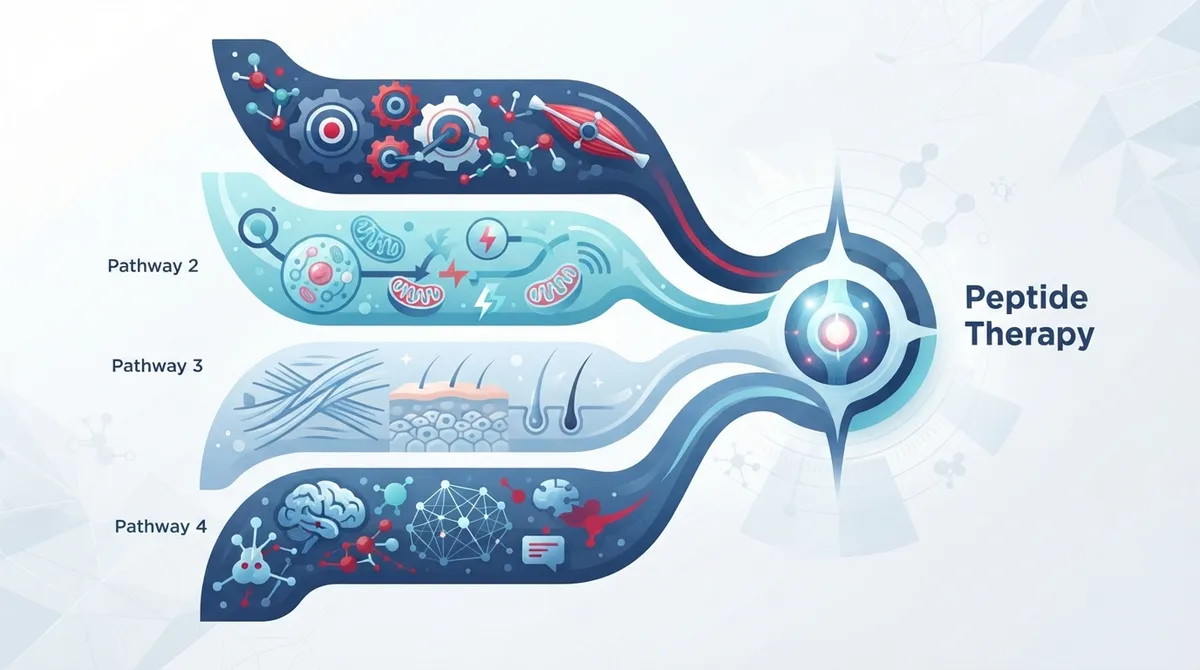
1. Peptide Therapy Is Not One Treatment
Peptides are short chains of amino acids. Your body makes thousands of them, and some are used as approved medicines, such as insulin. That is why the word sounds trustworthy. But the label "peptide therapy" covers very different substances with very different evidence.
Men can be prescribed peptide-based drugs when there is an established medical indication. A recovery goal alone, such as healing a sore tendon faster, is not an approved indication for the peptides most often marketed to athletes. Before you consider any product, ask which peptide it is, what it is approved for, and what human data supports the use.
Our team explains how these options differ in our guide to peptide therapy in 2026.

2. The Evidence for BPC-157 and TB-500 Is Thin in People
BPC-157 and TB-500 are the two names men hear most for tendon, ligament, muscle, and joint healing. Much of the supporting research comes from lab and animal studies. Animal findings do not prove a benefit in people.
Robust clinical trials in humans are lacking. That means no one can honestly promise you a faster recovery timeline. Any clinic that guarantees results is going beyond the science.
If you want a deeper look, read our overview of BPC-157 facts every wellness patient should know and our explainer on how to understand TB-500 before you consider it.
What the Research Does and Does Not Show
- Animal and lab studies: These suggest possible effects on tissue repair, but they are early signals only.
- Human trials: Large, well-controlled studies for injury recovery are not available.
- Dosing and timing: No proven, standard human protocol exists for recovery.
3. FDA Approval Is Absent for Recovery Use
The FDA has not approved BPC-157 or TB-500 as treatments for injury recovery. This matters because approval means a drug has been reviewed for safety, effectiveness, and manufacturing quality for a specific use.
Federal briefing materials published in 2026 describe a lack of adequate human safety information for TB-500. They also raise concerns about injectable routes, including the potential for immune reactions. In plain terms, regulators are still asking basic safety questions about these products.
4. Compounded Does Not Mean Proven
Many men assume that a peptide offered by a wellness clinic must be vetted. That is not a safe assumption. A compounding pharmacy prepares customized medicines, but compounding does not establish that a drug is safe or effective.
The FDA has flagged concerns about certain compounded peptides. These include limited human safety data, ingredients that are not well characterized, possible impurities, and immune reactions, especially with injectables.
|
Factor |
FDA-Approved Drug |
Compounded or Unverified Peptide |
|---|---|---|
|
Reviewed for the stated use |
Yes |
No |
|
Human safety data |
Established |
Often limited |
|
Ingredient consistency |
Regulated supply chain |
Can vary |
|
Impurity risk |
Controlled by standards |
Less certain |
If you are comparing options, our guide on FDA-approved vs. compounded peptides walks through the trade-offs.
5. Real Risks Exist, Especially With Injections
Injectable peptides can cause injection-site reactions and other side effects. For many unapproved recovery peptides, the frequency of problems is simply unknown. Long-term effects, drug interactions, and risks for men with conditions like heart disease, diabetes, or a cancer history are not well established.
Product quality is another concern. Outside approved drug supply chains, the dose in the vial may not match the label. That uncertainty is a risk by itself.
Questions to Ask Before Any Injection
- What exactly is in this product, and who made it?
- Is it FDA-approved for my condition?
- What human studies support this use?
- What side effects should I watch for, and who do I call?
- How will my medications and health conditions affect the risk?
6. Athletes Must Check Anti-Doping Rules
If you compete in any tested sport, stop and verify the rules first. BPC-157 and TB-500 have been identified in anti-doping discussions as prohibited substances. A recovery supplement is not worth a suspension.
Check the current World Anti-Doping Agency list and your sport's governing body before you use any peptide. Rules change, so confirm them each season rather than relying on a past answer.
7. Oral Collagen Peptides Are a Different Story
Not every peptide product carries the same uncertainty. A 2021 systematic review of collagen peptide supplementation, published in Amino Acids, included studies in recreationally active men. It reported some favorable findings for perceived recovery and exercise-related discomfort.
Keep the limits in mind. These results apply to oral collagen supplements, not injectable BPC-157 or TB-500. They also should not be stretched to other peptides. Still, it shows why a clinician can help you separate a reasonable supplement from a risky one.
8. A Primary Care Clinician Should Come First
The most useful step is also the least flashy. Have your injury assessed. The cause and severity matter more than any product. A sore tendon, a partial muscle tear, and referred pain from the spine each need a different plan.
A primary care clinician can review your history and medications, order imaging or labs when needed, and build an evidence-based plan. That plan often includes:
- Accurate diagnosis of the injury and its severity
- Rehabilitation or physical therapy with a graded return to activity
- Sleep and nutrition support, which strongly shape healing
- Approved treatments when they are medically indicated
- Body and metabolic data such as body composition testing to track progress
For fast answers on a new strain or sprain, urgent care can evaluate you the same day. For ongoing training, aging, and prevention goals, primary care gives you a long-term partner. If hormones or energy are part of your concern, a provider can also discuss testosterone replacement therapy when testing shows a true medical need.
At InCare, our team combines advanced technology with personalized care at our Tampa and Riverview locations. You can follow InCare on Facebook or see what our patients say, and you can visit us on Google — InCare to read reviews of our Tampa and Riverview care.
The Bottom Line for Men Considering Peptides
So, can men use peptide therapy for recovery? Men can be treated with peptide-based medicines when a proven medical indication exists. For popular recovery peptides like BPC-157 and TB-500, human evidence is inadequate, FDA approval for this use is absent, and product quality can be uncertain. That does not mean you are out of options. It means the smart path starts with a proper diagnosis and proven care.
Do not rely on marketing claims or unverified vials. Ask direct questions, check anti-doping rules if you compete, and let a qualified clinician guide each step. When you are ready to talk through an injury or recovery goal, book your visit with InCare today or contact our team with questions.
FAQs
Q: Can men use peptide therapy to recover from a workout or sports injury?
A: Men can be prescribed peptide-based medicines when there is an established medical indication, but recovery from a workout or sports injury is not an approved use for popular products like BPC-157 or TB-500. A clinician should first diagnose the injury and recommend evidence-based care such as rehabilitation, sleep, and nutrition support.
Q: Does BPC-157 work for tendon, ligament, or muscle injuries in humans?
A: Robust human trials do not currently support faster tendon, ligament, or muscle healing with BPC-157. Much of the supporting research is preclinical, and animal findings do not establish human benefit.
Q: Is TB-500 FDA-approved for injury recovery?
A: No. The FDA has not approved TB-500 for injury recovery. Federal briefing materials also describe a lack of adequate human safety information and concerns about injectable-route risks, including possible immune reactions.
Q: Are compounded recovery peptides safe?
A: Compounding does not establish safety or effectiveness. The FDA has raised concerns about some compounded peptides, including limited human safety data, poorly characterized ingredients, potential impurities, and immune reactions with injectable products.
Q: Can athletes use BPC-157 or TB-500 without breaking anti-doping rules?
A: Athletes should not assume they can. BPC-157 and TB-500 have been identified in anti-doping discussions as prohibited substances, so verify the current World Anti-Doping Agency list and your sport's rules before use.