Key Takeaways
- Ipamorelin has no FDA approval for any use and no approved oral form exists, meaning there's no official safety guidance, dosing standards, or quality control oversight for capsule products sold online
- Stomach acid breaks down peptides before absorption, and human research on ipamorelin has only tested non-oral routes like IV administration, so oral effectiveness is unproven and results cannot be assumed from other delivery methods
- The FDA has flagged safety concerns about compounded ipamorelin including potential immune reactions and serious adverse events, placing it in Category 2 for compounding with insufficient safety data
- Marketing claims for oral ipamorelin often lack clinical trial data specific to oral use—consult a licensed provider before considering any peptide product and explore evidence-based alternatives like medically supervised weight loss or vitamin drips
If you've searched "can you take ipamorelin orally," you're probably curious about peptide therapy but unsure what's actually safe. Ipamorelin has become a buzzword in wellness circles, often marketed in capsule form as a convenient alternative to injections. But before you add anything new to your routine, it's worth understanding what the science actually says. This guide breaks down eight important facts about oral ipamorelin, so you can make an informed decision with your healthcare provider.
At InCare, our Tampa and Riverview clinics believe patients deserve clear, honest answers about emerging wellness trends. This article walks through what's known, what's unproven, and what questions you should ask before trying any peptide product.

1. Ipamorelin Is Not FDA-Approved for Any Use
Ipamorelin is a peptide that acts on the ghrelin receptor. Researchers have studied it for its potential to stimulate growth hormone release. However, it is not an FDA-approved medication for any condition in the United States. This means there's no official guidance on dosing, safety, or effectiveness for any form of the compound, oral or otherwise.
Without FDA oversight, quality control varies widely between manufacturers. That's a real concern if you're considering a product sold online or through unregulated sources.
2. There Is No Approved Oral Ipamorelin Product
A common question patients ask their primary care provider is whether a pill or capsule form of ipamorelin actually works. The honest answer is that no FDA-approved oral ipamorelin product exists. There is also no established dosing guidance for taking it by mouth.
Some companies market oral capsules anyway, but these claims are not backed by strong clinical evidence. If a product promises guaranteed results without any regulatory approval, that should raise a red flag.
3. Stomach Acid Breaks Down Peptides Easily
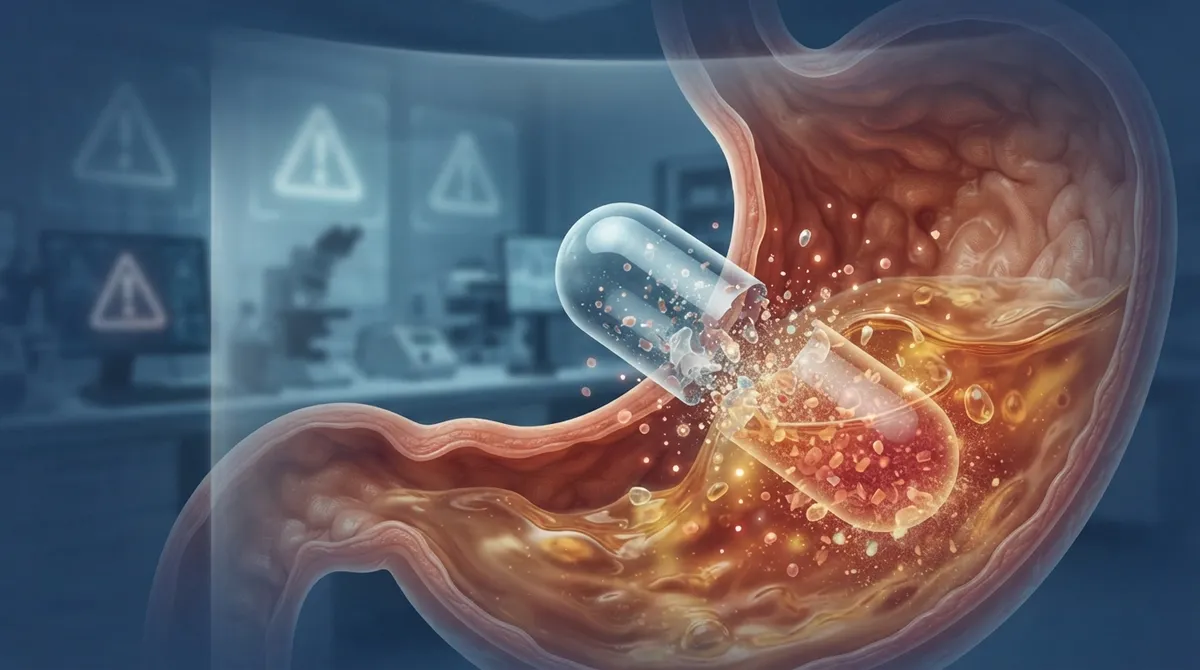
Peptides like ipamorelin are made of amino acid chains. When swallowed, they pass through the stomach, where acid and digestive enzymes can break them apart. This process, called degradation, often destroys the peptide before it ever reaches the bloodstream.
Peptides also tend to cross the intestinal lining poorly. This means even if some of the peptide survives digestion, very little may actually enter your system. Oral absorption is different for every compound, so what works for one peptide or drug doesn't automatically apply to ipamorelin.
4. Human Research Has Focused on Non-Oral Routes
Most studies on ipamorelin in humans have used non-oral methods, including intravenous administration in clinical research settings. These studies do not tell us whether an oral capsule would produce the same effects.
This is an important distinction. Just because a peptide showed certain results when given through an IV doesn't mean a pill version would work the same way. The research gap here is significant, and patients should be cautious about extrapolating results from one delivery method to another.
What This Means for Wellness Seekers
If you're the type of person who loves researching the latest wellness trends, it's tempting to assume that any peptide sold as a supplement has been tested for oral use. Unfortunately, that assumption often doesn't hold up. Always ask for specific human data on the exact form and route you're considering.
5. The FDA Has Raised Safety Concerns
The FDA has flagged ipamorelin acetate for potential safety issues in compounded forms. According to FDA materials from October 2024, there are concerns about immunogenicity, which means the body's immune system may react negatively due to peptide aggregation or impurities in compounded products.
The FDA has also cited a study involving intravenous ipamorelin for gastric motility that reported serious adverse events, including deaths. It's important to note that this finding relates to IV use, not oral use, which hasn't been adequately studied at all. The agency currently places ipamorelin acetate in Category 2 for the 503B compounding framework, which reflects ongoing safety uncertainty rather than approval for any specific use.
|
Fact |
What It Means for You |
|---|---|
|
No FDA approval |
No official safety or dosing standards exist |
|
No oral bioavailability data |
Absorption through the mouth is unproven |
|
Human studies use non-oral routes |
Oral results cannot be assumed safe or effective |
|
FDA safety concerns noted |
Immune reactions and adverse events have been reported |
|
Category 2 compounding status |
Insufficient safety data for certain routes |
6. Marketing Claims Often Outpace the Science
Wellness marketing can move faster than research. Terms like "bioidentical," "clinically studied," or "doctor recommended" sound reassuring, but they don't always reflect solid clinical trial data specific to oral ipamorelin.
Here are a few signs that a product's claims may be overstated:
- No mention of FDA approval status anywhere on the packaging or website
- Testimonials used as the main form of "proof" instead of clinical studies
- Vague language about "supporting growth hormone" without specific data
- Pricing that seems too good to be true for a peptide product
- No option to speak with a licensed clinician before purchase
If you see several of these signs, it's worth pausing before making a purchase. A trustworthy wellness provider will always encourage you to ask questions rather than rush you into buying.
7. Your Doctor Should Be Part of the Conversation
Before starting any peptide, including ipamorelin, talk with a qualified clinician. This is especially true if you're managing other health conditions or taking prescription medications. A knowledgeable provider can review your full health history and help you avoid unnecessary risks.
At InCare, our providers take time to discuss patient goals honestly, whether that's related to weight management, energy levels, or general wellness optimization. Our team, including physicians like Dr. Naveen Paddu and Dr. Pramjeet Ahluwalia, believes patients deserve evidence-based guidance, not marketing hype.
Here are steps to take before considering any peptide product:
- Schedule a visit with your primary care provider to discuss your goals
- Ask specifically about FDA approval status for any product you're considering
- Request information about oral absorption studies, if any exist
- Review your current medications for potential interactions
- Discuss alternative, evidence-based options for your specific health concern
- Ask about monitoring plans if you do decide to move forward with any therapy
8. Evidence-Based Alternatives May Serve You Better
If your goal is better energy, improved body composition, or healthy aging, there are well-studied options that don't carry the same uncertainty as oral ipamorelin. Programs like medically supervised weight loss, body composition analysis, and DNA gene testing offer data-driven insights without relying on unproven peptide claims.
For those interested in feeling more energized day to day, IV hydration and vitamin drips are another option with a longer track record of use in wellness settings. These services are designed with your safety in mind, and they're delivered under professional supervision at our Tampa and Riverview locations.
Why Transparency Matters in Wellness Care
Busy parents, young professionals, and anyone managing a demanding schedule want wellness solutions that actually work. That means choosing providers who are upfront about what the evidence shows, not just what sounds appealing. A clinic that prioritizes your long-term health will always explain the "why" behind a recommendation.
This is part of why patients throughout Tampa and Riverview trust InCare for straightforward, judgment-free care. You can read about real patient experiences and visit us on Google — InCare to see feedback from people who've walked through our doors. We also share health tips and clinic updates on Facebook, Instagram, and TikTok for those who want to stay informed between visits.
Making an Informed Decision About Peptide Therapy
The bottom line is simple. There's no solid proof that oral ipamorelin works the way marketing claims suggest. The FDA hasn't approved it, human research has focused on other delivery methods, and safety concerns remain unresolved. That doesn't mean peptide therapy is off the table entirely, but it does mean you should approach oral products with healthy skepticism.
If you're curious about peptide therapy options in Tampa, the safest path forward is a conversation with a licensed provider who can review the evidence with you honestly. Whether you're exploring wellness optimization for the first time or you've been researching peptides for months, having a knowledgeable partner makes all the difference.
Ready to talk through your wellness goals with a provider who puts your safety first? Reach out to our team today, or schedule your visit online to start the conversation about what actually works for your health.
FAQs
Q: Does oral ipamorelin work?
A: There is no reliable evidence that oral ipamorelin produces the same effects as other delivery methods. Peptides are typically broken down by stomach acid before they can be absorbed effectively, and no human studies confirm oral effectiveness.
Q: Is ipamorelin available as an FDA-approved pill or capsule?
A: No. Ipamorelin is not FDA-approved in any form, including oral capsules. There is no established dosing guidance or regulatory approval for oral use.
Q: Are ipamorelin capsules safe?
A: Safety has not been adequately studied for oral ipamorelin. The FDA has raised concerns about compounded ipamorelin products, including possible immune reactions, so caution is warranted.
Q: What should I ask my doctor before using ipamorelin?
A: Ask about FDA approval status, available human research, potential interactions with your current medications, and evidence-based alternatives that may better support your health goals.
Q: How is ipamorelin administered in clinical research?
A: Most human research on ipamorelin has used non-oral methods, including intravenous administration. These studies do not confirm that oral forms provide the same results.