Key Takeaways
- CoQ10 has decades of clinical research with thousands of participants confirming safety, while MOTS-c lacks FDA approval and relies mainly on animal/lab studies with no established safe human dose.
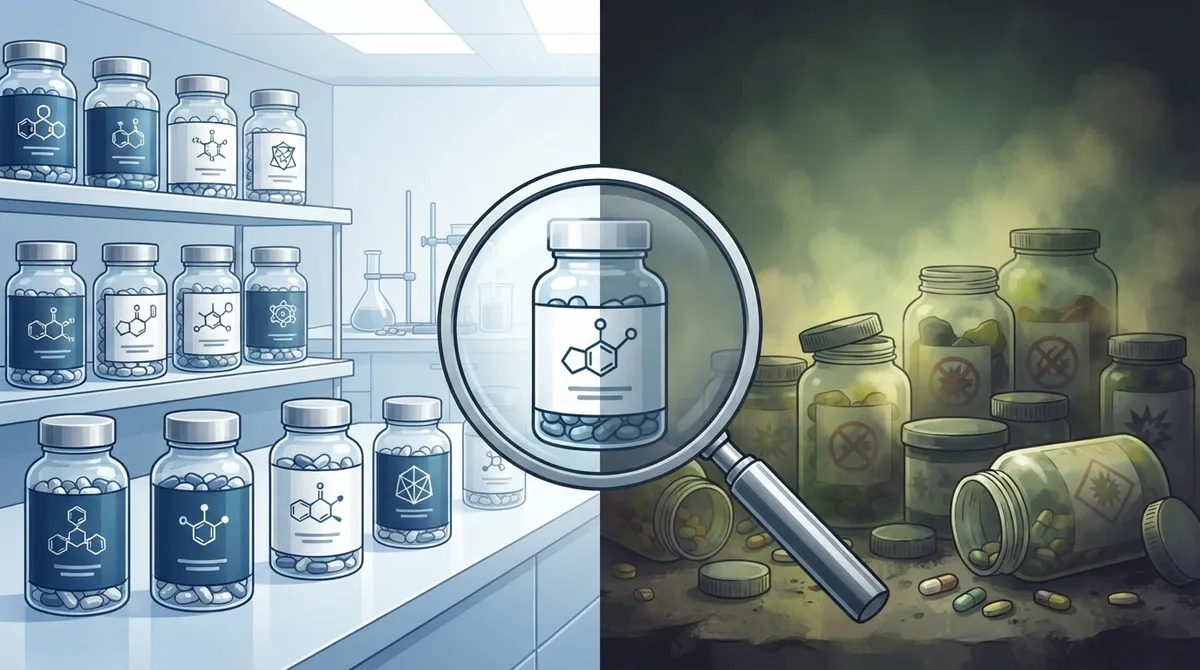
- MOTS-c is not legally approved for human use and products labeled 'research only' carry unknown risks for purity, dosing accuracy, and contamination; CoQ10 is available as a regulated over-the-counter supplement.
- MOTS-c online claims about fat burning, muscle building, and anti-aging lack solid clinical evidence and go beyond what current science supports; a related compound only completed 28-day safety testing in 20 people.
- CoQ10 can interact with blood thinners like warfarin and blood pressure medications, making a medical review essential before use, unlike the unknown interaction profile of unproven MOTS-c.
- CoQ10 comes in two forms (ubiquinone and ubiquinol) with different absorption rates; choosing the right one requires personalized medical guidance based on age and health conditions.
- Always consult your primary care provider before starting either product to review your medications, health history, and actual clinical evidence supporting the specific health goal you're targeting.
Wellness patients often mix up MOTS-c and CoQ10. Both connect to your mitochondria, the tiny parts of your cells that make energy. But they are very different products with very different levels of proof behind them. Understanding this difference matters for your health and your wallet.
Many people in Tampa and Riverview ask about MOTS-c after seeing it online. They want more energy, better metabolism, or slower aging. At the same time, CoQ10 has been used for decades with real research behind it. Mixing up these two products can lead to wasted money or unsafe choices. This guide breaks down the facts so you can make smart decisions with your doctor.
What Is MOTS-c and Why Is It Getting Attention?
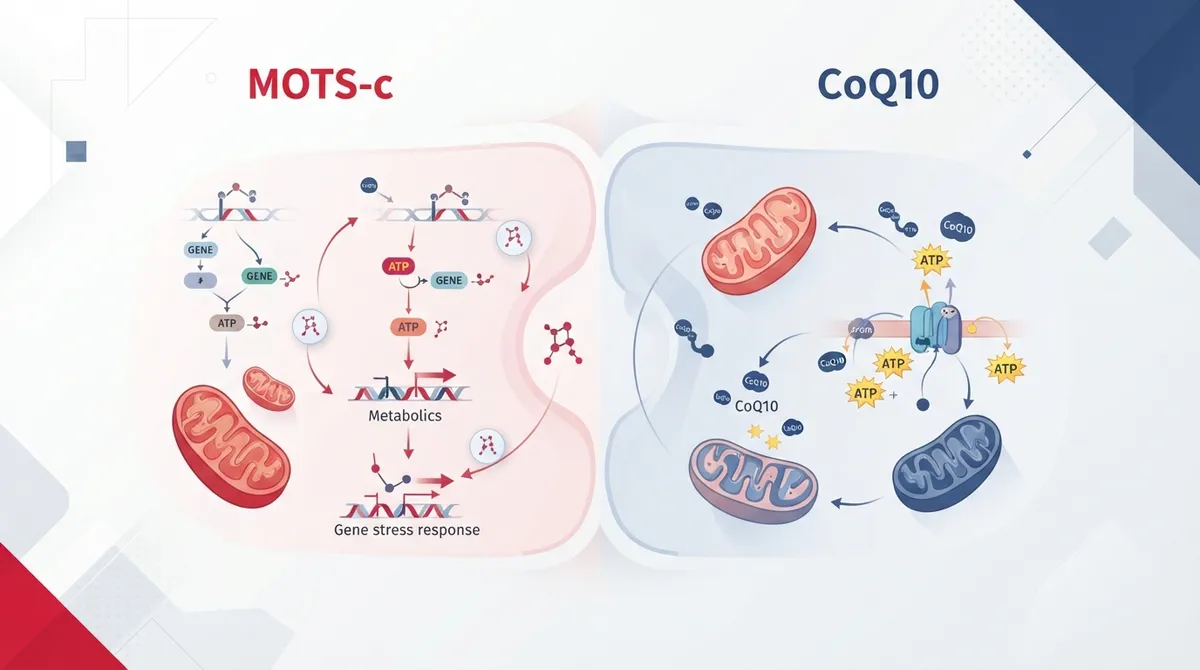
MOTS-c is a small peptide made of 16 amino acids. Your body's mitochondria naturally produce it. Scientists are studying whether it can help with blood sugar control, insulin function, and exercise recovery.
Most of this research comes from lab studies and animal testing. There is no strong proof yet that MOTS-c helps humans lose weight, fight diabetes, or slow aging. A related compound called CB4211 went through early human safety testing in a small group of about 20 people with obesity and liver fat issues. That study only lasted 28 days and did not prove the drug works. It also did not move forward into larger trials that would confirm safety or results.
MOTS-c is not approved by the FDA for any use. Products sold online are usually labeled "for research purposes only." This means the seller is not claiming it is safe for humans. It also means there is no guarantee about purity, dosage accuracy, or contamination risks. If you want to learn more about how researchers study new peptides, our peptide therapy in 2026 guide explains what current science actually supports.
What Is CoQ10 and How Does It Work?
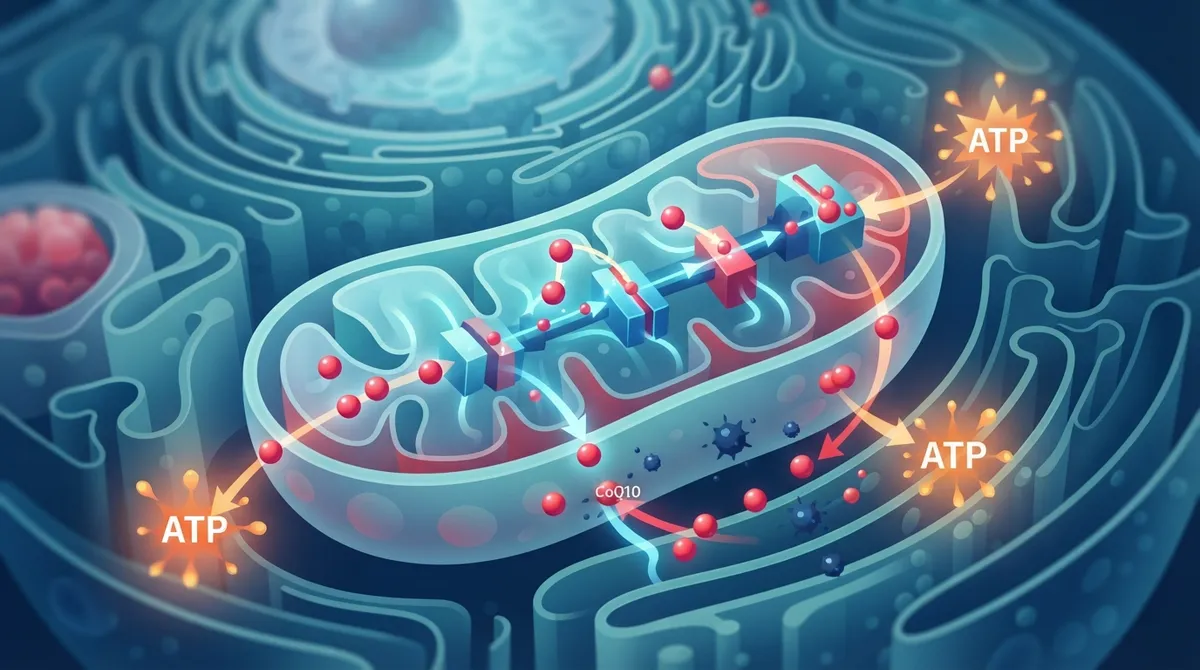
Coenzyme Q10, or CoQ10, is a natural compound your body makes on its own. It plays a key role in helping your cells produce energy. You can also get it through food or as an oral supplement, sold as ubiquinone or ubiquinol.
Unlike MOTS-c, CoQ10 has a long history of human use and study. A 2014 clinical trial with 420 heart failure patients tested CoQ10 at 100 mg three times a day alongside standard treatment. The study reported safety and fewer serious heart problems over time. However, a larger Cochrane review looked at 11 studies with 1,573 people and found the evidence for heart failure benefits was still not strong enough to confirm across the board.
CoQ10 doses in research usually range from 100 to 300 mg per day. The right amount depends on your health condition, other medications, and your doctor's advice. This is why a personal primary care visit matters before starting any supplement.
6 Mistakes People Make Comparing MOTS-c and CoQ10
Many patients assume these two products are interchangeable or equally proven. Here are the common errors we see at our clinic.
1. Assuming Natural Means Safe
Your body makes both MOTS-c and CoQ10 naturally. But making a synthetic version and injecting it is not the same as your body producing it on its own. Natural production does not guarantee that an outside product is safe or effective.
2. Treating MOTS-c Like an Approved Supplement
MOTS-c is not FDA-approved. It is not legal to sell for human use. Products labeled "research use only" are not meant for people to take. Buying these products puts you at risk of poor quality control, wrong dosing, and unknown side effects.
3. Ignoring CoQ10 Drug Interactions
CoQ10 seems gentle, but it can interact with blood thinners like warfarin. It may also affect blood pressure medicine and certain chemotherapy drugs. Common side effects include stomach upset, headache, dizziness, or trouble sleeping. Always review your medications with a provider first.
4. Believing MOTS-c Claims Without Evidence
Online ads often claim MOTS-c burns fat, builds muscle, or reverses aging. These claims go far beyond what science has actually proven. No large human trials confirm these results. Claims like this should raise a red flag, not excitement.
5. Overlooking Which Form of CoQ10 Fits Your Needs
CoQ10 comes in two main forms: ubiquinone and ubiquinol. Some studies suggest ubiquinol may absorb better in older adults. But the right choice depends on your age, health goals, and other factors your doctor should review with you.
6. Skipping Medical Guidance Before Starting Either Product
Whether you're curious about CoQ10 or MOTS-c, skipping a conversation with a licensed provider is risky. A qualified provider can check your health history, current medications, and specific goals before recommending anything.
MOTS-c vs CoQ10: A Side-by-Side Comparison
|
Factor |
MOTS-c |
CoQ10 |
|---|---|---|
|
FDA Approval |
Not approved for any use |
Available as an over-the-counter supplement |
|
Human Evidence |
Mostly preclinical; small early trials on an analogue only |
Multiple human studies over decades |
|
Common Use |
Investigational research only |
Heart health, migraine prevention, general wellness |
|
Typical Dose |
No established safe human dose |
100 to 300 mg per day, condition-dependent |
|
Legal Status for Athletes |
Banned by WADA as a metabolic modulator |
Not banned; widely used |
|
Side Effect Profile |
Unknown; product quality varies widely |
Generally well tolerated; some GI upset possible |
Why the Evidence Gap Matters for Your Health
The difference between MOTS-c and CoQ10 comes down to proof. CoQ10 has gone through real clinical trials involving thousands of people combined. MOTS-c has not. Most of what we know about MOTS-c comes from cell studies and animal research, not human trials.
This gap matters because unproven products can carry hidden risks. Purity, sterility, and correct dosing are not guaranteed for something labeled "research use only." Athletes should also know that MOTS-c is banned under World Anti-Doping Agency rules as an AMPK-activating metabolic modulator, according to 2026 regulatory guidance. If you compete in sports, this is a serious detail to check with your governing body.
How Primary Care Providers Evaluate New Wellness Trends
At InCare, our approach is to separate hype from proven science. When patients ask about trending peptides or supplements, we walk through several steps:
- Review the patient's current health conditions and medications
- Check if the product has real human clinical trial data
- Look at FDA approval status and legal classification
- Discuss known side effects and drug interactions
- Set realistic expectations based on actual evidence, not marketing claims
This process helps patients avoid wasting money on unproven products while still exploring wellness options that have real support. Our DNA gene testing and metabolic breath analysis services are examples of technology-driven tools with clear, measurable outputs you can act on with your care team.
Where CoQ10 Fits Into a Wellness Plan
For patients with heart concerns, migraine history, or general fatigue, CoQ10 may be worth discussing with your doctor. It is not a cure-all, and it should never replace prescribed treatment. But it has decades of use behind it and a much clearer safety picture than MOTS-c.
If you are managing a chronic condition, pairing supplement discussions with regular checkups matters. Learn more about how primary doctors help manage chronic illnesses to see how ongoing care supports long-term wellness goals.
Where MOTS-c Stands Today
MOTS-c remains an investigational compound. It is not something your doctor can legally prescribe for weight loss, diabetes, or anti-aging purposes. If you see it marketed as a proven treatment, that claim is not backed by solid clinical evidence yet.
Patients interested in metabolic health have safer, evidence-based paths available. Programs like medically supervised weight loss and body composition analysis use proven tools to track real progress, not speculation.
Questions to Ask Before Trying Any New Supplement
- Has this product been tested in large human clinical trials?
- Is it approved by the FDA for the use I'm considering?
- Could it interact with medications I already take?
- What does the seller's "research use only" label actually mean?
- Has my primary care provider reviewed this with my full health history?
Asking these questions before spending money protects both your health and your budget. It also helps you avoid products that promise more than science can currently support.
Why Local, Personalized Guidance Matters
Every patient's health picture is different. Age, medications, existing conditions, and personal goals all shape what makes sense for you. This is why generic online advice about MOTS-c or CoQ10 cannot replace a real conversation with a provider who knows your history.
Our team at InCare serves patients across Tampa and Riverview with this kind of personalized approach. We combine advanced technology with real medical expertise to help you separate proven science from online trends. You can also check out patient experiences and community updates on our Facebook page or follow wellness tips on Instagram and TikTok.
For general background on how peptides and mitochondrial compounds are studied, resources from organizations like the Alzheimer's Drug Discovery Foundation offer useful, science-based context.
Take the Next Step With Confidence
Choosing between MOTS-c and CoQ10 is not really a fair comparison. One has decades of clinical use behind it. The other remains an unproven, unapproved compound with real safety questions. The smartest move is talking with a provider who can walk you through the facts based on your own health needs.
If you want personalized guidance on wellness options that actually work, our team is ready to help. You can get in touch with our care team to discuss your goals, or go ahead and schedule your appointment today. Curious what other patients say about their experience? You can also visit us on Google — InCare to read real reviews from our Tampa and Riverview community.
FAQs
Q: What is the difference between MOTS-c and CoQ10?
A: CoQ10 is a natural, vitamin-like compound with decades of human research and an established safety profile at commonly studied doses. MOTS-c is an experimental mitochondrial peptide with mostly preclinical evidence and no FDA approval for human use.
Q: Is MOTS-c safer or more effective than CoQ10?
A: No current evidence supports this claim. MOTS-c lacks large-scale human trials, while CoQ10 has been studied in thousands of patients across various conditions, making it the more clinically established option.
Q: Does MOTS-c help with weight loss, insulin resistance, or anti-aging?
A: These claims are based mainly on animal and lab studies, not confirmed human results. A related compound reached only early-stage safety testing in a small group, which does not prove effectiveness for these uses.
Q: Is MOTS-c FDA-approved, and is it legal to buy or use?
A: MOTS-c is not FDA-approved for any medical use. Products sold online are typically labeled for research purposes only, meaning they are not intended or verified for human consumption.
Q: Can MOTS-c and CoQ10 be taken together?
A: Since MOTS-c is not an approved or well-studied product, combining it with CoQ10 or any other supplement is not recommended. Speak with a primary care provider before starting any new supplement regimen.