Key Takeaways
- Retatrutide activates three hormone receptors (GIP, GLP-1, and glucagon) compared to tirzepatide's two, potentially enabling stronger weight loss results of 28.3-28.7% versus tirzepatide's 20.9% in separate trials.
- Direct comparisons between retatrutide and tirzepatide are unreliable because studies used different patient populations and protocols; the TRIUMPH-5 head-to-head trial won't conclude until late 2026.
- Retatrutide remains investigational and unapproved by the FDA, while tirzepatide is FDA-approved as Mounjaro and Zepbound—making tirzepatide the only currently available prescription option with long-term safety data.
- Higher-dose retatrutide showed 18.2% treatment discontinuation due to side effects compared to 4% with placebo, indicating that stronger weight loss may require tolerating more nausea, diarrhea, and constipation.
Weight loss injections are one of the biggest topics in health care today. Many patients ask their doctor a simple question: is retatrutide better than tirzepatide? It's a fair question, since both drugs target the same problem but work in different ways. Before you make any decision about your weight loss plan, it helps to understand what the research actually shows.
At InCare, our providers in Tampa and Riverview guide patients through these choices every day. This article breaks down what retatrutide and tirzepatide are, what the studies say, and why working with a trusted weight loss team matters more than chasing the newest drug on the market.
1. Retatrutide and Tirzepatide Work on Different Hormone Targets
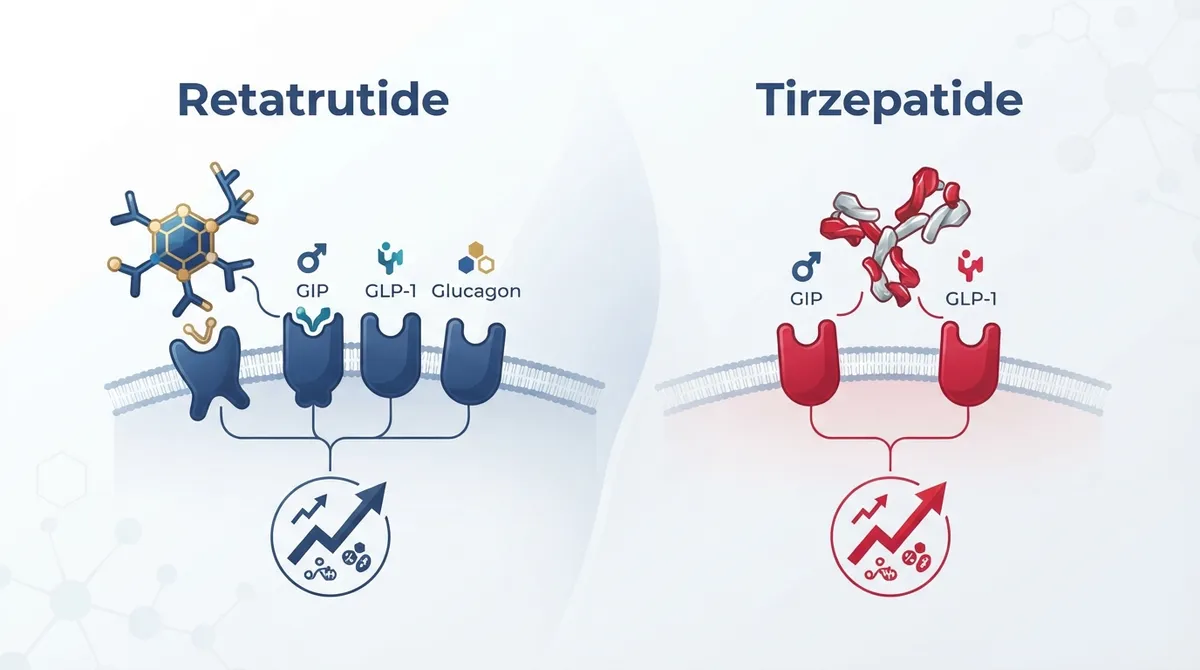
Tirzepatide is an FDA-approved medicine sold as Mounjaro for type 2 diabetes and Zepbound for weight management. It activates two hormone receptors: GIP and GLP-1. These hormones help control blood sugar, slow digestion, and reduce hunger.
Retatrutide is different. It is an investigational drug from Eli Lilly that activates three receptors instead of two. Along with GIP and GLP-1, it also targets the glucagon receptor. This triple-action design is why many researchers believe it could produce stronger results than two-receptor drugs.
- Tirzepatide: activates GIP and GLP-1 receptors
- Retatrutide: activates GIP, GLP-1, and glucagon receptors
- Tirzepatide: FDA-approved for specific patients
- Retatrutide: still in clinical trials, not yet approved
This difference in design is the main reason people compare the two drugs. But a bigger receptor target list does not automatically mean a better real-world result for every patient.
2. Clinical Trial Data Shows Retatrutide May Produce More Weight Loss
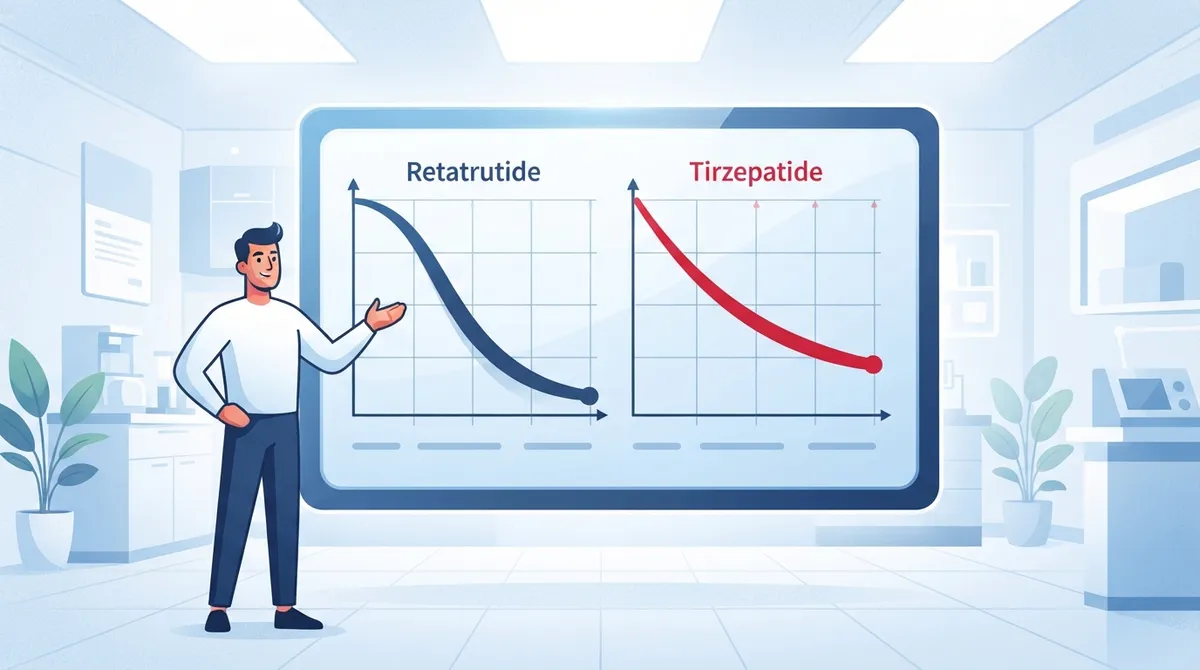
Study numbers get a lot of attention, and for good reason. In a Phase 2 obesity trial, the 12 mg dose of retatrutide led to about 24.2% average weight loss at 48 weeks. This data was published in the New England Journal of Medicine in 2023.
Tirzepatide's own SURMOUNT-1 trial showed strong results too. At the 15 mg dose, patients lost about 20.9% of their body weight on average over 72 weeks. This trial, also published in the New England Journal of Medicine, helped tirzepatide earn FDA approval as Zepbound in November 2023.
More recent retatrutide data pushes the numbers even higher. In the TRIUMPH-4 trial, the 12 mg dose produced about 28.7% average weight loss at 68 weeks in patients with obesity and knee osteoarthritis. Similarly, TRIUMPH-1 topline results reported around 28.3% average weight loss at 80 weeks, with 45.3% of patients losing at least 30% of their body weight.
|
Trial |
Drug and Dose |
Average Weight Loss |
Study Length |
|---|---|---|---|
|
Phase 2 Obesity Trial (2023) |
Retatrutide 12 mg |
~24.2% |
48 weeks |
|
SURMOUNT-1 (2022) |
Tirzepatide 15 mg |
~20.9% |
72 weeks |
|
TRIUMPH-4 (2025) |
Retatrutide 12 mg |
~28.7% |
68 weeks |
|
TRIUMPH-1 (2026) |
Retatrutide 12 mg |
~28.3% |
80 weeks |
These numbers look impressive on paper. But there's an important catch that patients need to understand before drawing conclusions.
3. Why Direct Comparisons Between the Two Drugs Are Tricky
Here's the problem with comparing these numbers directly: they come from separate trials. Each study used different patient groups, different protocols, and different follow-up periods. This makes it hard to say for certain that retatrutide beats tirzepatide in a true head-to-head sense.
Think of it like comparing two runners who ran different races on different tracks. One runner's time might look faster, but the courses weren't the same. You need both runners on the same track, on the same day, to get a fair answer.
That's exactly what a new study called TRIUMPH-5 is designed to do. This Phase 3 trial will directly compare retatrutide with tirzepatide in adults with obesity. The study plans to enroll about 800 participants, with an estimated completion in late 2026. Once this data is published, we will have a much clearer picture of how the two drugs truly stack up against each other.
Until then, any claim that retatrutide is "better" than tirzepatide should be viewed with some caution. Cross-trial comparisons offer clues, not proof.
4. Retatrutide Is Not Yet FDA-Approved
This is one of the most important facts for patients to know. Retatrutide remains an investigational drug. It has not received FDA approval for treating obesity, type 2 diabetes, or any other condition.
Tirzepatide, on the other hand, is fully approved. It's available by prescription as Mounjaro for diabetes and Zepbound for chronic weight management in adults who meet specific health criteria.
Because retatrutide is still investigational, it should not be offered as a standard prescription treatment outside of an approved clinical trial. Patients should be wary of any product marketed as "retatrutide" sold through unregulated or compounded sources. These products carry real risks, including unknown purity, incorrect dosing, and no guarantee of safety oversight.
If you're exploring weight loss medication options, working with a licensed provider ensures you receive treatments that are legal, tested, and appropriate for your health history.
5. Side Effects Look Similar, But Discontinuation Rates Differ
Both drugs belong to a class of medicines known as incretin-based therapies. This means their side effect profiles tend to overlap quite a bit. Common side effects reported with both retatrutide and tirzepatide include:
- Nausea, especially during dose increases
- Diarrhea or changes in bowel habits
- Constipation
- Reduced appetite
- Occasional stomach discomfort
One detail worth noting comes from the TRIUMPH-4 trial results. Patients on the higher dose of retatrutide stopped treatment due to side effects more often than those on a placebo. Reported figures showed about 18.2% discontinuation on the higher retatrutide dose, compared to roughly 4% with placebo.
This tells us that stronger weight loss results may come with a higher chance of side effects strong enough to make some patients quit treatment. It's a trade-off every patient should discuss carefully with their doctor before starting any GLP-1 based therapy.
6. What This Means for Your Weight Loss Plan Today
So, is retatrutide better than tirzepatide? The honest answer right now is: it might be, but we don't have the full picture yet. Early data looks promising for retatrutide's weight loss potential. But without completed head-to-head trials, long-term safety data, and FDA approval, it's not something your primary care provider can prescribe today.
For patients who qualify based on approved criteria, tirzepatide remains the practical, available option. It has passed rigorous FDA review, has years of real-world use data building up, and is prescribed under close medical supervision.
At InCare, our approach to medical weight loss goes beyond just prescribing a drug. We look at your whole health picture, including body composition, metabolic function, and lifestyle habits. Our metabolic breath analysis and body composition testing help create a plan built around your actual needs, not just a prescription pad.
Here are a few things to keep in mind as you consider your options:
- Ask your provider which medications are FDA-approved for your specific condition
- Discuss your full medical history before starting any weight loss treatment
- Avoid unregulated or compounded versions of investigational drugs
- Pair any medication with lifestyle support, like nutrition guidance and activity plans
- Stay updated on new trial results, like the upcoming TRIUMPH-5 comparison
Shared decision-making matters here. Your doctor should walk you through the pros, cons, and realistic expectations for any treatment path, whether that's tirzepatide today or retatrutide once it clears FDA review.
Finding the Right Weight Loss Support in Tampa and Riverview
Choosing a weight loss medication isn't just about picking the drug with the highest number on a chart. It's about finding a treatment that fits your body, your health history, and your daily life. Our team also offers IV hydration and vitamin drips, DNA gene testing, and cancer screenings as part of a whole-body approach to wellness, not just quick fixes.
Many patients feel overwhelmed by conflicting information online. Following trusted sources helps. We regularly share updates on treatment research through our Instagram page and community posts on Facebook, and you can also catch quick health tips on our TikTok channel. For broader context on how GLP-1 medications are studied and regulated, the U.S. Food and Drug Administration and the National Institutes of Health both publish helpful public research summaries.
If you're curious about your options, our Tampa and Riverview clinics offer consultations where we review your health goals and medical history together. Many patients also check Visit us on Google — InCare to read real reviews from people who have gone through our weight loss programs.
Conclusion
The debate over whether retatrutide is better than tirzepatide will likely continue until TRIUMPH-5 delivers direct comparison results in late 2026. For now, tirzepatide stands as the FDA-approved, available choice backed by years of safety data. Retatrutide shows exciting potential, but it remains investigational and should not be pursued outside of approved clinical trials or unregulated sources.
Your best move is to talk with a trusted primary care provider who can walk you through your options honestly. Ready to explore a weight loss plan built around your health? Reach out to our team today or schedule your appointment now to get started on a plan that actually fits your body and your goals.
FAQs
Q: Is retatrutide more effective than tirzepatide for weight loss?
A: Early clinical trial data suggests retatrutide may produce greater average weight loss than tirzepatide, with some trials showing results near 28% compared to tirzepatide's 20.9%. However, these comparisons come from separate studies with different populations and protocols, so a true head-to-head answer awaits results from the TRIUMPH-5 trial expected in late 2026.
Q: What is the difference between retatrutide and tirzepatide?
A: Tirzepatide activates two hormone receptors, GIP and GLP-1, and is FDA-approved as Mounjaro and Zepbound. Retatrutide activates three receptors, adding glucagon activity to GIP and GLP-1, but it remains an investigational drug without FDA approval.
Q: Is retatrutide FDA-approved for obesity or diabetes?
A: No, retatrutide has not received FDA approval for any indication. It is still being studied in clinical trials, including the TRIUMPH program, and should not be used outside of authorized research settings.
Q: What are the side effects and risks of retatrutide versus tirzepatide?
A: Both drugs share similar side effects common to incretin-based medicines, including nausea, diarrhea, constipation, and reduced appetite. Reported data from TRIUMPH-4 showed higher discontinuation rates at higher retatrutide doses compared to placebo, suggesting a possible trade-off between stronger results and tolerability.
Q: When will retatrutide be available by prescription?
A: Retatrutide's availability depends on completing Phase 3 trials and receiving FDA approval, which has not yet occurred. The TRIUMPH-5 head-to-head study is expected to finish around late 2026, and full regulatory review would follow after that data is published.