Key Takeaways
- Kisspeptin stimulates reproductive hormones rather than suppressing them, making it unsuitable for gender-affirming care which requires hormone suppression or replacement with established therapies like estradiol, testosterone, and GnRH analogues.
- No clinical guidelines recommend kisspeptin for transgender care and human trials involving transgender participants are extremely limited, meaning claims about feminizing, masculinizing, or puberty-suppressing effects lack scientific evidence.
- Responsible providers should listen to patient concerns about kisspeptin, clearly explain the evidence gap, and discuss FDA-approved alternatives backed by WPATH Standards of Care that have demonstrated mental health benefits.
- Comprehensive gender-affirming primary care extends beyond hormones to include preventive screenings, fertility counseling, mental health support, and regular monitoring of cardiovascular and metabolic health.
Patients researching gender-affirming care sometimes come across kisspeptin online and wonder if it belongs in their treatment plan. This peptide hormone is gaining attention in fertility and wellness circles, and questions about its role in gender-affirming medicine are becoming more common. If you are exploring hormone options or supporting a loved one through this process, understanding what kisspeptin actually does matters. This guide breaks down the science, the evidence gaps, and what respectful, informed primary care looks like for transgender and gender-diverse patients in 2026.
At InCare, our providers in Tampa and Riverview believe every patient deserves clear, honest answers about emerging treatments. This article explains kisspeptin's real function, why it is not currently used for gender affirmation, and how comprehensive primary care supports patients through every stage of their health journey.

1. What Kisspeptin Actually Does in the Body
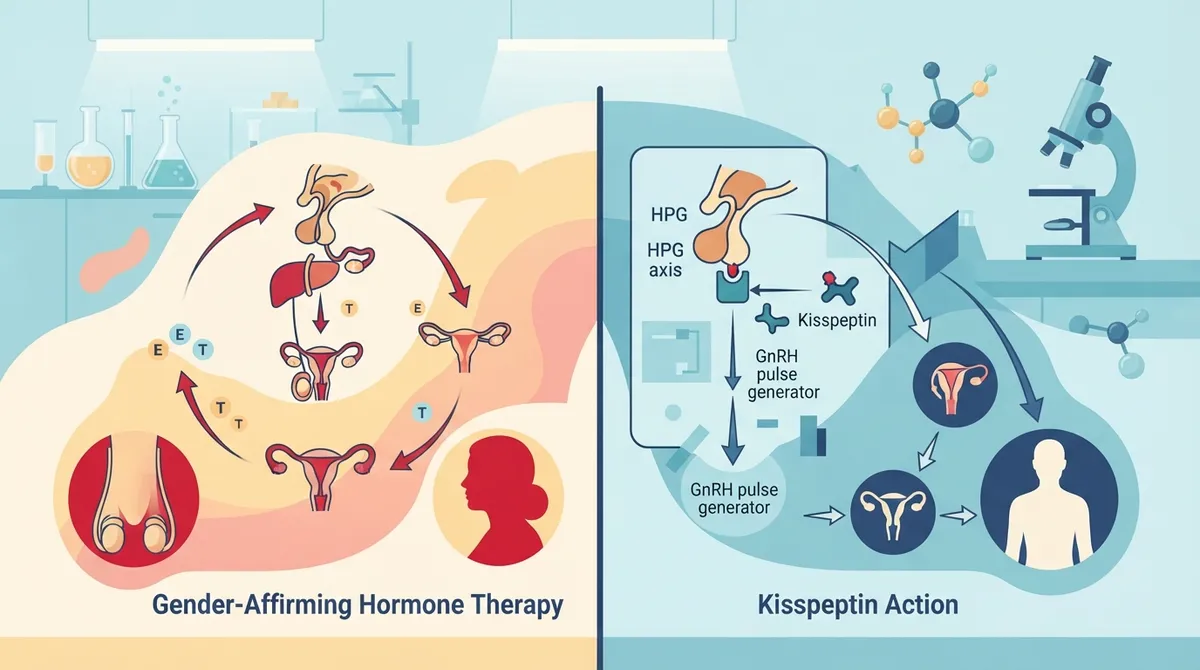
Kisspeptin is a naturally occurring hormone made in the brain. It activates special receptors that trigger the release of gonadotropin-releasing hormone, known as GnRH. This chain reaction then prompts the pituitary gland to release luteinizing hormone and follicle-stimulating hormone. Those two hormones control how much estrogen or testosterone your body produces.
In simple terms, kisspeptin acts like a switch that turns on the reproductive system. It does not shut hormones down or change them into a different type. This function is why researchers are studying kisspeptin mainly for fertility problems, delayed puberty, and reproductive hormone disorders, not for gender transition support.
Key Functions of Kisspeptin
- Stimulates pulsatile release of GnRH from the hypothalamus
- Triggers luteinizing hormone and follicle-stimulating hormone production
- Influences natural estrogen and testosterone levels
- Plays a role in puberty timing and onset
- Is being studied for infertility treatment support
2. Why Kisspeptin Is Not a Gender-Affirming Hormone Therapy
Many patients assume that any hormone-related peptide might help with gender transition. This is not accurate for kisspeptin. Standard gender-affirming hormone therapy relies on well-studied treatments like estradiol, testosterone, antiandrogens, and GnRH analogues that suppress puberty or reduce certain hormone production.
Kisspeptin works in the opposite direction. It stimulates the reproductive hormone system rather than suppressing it. This means its natural effects do not line up with the goals most transgender and gender-diverse patients are trying to achieve. There is currently no clinical guideline that recommends kisspeptin as a substitute for these established therapies.
|
Treatment |
Primary Action |
Used in Gender-Affirming Care? |
|---|---|---|
|
Estradiol |
Promotes feminizing changes |
Yes, standard therapy |
|
Testosterone |
Promotes masculinizing changes |
Yes, standard therapy |
|
GnRH Analogues |
Suppresses puberty or gonadal hormones |
Yes, when clinically indicated |
|
Antiandrogens |
Reduces testosterone effects |
Yes, often paired with estradiol |
|
Kisspeptin |
Stimulates GnRH and gonadotropin release |
No, not established or recommended |
3. What the Research Actually Shows
Kisspeptin research is still mostly experimental. Scientists are studying it for infertility, puberty disorders, and how the hypothalamus regulates hormones. Very few studies, if any, have directly examined kisspeptin's effects in transgender or gender-diverse patients.
This means claims that kisspeptin can feminize or masculinize the body, suppress puberty, or replace standard hormone therapy are not backed by solid clinical evidence. Responsible providers will always be upfront about this evidence gap rather than promising results that current science cannot support.
Evidence Gaps to Understand
- Most kisspeptin studies focus on fertility and reproductive endocrinology, not gender transition
- Human trials involving transgender participants are extremely limited
- Dosing, safety, and long-term effects for this use are unknown
- Results can vary based on sex assigned at birth and existing hormone levels
- No major medical body currently endorses kisspeptin for this purpose
4. How WPATH Standards of Care Guide Modern Treatment
The World Professional Association for Transgender Health published its Standards of Care Version 8 in 2022. This guidance references more than 1,400 studies and covers hormone therapy, primary care, mental health, and adolescent treatment protocols.
These standards emphasize individualized, patient-centered care. For adults, that means assessing informed consent capacity, reviewing physical and mental health history, and discussing expected benefits and risks. For adolescents, care typically involves a multidisciplinary team and established GnRH-based approaches, not experimental peptides like kisspeptin.
Research summarized in a JAMA review found real benefits from established gender-affirming hormone therapy. In one study, anxiety and depression scores dropped significantly after 18 months of treatment. Another study of adolescents found 60% lower odds of depression and 73% lower odds of suicidality among those who started puberty blockers or hormone therapy. These meaningful outcomes are tied to proven treatments, not to kisspeptin.
5. What Primary Care Providers Should Do When Patients Ask About Kisspeptin
If you bring up kisspeptin during a visit, your provider should respond with respect and honesty. Good primary care means listening to your goals first, then explaining what current science supports.
Steps a Responsible Provider Should Take
- Listen without judgment to your questions and goals
- Explain what kisspeptin does and does not do
- Clarify the current evidence gap for gender-affirming use
- Assess your overall health, including fertility and reproductive goals
- Refer you to an endocrinologist or gender-affirming specialist when appropriate
- Discuss FDA-approved, evidence-based alternatives that fit your needs
Providers should never prescribe kisspeptin outside of a proper clinical trial or specialist research setting. Instead, primary care should focus on the full picture of your health, including cancer screenings, cardiovascular risk, and mental health support.
6. Building a Complete Gender-Affirming Care Plan Beyond Hormones
Gender-affirming primary care is about much more than prescriptions. It includes preventive screenings based on your anatomy, sexual health checks, fertility counseling, and monitoring for medication side effects. Many patients also benefit from mental health screening and support for substance use concerns.
A well-rounded plan might include routine bloodwork, body composition analysis, and ongoing conversations about your long-term wellness goals. Our team at InCare also offers DNA gene testing for patients curious about their broader health predispositions, along with IV hydration and vitamin drips to support energy and recovery during hormone treatment.
What Comprehensive Gender-Affirming Primary Care Should Include
- Preventive screenings tailored to your specific anatomy
- Fertility counseling before starting any hormone treatment
- Mental health and substance use screening
- Cardiovascular and metabolic risk monitoring
- Regular bloodwork to track hormone levels safely
- Referrals to specialists experienced in transgender health
Patients who feel supported and heard tend to have better outcomes overall. This is why choosing a clinic with a patient-first approach matters so much. You can read what real patients say about their experience by visiting our InCare location on Google, where our Tampa and Riverview offices maintain strong reviews for compassionate, knowledgeable care.
Comparing Established Therapies to Experimental Options
It helps to see the difference between proven treatments and experimental compounds side by side. This table summarizes where kisspeptin stands compared to therapies with strong clinical backing.
|
Factor |
Established GAHT |
Kisspeptin |
|---|---|---|
|
Clinical guidelines |
Supported by WPATH SOC8 |
No guideline support |
|
Evidence base |
Thousands of studies |
Limited, mostly fertility-focused |
|
Monitoring protocols |
Well-defined lab and clinical checks |
Undefined for this use |
|
Availability |
Prescribed in clinical settings |
Research or trial settings only |
Staying informed protects your health and helps you make confident decisions with your care team. Following trusted health organizations on social platforms like Facebook, Instagram, and TikTok can also help you stay updated on wellness topics, though your personal treatment decisions should always come from a licensed provider.
Why Choosing the Right Primary Care Partner Matters
Navigating gender-affirming care requires a provider who understands both the science and the sensitivity involved. At InCare, our team of providers in Tampa and Riverview take time to answer questions honestly, without pressure or judgment. We combine advanced diagnostics with a whole-person approach to your care.
Whether you are exploring hormone therapy, need routine preventive screenings, or simply want a provider who will listen, our clinics are ready to help. We also offer weight loss programs and hair restoration services for patients managing changes during their transition or overall wellness journey.
Ready to talk with a provider who will give you clear, evidence-based answers? Reach out to our team today or schedule your appointment online to start building a care plan that truly fits your goals.
FAQs
Q: Can kisspeptin be used as gender-affirming hormone therapy?
A: No. Kisspeptin stimulates the reproductive hormone system rather than suppressing or replacing it, so it does not align with the goals of standard gender-affirming treatment. Established therapies like estradiol, testosterone, and GnRH analogues remain the recommended options.
Q: Is kisspeptin approved for transgender hormone care?
A: Kisspeptin is not approved or guideline-recommended for transgender hormone care. Current research is focused mainly on fertility, puberty timing, and reproductive hormone disorders, with very limited data on transgender patients.
Q: Can kisspeptin feminize or masculinize the body?
A: There is no reliable clinical evidence showing kisspeptin can produce feminizing or masculinizing effects. Its natural role is to trigger hormone release, not to change hormone type or direction.
Q: What should I do if my primary care doctor doesn't know much about kisspeptin?
A: Ask for an honest conversation about the evidence gap and request a referral to an endocrinologist or gender-affirming care specialist if needed. A good provider will explain what is known and unknown rather than guessing.
Q: What monitoring is recommended during gender-affirming hormone therapy?
A: Monitoring typically includes regular bloodwork to track hormone levels, cardiovascular and metabolic risk assessments, and preventive screenings based on your specific anatomy. Mental health check-ins are also an important part of ongoing care.