
Key Takeaways
- Yes, several clinics in and near downtown Tampa advertise peptide consultations, but availability depends on the specific peptide, your health history, and whether a clinician can legally prescribe it.
- "Peptide therapy" is a broad marketing term: FDA-approved peptide medicines are reviewed for specific conditions, while popular wellness peptides like BPC-157 and CJC-1295 are not FDA-approved for general wellness use.
- Compounded peptides have not gone through FDA pre-market review, so compounding does not prove a peptide is safe or effective; ask your clinician for sourcing and supporting evidence.
- Avoid providers who promise guaranteed results, sell products labeled "research use only" for self-injection, or skip a physical exam, health history, and lab review before treatment.
If you work, live, or play in the city center, you may be asking, can I get peptide therapy in downtown Tampa? The short answer is yes. Several clinics advertise peptide-related consultations in and near downtown Tampa. But availability depends on the exact peptide, your health history, and whether a clinician can legally prescribe it.
The term "peptide therapy" covers a lot of ground. Some peptide medicines are FDA-approved for specific conditions. Many popular wellness peptides are not. That gap matters for your safety and your wallet.
This guide breaks down six key facts every Tampa resident should know before booking. You will learn what is available, what the evidence says, and which questions to ask a doctor. A trusted primary care team can help you sort hype from help.

1. Yes, Peptide Services Are Available in and Near Downtown Tampa
Several providers in the Tampa area advertise peptide-related care. That includes at least one clinic in the downtown core. Still, an advertisement is not proof that a treatment is approved or effective.
Availability can change from month to month. A clinic may offer a consult but decline to prescribe a certain compound. Always confirm current services directly before you plan a visit.
Where to Look
InCare operates a downtown location at 1213 N Franklin St, Tampa, FL 33602. It is a primary care and wellness clinic that pairs physician visits with advanced wellness services. You can read more about peptides in Tampa and why InCare is a top clinic for peptide therapy, or explore the InCare locations page to find the closest office.
Other Tampa providers also advertise peptide services. These listings are examples, not endorsements. Compare each clinic's medical oversight, sourcing, and follow-up plan before you commit.
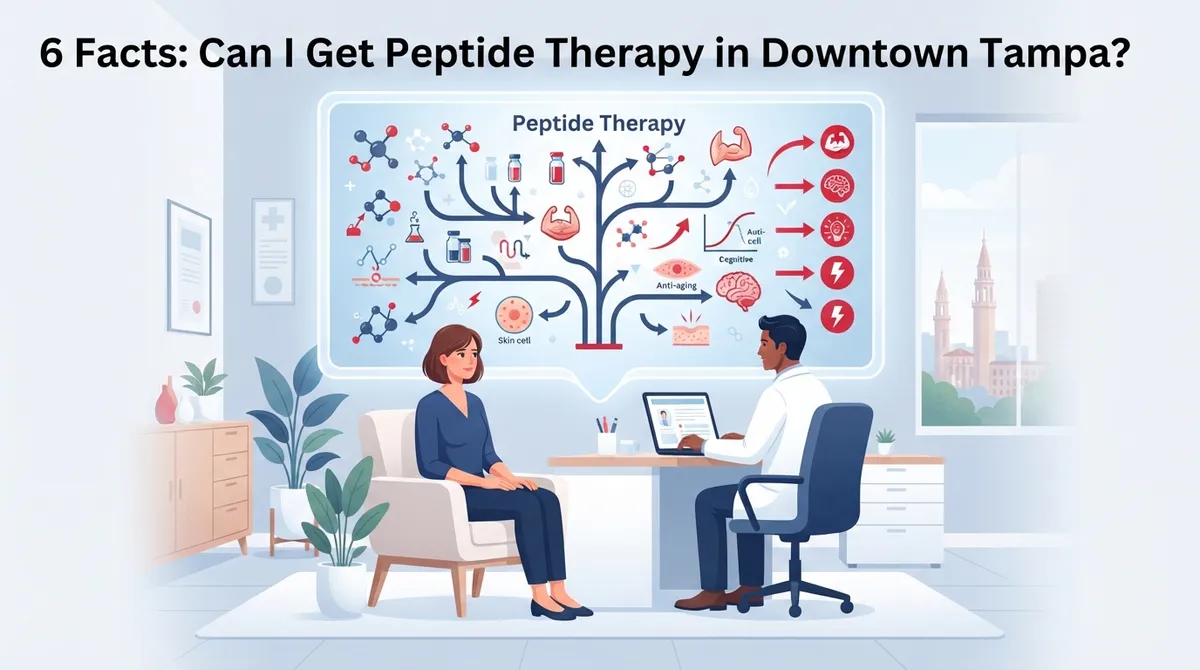
2. "Peptide Therapy" Is a Broad Marketing Term
Peptides are short chains of amino acids. Your body makes many of them naturally. They act as signals that help control hormones, healing, and metabolism.
In clinics, the phrase "peptide therapy" can mean very different things. Some products are approved medicines. Others are wellness compounds with limited human research. Knowing the difference is the first step to making a smart choice.
Common Peptides You Will Hear About
- BPC-157: Marketed for recovery and gut health. Not FDA-approved for general wellness use.
- CJC-1295 and ipamorelin: Marketed to support growth hormone signaling. Not FDA-approved for general wellness use.
- TB-500: Marketed for tissue repair. Not an FDA-approved drug for wellness.
- GLP-1 medicines: Some are FDA-approved for diabetes or weight management under specific conditions.
For a deeper look at one popular option, see this guide on BPC-157 in Tampa and whether it works.
3. FDA-Approved and Compounded Peptides Are Not the Same
This is the most important fact on the list. An FDA-approved drug has been reviewed for safety, effectiveness, and quality for a defined use. A compounded medicine has not gone through that review.
Compounding may be allowed under certain federal and state rules. But it does not make an unapproved peptide FDA-approved. It also does not prove that the peptide works.
|
Feature |
FDA-Approved Peptide Medicine |
Compounded or Wellness Peptide |
|---|---|---|
|
Pre-market FDA review |
Yes, for a specific condition |
No |
|
Proven for stated use |
Tested in clinical trials |
Often limited human data |
|
Quality oversight |
Standardized manufacturing |
Varies by pharmacy |
|
Best next step |
Discuss with your doctor |
Ask for sourcing and evidence |
The FDA has also raised concerns about certain bulk substances used in compounded peptides. These include risks tied to impurities and immune reactions. Regulatory status can change, so check current FDA guidance before treatment. To learn more about the approved side of the field, read about FDA-approved peptides you should know in 2026 and facts about non-FDA approved peptides.
4. The Evidence Varies a Great Deal by Peptide
Strong online claims do not equal strong science. Many wellness peptides have been studied mostly in animals or in very small human groups. Reliable numbers on patient outcomes for locally advertised, unapproved peptides are simply not available.
Medical experts have urged caution. A recent Stanford Medicine piece on peptides asks what the science really says, and the honest answer is that it depends on the compound. You can read that discussion in Stanford Medicine's overview of peptides and the science.
What This Means for You
Be wary of any clinic that promises fast or guaranteed results. A responsible clinician will explain what is known, what is unknown, and what is still experimental. If you are curious about timelines, this resource on how long peptides take to work offers helpful context.
5. Safety, Risks, and Monitoring Come First
Every injectable or compounded treatment carries risk. Possible issues include injection site reactions, impurities in a product, allergic responses, and unknown long-term effects. Interactions with your other medicines are also a concern.
This is why medical supervision matters. A licensed clinician should review your history, order labs when appropriate, and set a follow-up plan. Avoid any product sold as "research use only" for self-injection. Those items are not meant for human use and are not held to medical standards.
Red Flags to Watch For
- Claims that a peptide cures many unrelated conditions
- No clear source or pharmacy for the product
- No physical exam, health history, or lab review
- Pressure to buy a large package up front
- No plan for follow-up or monitoring
For a broader safety overview, see this guide on peptide therapy in Tampa: benefits and safety.
6. Choose a Provider With Real Medical Oversight
The best peptide conversation starts inside a medical practice that knows your whole health picture. A primary care clinic can check your hormones, metabolism, and risk factors first. Then you can decide together whether a peptide makes sense at all.
That whole-body approach is where InCare stands out. InCare blends primary care, urgent care, and advanced wellness services under one roof. Patients can also pair a visit with tools like metabolic breath analysis, DNA gene testing, and medical weight loss programs. You can meet the care team on the providers page.
With a 4.8 out of 5 rating from hundreds of patients, InCare is a strong choice for anyone in the downtown Tampa area who wants careful, personalized care. You can see what InCare patients say on Google and follow the practice on Instagram for updates.
Questions to Ask Before Starting Peptide Therapy
Bring this checklist to your first visit. A good clinician will welcome these questions.
- Which exact compound are you recommending, and for what purpose?
- Is it FDA-approved, or is it compounded?
- What evidence supports its use in people like me?
- What are the known risks and possible drug interactions?
- Which pharmacy supplies it, and how is quality checked?
- What labs or monitoring will I need, and how often?
- What happens if I have a side effect?
If you want help comparing options, this guide on choosing the best peptide therapy provider in Tampa Bay walks through the process step by step. If you are still weighing treatment types, see how TRT, peptide therapy, and hormone replacement compare.
Who May Benefit From a Peptide Conversation?
Peptide interest is growing across many groups. Busy professionals want more energy. Active adults want faster recovery. Health-minded women and men want to age well. Each of these goals deserves a real medical review before any product is considered.
Often, the best first move is a baseline wellness visit. A doctor can look at sleep, nutrition, hormones, and metabolic health. In many cases, proven steps like better sleep, strength training, and addressing a vitamin deficiency deliver more benefit than any peptide. If a peptide still fits your plan, you will have the medical foundation to use it safely.
Ready to Take the Next Step?
So, can you get peptide therapy in downtown Tampa? Yes, you can start the conversation. The smart path is to begin with a licensed clinician who explains the evidence, the legal status, and the risks in plain language.
InCare offers that kind of careful, whole-body approach in Tampa and Riverview. Book your visit with InCare today, or contact our team with any questions about peptides and wellness care.
FAQs
Q: Can I get peptide therapy in downtown Tampa?
A: Yes, clinics in and near downtown Tampa advertise peptide-related consultations. Availability depends on the specific peptide, your medical assessment, and whether it can legally be prescribed. Confirm current services directly with the clinic before booking.
Q: Is peptide therapy FDA-approved?
A: It depends on the peptide. Some peptide medicines are FDA-approved for specific conditions. Many wellness-marketed compounds, such as BPC-157 and CJC-1295, are not FDA-approved for general wellness use.
Q: What are the risks of peptide injections?
A: Risks can include injection site reactions, product impurities, allergic responses, and unknown long-term effects. Compounded products also lack pre-market FDA review. A licensed clinician should monitor you throughout treatment.
Q: What should I ask a doctor before starting peptide therapy?
A: Ask which exact compound is recommended, whether it is FDA-approved or compounded, and what evidence supports it. Also ask about the pharmacy source, known risks, drug interactions, and the follow-up plan.
Q: How do I choose a safe peptide therapy provider in Tampa?
A: Choose a licensed clinic with real medical oversight, clear sourcing, and a full health review before treatment. Avoid providers who guarantee results or sell products labeled for research use only.