Key Takeaways
- GHK-Cu shows modest results requiring 8-12 weeks of consistent twice-daily use to reduce wrinkle depth by 16-28% and increase skin density by 11-19%, based on small human trials averaging 40-71 participants.
- Clinical evidence for GHK-Cu remains limited to small studies with no large independently-funded trial exceeding 100 participants published as of 2026, so results should be treated as promising indicators rather than guarantees.
- GHK-Cu is generally gentler than retinol with milder side effects, but retinol has decades of extensive research backing it, making them complementary options rather than direct replacements for addressing fine lines.
- Combining topical GHK-Cu with broader wellness strategies including hydration, balanced nutrition, regular health checkups, and daily sunscreen protection produces more meaningful results than skincare products alone.
- Common mistakes that reduce GHK-Cu effectiveness include expecting rapid results, layering too many active ingredients, using poorly formulated products, neglecting sun protection, and discontinuing use before the 8-12 week clinical timeframe.
- Patch test GHK-Cu products on small skin areas first, introduce gradually starting every other day, choose products from reputable sources with clear labeling, and use eye-area-specific formulations rather than general facial serums near eyes.
Fine lines around the eyes and mouth often show up years before we feel ready for them. Many people turn to expensive creams that promise the world but deliver little. GHK-Cu, a copper peptide studied in dermatology research, has become one of the more talked-about ingredients for addressing visible signs of skin aging. Understanding what this compound actually does, and what it does not do, can help you make smarter choices about your skincare routine.
At InCare, our providers in Tampa and Riverview believe wellness starts with accurate information. This guide breaks down five key ways GHK-Cu may help with fine lines, backed by the clinical research available today. We will also cover realistic timelines, safety considerations, and how this fits into a broader wellness plan that includes preventive care and skin health support.
What Is GHK-Cu and Why Does It Matter for Skin Aging?
GHK-Cu is a small peptide that naturally binds to copper in the body. It occurs in human plasma, saliva, and urine, but levels decline as we age. Researchers first identified its role in tissue repair decades ago, and topical skincare formulas later adopted it as an anti-aging ingredient.
The peptide is applied to skin in serums and creams rather than taken as a pill or injection. Its main appeal comes from studies suggesting it may support skin density, firmness, and texture over time. This makes it different from treatments that offer instant, but temporary, results.
How GHK-Cu Is Thought to Work
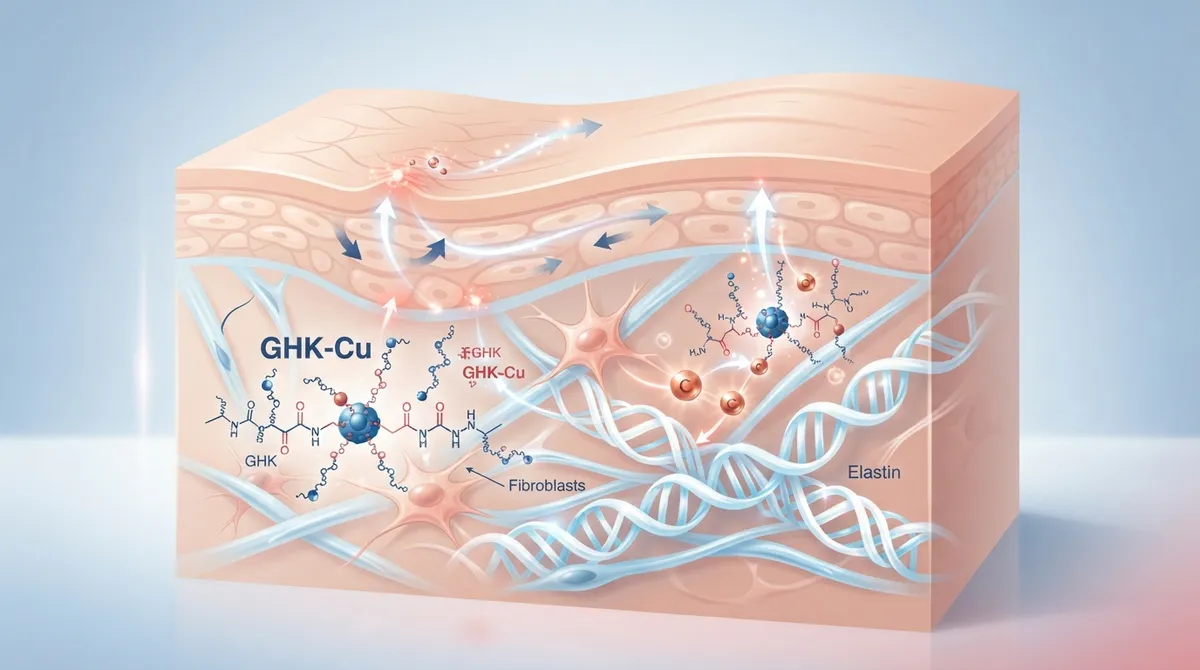
Topical GHK-Cu is believed to interact with skin cells in ways that support the skin's natural repair processes. Some laboratory and human studies suggest it may help with:
- Supporting collagen and elastin activity in skin tissue
- Improving skin firmness and thickness over consistent use
- Reducing the appearance of fine lines and wrinkle depth
- Evening out skin texture in photoaged skin
- Acting as an antioxidant against environmental stress
It is important to note this ingredient is positioned as a cosmetic wellness tool, not a medical treatment. Claims about reversing aging are not supported by strong clinical outcomes, and results tend to be modest rather than dramatic.

1. Reviewing the Human Clinical Evidence
The strongest evidence for GHK-Cu comes from small, published human studies rather than large trials. One widely cited review documented a facial cream containing GHK-Cu used for 12 weeks in 71 women with photoaged skin. Researchers reported improvements in skin density and thickness, along with reduced fine lines and wrinkle depth.
Another double-blind study involved 40 women between ages 40 and 65. After eight weeks of twice-daily topical use, researchers observed reduced wrinkle volume compared to a placebo group. These studies, while promising, remain limited in size and scope.
What the Numbers Actually Show
|
Study Detail |
Reported Outcome |
|---|---|
|
71 women, 12-week facial cream study |
Reduced fine lines and wrinkle depth; improved skin density and thickness |
|
40 women, 8-week double-blind trial |
Reduced wrinkle volume with twice-daily topical use |
|
Meta-analytic review (2025-2026) |
About 7 randomized controlled trials, roughly 456 total participants |
|
Wrinkle depth reduction range |
Approximately 16% to 28% over 8 to 12 weeks |
|
Skin density increase range |
Approximately 11% to 19% after topical use |
As of 2026, evidence summaries note that no large, independently funded trial with more than 100 participants has been published for GHK-Cu. This means the research base is promising but still developing. Anyone considering topical copper peptides should treat these numbers as early indicators, not guarantees.
2. Setting Realistic Timelines for Results
One common question is how long GHK-Cu takes to show visible changes. Based on the available studies, most reported improvements appeared after 8 to 12 weeks of consistent, twice-daily use. This is a gradual process, not an overnight fix.
Here is a general timeline reported in clinical research:
- Weeks 1 to 2: Skin may feel smoother, but visible changes are typically minimal.
- Weeks 3 to 6: Some users report early improvements in texture and hydration.
- Weeks 8 to 12: Studies report measurable reductions in wrinkle depth and improved skin density.
- Beyond 12 weeks: Continued use appears necessary to maintain results, since effects are not permanent.
Patience and consistency matter more than product concentration alone. Skipping applications or stopping early may reduce the chances of seeing the modest benefits reported in research.
3. Comparing GHK-Cu to Other Fine Line Ingredients
Many people ask how GHK-Cu compares with retinol, one of the most studied anti-aging ingredients available. Both target fine lines, but they work through different mechanisms and have different evidence bases.
|
Factor |
GHK-Cu |
Retinol |
|---|---|---|
|
Evidence base |
Limited, small human trials |
Extensive, decades of research |
|
Typical timeline |
8 to 12 weeks |
4 to 12 weeks |
|
Skin sensitivity |
Generally mild |
Can cause irritation, peeling |
|
FDA status for anti-aging |
Not FDA-approved as a treatment |
Not FDA-approved for cosmetic wrinkle claims either |
|
Common use |
Serums, creams |
Serums, creams, prescription formulas |
Some people use both ingredients together, though this should be approached carefully to avoid skin irritation. Discussing your skincare routine with a knowledgeable provider can help you avoid combining products that may not work well together.
4. Understanding Safety and Sensitive Skin Considerations
GHK-Cu is generally considered well tolerated in cosmetic formulations, but safety data remains more limited compared to mainstream actives like retinol or vitamin C. Product quality, concentration, and formulation all affect how your skin responds.
Consider these safety points before starting any new product:
- Patch test new products on a small area of skin first
- Introduce the product gradually, starting with every other day
- Watch for redness, itching, or unusual reactions
- Choose products from reputable sources with clear ingredient labeling
- Avoid combining too many active ingredients at once
- Discontinue use and consult a provider if irritation persists
Is GHK-Cu Safe Around the Eyes?
Some formulations are designed specifically for the eye area, where skin is thinner and more sensitive. Because eye-area skin reacts differently than other facial skin, it is wise to choose a product formulated for that purpose. General facial serums are not always suitable for use close to the eyes.
5. Fitting Skin Health Into a Broader Wellness Plan
Fine lines are often just one visible sign of how the body is aging overall. Skin health connects closely with hydration, nutrition, hormone balance, and even chronic health conditions. This is why skin concerns are worth discussing during a comprehensive wellness visit rather than addressing them in isolation.
At InCare, our approach to whole-body wellness includes services that support skin and overall vitality, such as IV hydration and vitamin drips for hydration and nutrient support, and DNA gene testing to better understand your body's unique needs. Combining topical care with internal wellness strategies often produces more noticeable, lasting results than skincare products alone.
Preventive health checks also matter here. A wellness visit can help identify underlying factors, like nutrient deficiencies or hormone shifts, that may accelerate visible aging. Our providers at InCare take a whole-body view rather than treating skin concerns as a standalone issue.
Steps to Build a Sensible Skin Wellness Routine
Building sustainable habits tends to outperform chasing quick fixes. Consider these steps as a starting framework:
- Schedule a wellness checkup to review your overall health baseline.
- Discuss any skin concerns, including fine lines, with your provider.
- Introduce topical ingredients like GHK-Cu gradually and consistently.
- Support skin from within through hydration and balanced nutrition.
- Track changes over 8 to 12 weeks rather than expecting instant results.
- Reassess your routine periodically as your skin and health needs change.
This structured approach reduces guesswork and helps you avoid wasted money on products that may not suit your skin type or goals.
Common Mistakes People Make With Copper Peptides
Even well-researched ingredients can fail to deliver results when used incorrectly. Avoid these frequent mistakes:
- Expecting dramatic results within days rather than weeks
- Layering too many active ingredients that cancel each other out
- Choosing unverified or poorly formulated products
- Ignoring sun protection, which undermines any anti-aging effort
- Skipping professional guidance when skin reactions occur
Sun protection deserves special mention. Photoaging, the very condition many GHK-Cu studies focus on, is driven largely by UV exposure. According to the Centers for Disease Control and Prevention, daily sunscreen use remains one of the most effective ways to slow visible skin aging. No peptide can fully offset ongoing sun damage.
Why Choose InCare for Whole-Body Wellness Guidance
Skin concerns rarely exist in isolation from the rest of your health. Our team at InCare, including Dr. Pramjeet Ahluwalia and Dr. Naveen Paddu, brings a comprehensive perspective to preventive care and wellness optimization. We combine advanced diagnostics with personalized guidance so patients in Tampa and Riverview receive care tailored to their actual needs.
Patients consistently share positive experiences with our clinical teams, and you can read reviews and see what current patients say by visiting InCare on Google. We also share wellness tips and updates through our Facebook page, Instagram account, and TikTok channel, where followers get practical health information beyond the exam room.
If you are researching skin health while managing your home's exterior, local property owners in the Tampa Bay area often turn to trusted services like Buckhorn Power Wash for exterior maintenance or Wayne & Sons Landscaping & Junk Removal for yard upkeep, since a healthy home environment often reflects the same attention to detail people apply to their personal wellness routines.
Bringing It All Together
GHK-Cu offers a research-backed, though modest, option for people concerned about fine lines and early photoaging. The evidence supports gradual improvements in skin density, texture, and wrinkle depth after consistent use over 8 to 12 weeks. It is not a medical cure, and results vary depending on formulation, consistency, and individual skin biology.
Pairing topical skincare with a broader wellness strategy, including hydration support, nutrition, and regular primary care checkups, tends to produce more meaningful results. Our team can help you understand how skin health fits into your overall wellness picture, whether you are exploring weight loss support, cancer screening, or general preventive care.
Ready to talk with a provider about your skin and wellness goals? Reach out to our team today, or go ahead and schedule your appointment online to get started with personalized care at InCare.
FAQs
Q: What is GHK-Cu and how does it work for fine lines?
A: GHK-Cu is a copper-binding peptide applied topically to skin to support collagen activity and skin repair processes. Human studies suggest it may reduce fine lines and wrinkle depth after 8 to 12 weeks of consistent use, though evidence remains limited to smaller clinical trials.
Q: Does copper peptide really help reduce wrinkles?
A: Some published studies report reduced wrinkle depth and improved skin density with topical GHK-Cu, including a 12-week study of 71 women showing measurable improvements. However, no large, independently funded trial with more than 100 participants has confirmed these findings as of 2026, so results should be viewed as promising rather than definitive.
Q: How long does GHK-Cu take to show results on fine lines?
A: Most clinical studies report visible changes after 8 to 12 weeks of twice-daily topical use. Early texture improvements may appear sooner, but measurable reductions in wrinkle depth typically require consistent, longer-term application.
Q: Is GHK-Cu safe for sensitive skin?
A: GHK-Cu is generally well tolerated in cosmetic formulations, but safety data is more limited than for established ingredients like retinol. Patch testing and gradual introduction are recommended, especially for those with reactive or sensitive skin.
Q: How does GHK-Cu compare with retinol for fine lines?
A: Retinol has a much larger body of clinical research supporting its anti-aging effects but can cause more irritation and peeling. GHK-Cu tends to be gentler with a smaller evidence base, making it a complementary option rather than a direct replacement for retinol.