Key Takeaways
- KP-10 successfully raises LH levels in men, especially with continuous infusion, but responses vary dramatically by sex, dose, and menstrual cycle phase—women show no measurable response during follicular phase even at high doses.
- KP-10 remains an investigational research compound with only small-scale studies (typically fewer than 20 participants); it is not FDA-approved for fertility, testosterone, or metabolic conditions despite online wellness claims.
- Self-administering KP-10 outside clinical trials carries safety risks; hormone research requires licensed provider oversight including baseline testing, medication review, and regular monitoring rather than home experimentation.
- Kisspeptin-54, a related but different peptide, shows more fertility trial data than KP-10; confusion between these fragments leads patients to overestimate KP-10's clinical readiness for conditions like OHSS prevention.
Kisspeptin-10, often shortened to KP-10, has become a hot topic in wellness circles. Patients hear about it online and wonder if it could boost fertility or fix hormone problems. But what does the actual science say? This guide breaks down five key areas of KP-10 research, using real findings from clinical studies, so you can separate fact from wellness-trend hype.
At InCare, our providers believe patients deserve clear, honest information about emerging peptides like KP-10. We combine that same evidence-based approach across our primary care and wellness services in Tampa and Riverview. This article explains what KP-10 is, what studies have found, and why it remains a research tool rather than an approved treatment.
What Is KP-10 and Why Does It Matter for Hormone Health?
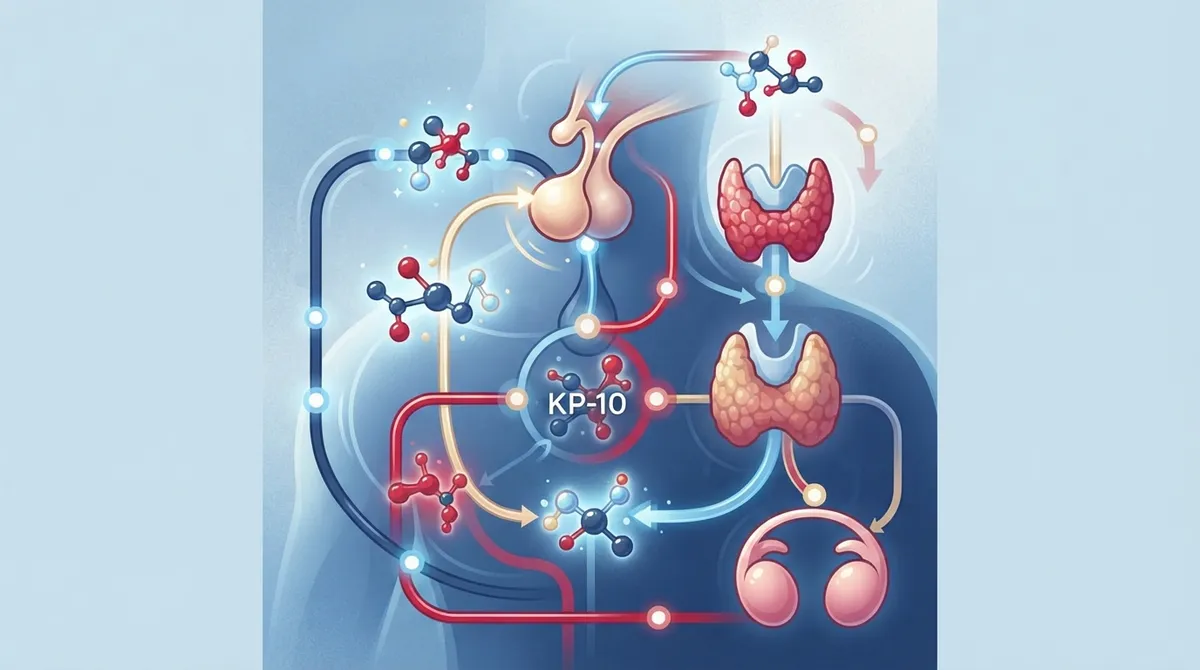
KP-10 stands for kisspeptin-10. It is a small, active piece of a larger protein called kisspeptin. This peptide works in the brain's hypothalamus, where it turns on a receptor called KISS1R.
When KP-10 activates this receptor, it triggers the release of gonadotropin-releasing hormone (GnRH). This hormone then tells the pituitary gland to release two other hormones: luteinizing hormone (LH) and follicle-stimulating hormone (FSH). These two hormones control puberty, the menstrual cycle, testosterone levels, and fertility.
Because of this hormone chain reaction, researchers have studied KP-10 for decades. They want to know if it could help treat conditions tied to low reproductive hormones. This is different from other wellness topics like DNA gene testing or body composition analysis, which look at your current health status rather than hormone signaling pathways.
5 Key KP-10 Medical Studies and What They Found
Below are five important areas of KP-10 research. Each one reveals something different about how this peptide behaves in the human body.
1. KP-10's Effect on LH and Testosterone in Men
One well-known study, published by George and colleagues in 2011, looked at healthy men. Researchers gave them a continuous IV dose of KP-10 at about 1.5 micrograms per kilogram per hour for nine hours. The result? LH pulse frequency and amplitude both increased.
This means KP-10 successfully triggered the hormone signal chain in men. Testosterone changes were more noticeable with this longer infusion than with a single quick dose. This finding matters for anyone curious about the science behind hormone therapies discussed at a provider consultation.
2. Dose-Dependent LH Response in Bolus Studies
A 2016 review in the Journal of Endocrinology summarized several human trials. It found that a single KP-10 bolus dose raised LH levels in men in a dose-dependent way. This means higher doses led to bigger LH increases.
The same review noted a smaller FSH response compared to LH. Testosterone changes were more consistent with longer infusions rather than one quick injection. This is an important distinction for anyone trying to understand how KP-10 might behave differently than steady hormone therapies.
3. Limited Response in Women During the Follicular Phase
Not all KP-10 studies show a strong hormone response. A 2011 study by Jayasena and colleagues tested KP-10 in healthy women during the early follicular phase of their cycle. Even at high doses, using IV, subcutaneous, and infusion methods, the women showed no measurable increase in gonadotropins.
This tells us that timing matters. A woman's menstrual cycle phase can completely change how her body responds to KP-10. This kind of nuance is why hormone-related questions are best discussed during a wellness visit rather than guessed at home.
4. KP-10 and Insulin Secretion in Men
A registered clinical trial, NCT03771326, explored a different angle. Researchers gave a single IV dose of KP-10 (0.5 micrograms per kilogram) to 14 healthy men. Seven were normal weight, and seven were classified as obese.
This study focused on insulin secretion, not fertility or testosterone. It was a small physiological study, not proof that KP-10 treats diabetes or metabolic disease. It simply shows that researchers are exploring KP-10's effects beyond reproduction.
5. Kisspeptin-Based Ovulation Triggers and OHSS Prevention
A 2024 review from the American Physiological Society looked at kisspeptin-based ovulation triggers in 60 women at high risk for ovarian hyperstimulation syndrome (OHSS). The results were promising: oocyte maturation happened without moderate, severe, or critical OHSS cases.
However, this research mainly involved kisspeptin-54, a related but different peptide, not KP-10 specifically. A 2025 review confirmed that kisspeptin protocols for infertility are still experimental. They have not been adopted into standard IVF practice yet.
KP-10 vs. Kisspeptin-54: What's the Difference?
Many people confuse KP-10 with other kisspeptin fragments. Here is a simple comparison to clear up the confusion.
|
Feature |
KP-10 |
Kisspeptin-54 |
|---|---|---|
|
Size |
Smaller fragment (10 amino acids) |
Larger fragment (54 amino acids) |
|
Duration of Action |
Shorter half-life |
Longer-lasting effects |
|
Main Research Focus |
LH/FSH response, insulin studies |
Fertility, ovulation triggers, OHSS prevention |
|
Clinical Use Status |
Investigational only |
Investigational; more fertility trial data |
Common Myths About KP-10 That Patients Should Avoid
Wellness trends often move faster than the science behind them. Here are myths patients should watch out for:
- KP-10 is not an approved fertility treatment, despite online claims.
- KP-10 is not a proven testosterone booster for general use.
- KP-10 is not a diabetes treatment, even though it was studied for insulin secretion.
- Self-administering research peptides at home carries real safety risks.
- Results from animal or lab studies do not always apply to humans.
- Peptide response varies heavily by sex, dose, and health status.
Why Hormone Research Should Stay in a Clinical Setting
Understanding peptides like KP-10 requires more than reading a summary online. Hormone levels, health history, and current medications all affect outcomes. This is why any interest in emerging peptide research should start with a conversation with a licensed provider.
At InCare, our team stays current with peptide research trends while keeping patient safety first. We offer science-based alternatives, including hormone testing, IV hydration and vitamin drips, and metabolic assessments through our metabolic breath analysis service. These tools give real, measurable insight into your health today.
Steps to Take If You're Curious About Peptide Research
If you want to learn more about hormone health or emerging peptide science, follow these steps:
- Schedule a comprehensive wellness visit to review your hormone baseline.
- Ask your provider about current, approved treatment options for your specific concern.
- Request relevant lab work, such as LH, FSH, or testosterone panels.
- Discuss any peptide or supplement you are considering before starting it.
- Follow up regularly to track your progress with proven, monitored therapies.
How InCare Supports Whole-Body Hormone Wellness
InCare's Tampa and Riverview locations focus on whole-body optimization, not quick fixes. Our providers, including those featured on our providers page, use evidence-based tools to evaluate your hormone health, metabolism, and overall wellness.
We also offer cancer screenings and weight loss programs for patients who want a full picture of their health, not just one hormone pathway. You can find both of our Tampa and Riverview locations convenient for scheduling in-person or virtual visits.
Many patients also follow InCare's updates on Facebook, Instagram, and TikTok for the latest wellness education and clinic news. These channels share simple explanations of complex topics, much like this article.
What Makes KP-10 Different From Approved Hormone Therapies?
Approved therapies, like testosterone replacement or fertility medications, go through years of large-scale clinical trials. KP-10 has only been tested in small groups, often fewer than 20 people per study. This limits how much we can apply the findings to the general public.
Approved treatments also come with clear dosing guidelines and monitored safety data. KP-10 still lacks this level of detail for routine use. That gap is exactly why patients should rely on licensed providers rather than unregulated peptide sellers.
Bringing It All Together
KP-10 research shows real promise as a tool for understanding the reproductive hormone system. Studies have found it can raise LH levels, and in some cases, testosterone, especially in men. But responses vary widely based on sex, dose, and even the time of month in women.
Right now, KP-10 remains a research compound. It is not an approved treatment for infertility, low testosterone, or metabolic disease. Patients curious about hormone optimization should always work with a trusted primary care team rather than experimenting alone.
If you have questions about hormone health, fertility, or general wellness, our team is ready to help. You can get in touch with our team today, or you can schedule your appointment now to start your personalized wellness plan. You can also visit us on Google — InCare to see reviews from patients in Tampa and Riverview who trust our evidence-based approach to whole-body health.
FAQs
Q: What is KP-10 in medical studies?
A: KP-10, or kisspeptin-10, is a small peptide fragment that activates the KISS1R receptor in the hypothalamus. This action stimulates GnRH release, which in turn raises luteinizing hormone and, in some cases, follicle-stimulating hormone and testosterone.
Q: Can KP-10 improve fertility or ovulation?
A: Kisspeptin research shows promise for fertility support, but most strong clinical evidence involves kisspeptin-54, not KP-10 specifically. KP-10 remains an experimental research tool and is not an established fertility treatment.
Q: Is KP-10 approved for treating low testosterone or infertility?
A: No. KP-10 is not an FDA-approved or routinely prescribed treatment for low testosterone, infertility, or metabolic conditions. It remains in early-stage clinical research.
Q: What did clinical studies find about KP-10 and insulin?
A: A registered study, NCT03771326, examined KP-10's effect on insulin secretion in 14 healthy men, seven normal-weight and seven obese. This was a small physiological study and does not establish KP-10 as a diabetes treatment.
Q: Is it safe to use KP-10 from a peptide clinic or compounding provider?
A: Patients should not self-administer research peptides like KP-10 outside of a supervised clinical trial. Working with a licensed primary care provider ensures safety, proper testing, and access to established, evidence-based treatment options.