
Key Takeaways
- KISS1 was originally discovered as a metastasis suppressor gene that reduces cancer spread in lab studies, but its effects vary significantly by cancer type and remain unproven in human trials.
- Triple-negative breast cancer is a major exception where kisspeptin may actually promote tumor growth rather than suppress it, unlike its protective effects in colorectal, ovarian, pancreatic, and prostate cancers.
- Kisspeptin blood tests cannot diagnose cancer because levels naturally fluctuate with age, menstrual cycle, and pregnancy, making it impossible to establish a validated diagnostic threshold for cancer risk.
- People with personal or family cancer history should avoid kisspeptin products outside clinical trials, as it affects reproductive hormones and long-term safety data in cancer survivors does not exist.
- Current evidence does not support kisspeptin as an approved cancer treatment or screening tool; established cancer screening methods remain the gold standard for early detection.
- Kisspeptin research is still in preclinical stages with most evidence from lab and animal studies, meaning its therapeutic effects in human cancer patients remain unproven and require further investigation.
Kisspeptin has become a buzzword in wellness circles, often discussed alongside fertility support and hormone health. But a newer question keeps coming up in patient conversations: does kisspeptin have a connection to cancer? The answer is more nuanced than a simple yes or no, and it deserves a clear, honest explanation. This guide breaks down what science actually shows, so you can make informed decisions with your care team rather than relying on internet rumors.
At InCare, patients in Tampa and Riverview regularly ask about kisspeptin during wellness visits and hormone consultations. As a clinic built on prevention and evidence-based care, we believe you deserve facts, not hype. Below are five essential facts about the kisspeptin cancer connection, based on current research, along with guidance on what this means for your health decisions.
What Is Kisspeptin, and Why Does It Matter for Your Health?
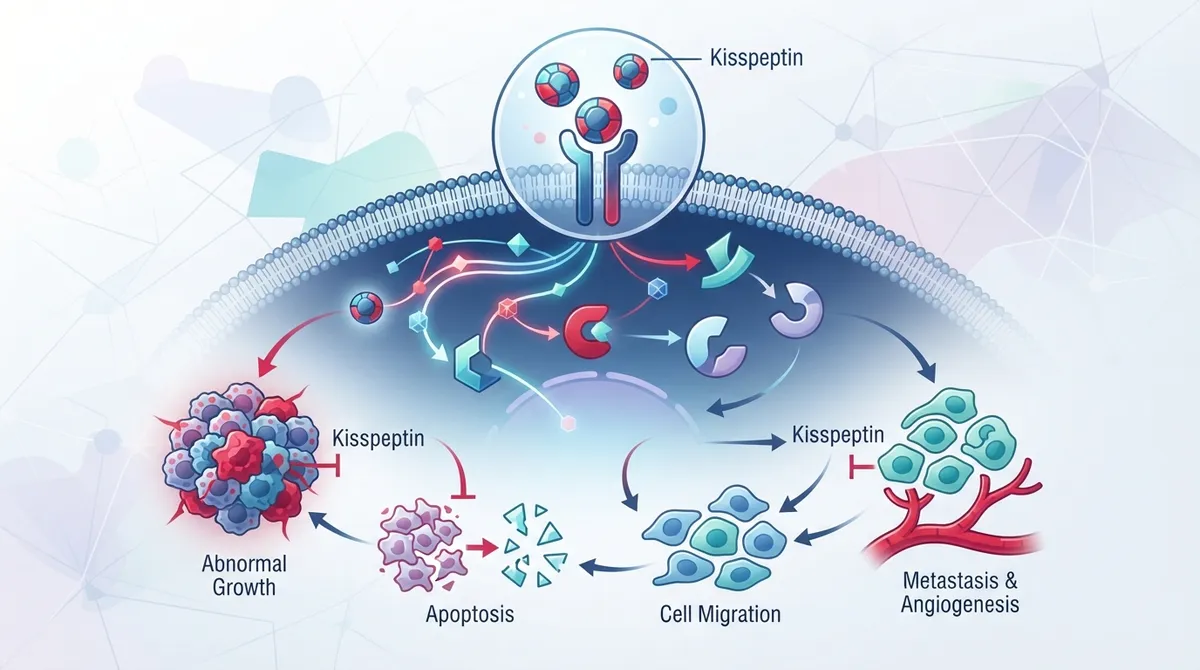
Kisspeptin is a natural hormone made by a gene called KISS1. Your body uses it to control puberty, fertility, and ovulation. It works by signaling another hormone called GnRH, which then triggers the reproductive system to function properly.
Because of its role in fertility, kisspeptin has drawn attention from researchers studying reproductive health. But scientists have also found it in tumor tissue during cancer studies. This has led to growing interest in how kisspeptin might relate to cancer growth or spread.
Kisspeptin's receptor is called KISS1R. You may also see it called GPR54 in medical literature. Both names refer to the same receptor, and understanding this can help you search for accurate information if you want to learn more on your own.
Fact 1: Kisspeptin Was First Discovered as a Cancer-Fighting Gene
Here is something surprising. The KISS1 gene was not first found in fertility research. It was discovered because it seemed to stop cancer from spreading. Scientists originally called it a "metastasis suppressor gene."
This means that in many lab studies, higher levels of KISS1 or its receptor were linked to less aggressive cancer. Lower levels were often linked to cancers that spread faster and had worse outcomes. This discovery happened decades ago, but it still shapes how researchers think about kisspeptin today.
- KISS1 was named for its cancer-suppressing properties before its fertility role was fully understood.
- Lower KISS1 activity has been tied to more aggressive tumor behavior in several cancer types.
- This protective effect appears in laboratory and animal studies, not yet confirmed in large human trials.
- The gene's dual role in fertility and cancer biology makes it a unique and complex research subject.
Fact 2: The Cancer-Fighting Effect Is Not the Same in Every Cancer Type
This is where things get complicated. Kisspeptin does not act the same way in every type of cancer. In many models, it slows down cancer cell movement and growth. In others, it may do the opposite.
Research has shown that kisspeptin signaling can reduce the spread of several cancer types in lab and animal studies. This includes colorectal, ovarian, pancreatic, bladder, prostate, thyroid, gastric, and some mesothelioma models. In these cases, kisspeptin appeared to block cancer cells from moving, invading nearby tissue, or multiplying.
Cancer Types Where Kisspeptin Shows a Protective Pattern in Research
|
Cancer Type |
Reported Effect in Studies |
Research Stage |
|---|---|---|
|
Colorectal Cancer |
Reduced cell migration and invasion |
Preclinical (lab/animal) |
|
Ovarian Cancer |
Reduced proliferation |
Preclinical (lab/animal) |
|
Pancreatic Cancer |
Reduced metastatic spread |
Preclinical (lab/animal) |
|
Bladder Cancer |
Inhibited invasion |
Preclinical (lab/animal) |
|
Prostate Cancer |
Reduced migration |
Preclinical (lab/animal) |
|
Thyroid Cancer |
Reduced tumor cell activity |
Preclinical (lab/animal) |
|
Gastric Cancer |
Reduced invasion |
Preclinical (lab/animal) |
|
Mesothelioma |
Antitumor activity observed |
Preclinical (lab/animal) |
A 2017 study found that kisspeptin reduced migration and invasion in human breast, prostate, and colorectal cancer cells. It also slowed tumor growth and spread in mouse models through a signaling pathway called EIF2AK2. While promising, this remains preclinical evidence, not proof that kisspeptin treats cancer in people.
Fact 3: Breast Cancer Is the Major Exception to Watch
Breast cancer research tells a different story. Some studies suggest kisspeptin signaling can actually support tumor growth rather than stop it, especially in triple-negative breast cancer.
A 2020 study published in Cell Death & Disease found higher kisspeptin levels in the blood of patients with triple-negative breast cancer compared to healthy individuals. In lab models, the KISS1R receptor appeared to help tumors grow, spread, and adapt their metabolism to survive. This is the opposite of what was seen in many other cancer types.
Breast cancer is not one single disease. It has many subtypes, and each may respond differently to hormone signals like kisspeptin. This is why doctors caution against generalizing kisspeptin's effects across all cancers, or even across all breast cancers.
Why Breast Cancer Behaves Differently
- Breast tissue has unique hormone receptor patterns that differ from other organs.
- Triple-negative breast cancer lacks common hormone receptors, making it behave more aggressively.
- KISS1R may interact with metabolic pathways that fuel tumor growth in this subtype.
- Genetic and cellular differences between tumors mean one signaling pathway can have opposite effects depending on context.
- Ongoing research is needed to confirm these findings in larger human populations.
Fact 4: A Blood Test Cannot Diagnose Cancer Using Kisspeptin
Some wellness marketing has suggested that checking kisspeptin levels could reveal cancer risk. This is not supported by current medical evidence.
Kisspeptin blood levels naturally change based on age, reproductive stage, pregnancy, and hormone therapy. These normal shifts make it impossible to set a clear "healthy" or "unhealthy" number tied to cancer risk. No major health organization currently recommends kisspeptin testing as a cancer screening tool.
If you are concerned about cancer risk, the safest path is proven screening methods. InCare offers cancer screening services designed around evidence-based guidelines, not experimental biomarkers. These screenings are reviewed by your care team and tailored to your personal and family health history.
- Kisspeptin levels shift naturally with the menstrual cycle, pregnancy, and puberty.
- There is no validated cutoff number linking kisspeptin blood levels to cancer diagnosis.
- Most kisspeptin-cancer research looks at tumor tissue, not blood samples from healthy people.
- Standard screenings remain the gold standard for early cancer detection.
Fact 5: People With a Cancer History Should Be Cautious About Kisspeptin Products
Kisspeptin is not an approved cancer treatment, and it should never be marketed as one. It is also not a routine part of fertility care outside of specific clinical research settings.
Because kisspeptin affects your reproductive hormone system, it can influence estrogen, testosterone, and other sex hormones. For someone with a current cancer diagnosis or prior cancer history, this hormone shift could carry unknown risks. Long-term safety data for repeated or nonstandard kisspeptin use simply does not exist yet.
Questions to Ask Before Considering Any Kisspeptin-Related Product
- Do I have a personal or family history of hormone-sensitive cancer?
- Am I currently pregnant, breastfeeding, or planning pregnancy?
- What medications or hormone therapies am I currently using?
- Has my primary care provider reviewed my full health history for this decision?
- Is this product being used inside a supervised clinical trial or outside standard medical guidance?
These questions matter because kisspeptin research is still evolving quickly. Our team at InCare providers stays current on emerging peptide research while prioritizing patient safety above trends. If you are curious about hormone health more broadly, our guide to kisspeptin and fertility offers additional background.
How InCare Approaches Hormone and Wellness Conversations
Wellness trends move fast, but good medicine moves carefully. At InCare, we combine advanced tools like DNA gene testing and body composition analysis with old-fashioned clinical judgment. This means we look at the whole picture before recommending any new therapy.
Our providers, including Dr. Naveen Paddu, Dr. Pramjeet Ahluwalia, and Dr. Teshy John, take time to explain the real evidence behind popular health topics. We believe informed patients make better decisions, especially when it comes to cancer risk and hormone therapies.
Comparing Established Cancer Screening vs. Experimental Peptide Claims
|
Category |
Established Cancer Screening |
Experimental Kisspeptin Claims |
|---|---|---|
|
Scientific Backing |
Decades of large human studies |
Mostly lab and animal studies |
|
Regulatory Approval |
Approved and guideline-recommended |
Not approved for cancer detection or treatment |
|
Diagnostic Reliability |
Validated thresholds and protocols |
No validated diagnostic threshold |
|
Clinical Availability |
Widely available through primary care |
Limited to research settings |
If you want to explore whole-body wellness safely, consider starting with a comprehensive primary care visit. This gives your provider a full picture before discussing any advanced or experimental therapy. You can also learn more about our approach on Facebook or see patient experiences on Instagram.
What This Means for Tampa and Riverview Patients Today
If you live in Tampa or Riverview and have heard about kisspeptin online, you are not alone. Many patients bring wellness trends to their appointments, and that is a good thing. It opens the door for honest, evidence-based conversations.
The bottom line is this: kisspeptin research is exciting but incomplete. It shows real promise in some cancer models while raising caution flags in others, particularly triple-negative breast cancer. No current evidence supports using kisspeptin as a cancer treatment, screening tool, or safe wellness supplement outside of research settings.
- Kisspeptin remains primarily a reproductive hormone with cancer-related research still developing.
- Its effects vary significantly by cancer type, meaning no single conclusion applies to all patients.
- Standard, proven cancer screenings remain the safest and most reliable approach today.
- Anyone with a cancer history should talk to a qualified provider before considering hormone-related peptides.
You can also check what real patients say about our approach to preventive care by visiting Visit us on Google — InCare. Our 4.8-star rating reflects a commitment to clear, honest communication about every health topic, including emerging ones like kisspeptin.
Moving Forward With Confidence, Not Confusion
Cancer-related health decisions deserve careful thought, not quick trends. Whether you are curious about kisspeptin, exploring weight loss programs, or simply due for a wellness checkup, InCare is here to guide you with real answers.
Ready to talk through your questions with a trusted provider? Reach out to our team today or schedule your appointment now to start your personalized wellness plan. You can also follow our latest health tips on Tik Tok for more evidence-based updates.
FAQs
Q: Does kisspeptin cause cancer?
A: Current evidence does not show that kisspeptin causes cancer. In most laboratory studies, it actually slows cancer cell growth and spread. The exception involves certain breast cancer subtypes, where research suggests it may support tumor growth instead.
Q: Can kisspeptin prevent or stop cancer metastasis?
A: Kisspeptin has shown antimetastatic effects in several laboratory and animal cancer models, including colorectal, ovarian, and prostate cancer. However, this evidence comes from preclinical research and has not been proven effective as a treatment in human patients.
Q: Is kisspeptin linked to breast cancer, especially triple-negative breast cancer?
A: Yes, research has found elevated kisspeptin levels in patients with triple-negative breast cancer. Laboratory studies suggest the KISS1R receptor may promote tumor growth and metastasis in this specific breast cancer subtype, unlike its effect in many other cancers.
Q: Can a kisspeptin blood test detect cancer?
A: No, kisspeptin blood tests are not a validated cancer screening tool. Kisspeptin levels naturally fluctuate due to age, menstrual cycle, and pregnancy, making it impossible to set a reliable diagnostic threshold for cancer risk.
Q: Is kisspeptin safe for people with a history of cancer?
A: People with a personal or family history of cancer should speak with a qualified provider before using any kisspeptin-related product. Because kisspeptin affects reproductive hormones, its long-term safety in cancer survivors has not been established.