Key Takeaways
- MOTS-c lacks human safety data and FDA approval with only preclinical evidence, while nicotinamide riboside has multiple randomized human trials showing NAD+ increases and short-term safety—making NR significantly more clinically developed.
- Nicotinamide riboside is an oral supplement (250-2,000 mg daily) that converts to NAD+, whereas MOTS-c is an unapproved injectable peptide often sold as unregulated research chemical with unknown purity and legal status.
- Neither MOTS-c nor nicotinamide riboside is proven to reverse aging, treat diabetes, or cause weight loss—evidence-based medical care with proven treatments remains the more reliable option for metabolic conditions.
- MOTS-c and NR work through different pathways (AMPK activation vs NAD+ production), so they are not interchangeable; MOTS-c analogue CB4211 data should not be used as proof that native MOTS-c is safe or effective in humans.
Longevity supplements are everywhere online. Two names keep coming up: MOTS-c and nicotinamide riboside. Both get linked to energy, metabolism, and healthy aging. But they are not the same thing, and they don't have the same level of proof behind them.
If you're weighing these options, you need clear facts, not hype. This guide breaks down what the science actually says about MOTS-c compared to nicotinamide riboside (NR). We'll cover how each one works, what human studies show, and why a conversation with a primary care provider matters before trying either one. At InCare, we help patients in Tampa and Riverview sort real evidence from wellness marketing so they can make safer choices.
1. What Is MOTS-c and How Does It Work?
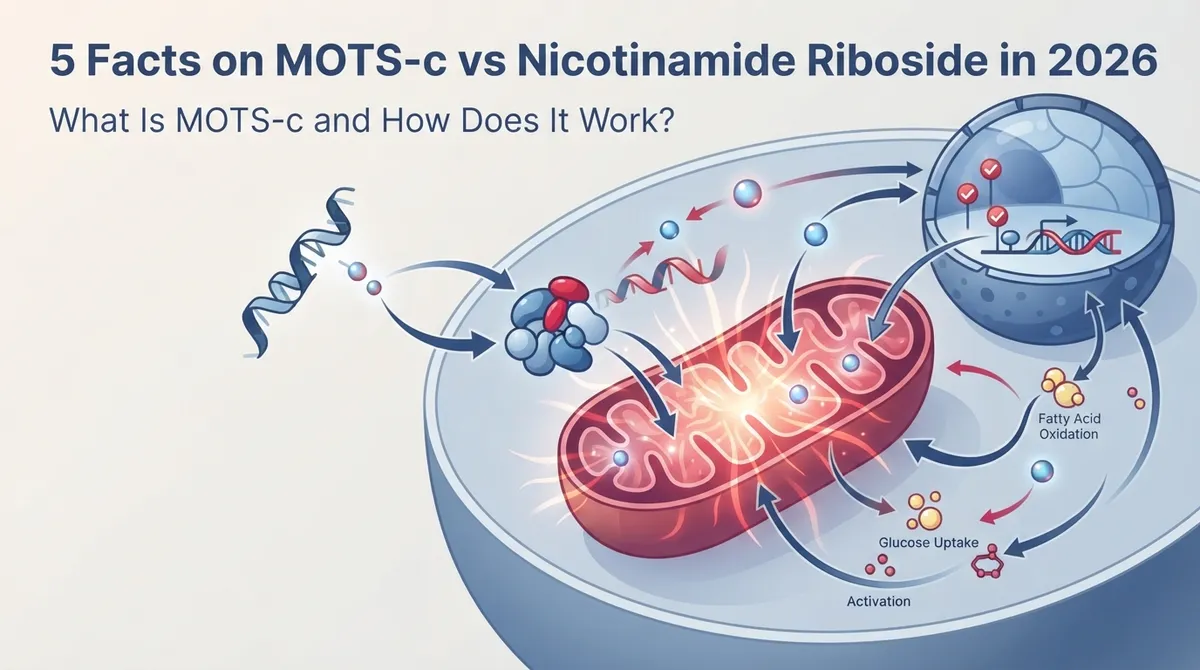
MOTS-c is a small peptide made from mitochondrial DNA. Mitochondria are the parts of your cells that produce energy. Researchers think MOTS-c may affect AMPK, a protein linked to how your body uses glucose and manages stress at the cellular level.
That sounds promising. But here's the catch: most of what we know comes from lab dishes and animal studies. There is no approved human dosing for MOTS-c. There is no long-term safety data. And there is no completed, well-controlled human trial proving it works for weight loss, diabetes, or aging.
Some clinics and online sellers market MOTS-c as an injectable peptide. This raises real concerns about quality, sterility, and legal status. Products sold as "research chemicals" are not meant for human use and are not checked for purity the way approved medications are.
The CB4211 Confusion
You may see claims that human trials prove MOTS-c works. Often, these claims actually reference CB4211, a MOTS-c analogue, not native MOTS-c itself. Early studies of CB4211 included about 88 participants across safety-focused trials. One small study followed 20 adults with obesity and elevated liver fat for 28 days.
These were safety and tolerability studies, not proof of benefit. The CB4211 program did not move forward into confirmed Phase 2 efficacy trials. That's an important distinction. Analogue data should never be treated as proof that native MOTS-c is safe or effective in people.
2. What Is Nicotinamide Riboside and How Does It Work?
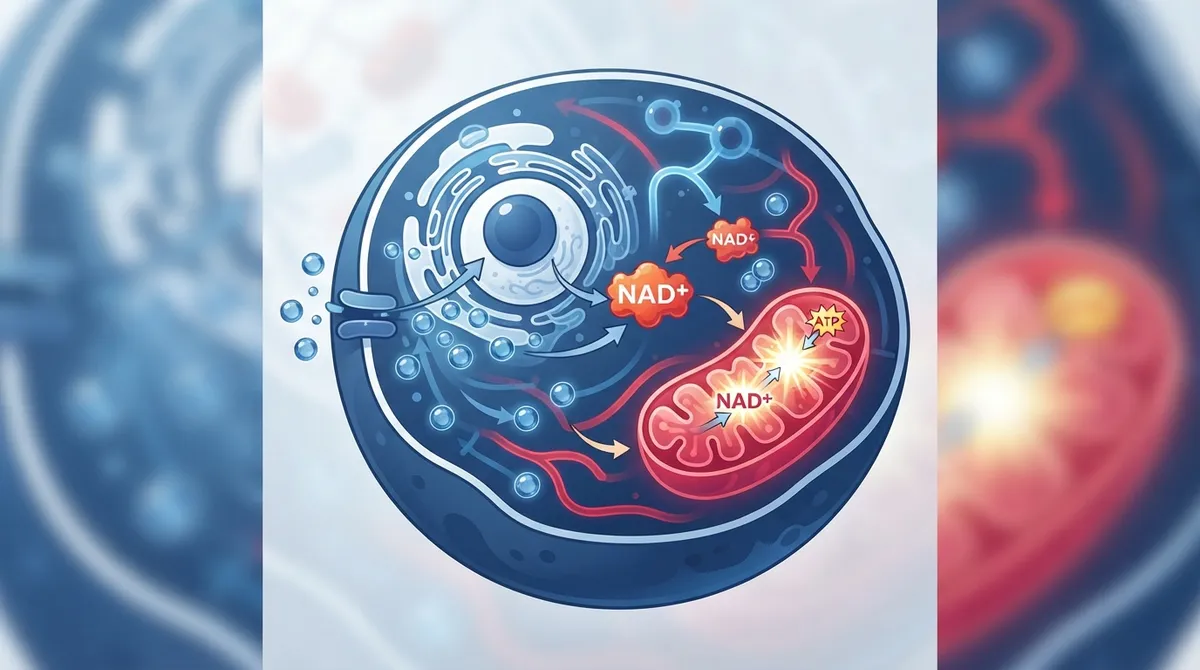
Nicotinamide riboside is a form of vitamin B3. It's taken by mouth, usually as a capsule. Your body converts NR into NAD+, a molecule every cell needs to make energy, repair DNA, and manage metabolic signals.
NAD+ levels naturally drop as people get older. This is why researchers got interested in NR as a way to raise NAD+ levels back up. Unlike MOTS-c, NR has been tested in actual randomized, placebo-controlled human trials.
One well-known 2017 study, published in npj Aging, gave 120 adults NR combined with pterostilbene. Researchers measured blood NAD+ levels before and after. NAD+ measures went up. Out of the group, 45 participants reported a total of 66 mild adverse events, but everyone recovered and no serious problems occurred.
Human studies of NR have typically used doses between 250 mg and 2,000 mg per day. Results vary by study design, population, and formulation. This means you can't assume every NR product on the market will produce the same effect.
3. MOTS-c vs Nicotinamide Riboside: Side-by-Side Comparison
Here's a simple breakdown of where these two compounds stand as of 2026.
|
Factor |
MOTS-c |
Nicotinamide Riboside |
|---|---|---|
|
Form |
Peptide, typically injected |
Oral capsule |
|
Human safety data |
Very limited; mostly from an analogue (CB4211) |
Multiple randomized trials with short-term safety data |
|
Human efficacy trials |
None completed showing clinical benefit |
Some trials show NAD+ increase; broader health benefits unproven |
|
Regulatory status |
Not FDA approved; often sold as research chemical |
Sold as a dietary supplement |
|
Typical claims |
Metabolism, insulin sensitivity, anti-aging |
Energy, cellular repair, NAD+ support |
|
Overall research maturity |
Preclinical stage |
More clinically developed, but still limited long-term data |
The takeaway is simple. NR has more human data behind it. MOTS-c remains experimental. Neither one is proven to reverse aging, cure diabetes, or replace standard medical care.
4. Common Questions Patients Ask About These Compounds
Patients researching peptide therapy and NAD+ boosters often ask similar questions. Here are the ones we hear most in our Tampa and Riverview clinics.
- Does MOTS-c raise NAD+ like NR does? No. MOTS-c works through a different pathway involving AMPK activation, not direct NAD+ production.
- Are either of these proven to extend lifespan? No human study has proven that either compound extends lifespan in people.
- Is MOTS-c legal to buy? It is not FDA approved for human use. Products sold online as "research use only" carry legal and safety concerns.
- Can NR interact with medications? Possibly. Anyone on prescription drugs, especially for blood sugar or blood pressure, should talk to a doctor before starting NR.
- Which one helps with weight loss? Neither has strong proof for weight loss. Evidence-based options like medically supervised weight loss programs have far more research behind them.
5. Why Primary Care Guidance Matters More Than Either Option
Chasing the newest peptide or supplement trend can distract from what actually improves health. Diagnosed conditions like diabetes, obesity, and metabolic syndrome respond best to proven treatments, lifestyle changes, and ongoing monitoring by a doctor.
This doesn't mean cellular health research isn't interesting. It is. But interesting research and proven therapy are two different things. A responsible primary care provider will help you separate the two.
What a Doctor-Led Approach Looks Like
Instead of guessing which peptide or supplement might help, a structured approach works better:
- Get baseline lab work to understand your current metabolic health.
- Discuss your goals, whether that's energy, weight, or general wellness.
- Review proven options first, including approved medications and lifestyle changes.
- Consider advanced tools like DNA gene testing or body composition analysis to track real progress.
- Follow up regularly to see what's actually working for your body.
This kind of plan gives you measurable results instead of unverified claims. It also protects you from products with unclear sourcing, dosing, or quality control.
Where InCare Fits Into Your Wellness Plan
At InCare, we combine primary care with advanced wellness tools so patients get science-backed answers, not marketing promises. Our providers, including Dr. Naveen Paddu, Dr. Pramjeet Ahluwalia, and Dr. Teshy John, help patients across Tampa and Riverview understand what's proven and what's still experimental.
We also offer services like IV hydration and vitamin drips and metabolic breath analysis to support energy and metabolism using methods with clearer safety profiles. If you're curious about how peptide therapy fits into a broader wellness plan, our team can walk you through the current evidence honestly.
You can also connect with our community and see real patient experiences on Facebook and Instagram, or check out quick wellness tips on Tik Tok. For more perspective from patients near you, visit us on Google — InCare to read reviews from our Tampa and Riverview locations.
Making a Safer Choice for Your Health
MOTS-c and nicotinamide riboside sit at very different points on the evidence scale. NR has more human trials, a clearer safety record in the short term, and is available as an oral supplement. MOTS-c remains investigational, with human safety and efficacy still largely unproven.
Neither should replace a solid healthcare plan built around diagnosis, prevention, and proven treatment. If you're exploring wellness options and want an honest, medically guided conversation, our team is ready to help you sort fact from trend.
Ready to talk to a provider about your wellness goals? Reach out to our team today or schedule your appointment online to get started with a plan built on real evidence, not guesswork.
FAQs
Q: What is the main difference between MOTS-c and nicotinamide riboside?
A: MOTS-c is an investigational peptide backed mostly by lab and animal research, while nicotinamide riboside is an oral NAD+ precursor tested in multiple human clinical trials. NR has far more human safety and pharmacokinetic data available.
Q: Does MOTS-c increase NAD+ levels like nicotinamide riboside does?
A: No. MOTS-c is thought to work through AMPK activation and mitochondrial signaling, not by raising NAD+ directly. NR specifically works as a precursor that your body converts into NAD+.
Q: Is MOTS-c legal and safe to use in humans?
A: Native MOTS-c has not been established as safe or effective in humans and lacks FDA approval for therapeutic use. Products marketed for injection often fall into unregulated research-chemical categories, raising quality and legal concerns.
Q: Are nicotinamide riboside supplements safe?
A: Randomized trials suggest oral NR is generally well tolerated over short to medium term use, though long-term data remains limited. Patients on medications, especially for blood sugar or blood pressure, should consult their provider before starting NR.
Q: Should I try MOTS-c or nicotinamide riboside for weight loss or diabetes?
A: Neither compound is proven to treat weight loss, diabetes, or metabolic syndrome. Evidence-based primary care approaches, including approved medications and lifestyle changes, remain the more reliable path for these conditions.