Key Takeaways
- CJC-1295 is prohibited by WADA at all times for competitive athletes, risking suspension and disqualification; it is also not FDA-approved for human use, meaning online products lack quality control and dosing standards.
- Despite measurable hormone increases in clinical studies, peer-reviewed research has not demonstrated that CJC-1295 improves muscle mass, fat loss, or exercise performance in healthy trained individuals.
- IGF-1 remains elevated for up to 28 days after multiple doses, creating prolonged hormonal exposure with unknown long-term safety effects in athletic populations.
- Medically supervised alternatives like structured weight loss programs, IV hydration therapy, and body composition analysis offer proven, evidence-based performance support without legal or health risks.
Athletes searching for an edge often come across CJC-1295, a peptide marketed for muscle recovery and body composition. Before trying any peptide, it helps to understand what the science actually shows. This matters even more for competitive athletes who face strict anti-doping rules and health risks tied to unregulated products.
CJC-1295 is a synthetic hormone-releasing compound that has gained popularity in fitness circles and online wellness communities. But popularity does not equal proof, and marketing claims often move faster than clinical research. At InCare, our providers believe patients deserve clear, honest information before making decisions about their health and performance goals.
This article breaks down five key facts every athlete should know about CJC-1295, including how it works, what research actually shows, and why legality and safety concerns matter more than trending claims. We will also cover how a primary care team can help you pursue performance and recovery goals the right way.

What Is CJC-1295 and How Does It Work?
CJC-1295 is a lab-made peptide known as a growth hormone-releasing hormone (GHRH) analog. Instead of supplying growth hormone directly, it signals the pituitary gland to release more of the body's own growth hormone. This mechanism is different from synthetic human growth hormone, which adds hormone directly into the bloodstream.
Once growth hormone increases, the liver responds by producing more insulin-like growth factor 1, or IGF-1. Both hormones play a role in metabolism, tissue repair, and muscle growth. This is why CJC-1295 is often discussed alongside peptide therapy programs focused on recovery and wellness.
The Hormonal Response in Clinical Research
A well-known randomized, placebo-controlled study published on PubMed examined CJC-1295 in healthy adults. The results showed measurable hormone changes after a single dose, but they also revealed how long those effects can last, which raises important safety questions.
- Growth hormone increased 2 to 10 times above baseline for 6 days or more after one injection
- IGF-1 increased 1.5 to 3 times above baseline for 9 to 11 days after a single dose
- The estimated half-life of CJC-1295 in this study was 5.8 to 8.1 days
- After multiple doses, IGF-1 remained elevated for up to 28 days
These numbers show real biological activity. However, hormone changes on paper do not automatically translate into safe or effective performance benefits in real-world athletic training.

5 Key Facts Athletes Need to Understand
Below are the five most important facts for any athlete considering CJC-1295, ranked by how directly they affect health, legality, and results.
1. Hormone Increases Do Not Equal Performance Gains
Despite the dramatic hormone shifts seen in trials, published peer-reviewed research has not shown that CJC-1295 improves muscle mass, fat loss, or exercise performance in healthy trained individuals. This includes combinations like CJC-1295 paired with ipamorelin, which are commonly marketed together in wellness spaces.
Growth hormone and IGF-1 support many body processes, but simply raising their levels does not guarantee stronger lifts, faster sprints, or quicker recovery times. Athletic performance depends on training load, nutrition, sleep, and genetics working together, not a single hormone pathway.
2. CJC-1295 Is Prohibited in Competitive Sport
The World Anti-Doping Agency (WADA) lists growth hormone-releasing factors, including CJC-1295, under its prohibited substances category. This ban applies at all times, not just during competition season, which means in-season and off-season testing can both detect its use.
Athletes who compete under any organization that follows WADA rules face real risk of suspension, disqualification, or loss of eligibility. This is one of the clearest reasons competitive athletes should avoid this peptide entirely.
3. It Is Not FDA-Approved for Human Use
CJC-1295 is not approved by the FDA for any therapeutic purpose in humans. Any use in wellness or fitness settings falls outside approved medical guidelines, meaning quality control, dosing standards, and safety monitoring are not guaranteed.
Products sold online may vary widely in purity and concentration. Without regulatory oversight, athletes cannot be certain what they are actually injecting into their bodies.
4. Side Effects and Long-Term Risks Are Not Fully Known
Because CJC-1295 has not gone through the same rigorous, long-term human trials as approved medications, its full safety profile remains unclear. Reported concerns in wellness communities include injection site reactions, water retention, joint discomfort, and changes in blood sugar regulation.
Since IGF-1 levels can stay elevated for weeks after just a few doses, the body may be exposed to prolonged hormonal changes with effects that are still not well studied in athletic populations.
5. Safe Alternatives Exist Through Medical Supervision
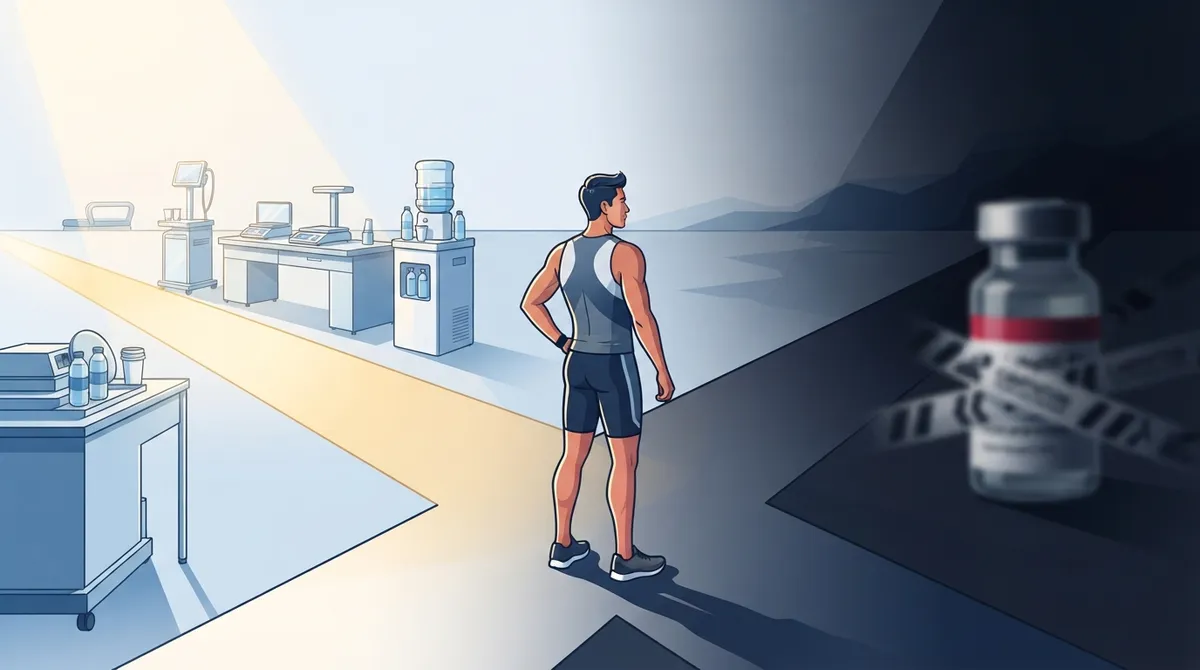
Athletes looking to support recovery and performance have better paths available through a licensed primary care or wellness provider. Options like structured weight loss programs, IV hydration therapy, and body composition analysis can help athletes track real progress using proven tools.
ApproachRegulatory StatusEvidence for PerformanceTesting Risk for AthletesCJC-1295Not FDA-approvedNo proven benefit in healthy adultsProhibited by WADA at all timesMedically supervised weight lossFDA-regulated medications availableDocumented results with monitoringNone, when prescribed appropriatelyIV hydration therapyAdministered under clinical supervisionSupports hydration and recoveryNoneBody composition trackingNon-invasive, technology-basedMeasurable, trackable dataNone
How CJC-1295 Compares to Other Peptides
Athletes often confuse CJC-1295 with similar-sounding peptides like ipamorelin or sermorelin. While all three influence growth hormone release, they differ in mechanism, duration of action, and research history.
- Sermorelin mimics natural GHRH more closely and has a shorter duration of action
- Ipamorelin works through a different receptor pathway and is often combined with CJC-1295 in unregulated products
- CJC-1295 has a longer half-life, meaning its effects on hormone levels last much longer after each dose
None of these peptides carry FDA approval for athletic performance use, and all fall under scrutiny from anti-doping organizations when used by competitive athletes.
Why Testing Implications Matter So Much
Many athletes assume peptides are harder to detect than traditional steroids. This assumption can be costly. Anti-doping labs continue to update detection methods, and prohibited substances remain banned regardless of detection technology at any given time.
A positive test can affect scholarships, professional contracts, and reputations built over years of hard work. For amateur and recreational athletes, health risks alone should be reason enough to avoid unregulated peptides.
Steps Athletes Should Take Before Trying Any Peptide
Before considering any performance-related supplement or peptide, athletes should follow a clear process to protect their health and eligibility.
- Check the current prohibited substances list from your sport's governing body
- Ask a licensed medical provider about the actual evidence behind any product
- Request lab testing and bloodwork before starting any new regimen
- Discuss training, sleep, and nutrition strategies that have documented performance benefits
- Avoid products sold without clear manufacturing or quality standards
This kind of due diligence protects both short-term health and long-term athletic career prospects.
How Primary Care Supports Athletic Performance the Right Way
Primary care providers play a bigger role in athletic performance than many people realize. Regular checkups, bloodwork, and screening services help athletes catch issues early, long before they affect performance or long-term health.
At InCare, our team of providers takes a whole-body approach to wellness, looking at metabolism, hormone balance, and recovery patterns without relying on unproven or prohibited substances. Services like metabolic breath analysis and DNA gene testing give athletes real data to guide training and recovery decisions.
Building a Recovery Plan That Actually Works
Recovery is where many athletes lose the most ground, often without realizing it. Sleep quality, hydration status, and nutrient intake affect performance far more than most people expect.
- Consistent sleep schedules to support natural hormone regulation
- Hydration strategies tailored to training intensity and climate
- Balanced nutrition plans built around individual metabolic needs
- Routine bloodwork to catch deficiencies before they cause problems
- Gradual training load increases to reduce injury risk
These strategies are backed by decades of sports medicine research, unlike peptides that remain largely unstudied in athletic populations.
Choosing a Trusted Wellness Partner in Tampa and Riverview
Athletes in the Tampa Bay area have access to comprehensive wellness services that go beyond a typical checkup. InCare's locations in Tampa and Riverview offer a combination of primary care, urgent care, and advanced wellness testing under one roof.
Patients consistently share positive experiences with our team, and you can visit us on Google — InCare to read reviews from real patients in the community. Many highlight the friendly staff and the thorough, personalized care they receive during every visit.
You can also follow along with wellness tips and clinic updates on our Facebook page, Instagram account, and TikTok channel, where we share practical health information for the community.
Making Informed Decisions About Performance and Health
The appeal of a quick fix is understandable, especially for athletes under pressure to perform. But the evidence on CJC-1295 simply does not support the claims often made about it in fitness circles.
Choosing a medically supervised approach to performance and recovery protects both your health and your athletic future. Working with a knowledgeable primary care team gives you access to proven tools, accurate testing, and honest guidance instead of unverified claims.
Take the Next Step Toward Safe Performance Support
If you are an athlete looking for real, evidence-based ways to support recovery and performance, our team is ready to help. Reach out to our clinic to get in touch with our team and discuss your goals, or go ahead and schedule your appointment today to start building a plan that actually works for your body.
FAQs
Q: What is CJC-1295 and how does it work?
A: CJC-1295 is a synthetic peptide that signals the pituitary gland to release more growth hormone, which in turn raises IGF-1 levels. Research shows these hormone changes can last for days or weeks, though this does not confirm any performance benefit.
Q: Is CJC-1295 legal for competitive athletes?
A: No. The World Anti-Doping Agency lists growth hormone-releasing factors, including CJC-1295, as prohibited at all times. Use can result in suspension, disqualification, or other anti-doping sanctions.
Q: Does CJC-1295 actually improve muscle growth or performance?
A: Published peer-reviewed research has not demonstrated improved muscle mass, fat loss, or exercise performance from CJC-1295, even in combination with peptides like ipamorelin. Hormone increases do not automatically translate into measurable athletic gains.
Q: Is CJC-1295 approved by the FDA?
A: CJC-1295 is not FDA-approved for any human therapeutic use. This means its use in wellness or sports settings falls outside standard medical safety and quality regulations.
Q: What safer options exist for athletes seeking recovery support?
A: Medically supervised programs like structured weight loss plans, IV hydration therapy, and body composition tracking offer measurable, evidence-based support. A primary care provider can also run bloodwork to identify real deficiencies affecting performance.