
Key Takeaways
- MOTS-c is a 16-amino acid peptide from mitochondrial DNA that acts as a cellular messenger, but current evidence comes mostly from animal studies; human trials remain limited and ongoing, so it should not be viewed as a proven treatment yet.
- Lab research suggests MOTS-c activates AMPK pathways that may improve glucose uptake, fat burning, and insulin sensitivity, but these benefits are unconfirmed in humans and age-related MOTS-c decline does not prove causation or anti-aging effects.
- MOTS-c products sold online are unregulated and may lack verified purity, sterility, or accurate dosing; consult a licensed provider rather than relying on social media claims, as FDA-approved alternatives for metabolic support already exist.
- Proven mitochondrial health strategies available today include regular exercise, balanced nutrition, quality sleep, and metabolic testing through primary care—these evidence-backed approaches are more reliable than experimental peptides for immediate metabolic optimization.
Interest in mitochondrial-derived peptides has grown fast among people looking for ways to boost energy, improve metabolism, and support healthy aging. One compound getting attention is MOTS-c. Wellness patients often ask their doctor about it after seeing claims online. But what does MOTS-c function actually mean, and is it something you should consider? This guide breaks down the science in plain language, so you can make informed decisions with your primary care team.
At InCare, we believe patients deserve clear, honest information about emerging wellness trends. This article explains what current research shows about MOTS-c function, what remains unproven, and why working with a licensed provider matters more than following online trends. Whether you visit our Tampa or Riverview location, our goal is to help you separate real science from marketing hype.
1. What MOTS-c Function Actually Means in the Body
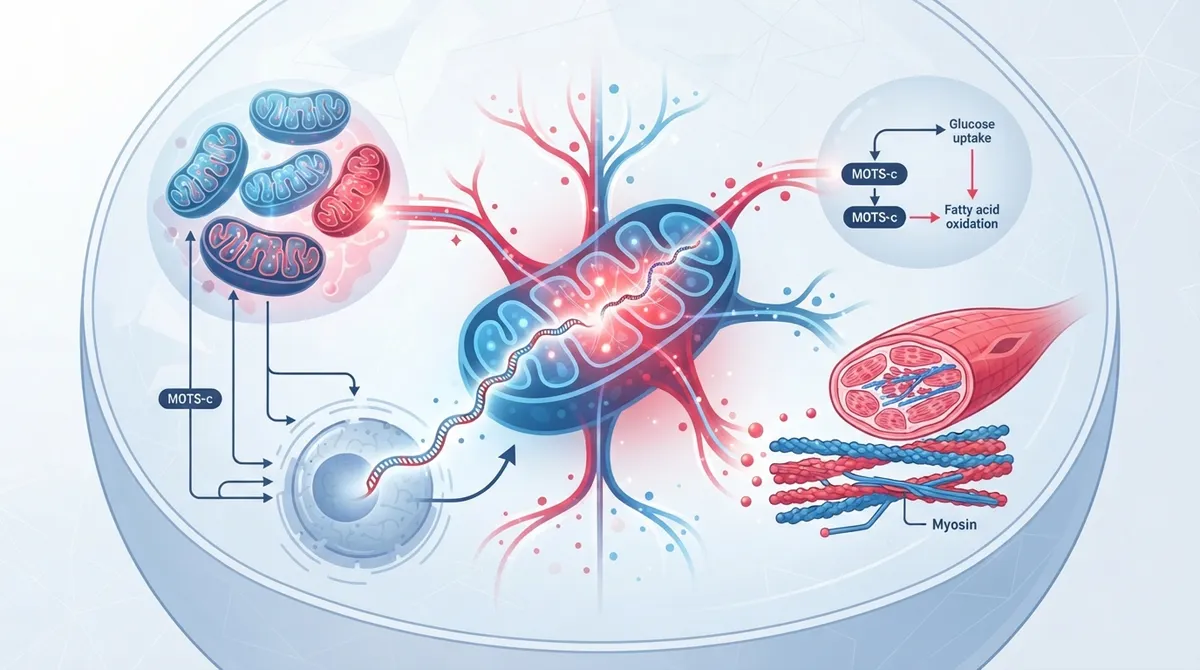
MOTS-c stands for mitochondrial open reading frame of the 12S rRNA type-c. It sounds complex, but the idea is simple. MOTS-c is a small peptide made of just 16 amino acids. It is coded by mitochondrial DNA, not regular DNA found in the cell nucleus.
Mitochondria are the tiny structures inside your cells that produce energy. Scientists discovered that mitochondria also send out signals that affect other parts of the body. MOTS-c function appears to be one of these signals. Researchers first identified this peptide and its metabolic role in 2015, using cell and mouse studies.
Unlike hormones made by glands, MOTS-c seems to act more like a messenger between your cells' energy factories and the rest of your body. Its main target appears to be skeletal muscle, though it may also influence fat tissue and other organs involved in blood sugar control.
Why This Matters for Primary Care Patients
Understanding MOTS-c function helps explain why mitochondrial health is a growing focus in wellness clinic visits. Your mitochondria affect nearly every system in your body, from muscle strength to how well you process sugar and fat. If you are curious about your own mitochondrial health, our mitochondrial health facts guide offers more background.
2. How MOTS-c Function Connects to Blood Sugar and Metabolism
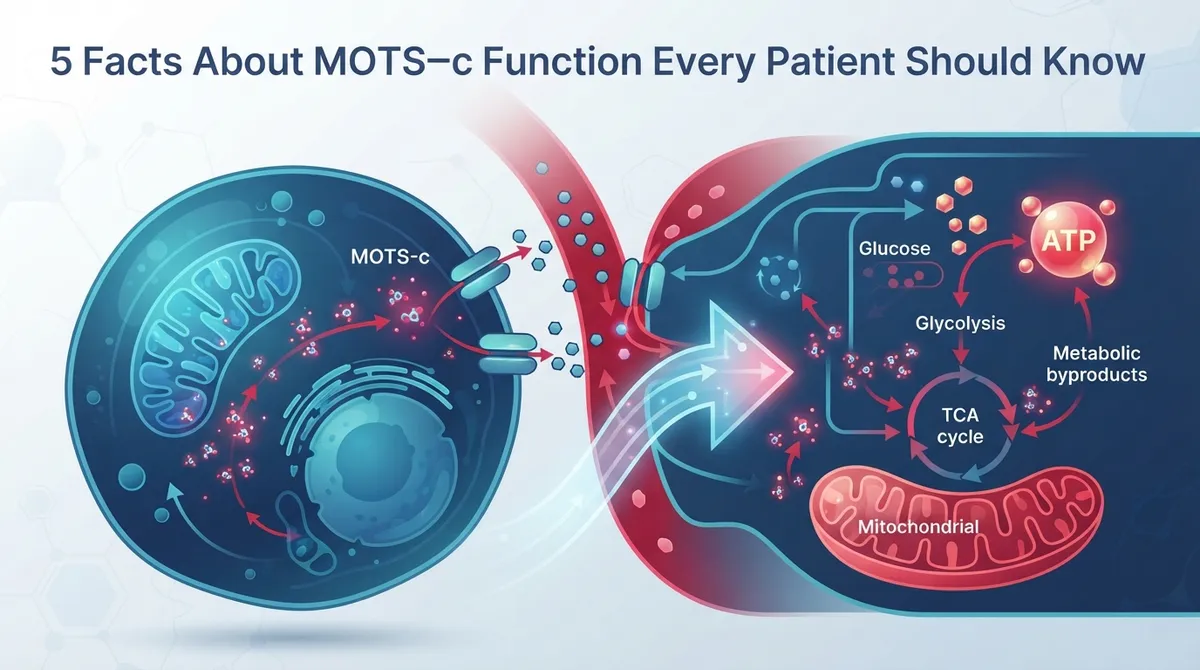
One of the most studied areas of MOTS-c function involves blood sugar control. Lab research suggests MOTS-c may activate a pathway called AMPK, short for AMP-activated protein kinase. Think of AMPK as an energy switch inside your cells.
When AMPK turns on, it can promote several helpful actions:
- Increased glucose uptake into cells
- Better fat burning for energy
- Improved response to physical and metabolic stress
- Support for healthy insulin sensitivity
In animal studies, MOTS-c has shown promise for improving insulin sensitivity and resisting weight gain from high-fat diets. These results are encouraging, but they come from mice and cell cultures, not large human trials. This distinction matters a lot when deciding whether a therapy is ready for real-world use.
The Nucleus Connection
Under stress conditions, MOTS-c may travel from the mitochondria into the cell's nucleus. There, it may influence genes tied to antioxidant defense and stress response, including pathways linked to NRF2 and ATF1. This suggests MOTS-c function goes beyond simple energy signaling. It may help cells adapt to challenges like exercise, illness, or aging.
3. What Human Research Shows So Far
Human studies on MOTS-c are still limited compared to lab research. Most current findings come from observational studies and small exercise trials, not large controlled treatments.
Here is what researchers have found in people:
- MOTS-c levels in blood and muscle tend to rise after exercise, though the amount varies by fitness level and workout type.
- A 2023 review summarized data comparing three age groups: 18 to 30, 45 to 55, and 70 to 81 years old, with 25 people per group. Plasma MOTS-c was significantly lower in the middle-aged and older groups compared to the youngest group.
- No universally accepted normal range exists yet for blood MOTS-c levels.
- A Phase 2a clinical trial listed on ClinicalTrials.gov is studying MOTS-c over 12 weeks in adults with prediabetes and excess weight. The trial is designed to look at insulin sensitivity, safety, and cardiometabolic markers.
It is important to understand that trial registration does not prove a treatment works. It simply means researchers are formally testing it under controlled conditions. Results from this and future studies will help clarify how MOTS-c function translates from the lab to real patient care.
Age-Related Decline
The drop in MOTS-c levels with age has led some to call it an exercise mimetic or anti-aging compound. While the pattern is interesting, a correlation does not confirm cause and effect. Lower levels in older adults could reflect many factors, including reduced muscle mass, activity levels, or other age-related changes. If you're interested in healthy aging strategies backed by more established evidence, our cellular aging resources may help.
4. Common Misconceptions About MOTS-c Function
Online marketing often overstates what MOTS-c can do. Here are important facts every patient should know before considering any peptide product.
|
Claim Often Made Online |
What Current Evidence Actually Shows |
|---|---|
|
MOTS-c is FDA-approved for weight loss |
MOTS-c is not FDA-approved for any use. It remains investigational. |
|
MOTS-c is a proven exercise substitute |
Human data is limited to exercise-related changes in levels, not confirmed treatment effects. |
|
MOTS-c injections are a safe supplement |
Online peptide products may have uncertain purity, sterility, and dosing. |
|
MOTS-c treats diabetes in humans |
Only preclinical animal studies show this effect; human trials are still ongoing. |
|
There is an established safe dose |
No validated dose, route, or monitoring protocol exists for routine use. |
These distinctions matter because unregulated peptide products sold online may not contain what the label claims. Without proper testing, there is no way to verify potency or safety. This is one reason our providers emphasize evidence-based approaches over unproven trends.
Why Working With a Licensed Clinic Matters
Patients sometimes feel pressure to try trending peptides after reading enthusiastic reviews online. A trusted primary care team can help you evaluate claims, understand realistic expectations, and choose therapies with stronger safety records. Our team regularly discusses peptide therapy safety with patients who want science-backed guidance rather than guesswork.
5. Smarter Ways to Support Mitochondrial Health Today
While MOTS-c remains experimental, you do not need to wait for future research to support your metabolism and energy levels. Several proven strategies can help your mitochondria function well right now.
- Regular aerobic and resistance exercise, which naturally raises certain metabolic signaling molecules
- Balanced nutrition with adequate protein and micronutrients
- Quality sleep, which supports cellular repair processes
- Routine body composition tracking to monitor progress over time
- Personalized DNA gene testing to understand your unique metabolic tendencies
These approaches are backed by decades of research, unlike many peptide products sold without regulation. Combining smart lifestyle habits with regular checkups gives you a stronger, more reliable path toward better health.
Building a Personalized Wellness Plan
Every patient's metabolic profile is different. A metabolic breath analysis can measure how efficiently your body burns fat and carbohydrates. Pairing this data with routine primary care visits helps your provider create a plan built around your actual results, not general assumptions. For patients focused on weight management, our weight loss programs use proven, supervised methods rather than unregulated peptides.
Talking to Your Doctor About Emerging Peptides
If you are curious about MOTS-c or similar compounds, bring your questions to a licensed provider rather than relying solely on social media or online forums. A knowledgeable physician can explain the difference between promising lab research and treatments ready for everyday use.
Our physicians, including Dr. Pramjeet Ahluwalia and Dr. Naveen Paddu, take time to walk patients through current evidence on trending wellness topics. This kind of honest conversation helps you avoid wasting money on unproven products while still exploring legitimate options for improving your health.
Patients in the Tampa Bay area have shared their experiences with our team, and you can visit us on Google — InCare to read what others say about their visits. You can also follow our latest wellness updates on Facebook, Instagram, and Tik Tok for science-based content on emerging health trends.
Making Informed Decisions About Your Metabolic Health
MOTS-c function represents a fascinating area of mitochondrial research with real potential for the future. Studies suggest it may play a role in insulin sensitivity, exercise adaptation, and cellular stress response. However, current evidence comes mostly from animal and cell studies, with human research still in early stages.
Until more clinical trials are completed, MOTS-c should be viewed as an area to watch rather than a proven treatment. Patients interested in metabolic optimization have safer, better-studied options available today through supervised primary care and wellness programs.
If you want to learn more about your metabolic health or explore evidence-based wellness services, our team is ready to help. Schedule your appointment today and take the next step toward a personalized, science-backed health plan at InCare in Tampa or Riverview.
FAQs
Q: What is MOTS-c and what does it do in the body?
A: MOTS-c is a small peptide made of 16 amino acids, encoded by mitochondrial DNA. Research suggests it acts as a signaling molecule that may influence energy metabolism, insulin sensitivity, and cellular stress responses, primarily in skeletal muscle.
Q: Does exercise naturally increase MOTS-c levels?
A: Human studies suggest that circulating and skeletal-muscle MOTS-c levels may rise after exercise. However, the size of this response varies based on fitness level, exercise type, and how the sample was measured, and no standard reference range currently exists.
Q: Is MOTS-c approved by the FDA or available as a supplement?
A: No, MOTS-c is not approved by the FDA as a medication or dietary supplement. It remains an investigational compound, and products sold online may carry unknown risks related to purity and dosing.
Q: Can MOTS-c help with weight loss or metabolic syndrome?
A: Animal studies have shown improvements in insulin sensitivity and resistance to diet-induced obesity, but these results have not been confirmed in large human trials. MOTS-c should not be viewed as a proven weight loss treatment at this time.
Q: What human clinical trials have studied MOTS-c?
A: A Phase 2a randomized, placebo-controlled trial listed on ClinicalTrials.gov is currently evaluating 12 weeks of MOTS-c in adults with prediabetes and overweight or obesity, focusing on insulin sensitivity and safety. Trial registration alone does not confirm effectiveness or approval.