
Key Takeaways
- Kisspeptin is a brain hormone that controls ovulation by triggering GnRH release, which activates LH and FSH; without sufficient kisspeptin activity, women may experience irregular periods or fertility issues.
- Early research shows kisspeptin may reduce severe OHSS risk by 33.6-fold in IVF treatment, but this comes from one study population and kisspeptin remains experimental, not yet routine in fertility clinics.
- Kisspeptin is not FDA-approved and remains in clinical trial phases; any kisspeptin products sold as supplements or wellness injections outside clinical research lack regulatory verification and should be avoided.
- Kisspeptin may help diagnose ovulation disorders like hypothalamic amenorrhea and unexplained infertility through functional brain-ovary communication testing, but standard evaluation with bloodwork and ultrasound remains the first step.
- A 2022 trial found kisspeptin altered brain response in women with low sexual desire and is being studied for menopause symptoms, but these uses remain exploratory and unproven.
- Safety data from over 150 research subjects show no serious side effects to date, but long-term safety is unknown and dosing varies widely across studies without standardization.
Kisspeptin has become one of the most talked-about topics in reproductive health research. If you have searched for answers about ovulation, fertility, or hormone testing, you may have come across this brain hormone. Many women want to know what kisspeptin actually does and whether it can help with real health concerns.
This article breaks down the science of kisspeptin in plain language. We will cover how it works, what research shows, and why standard medical evaluation still matters most. As a personalized primary care and wellness clinic, InCare believes women deserve clear, honest information before making health decisions. Whether you live near our Tampa office or our Riverview location, our team can help you sort fact from marketing hype.
What Is Kisspeptin and Why Does It Matter for Women?
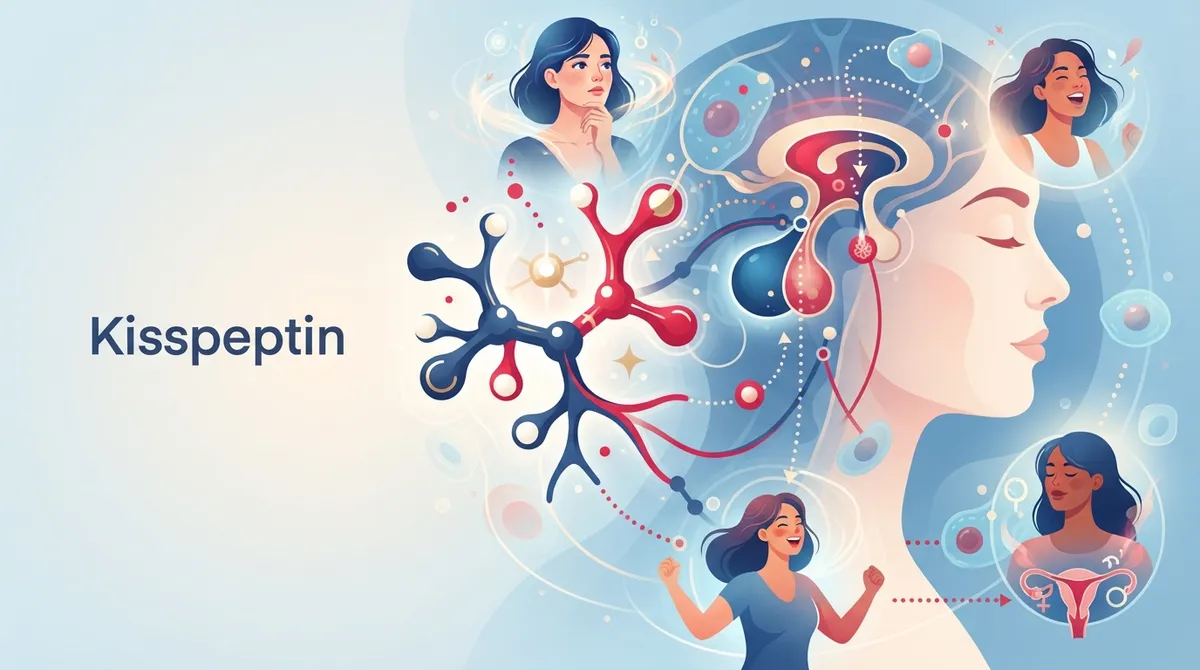
Kisspeptin is a natural hormone made in the brain. It comes from a gene called KISS1. This hormone acts like a messenger. It tells another part of the brain to release a signal called GnRH.
GnRH then tells the pituitary gland to release two more hormones: LH and FSH. These two hormones control ovulation and the menstrual cycle. In simple terms, kisspeptin sits at the very top of a chain reaction that controls female fertility.
Without enough kisspeptin activity, this whole chain can break down. This may lead to irregular periods, missed ovulation, or trouble getting pregnant. Researchers see kisspeptin as a master switch for reproductive health.
How Kisspeptin Affects the Menstrual Cycle
Kisspeptin plays a role in several key parts of a woman's cycle. It helps trigger puberty. It supports normal monthly cycles. It also causes the midcycle surge in LH that leads to ovulation.
Here are the main ways kisspeptin supports cycle health:
- Helps start puberty at the right age
- Supports regular follicle growth each month
- Triggers the LH surge needed for ovulation
- Keeps the hypothalamic-pituitary-ovarian axis working smoothly
- May influence hormone shifts during perimenopause
When any part of this system is off balance, women may notice symptoms like missed periods or unpredictable cycles. This is one reason primary care doctors ask detailed questions about menstrual history during wellness visits.

4 Key Kisspeptin Facts Women Should Understand
Research on kisspeptin is growing fast, but most uses are still experimental. Below are four facts that help explain where the science stands today.
1. Kisspeptin May Offer a Safer Ovulation Trigger in Fertility Treatment
In IVF treatment, doctors often give a "trigger shot" to cause final egg maturation before egg retrieval. Traditional triggers carry a risk of ovarian hyperstimulation syndrome, or OHSS. This condition can cause swelling, pain, and in rare cases, serious complications.
Early research suggests kisspeptin may lower this risk. One study reported that women given kisspeptin-54 had a 33.6-fold lower risk of severe OHSS compared to a standard trigger, in a group of women already at high risk. This is a striking number, but it comes from one specific study population. It should not be assumed to apply to every patient or every fertility clinic.
Kisspeptin is not yet a routine part of most IVF protocols. It remains an active area of clinical trial research rather than a widely available treatment option.
2. A 2024 Trial Showed Promising Results for a New Kisspeptin Agonist
In 2024, researchers reported results from two placebo-controlled trials testing a kisspeptin agonist called MVT-602. The trials involved healthy premenopausal women, including some going through ovarian stimulation for fertility treatment.
The LH response after MVT-602 looked more like a natural midcycle surge compared to older trigger methods. This is exciting news for the fertility research community. Still, this drug is not FDA-approved for general use. It remains in the testing phase.
3. Kisspeptin May Help Diagnose Certain Ovulation Disorders
Doctors sometimes need to figure out why a woman's reproductive hormones are not working as expected. Kisspeptin testing could someday help answer that question. It may act as a functional test of how well the brain and ovaries are communicating.
This could be useful for conditions like:
- Hypothalamic amenorrhea, where periods stop due to stress, low body weight, or too much exercise
- Polycystic ovary syndrome (PCOS), which affects ovulation and hormone balance
- Unexplained infertility, where standard tests do not reveal a clear cause
- Delayed puberty, where hormone signals may be starting late
Despite this potential, kisspeptin blood testing is not yet a standard diagnostic tool in most primary care or fertility clinics. Women with symptoms like these should still start with standard evaluation, including bloodwork, ultrasound, and a review of their primary care health history.
4. Kisspeptin Research Is Exploring Sexual Desire and Menopause
A 2022 clinical trial published in JAMA Network Open studied kisspeptin in 32 premenopausal women with low sexual desire, a condition called hypoactive sexual desire disorder. The hormone changed how the brain responded to certain images and cues. Researchers found it was well tolerated by participants.
This study was exploratory. It does not prove kisspeptin treats low libido. More research is needed before this becomes an approved therapy.
Kisspeptin and a related pathway called neurokinin B are also being studied in menopause. Scientists think this pathway may affect hot flashes and bone health as women age. However, kisspeptin itself is not an approved menopause treatment. Approved neurokinin-3 receptor drugs are a separate category and should not be confused with kisspeptin therapy.
Kisspeptin Research Snapshot: What the Data Shows
|
Research Area |
Population Studied |
Key Finding |
|---|---|---|
|
Systematic Review (2025) |
33 clinical trial records reviewed |
29 interventional studies met inclusion criteria |
|
Sexual Desire Trial |
32 premenopausal women |
Altered brain response, well tolerated |
|
MVT-602 Study |
9 healthy women, 6 PCOS, 6 hypothalamic amenorrhea |
LH response resembled natural surge |
|
OHSS Risk Study |
High-risk IVF patients |
33.6-fold lower severe OHSS risk vs. standard trigger |
These numbers come from small, controlled research settings. Dosing and patient selection still need more study before kisspeptin becomes a routine treatment option.
Is Kisspeptin Safe? What the Research Says About Side Effects
Safety data on kisspeptin is still limited but encouraging so far. According to a 2025 clinical trial protocol, kisspeptin has been given to more than 150 subjects across multiple studies. No serious kisspeptin-related side effects have been reported in the literature reviewed by investigators.
That said, this is not the same as proof of long-term safety. Doses used in studies have ranged widely, from about 0.15 to 12.8 nmol/kg, depending on the trial. These research doses should never be viewed as guidance for personal use.
Key safety points to keep in mind:
- Small trials have not shown serious side effects so far
- Long-term safety data is still limited
- Dosing varies greatly between studies and is not standardized
- Kisspeptin products sold outside clinical research are not regulated or verified
- Self-treatment with unregulated kisspeptin products is not recommended
Because kisspeptin is not FDA-approved as a treatment, any product marketed as a "kisspeptin supplement" or "wellness injection" should be viewed with caution. Quality, purity, and dosing cannot be verified outside of controlled clinical trials.
How Kisspeptin Differs From Other Hormone Therapies
It is easy to confuse kisspeptin with other hormone-related treatments. Here is a simple comparison to clear up common confusion.
|
Therapy |
What It Does |
Approval Status |
|---|---|---|
|
Kisspeptin |
Triggers GnRH release from the brain |
Experimental, not FDA-approved |
|
GnRH Agonists |
Directly stimulate or suppress GnRH receptors |
FDA-approved for several conditions |
|
Neurokinin-3 Receptor Drugs |
Target a related pathway for hot flashes |
FDA-approved for menopause symptoms |
|
hCG Trigger Shots |
Mimics LH to trigger ovulation in IVF |
FDA-approved and widely used |
This table shows why it is important to talk with a qualified provider before assuming kisspeptin can replace an approved treatment. Each option works differently and has its own safety record.
When Should Women Seek a Standard Medical Evaluation?
If you are dealing with irregular periods, fertility struggles, low sex drive, or menopause symptoms, the safest first step is a full medical workup. This is true whether or not kisspeptin research eventually becomes mainstream treatment.
Common reasons to schedule a visit include:
- Periods that are missing, irregular, or unusually painful
- Trouble conceiving after months of trying
- Signs of PCOS, such as acne, excess hair growth, or weight changes
- Low libido that affects your quality of life
- Menopause symptoms like hot flashes or mood changes
- A family history of reproductive or hormone conditions
At InCare, our providers take a whole-body approach to women's health. This includes reviewing your cycle history, running appropriate lab work, and discussing options that are proven and safe. We also offer services like DNA gene testing and body composition analysis to give a fuller picture of your overall health.
Why Choose InCare for Women's Wellness Care
Women without an established primary care relationship often feel unsure where to start. InCare makes this simple. Our team combines advanced technology with real medical expertise to guide you through hormone questions, fertility concerns, and general wellness needs.
Here is what sets our approach apart:
- Same-week appointments at our Tampa and Riverview locations
- Providers experienced in women's hormone health and preventive care
- Access to advanced testing, including cancer screening and metabolic assessments
- Honest guidance that separates proven treatments from experimental research
- A whole-body approach that goes beyond a single symptom or complaint
Women researching topics like kisspeptin often just want clear answers. Our physicians, including Dr. Pramjeet Ahluwalia, are known for taking time to explain complex topics in a way that makes sense. You can also see what patients say about their experience by visiting our InCare location on Google, where our Tampa Bay area clinics maintain a strong reputation for friendly, knowledgeable care.
For more general information on peptide-based wellness topics, our team has published detailed guides on how kisspeptin works in fertility health, which pairs well with this overview for readers wanting deeper detail.
Staying Informed: Where to Learn More
Kisspeptin research is moving quickly, and staying current matters. Trusted sources like the National Institutes of Health research database and peer-reviewed journals such as Physiological Reviews publish updated findings as new trials are completed. We encourage patients to review these sources alongside guidance from their own healthcare provider.
You can also follow InCare on Facebook, Instagram, and TikTok for easy-to-understand updates on wellness topics like this one. Our goal is to help you make informed decisions, not follow trends without evidence.
Final Thoughts on Kisspeptin and Women's Health
Kisspeptin is a fascinating hormone with real potential in fertility research, ovulation science, and possibly menopause care. But most of its uses remain experimental. Women should not treat kisspeptin as a proven supplement or a shortcut to hormone balance.
Instead, the smartest step is a full evaluation from a trusted primary care team. Whether you are dealing with irregular cycles, fertility questions, or general wellness concerns, InCare is ready to help. Our Tampa and Riverview clinics offer comprehensive, evidence-based care built around your needs.
Ready to get real answers about your hormone health? Book your appointment with InCare today and take the next step toward whole-body wellness.
FAQs
Q: What is kisspeptin and what does it do in women?
A: Kisspeptin is a natural brain hormone that triggers the release of GnRH, which controls LH and FSH. These hormones regulate ovulation, the menstrual cycle, and puberty in women.
Q: Can kisspeptin help women with infertility or PCOS?
A: Research is exploring kisspeptin for infertility and PCOS-related ovulation problems, with some promising early results. However, it remains an experimental approach and is not yet an established treatment for these conditions.
Q: Is kisspeptin approved for IVF or ovulation induction?
A: Kisspeptin is not currently an approved, routine part of IVF protocols. Some studies show it may lower the risk of ovarian hyperstimulation syndrome, but more research is needed before it becomes standard care.
Q: Is kisspeptin safe, and what side effects are known?
A: Small clinical studies have not identified serious kisspeptin-related side effects, and tolerability has generally been favorable. However, long-term safety data is limited, so kisspeptin should only be used within supervised research settings.
Q: Is kisspeptin available as a prescription, supplement, or wellness injection?
A: Kisspeptin is not FDA-approved as a prescription medication or supplement. Products marketed this way outside of clinical trials are not regulated, so patients should rely on standard medical evaluation instead.