Key Takeaways
- Kisspeptin stimulates the brain's natural hormone chain (GnRH→LH/FSH), while hCG directly binds to reproductive organ receptors for faster effects; kisspeptin may create more physiologic responses suitable for high-OHSS-risk patients.
- A 2022 review found OHSS odds were 33.6 times higher with hCG than kisspeptin in high-risk populations; kisspeptin phase II studies reported no moderate or severe OHSS cases, though sample sizes remain small.
- hCG has decades of established clinical use with FDA-approved products for ovulation induction and male hypogonadism, while kisspeptin remains investigational and not broadly FDA-approved for fertility treatment.
- Kisspeptin-54 achieved ~95% oocyte maturation rates and 45% live-birth rates in high-responder subgroups, but broader population data shows kisspeptin has not consistently outperformed hCG for implantation or pregnancy rates.
- Kisspeptin is being studied as a pregnancy viability biomarker (AUC 0.902) but should not replace standard hCG testing; hCG remains the clinically validated, widely accessible option for confirming pregnancy.
- Both hormones require specialist supervision, lab monitoring, and individualized protocols; any consideration of kisspeptin or hCG therapy must start with comprehensive evaluation and referral to a reproductive endocrinologist.
If you have spent time researching fertility treatments or hormone therapies, you may have come across two names that sound similar but work in very different ways: kisspeptin and hCG. Both play a role in reproductive health, but they act on the body through separate pathways with different levels of clinical evidence behind them. Understanding these differences matters, especially if you are exploring hormone-related care or considering options for fertility support.
This guide breaks down how kisspeptin compares to hCG, what the research actually shows, and why any decision about these treatments should involve a qualified medical provider. Whether you are a busy parent trying to understand fertility options, a wellness-focused professional curious about peptide therapy, or someone managing a hormone condition, this article gives you the facts you need. At InCare, our team believes patients deserve clear, evidence-based information before making health decisions.
1. How Kisspeptin and HCG Work in the Body
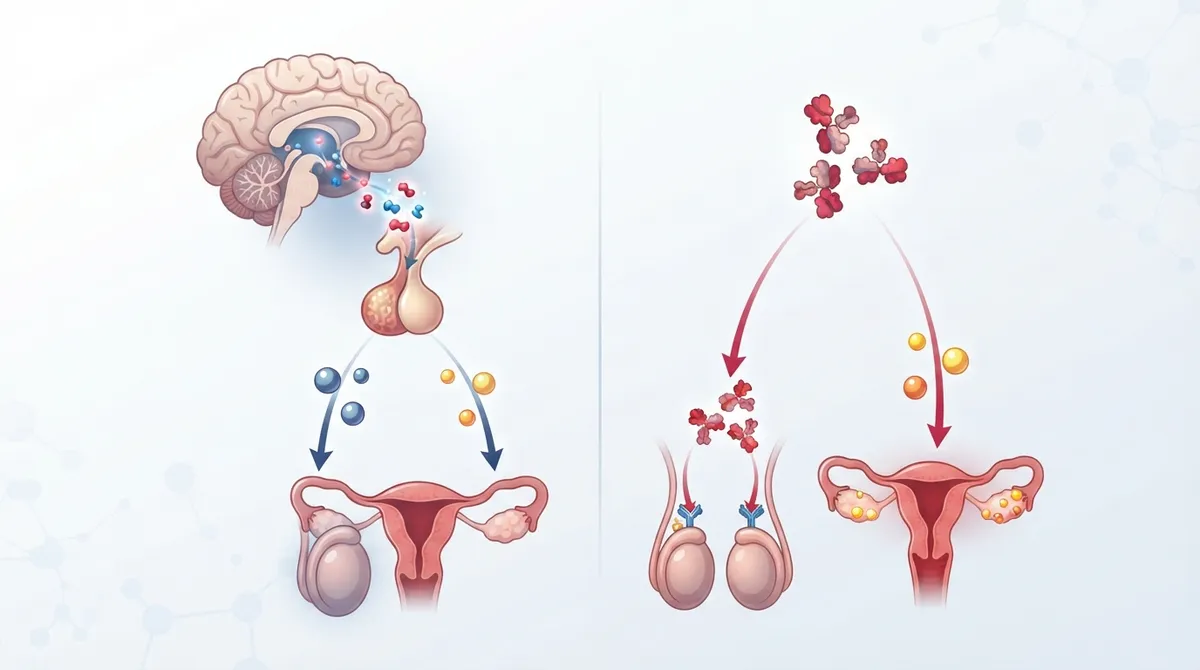
Kisspeptin and hCG both influence reproductive hormones, but they start their work in different places. Kisspeptin is a natural brain chemical. It is made in the hypothalamus, a small but powerful part of the brain that controls many hormone functions.
Kisspeptin triggers the release of gonadotropin-releasing hormone (GnRH). This, in turn, tells the pituitary gland to release two important hormones: luteinizing hormone (LH) and follicle-stimulating hormone (FSH). These hormones then act on the ovaries or testes to support reproduction.
hCG works differently. It skips the brain signaling step entirely. Instead, hCG binds directly to LH receptors in the ovaries and testes. This gives it a more direct, immediate effect compared to kisspeptin's upstream approach.
- Kisspeptin stimulates the brain's natural hormone signaling chain
- hCG acts directly on reproductive organ receptors
- Kisspeptin creates a more physiologic, self-regulated hormone surge
- hCG provides a stronger, more predictable pharmacologic effect
- Both hormones ultimately support processes tied to fertility and reproduction
This difference in mechanism is the foundation for why researchers are studying kisspeptin as a possible alternative to hCG in certain fertility protocols. To learn more about the science behind this hormone, read our detailed piece on what kisspeptin is and how it supports fertility.

2. Clinical Uses: Where Each Hormone Fits Today
hCG has a long history of medical use. It is an established option in several fertility protocols, including ovulation induction. Doctors also use it to treat hypogonadotropic hypogonadism in men, a condition where the body does not produce enough sex hormones. In IVF settings, hCG is often used as a trigger shot to finish egg maturation before retrieval.
Kisspeptin, by contrast, remains largely investigational. Researchers are studying kisspeptin-54 as a possible trigger for ovulation or egg maturation in IVF cycles. Because kisspeptin causes the patient's own body to release LH, it may create a shorter, more natural hormone signal compared to the direct action of hCG.
Current Applications at a Glance
|
Factor |
Kisspeptin |
HCG |
|---|---|---|
|
Regulatory Status |
Investigational, limited approval |
Established, multiple approved products |
|
Mechanism |
Stimulates hypothalamic GnRH release |
Directly binds LH receptors |
|
Common Use |
Studied for IVF trigger, male hypogonadism research |
Ovulation induction, IVF trigger, male hypogonadism treatment |
|
OHSS Risk |
Lower risk in high-responder patients |
Higher risk, especially in PCOS patients |
|
Clinical Evidence Base |
Early-phase, smaller trials |
Decades of established data |
This table highlights a key point: hCG has far more history behind it, while kisspeptin is still working its way through clinical research. Patients considering either option should always consult a specialist before starting treatment. If you want general guidance on comprehensive wellness planning, our primary care team can help point you toward the right specialist.
3. What the Research Says About Safety and Results
One of the most talked-about advantages of kisspeptin is its potential to lower the risk of ovarian hyperstimulation syndrome (OHSS). OHSS is a serious complication that can occur during fertility treatment, particularly in women with polycystic ovary syndrome or a high ovarian response.
A 2022 review found that the odds of OHSS were much higher with hCG than with kisspeptin in certain comparative studies, with an odds ratio of 33.6. This is a striking number, but it is important to remember this data comes from a specific, high-risk patient population, not the general fertility population.
- Early kisspeptin-54 trials in high-OHSS-risk patients reported about 95% oocyte maturation rates
- Around 70% of patients in optimized dosing studies achieved at least 60% metaphase-II oocytes
- A 2022 review found roughly 32% live-birth rate per embryo transfer across kisspeptin doses studied
- In high-responder subgroups, that live-birth rate rose to about 45%
- A 2025 review reported around 53% clinical pregnancy and 45% live-birth rates in select high-risk groups, with no moderate or severe OHSS cases in phase II studies
These numbers sound promising, but researchers are careful to note the sample sizes remain small. Results have not consistently shown kisspeptin to outperform hCG when it comes to implantation, clinical pregnancy, or live birth across broader populations. More research is needed before kisspeptin becomes a routine part of fertility care.
Kisspeptin as a Pregnancy Biomarker
Beyond its use as a treatment, kisspeptin is also being studied as a biomarker for pregnancy viability. A 2022 systematic review found that kisspeptin measured after six weeks of gestation had an area under the curve (AUC) of 0.902 for telling apart viable pregnancies from miscarriage. hCG scored 0.834 in that same analysis.
Another study involving 993 pregnant women at about 11 weeks found kisspeptin predicted later miscarriage with an AUC of 0.899, compared to 0.775 for hCG. These findings are interesting from a research standpoint, but they do not mean kisspeptin should replace standard hCG pregnancy testing. hCG remains the clinically validated, widely used biomarker for confirming pregnancy.
4. What This Means for Primary Care and Wellness Patients
For most patients visiting a primary care or wellness clinic, kisspeptin should be viewed as an area of active research rather than a ready-to-use treatment. Claims about kisspeptin boosting testosterone, improving fertility, or serving as a general "peptide therapy" should be approached with caution unless backed by a specialist evaluation.
The U.S. FDA's Pharmacy Compounding Advisory Committee reviewed kisspeptin-10 in October 2024, noting it has been studied for secondary hypogonadism. Meanwhile, multiple hCG products already carry approval for select cases of male hypogonadism linked to pituitary problems. This regulatory gap is a major reason why hCG remains the more accessible and trusted option for most patients today.
- Kisspeptin should not be used casually or without medical supervision
- hCG has established protocols with known dosing and monitoring standards
- Both hormones require lab work and, often, ultrasound monitoring
- Patients with PCOS or high OHSS risk may benefit from specialist discussion about kisspeptin research
- Anyone considering hormone therapy should start with a thorough health evaluation
If you are dealing with symptoms related to hormone imbalance, fatigue, or fertility concerns, the right first step is a conversation with your primary care provider. Our physicians, including Dr. Naveen Paddu, Dr. Pramjeet Ahluwalia, and Dr. Teshy John, can help you understand your options and refer you to reproductive specialists when needed.
Steps to Take Before Considering Hormone Therapy
- Schedule a comprehensive wellness visit to review your current hormone levels
- Ask your provider about relevant lab testing, including DNA gene testing if you want deeper insight into your health predispositions
- Discuss any symptoms related to fertility, energy, or hormone balance openly
- Request a referral to an endocrinologist or reproductive specialist if kisspeptin or hCG therapy is being considered
- Follow up regularly to monitor progress and adjust your care plan as needed
Patients across Tampa and Riverview trust InCare for guidance on complex health topics like this one. Our approach blends modern technology with a personal touch, something reflected in the feedback we receive from our community. You can visit us on Google — InCare to see what our patients have to say about their experience.
Comparing Kisspeptin and HCG Side by Side
To summarize the key differences discussed throughout this article, here is a quick reference table covering the most important comparison points.
|
Comparison Point |
Kisspeptin |
HCG |
|---|---|---|
|
Origin |
Naturally occurring brain peptide |
Hormone produced during pregnancy, also synthesized as medication |
|
Action Site |
Hypothalamus, triggers GnRH release |
Ovaries and testes, direct LH receptor activation |
|
Approval Status |
Primarily investigational |
FDA-approved for several indications |
|
Luteal Support Needs |
May require individualized support due to shorter LH surge |
Provides sustained pharmacologic effect |
|
Best Suited For |
Research settings, high-risk OHSS patients under specialist care |
Established fertility and hormone treatment protocols |
This comparison makes it clear that while kisspeptin shows promise, it has not yet reached the same level of clinical acceptance as hCG. Anyone interested in either option should treat this information as a starting point for a deeper conversation with a qualified provider, not a substitute for medical advice.
Why Personalized Care Matters for Hormone Health
Hormone health is complex, and no two patients are exactly alike. This is why cookie-cutter treatment plans rarely work well for fertility or hormone-related concerns. A personalized approach, one that considers your full health history, current lab values, and specific goals, gives you the best chance at a safe and effective outcome.
At InCare, we combine advanced diagnostic tools like body composition analysis with traditional primary care expertise to build a complete picture of your health. This whole-body approach helps identify underlying issues that may be affecting your hormone balance, energy levels, or reproductive health before they become bigger problems.
We also understand that many patients turn to social media and online communities to research treatments like kisspeptin and hCG before their appointments. While platforms like Facebook and Instagram can be great places to find general health tips and community support, they should never replace a one-on-one conversation with your doctor. You can also find quick wellness tips from our team on TikTok, where we break down complex health topics into simple, digestible content.
Moving Forward With Confidence
Kisspeptin and hCG both play important roles in reproductive science, but they are not interchangeable. hCG remains the established, well-studied option for most fertility and hormone treatments today. Kisspeptin offers exciting possibilities, particularly for patients at high risk of OHSS, but it still needs more research before it becomes a standard option in most clinics.
If you have questions about hormone health, fertility support, or general wellness optimization, our team at InCare is here to help. We serve patients throughout Tampa and Riverview with a focus on prevention, education, and personalized care. Reach out to get in touch with our team today, or go ahead and schedule your appointment now to start your conversation about hormone health with a trusted provider.
FAQs
Q: What is the main difference between kisspeptin and hCG?
A: Kisspeptin works upstream by stimulating the brain's hypothalamus to release GnRH, which then prompts the pituitary to release LH and FSH. hCG acts more directly by binding to LH receptors in the ovaries and testes, producing a faster and more predictable hormone response.
Q: Can kisspeptin replace hCG as an IVF trigger?
A: Kisspeptin is being studied as a possible alternative trigger, especially for patients at high risk of ovarian hyperstimulation syndrome. However, current evidence remains limited, and hCG continues to be the more established and widely used option in most IVF protocols.
Q: Is kisspeptin safer than hCG for patients at risk of OHSS?
A: Some research suggests kisspeptin may lower the risk of ovarian hyperstimulation syndrome compared to hCG, particularly in high-responder patients. That said, this evidence comes from smaller, selected studies, so any decision should involve close specialist monitoring.
Q: Is kisspeptin FDA-approved for fertility treatment?
A: No, kisspeptin is not broadly FDA-approved for fertility treatment. It remains largely investigational, while multiple hCG products already have approval for specific fertility and hormone-related conditions.
Q: Should I ask my primary care doctor about kisspeptin or hCG?
A: Yes, your primary care provider is a good starting point for discussing hormone health concerns. They can evaluate your overall health, order relevant lab testing, and refer you to a reproductive endocrinologist if kisspeptin or hCG therapy may be appropriate for your situation.