Key Takeaways
- Exercise naturally increases your body's own MOTS-c production by up to 12-fold, but no human study has proven that injected MOTS-c supplements improve stamina or endurance.
- MOTS-c is not FDA-approved for any use and safety data in humans is limited; products sold online may have purity and sterility issues with unknown side effects and drug interactions.
- Most MOTS-c stamina claims rely on animal studies and lab research that cannot be directly applied to humans—animal bodies process peptides differently with different dosing and metabolic pathways.
- Proven, evidence-based stamina boosters include regular aerobic exercise, strength training, 7-9 hours of sleep, balanced nutrition, and hydration rather than unproven peptide supplements.
Scroll through any wellness forum and you will find bold claims about MOTS-c boosting stamina, energy, and workout performance. These posts often sound convincing. But what does the actual science say? At InCare, we believe patients deserve clear, honest answers before trying any new peptide or supplement. This article breaks down what MOTS-c really is, what the research shows about stamina claims, and safer ways to boost your energy that are backed by real evidence.
MOTS-c is a small peptide made by your own mitochondria. It has become popular in wellness circles because early lab studies suggest it may play a role in energy metabolism and exercise adaptation. However, popularity does not equal proof. Before you consider any peptide for stamina, it helps to understand the difference between what happens naturally in your body and what happens when a product is injected or taken as a supplement.

1. What MOTS-c Actually Is and Why It Gets Attention
MOTS-c stands for mitochondrial open reading frame of the 12S rRNA-c. That is a mouthful, but the idea is simple. It is a tiny peptide encoded by your mitochondrial DNA. Mitochondria are often called the powerhouse of the cell because they produce energy for nearly everything your body does.
Researchers have studied MOTS-c because it appears to interact with systems that control energy use, insulin sensitivity, and how your muscles respond to stress. This has led some wellness companies to market MOTS-c as a stamina booster or anti-aging solution. But early lab interest does not always translate into proven human benefits.
If you want to understand how your body's cells produce and use energy, a visit for metabolic breath analysis can give you real, measurable data instead of guesswork.
2. Does Exercise Naturally Raise MOTS-c Levels?
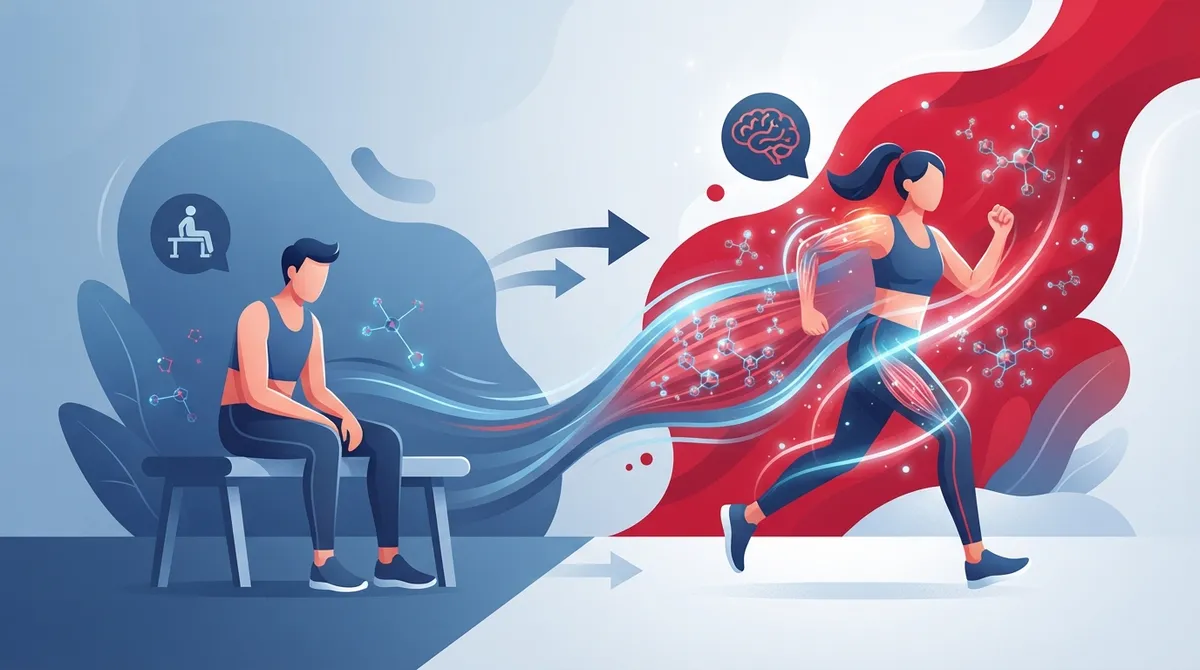
Yes, and this is one of the most solid findings we have. A 2021 study published in Nature Communications found that after a single session of stationary biking, skeletal muscle MOTS-c expression rose about 11.9 times in healthy young men. Blood levels of the peptide rose too, climbing from around 125 pg/mL to about 190 pg/mL.
This is a real, measurable effect. But it is important to understand what this study actually tested. It measured your body's own natural MOTS-c production after exercise. It did not test injected or supplemental MOTS-c. The study also included only 10 participants, so the results cannot be applied broadly to older adults, athletes, or people with chronic health conditions.
A separate 2022 pilot study found that MOTS-c levels changed with chronic endurance training. Again, this tells us exercise affects natural peptide levels. It does not tell us that taking MOTS-c as a supplement will improve your stamina.
Key Takeaways From the Exercise Research
- Exercise increases the body's own MOTS-c production, based on small human studies.
- No study has proven that injecting MOTS-c improves human stamina or endurance.
- Sample sizes in existing human research remain very small, often under 15 people.
- Findings in mice and cells cannot be assumed to apply directly to humans.
3. Why Animal Studies Cannot Prove Human Stamina Benefits
Much of the excitement around MOTS-c stamina claims comes from animal research. Mice given MOTS-c in lab settings have shown improved physical capacity and metabolic changes. These results are interesting for scientists. They are not proof that the same effects will happen in people.
Animal bodies process peptides differently than human bodies. Dosing, absorption, and metabolic pathways can vary widely between species. A treatment that shows promise in a mouse study may fail, or even cause harm, in human trials. This is a common pattern across medical research, not just with peptides.
As of now, no large, placebo-controlled human trial has confirmed that exogenous MOTS-c improves stamina, exercise capacity, or long-term health outcomes. Until that kind of evidence exists, claims about MOTS-c and stamina remain investigational, not proven.
4. Safety, Legal Status, and What You Should Know Before Trying MOTS-c
MOTS-c is not approved by the FDA for stamina, weight management, athletic performance, or any other medical use. It also lacks approval from major international regulators. This means any product sold as MOTS-c for human use is operating outside standard drug safety review.
Human safety data for injected MOTS-c is limited. Important unknowns include:
- Short-term and long-term side effects in humans
- Possible immune reactions to the peptide
- Risks tied to injection site infections or improper dosing
- Interactions with medications you may already take
- Safety concerns for people with liver or kidney disease
- Effects during pregnancy, which have not been studied
Products sold online or through unregulated peptide sellers may not match their labels. Independent testing has found issues with purity, potency, and sterility in some peptide products. Just because MOTS-c occurs naturally in your body does not mean an injected, synthetic version is automatically safe.
A Quick Comparison: Natural MOTS-c vs. Supplemental MOTS-c
|
Factor |
Natural MOTS-c (From Exercise) |
Supplemental or Injected MOTS-c |
|---|---|---|
|
Evidence Level |
Small human studies show increased levels after exercise |
Mostly animal and cell studies only |
|
FDA Approval |
Not applicable, it's a natural body process |
Not approved for any use |
|
Safety Data |
Well understood through exercise physiology |
Largely unknown in humans |
|
Stamina Benefit Proof |
Indirect, tied to fitness improvements from exercise itself |
Not established in human trials |
Given these gaps, our physicians at InCare recommend that patients treat MOTS-c stamina claims with healthy skepticism. If you are curious about peptide therapy in general, it helps to speak with a provider who understands both the science and the risks. Our peptide therapy team in Tampa can walk you through what is currently supported by evidence.
What Actually Works to Improve Stamina
The good news is that you do not need an unproven peptide to feel more energetic and build real stamina. Decades of research support a handful of simple, effective habits. These strategies are backed by strong clinical evidence, unlike MOTS-c supplementation claims.
- Regular aerobic exercise, such as walking, cycling, or swimming
- Resistance training to build and maintain muscle strength
- Consistent, quality sleep of seven to nine hours per night
- A balanced diet with enough protein, healthy fats, and complex carbohydrates
- Proper hydration throughout the day
- Medical evaluation for underlying issues like anemia, thyroid problems, or heart and lung conditions
Low stamina is sometimes a sign of something deeper. Conditions like anemia, thyroid disease, depression, or overtraining can all sap your energy. A thorough annual wellness visit can help identify the real cause of fatigue instead of guessing with unproven supplements.
How InCare Approaches Energy and Wellness
At InCare, we combine primary care expertise with advanced wellness tools to help patients feel their best. Our team in Tampa and Riverview offers services like body composition analysis, DNA gene testing, and IV hydration and vitamin drips to support real, measurable improvements in energy and health.
If fatigue or low stamina is affecting your daily life, our physicians, including Dr. Naveen Paddu and Dr. Pramjeet Ahluwalia, can help you find evidence-based solutions tailored to your health history. You can also explore our medically supervised weight loss programs, which often improve energy levels as a side benefit of better metabolic health.
We understand that patients want quick answers and effective solutions. That is why we focus on treatments supported by real clinical evidence rather than trending claims. Many of our patients in the Tampa Bay area have shared their experiences, and you can visit us on Google — InCare to read what others say about their care journey with us.
You can also follow our latest wellness updates and patient education content on Facebook, Instagram, and TikTok, where we share honest, science-based information about emerging wellness trends like peptide therapy.
Making an Informed Decision
MOTS-c is a fascinating area of research. It may one day lead to real medical treatments for metabolic disease or age-related muscle decline. But for now, claims that it boosts human stamina remain unproven. The exercise-induced rise in natural MOTS-c is real and measurable, but that is different from injecting a synthetic version and expecting the same results.
Before trying any peptide product marketed for stamina or energy, talk with a licensed medical provider. Ask about the evidence, the risks, and whether a proven alternative might serve you better. Our team can also help you explore primary care services designed to address the root causes of low energy, from hormone imbalances to nutritional gaps.
Ready to get real answers about your energy and stamina goals? Book your appointment today and let our experienced team guide you toward safe, evidence-based solutions. You can also reach out to our care team with any questions about peptide therapy, wellness programs, or scheduling a visit at our Tampa or Riverview location.
FAQs
Q: Does MOTS-c actually improve stamina or endurance in humans?
A: Current human research does not prove this. Studies show exercise raises natural MOTS-c levels in your body, but no human trial has confirmed that injected or supplemental MOTS-c improves stamina or endurance.
Q: What is MOTS-c and how does it work?
A: MOTS-c is a small peptide made by your mitochondria, the energy-producing parts of your cells. Researchers believe it may play a role in energy metabolism, insulin sensitivity, and how muscles respond to stress, though many effects remain under study.
Q: Is MOTS-c FDA-approved or legal to use?
A: MOTS-c is not FDA-approved for stamina, athletic performance, or any other medical use. It also lacks marketing authorization from major international health regulators.
Q: Are MOTS-c injections safe?
A: Safety data for injected MOTS-c in humans is limited. Unknowns include long-term side effects, immune reactions, and risks from products with unverified purity or sterility standards.
Q: Can exercise naturally increase MOTS-c levels?
A: Yes. A 2021 study found that a single bout of exercise increased skeletal muscle MOTS-c expression nearly 12-fold in healthy young men, along with a rise in circulating peptide levels.