Key Takeaways
- Retatrutide is a triple-hormone receptor agonist targeting GLP-1, GIP, and glucagon receptors simultaneously, unlike semaglutide (GLP-1 only) or tirzepatide (GLP-1 and GIP), potentially explaining superior weight loss results of up to 24.2-28.3% in clinical trials.
- Glucagon receptor activation in retatrutide uniquely increases resting calorie burn and fat oxidation, while GLP-1 and GIP reduce appetite and improve insulin sensitivity—this triple mechanism addresses weight loss through both appetite suppression and metabolic acceleration.
- Phase 2 trial data showed 85-90% of participants at the highest dose lost at least 5% body weight versus only 27% on placebo, with average losses reaching 24.2% at 48 weeks, representing some of the strongest results in weight loss drug history.
- Retatrutide remains investigational and unapproved; products sold online as 'research' or 'compounded' versions are unregulated and carry safety risks—only legitimate clinical trials offer safe access until FDA approval occurs.
- Gastrointestinal side effects including nausea, diarrhea, and vomiting are common especially at higher doses, and long-term safety and cardiovascular outcome studies are still ongoing, making medical supervision essential for any consideration.
- Work with qualified primary care providers on proven FDA-approved options like semaglutide and tirzepatide now while staying informed about retatrutide's trial progress through reputable sources rather than pursuing unapproved online alternatives.
If you follow weight loss news, you have likely heard about retatrutide. It is one of the most talked-about investigational medicines in metabolic health today. Patients across Tampa and Riverview ask about it during weight loss consultations, hoping it might be the next breakthrough after semaglutide and tirzepatide. But how does retatrutide work, and is it something you can actually get right now? This article breaks down the science in simple terms, reviews the clinical trial data, and explains what primary care patients should know before considering any triple-hormone therapy. Understanding the mechanism matters, especially since this drug is still investigational and not yet available through routine prescriptions.

What Is Retatrutide?
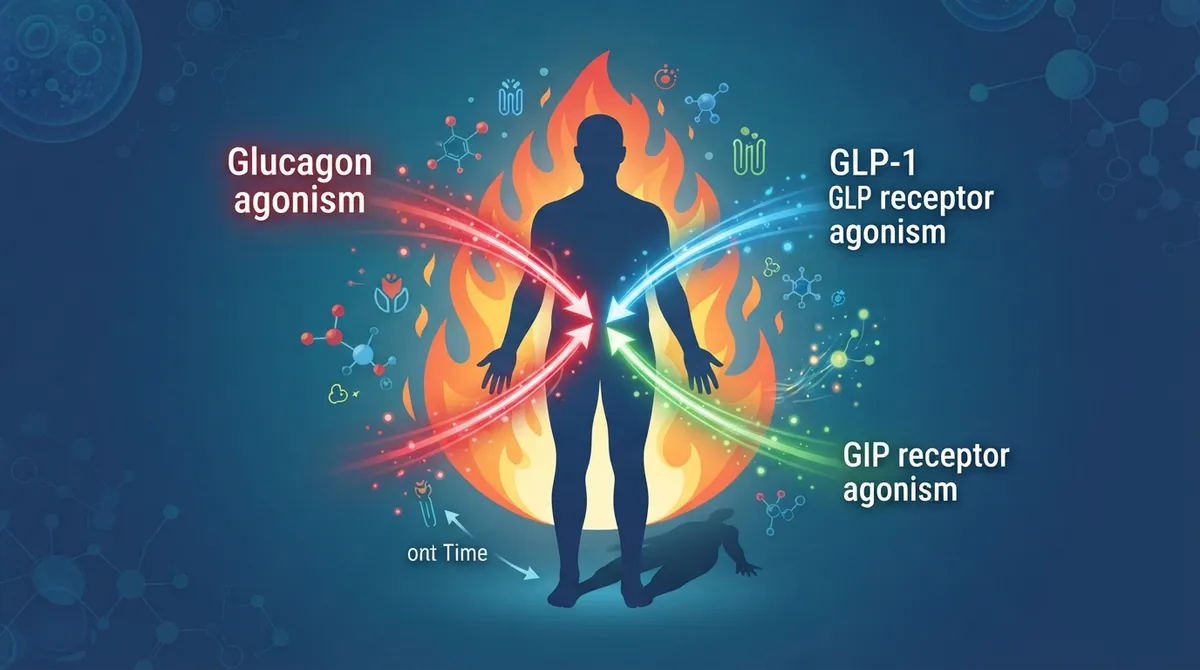
Retatrutide, also known by its research name LY3437943, is an experimental medicine given as a once-weekly injection. It was built to act on three different hormone receptors in your body at the same time. This sets it apart from older weight loss medicines that only target one or two receptors.
Researchers often call it a "triple agonist" or "triple-hormone receptor agonist." This means it turns on three separate signals in your body that all play a role in appetite, blood sugar, and fat burning. Teams at InCare who oversee weight loss programs stay current on emerging peptide research like this so patients receive accurate, up-to-date guidance.
3 Ways Retatrutide Targets Weight Loss
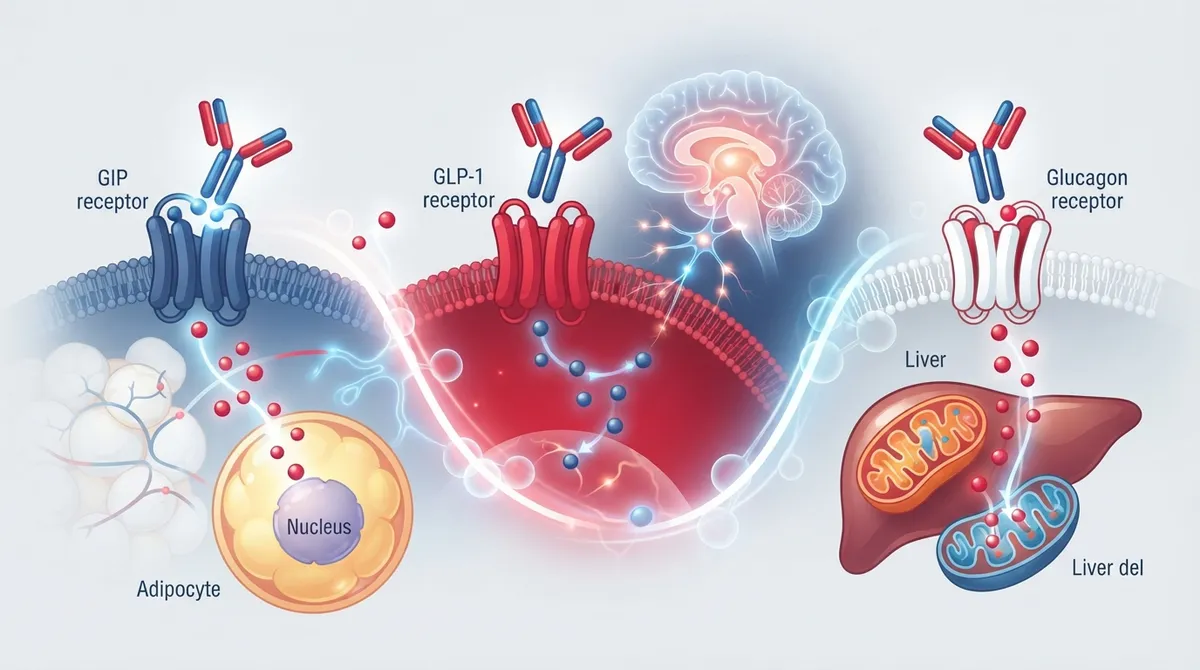
To understand how does retatrutide work, it helps to break down the three receptors it activates. Each one plays a different role in your metabolism. Together, they may explain why trial results have shown such large weight loss numbers.
1. GLP-1 Receptor Activation Reduces Appetite
The first target is the GLP-1 receptor. This is the same receptor used by other well-known weight loss medicines. When activated, it can:
- Reduce hunger and cravings
- Slow down how fast food leaves your stomach, so you feel full longer
- Boost insulin release only when blood sugar is high
- Improve overall blood sugar control
These effects help people eat less without feeling deprived. This is a major reason GLP-1-based therapies have become so popular in medical weight loss programs.
2. GIP Receptor Activation Supports Insulin Sensitivity
The second target is the GIP receptor. This hormone works alongside GLP-1 but has its own separate effects. GIP receptor activation may:
- Improve how well your body responds to insulin
- Support healthier fat cell function
- Complement the appetite-reducing effects of GLP-1
Researchers believe this dual action on GLP-1 and GIP is part of why tirzepatide already outperforms single-target medicines. Retatrutide adds a third layer on top of this combination.
3. Glucagon Receptor Activation Boosts Energy Burn
The third and most unique target is the glucagon receptor. This is what makes retatrutide different from every other GLP-1 or GIP medicine on the market. Glucagon receptor activation is designed to:
- Increase the number of calories your body burns at rest
- Promote your body's ability to burn stored fat for fuel
- Affect how your liver manages sugar and fat
Glucagon can raise blood sugar on its own. That is why retatrutide is engineered carefully, so the glucose-lowering effects of GLP-1 and GIP help balance out this glucagon activity. This balance is one of the most complex parts of the drug's design.
Retatrutide vs. Other Weight Loss Medicines
Many patients want to know how retatrutide compares to medicines they may have already heard about. The table below breaks down the key differences in receptor targets.
|
Medicine |
Receptors Targeted |
Status |
|---|---|---|
|
Semaglutide |
GLP-1 only |
FDA-approved for weight and diabetes management |
|
Tirzepatide |
GLP-1 and GIP |
FDA-approved for weight and diabetes management |
|
Retatrutide |
GLP-1, GIP, and glucagon |
Investigational, not FDA-approved |
This three-receptor design is why retatrutide is often described as the next step in metabolic medicine. However, being investigational means it has not completed the full approval process required for routine prescribing.
What Clinical Trials Show About Weight Loss Results
The data behind retatrutide has generated real excitement in the medical community. A Phase 2 trial published in the New England Journal of Medicine followed 338 adults with overweight or obesity for 48 weeks. Here is what researchers found, organized by dose.
|
Dose |
Average Weight Loss at 48 Weeks |
|---|---|
|
Placebo |
About 2.1% |
|
1 mg |
About 8.7% |
|
4 mg |
About 16.9% |
|
8 mg |
About 17.5% |
|
12 mg |
About 24.2% |
At the highest dose, about 85 to 90 percent of participants lost at least 5 percent of their body weight, compared to only 27 percent on placebo. These numbers are some of the strongest ever reported in a weight loss drug trial. More recently, Eli Lilly reported topline Phase 3 results from its TRIUMPH-1 study, showing weight reduction of up to 28.3 percent at 80 weeks. These are company-reported findings, so they should be viewed separately from fully published peer-reviewed data.
Steps to Understanding If Retatrutide Fits Your Health Goals
Since retatrutide remains investigational, patients interested in advanced weight loss options should approach the topic carefully. Here are the steps we recommend at InCare.
- Schedule a comprehensive wellness visit to review your current health status and weight loss history.
- Ask your provider about FDA-approved options like semaglutide and tirzepatide, which are available now through supervised programs.
- Discuss your metabolic health using tools like body composition analysis and metabolic breath analysis to set realistic goals.
- Stay informed on retatrutide's clinical trial progress through reputable medical sources rather than unregulated online sellers.
- Avoid any product marketed online as "research" or "compounded" retatrutide, since these are not properly regulated and carry real safety risks.
Following these steps helps you make informed decisions with a qualified provider instead of relying on unverified sources.
Who Might Benefit From Triple-Hormone Therapy in the Future
Clinical trials for retatrutide have studied several groups of patients. As research continues, these groups may eventually see the most benefit once and if the drug receives approval.
- Adults with obesity or overweight linked to health conditions like high blood pressure
- People with type 2 diabetes seeking better blood sugar control
- Patients with cardiometabolic risk factors, such as high cholesterol
- Individuals with musculoskeletal strain related to excess body weight
It is worth noting that retatrutide is not yet approved for any of these uses. Patients working through a primary care clinic can still access proven, effective options today while staying informed about future developments.
Safety Considerations and Side Effects
Like other GLP-1 based medicines, retatrutide has shown a pattern of gastrointestinal side effects in trials. These were generally more common at higher doses. Reported side effects include:
- Nausea
- Diarrhea
- Vomiting
- Reduced appetite
Long-term safety data and cardiovascular outcome studies are still being collected. This is standard for any drug moving through clinical development. Until longer-term studies are complete, providers cannot fully confirm the risk profile for wide use. This is one more reason patients should only consider retatrutide through a properly regulated clinical trial, not through unverified online sellers.
Why Medical Supervision Matters for Any Weight Loss Therapy
Whether you are exploring FDA-approved GLP-1 therapy or simply learning about what may come next, medical supervision is essential. A trained provider can:
- Review your full health history and current medications
- Order lab work to check for underlying conditions
- Monitor side effects and adjust your plan as needed
- Help you build sustainable habits alongside any medicine
At InCare, our providers, including Dr. Naveen Paddu, Dr. Pramjeet Ahluwalia, and Dr. Teshy John, guide patients through evidence-based weight loss options with a whole-body approach. This includes checking hormone levels, metabolic markers, and even offering DNA gene testing to better understand your unique health profile.
How InCare Supports Your Weight Loss Journey Today
While retatrutide continues through clinical trials, InCare offers proven, physician-supervised weight loss programs right now. Patients in Tampa and Riverview can access:
- Personalized weight loss plans using FDA-approved medicines
- Advanced body composition tracking with 3D imaging
- IV hydration and vitamin therapy to support energy during weight loss
- Comprehensive primary care to manage related health conditions
Our locations in Tampa and Riverview make it convenient to start your journey close to home. Many patients also follow us on Facebook and Instagram for updates on new treatments and wellness tips. You can also check out our latest patient experiences and Tik Tok content for a closer look at what a visit involves.
If you want to learn more about our current medical weight loss offerings or ask questions about emerging treatments like retatrutide, our team is ready to help. See what other patients say by visiting us on Visit us on Google — InCare, where our Tampa and Riverview locations maintain a strong reputation for compassionate, results-driven care.
Moving Forward With Accurate Information
Retatrutide represents an exciting step forward in metabolic medicine. Its ability to activate three separate hormone receptors may explain the impressive weight loss results seen in trials so far. But it remains investigational, meaning it is not something you can pick up at a pharmacy or receive through a standard prescription today.
The safest path forward is working with a trusted primary care team that stays current on the latest research while offering proven, approved treatments in the meantime. Whether you are curious about triple-hormone therapy or ready to start a medically supervised weight loss plan now, InCare is here to guide you every step of the way.
Ready to take the next step in your health journey? Book Now to schedule a consultation, or reach out to our team with any questions about weight loss options available today.
FAQs
Q: How does retatrutide differ from Ozempic, Wegovy, and Mounjaro?
A: Retatrutide activates three hormone receptors: GLP-1, GIP, and glucagon. Ozempic and Wegovy target only GLP-1, while Mounjaro (tirzepatide) targets GLP-1 and GIP. This extra glucagon activity is what sets retatrutide apart and may explain its stronger weight loss results in trials.
Q: Does retatrutide suppress appetite or increase metabolism?
A: It appears to do both. GLP-1 receptor activation helps reduce appetite and slow digestion, while glucagon receptor activation may increase calorie burning and fat oxidation. This combination is central to how retatrutide works in clinical studies.
Q: How much weight loss has retatrutide produced in clinical trials?
A: In a Phase 2 trial, patients on the highest dose lost an average of 24.2% of body weight at 48 weeks. Topline Phase 3 results reported by Eli Lilly showed reductions up to 28.3% at 80 weeks, though these are company-reported findings pending full publication.
Q: Is retatrutide FDA approved, and when might it become available?
A: Retatrutide is not currently FDA-approved. It remains an investigational medicine still moving through clinical trials, so there is no confirmed timeline for approval or public availability.
Q: Can patients get retatrutide through a primary care clinician or compounding pharmacy?
A: No. Retatrutide has no approved commercial supply chain, and products sold online as 'research' or 'compounded' retatrutide are not properly regulated. Patients should only consider it through a legitimate clinical trial and should ask their primary care provider about approved alternatives in the meantime.