Key Takeaways
- Ipamorelin is not FDA-approved and was placed on the FDA's Category 2 safety risk list in September 2023, signaling significant safety concerns that make compounding risky.
- A prescription alone does not make ipamorelin safe or legal; the compounding pharmacy must follow strict federal and state rules, and safety approval is not guaranteed regardless of prescriber credentials.
- The FDA has documented serious adverse events including death linked to ipamorelin use, and identified concerns about immunogenicity from peptide impurities and insufficient safety data for subcutaneous injection.
- Research-only labeling on peptide products does not authorize personal use or injection; this labeling exists to avoid regulatory oversight and provides no guarantee of purity or dosage accuracy.
- Before considering any peptide therapy, directly verify current FDA compounding lists and ask prescribers about sourcing, compounding pathways, state regulations, and documented safety data rather than trusting marketing claims.
- FDA-cleared alternatives with established safety records, such as IV hydration therapy, vitamin drips, and medically supervised weight loss programs, provide safer options for wellness and recovery goals.
Searching for clear answers about ipamorelin's legal status can feel confusing. Wellness clinics, social media influencers, and online sellers often give conflicting information. If you are exploring peptide therapy for anti-aging, recovery, or weight management, you deserve facts, not marketing hype.
This guide breaks down what current FDA rules actually say about ipamorelin. We explain the difference between FDA approval and compounded medications. We also cover the safety concerns regulators have flagged. Whether you are a busy parent, a wellness-focused professional, or simply curious about peptide trends, this article gives you the straight facts before you make any health decisions.

Is Ipamorelin Legal? The Short Answer
Ipamorelin has not been approved by the FDA as a finished drug product. This means there is no FDA-approved dose, prescribing label, or official medical use for it in the United States. That single fact shapes everything else you need to know about its legal standing.
Being unapproved is different from being illegal to possess. According to information reviewed from FDA regulatory materials, ipamorelin is not currently listed as a controlled substance by the DEA. However, this does not automatically make it legal to market, prescribe, or inject as a wellness treatment. Federal and state rules around compounding still apply, and those rules are strict.
Mistake 1: Assuming No FDA Approval Means It's Illegal to Own
Many people wrongly assume that anything not approved by the FDA must be against the law to possess. That is not accurate. The real issue is how a product is manufactured, sold, and used for human treatment. A substance can lack approval and still not be a controlled substance, yet still carry serious safety concerns when compounded or administered incorrectly.
This mistake leads people to either avoid legitimate medical conversations out of fear, or worse, assume any peptide seller is operating within safe and lawful boundaries. Neither assumption serves your health well. The smarter move is asking a licensed provider to explain sourcing, compounding pathway, and current regulatory status before considering any peptide therapy.
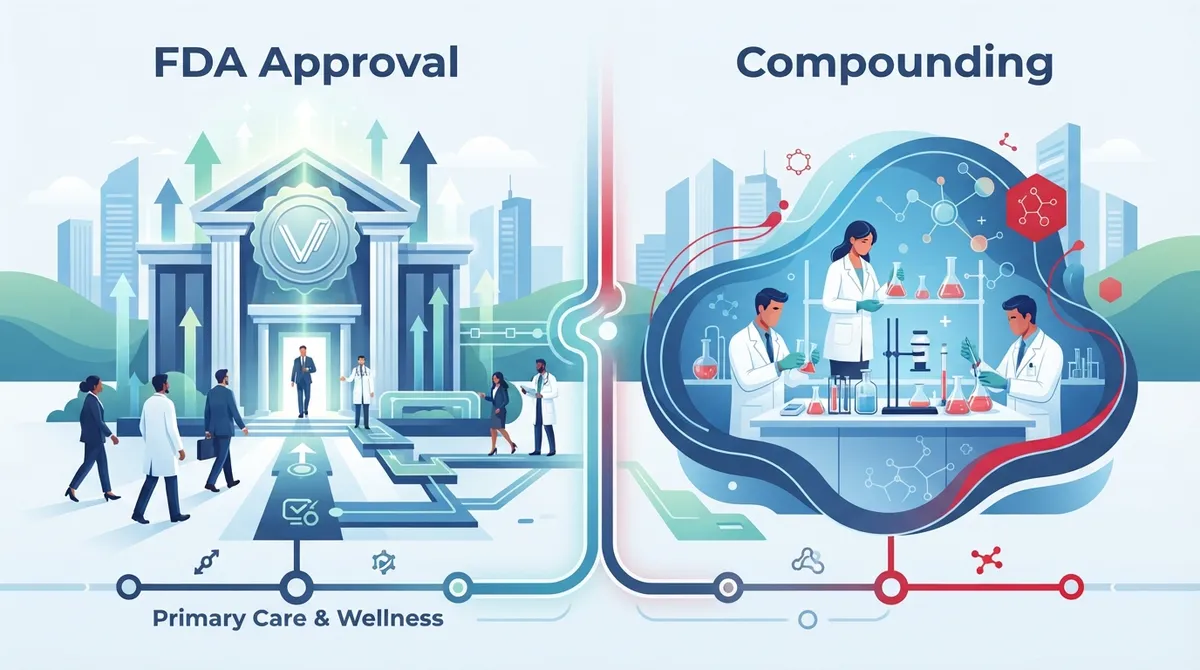
Understanding FDA Approval vs. Compounding
FDA approval means a drug went through rigorous testing for safety, effectiveness, and manufacturing quality. Ipamorelin has never completed this process. No FDA-approved version exists for any condition, including anti-aging, muscle recovery, or hormone optimization.
Compounded medications work differently. Pharmacies can sometimes prepare custom formulations for individual patients under specific federal and state rules. But compounding a drug does not mean it is FDA-approved or that it has been checked for safety and quality before it reaches you. A prescription alone does not make compounding automatically lawful; the pharmacy and prescriber must also follow applicable rules.
Mistake 2: Believing a Prescription Automatically Makes It Safe and Legal
This is one of the most common and costly misunderstandings people have about peptide therapy. Getting a prescription from any provider does not guarantee the compounding process meets federal safety standards. It also does not confirm the pharmacy is operating within its legal authority for that specific substance.
The FDA has placed ipamorelin acetate on its Category 2 list for 503B outsourcing facility compounding. This designation, added on September 29, 2023, signals that the FDA has identified potential significant safety risks. Category 2 status is not an approval. It is a warning flag that tells providers and pharmacies to proceed with caution, if at all.
|
Term |
What It Means |
Why It Matters |
|---|---|---|
|
FDA Approved |
Drug passed full safety and efficacy testing |
Ipamorelin has never received this status |
|
503A Compounding |
Pharmacy-level custom prescriptions |
Advisory committees have recommended against adding ipamorelin-related substances here |
|
503B Category 2 |
Outsourcing facility list with flagged safety concerns |
Ipamorelin acetate was added to this list in 2023 |
|
Controlled Substance |
DEA-scheduled drug with strict possession rules |
Ipamorelin is not currently scheduled by the DEA |
What Safety Concerns Has the FDA Identified?
The FDA's concerns about ipamorelin are not vague. According to materials reviewed by the agency's Pharmacy Compounding Advisory Committee, there are documented worries about immunogenicity. This means the body's immune system may react negatively to impurities or aggregation in the peptide.
Regulators have also pointed to a published study reporting serious adverse events, including death, linked to intravenous ipamorelin use for gastric motility purposes. While the available data did not offer enough detail to calculate a reliable event rate, the fact that death was reported at all should give any wellness-minded person pause. Additionally, the FDA noted insufficient safety information for other delivery methods, including subcutaneous injection.
Mistake 3: Trusting Research-Only Labels as Proof of Safety
Many online sellers mark peptide products as "for research purposes only." Some buyers assume this label somehow makes at-home use acceptable or legal. It does not. Research-only labeling exists specifically to avoid regulatory oversight of human use. It does not authorize injecting or ingesting the product for personal wellness goals.
This mistake can expose you to unregulated, unverified products with no guarantee of purity or dosage accuracy. If a substance has not gone through proper clinical channels, you cannot know what you are truly putting into your body. This is why speaking with a knowledgeable primary care provider matters so much before considering any peptide-based approach.
How This Affects Wellness Clinics and Patients
Reputable wellness clinics should never present ipamorelin as an FDA-approved hormone therapy, anti-aging solution, or recovery tool. Making these claims misleads patients and creates legal risk for the clinic. Instead, trustworthy providers stay current with FDA lists and applicable state laws before considering any peptide-related service.
At InCare, our approach to peptide therapy in Tampa centers on regulatory awareness and patient safety first. We believe informed patients make better health decisions. That is why we encourage anyone curious about peptides to ask direct questions about sourcing, compounding pathways, and current FDA guidance rather than relying on marketing claims from unregulated sellers.
Questions to Ask Before Considering Any Peptide Therapy
- Is this substance currently FDA-approved for any indication?
- What is its current status on FDA's compounding bulk substance lists?
- Is the pharmacy licensed and operating within 503A or 503B rules?
- What documented safety data exists for the specific delivery method being proposed?
- Does the prescriber have current, verified regulatory knowledge about this substance?
These questions apply to ipamorelin and to many other emerging peptides in the wellness space. A provider who cannot answer them clearly should raise concern, not confidence.
Why Comprehensive Primary Care Matters More Than Peptide Trends
Trending wellness treatments often move faster than regulatory science can keep up. This gap creates real risk for patients seeking quick results. A stronger long-term approach involves building a relationship with a primary care provider who understands your full health picture, not just the latest peptide fad.
Comprehensive primary care includes options like DNA gene testing for personalized insights, body composition analysis to track real progress, and medically supervised weight loss programs that use proven, regulated approaches. These services give you measurable results without relying on substances lacking FDA approval.
For patients focused on recovery and cellular wellness, IV hydration and vitamin drip therapy offers a safer, more established alternative for energy and wellness support. Our team can also guide you through cancer screening options and other preventive services designed around current medical evidence, not unregulated trends.
How to Verify Current Regulatory Status Before Making Decisions
Regulations around peptides change often. What is accurate today may shift as the FDA updates its bulk substance lists or as new safety data emerges. Before considering ipamorelin or any similar peptide, verify information directly through FDA's published compounding resources rather than relying on outdated blog posts or seller claims.
According to the FDA's official bulk drug substances safety page, ipamorelin acetate remains flagged for significant safety concerns. This resource is updated periodically, so checking it directly gives you the most current information available.
State laws also matter here. What applies in Florida may differ from rules in another state. A licensed medical provider practicing in your area, like our team serving Tampa and Riverview patients, can help interpret how state-specific compounding rules intersect with federal guidance.
What This Means for Your Wellness Decisions
If your goal is anti-aging support, better recovery, or metabolic optimization, there are FDA-cleared and well-researched paths worth exploring first. Ask your provider about options with established safety records before considering substances still under regulatory review.
Being cautious does not mean giving up on wellness goals. It means pursuing them through channels backed by real clinical evidence. A knowledgeable primary care team can walk you through what is currently approved, what remains experimental, and what carries documented safety risks like those identified for ipamorelin.
Our patients often ask about the difference between hype and evidence-based care. We encourage everyone to visit us on Google — InCare to see how our Tampa and Riverview community discusses their experiences with transparent, honest care. You can also follow health updates and wellness tips through our Facebook page, our Instagram account, and our TikTok channel, where we share practical, fact-based wellness content.
Moving Forward With Confidence
Understanding whether ipamorelin is legal requires looking past simple yes-or-no answers. FDA approval status, compounding rules, and documented safety concerns all play a role in the real picture. Right now, ipamorelin has no FDA approval, carries flagged safety risks under Category 2 compounding rules, and lacks robust clinical safety data for common delivery methods.
Rather than navigating this alone or trusting unverified online sellers, work with a primary care team that prioritizes your safety and gives you honest, current information. Our providers at InCare stay informed on shifting FDA guidance so you do not have to guess.
Ready to talk with a provider who puts your safety first? Reach out to our team today to discuss your wellness goals, or schedule your appointment now to start building a health plan grounded in real evidence, not trends.
FAQs
Q: Is ipamorelin FDA-approved in the United States?
A: No, ipamorelin has not been approved by the FDA as a finished drug for any medical or wellness indication. This means there is no official FDA-approved dose, prescribing information, or therapeutic use for it.
Q: Can a doctor prescribe ipamorelin for wellness or anti-aging?
A: A provider cannot prescribe an FDA-approved version of ipamorelin because none exists. Any compounded form must meet strict federal and state requirements, and current FDA safety concerns make this a complicated area for prescribers to navigate responsibly.
Q: Is ipamorelin a controlled substance?
A: Ipamorelin is not currently scheduled as a controlled substance by the DEA. However, this does not mean it is automatically legal to market or administer, since compounding rules and safety concerns still apply.
Q: What safety risks has the FDA identified for compounded ipamorelin?
A: The FDA has cited potential immunogenicity from peptide impurities, difficulty characterizing the peptide, and serious adverse events, including death, reported in a study involving intravenous use. The agency added ipamorelin acetate to its Category 2 safety risk list in September 2023.
Q: Can a wellness clinic legally administer ipamorelin injections?
A: Clinics should approach this cautiously since ipamorelin carries FDA-flagged safety concerns and lacks approval as a finished drug. Any clinic considering peptide therapy should verify current FDA lists, confirm proper compounding pathways, and follow applicable state laws before offering any related service.