
Key Takeaways
- Urolithin A has significantly stronger human clinical evidence than MOTS-c, with multiple randomized controlled trials showing modest 12% improvements in muscle strength and endurance in older adults, while MOTS-c evidence remains limited to cell and animal studies.
- MOTS-c is an injectable peptide from mitochondria with unclear purity and dosing standards, whereas urolithin A is an oral supplement derived from gut bacteria processing foods like pomegranates, making urolithin A safer and more consistently dosed.
- Neither compound is FDA-approved or proven to treat aging, diabetes, or chronic disease; they work best alongside exercise and a balanced diet, not as replacements for established healthy lifestyle habits.
- Anyone pregnant, breastfeeding, managing chronic illness, or taking glucose-lowering medications should consult a clinician before using either compound, and working with a qualified provider is essential to assess personal risk factors.
Mitochondrial health has become one of the hottest topics in wellness circles, and two names keep coming up: MOTS-c and urolithin A. Both are marketed as ways to boost cellular energy, support muscle strength, and slow down age-related decline. But these two compounds are not the same, and the science behind them is not equally strong. If you are exploring these options in Tampa or Riverview, it pays to know the facts before you spend money or put anything in your body. This guide breaks down what current research actually shows, so you can make an informed choice with the help of a qualified primary care provider.
At InCare, our team believes wellness decisions should be based on evidence, not hype. Below are 14 key facts that compare MOTS-c and urolithin A, so you can separate proven benefits from marketing claims.
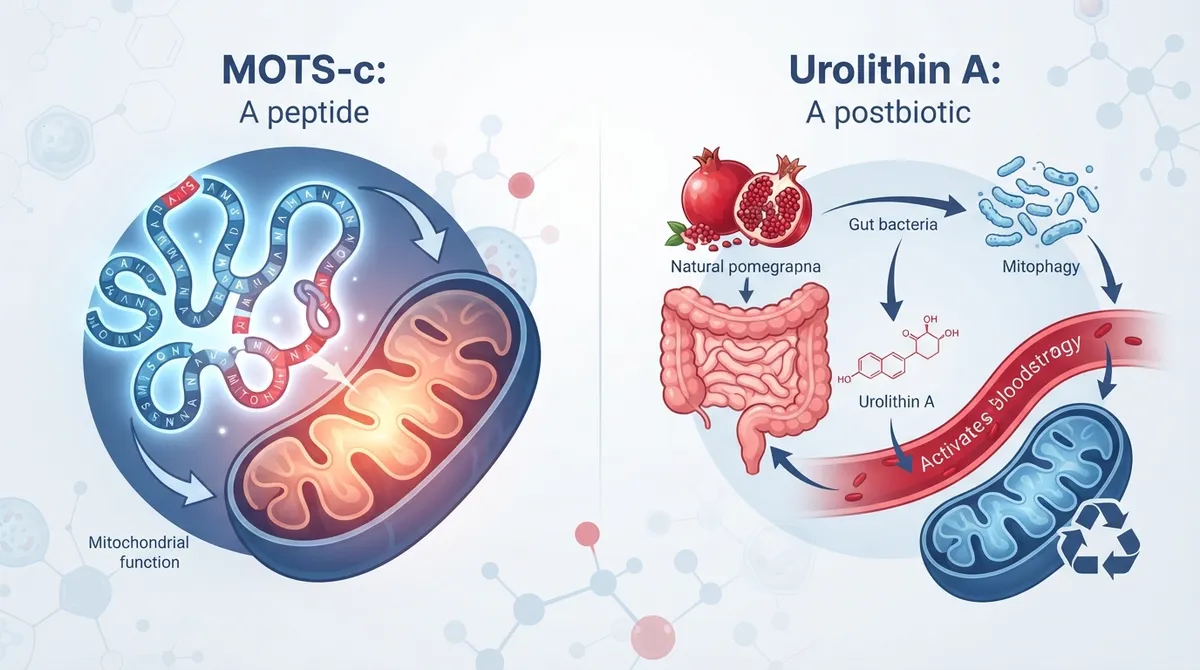
1. MOTS-c Is a Peptide, Urolithin A Is a Postbiotic
MOTS-c is a small peptide made inside your mitochondria, the energy factories of your cells. Urolithin A is different. It is a compound your gut bacteria produce after you eat foods like pomegranates, walnuts, and berries. This basic difference in origin shapes how each one is studied and used.

2. Urolithin A Comes From Food, MOTS-c Does Not
Not everyone makes urolithin A naturally. Your gut bacteria have to convert plant compounds called ellagitannins into urolithin A, and this process varies widely from person to person. Some people barely produce any at all. That is why supplement makers created oral urolithin A products to guarantee a consistent dose. MOTS-c, on the other hand, is not something you get from food. It exists naturally in your cells, and any outside use comes from injectable or compounded products.
3. They Target Different Mitochondrial Pathways
MOTS-c is thought to act like an exercise mimetic. This means it may signal your body in ways similar to physical activity, affecting glucose use and metabolic flexibility. Urolithin A works through a different process called mitophagy. This is your body's natural way of clearing out damaged mitochondria and replacing them with healthy ones, especially in muscle tissue.
4. Urolithin A Has Much Stronger Human Research
This is one of the biggest differences between the two. Urolithin A has been tested in several small, randomized, placebo-controlled trials in humans. MOTS-c has not reached that level of testing. Most MOTS-c evidence still comes from cell studies and animal research, not large human trials.
5. A 2022 Trial Showed Real Muscle Benefits From Urolithin A
A randomized clinical trial published in JAMA Network Open in 2022 found that urolithin A supplementation improved muscle endurance in middle-aged and older adults. The study reported the compound was safe and well tolerated during the trial period, which is meaningful data that MOTS-c simply does not have yet.
6. Another 2022 Study Found Mixed But Interesting Results
A separate 2022 study looked at muscle strength after four months of urolithin A use. Researchers reported about a 12% improvement in a strength measure, along with favorable changes in some mitochondrial and inflammatory markers. However, the primary outcome tracking peak power did not show a significant improvement. This shows that even the better-studied compound has limits, and results are not uniform across every measure.
7. Urolithin A Doses in Studies Range From 500 to 1,000 mg
Clinical trials studying urolithin A commonly used daily doses between 500 mg and 1,000 mg. Study periods ranged from a few weeks up to about four months. Early pharmacokinetic research also suggests the compound does not build up in the blood over time at these doses. This kind of dosing consistency helps researchers compare results across studies, something that is harder to do with MOTS-c given the lack of standardized human trials.
8. MOTS-c Human Data Is Limited to Small, Short Studies
Available human safety data on MOTS-c come from small groups, often involving only a few dozen participants over short periods. This is nowhere near enough to catch rare or delayed side effects. Large studies with long follow-up are needed before anyone can call MOTS-c a safe or effective treatment for humans.
9. Observational Data on MOTS-c Does Not Prove Cause and Effect
Some studies have found that people with lower blood levels of MOTS-c tend to have more metabolic issues, like obesity or type 2 diabetes. This is only an association, though. It does not prove that giving someone MOTS-c will fix those problems. Correlation is not the same as proof of benefit, and this distinction matters a lot in wellness medicine.
10. Neither Compound Is FDA-Approved for These Uses
It is important to be clear: neither MOTS-c nor urolithin A is an FDA-approved treatment for aging, diabetes, weight loss, or exercise performance. Urolithin A is sold as a dietary supplement, while MOTS-c is often sold as a compounded or research-grade injectable, which raises separate safety questions.
11. Product Quality and Purity Concerns Differ Sharply
Because urolithin A supplements go through standard supplement manufacturing, quality can still vary, but dosing tends to be more consistent. Injectable or compounded MOTS-c products sold online may have uncertain purity, inconsistent dosing, and unclear sterility standards. This is a real safety concern for anyone considering self-injection without medical guidance. Here is a quick comparison of key differences:
|
Factor |
MOTS-c |
Urolithin A |
|---|---|---|
|
Origin |
Mitochondria-derived peptide |
Gut microbiome postbiotic from food compounds |
|
Form |
Typically injectable/compounded |
Oral supplement |
|
Human trial evidence |
Limited, mostly preclinical |
Several small randomized controlled trials |
|
Studied dose |
No standardized human dose |
500-1,000 mg daily |
|
Primary mechanism |
Metabolic signaling, exercise mimetic |
Mitophagy (mitochondrial recycling) |
|
FDA approval status |
Not approved |
Not approved (sold as supplement) |
12. Urolithin A Should Not Replace Exercise or a Balanced Diet
Even with its stronger evidence base, urolithin A is not a magic fix. The improvements seen in trials were modest, and researchers were careful to note that supplementation works best alongside good lifestyle habits, not instead of them. Anyone chasing better muscle health should still prioritize regular movement, strength training, and whole foods as the foundation of their plan.
- Urolithin A studies show modest, not dramatic, improvements in muscle measures
- Benefits appear most consistent in endurance-related outcomes
- Product quality and third-party testing matter for supplement safety
- Neither compound is proven to treat diabetes, heart disease, or dementia
13. Who Should Avoid These Compounds Without Medical Guidance
Some people need to be especially cautious. This includes those who are pregnant or breastfeeding, anyone managing a significant chronic illness, and people taking glucose-lowering medications. If you fall into any of these groups, talk with a clinician before trying urolithin A supplements or considering peptide therapy of any kind.
- Schedule a conversation with your primary care provider about your goals
- Share your full medication list and health history
- Ask about realistic expected outcomes, not marketing promises
- Discuss third-party testing and sourcing for any supplement
- Set a follow-up visit to track how you respond
14. A Personalized Wellness Plan Beats Guesswork Every Time
Choosing between MOTS-c and urolithin A is not just about which one sounds more advanced. It comes down to evidence, safety, and how a compound fits your specific health picture. Our providers at InCare, including Naveen Paddu MD, Pramjeet Ahluwalia MD, and Teshy John MD, help patients across Tampa and Riverview sort through wellness trends with a clear, evidence-based lens. We combine tools like DNA gene testing, body composition analysis, and metabolic breath analysis to build a plan around your actual biology, not general assumptions.
If you are curious about peptide therapy options that do have stronger safety and research support, our peptide therapy program in Tampa walks through what is currently available and appropriate for your goals. We also offer IV hydration and vitamin drips and medical weight loss programs for patients looking for additional, well-supported ways to support energy and metabolic health.
You can also follow our updates and patient education content on Facebook and Instagram, or check out wellness tips on TikTok. Many of our Tampa and Riverview patients also share their experiences and see what others are saying when they visit us on Google — InCare.
Final Thoughts on MOTS-c vs Urolithin A
Right now, urolithin A holds a clear edge in terms of human clinical evidence, safety data, and consistent dosing. MOTS-c remains an interesting but largely unproven compound, with most support coming from lab and animal studies rather than large human trials. Neither should be viewed as a cure for aging, diabetes, or chronic disease. The smartest path forward is working with a trusted provider who can review your labs, your goals, and your risk factors before recommending any wellness therapy.
Ready to talk through your options with a team that puts evidence first? Reach out to our care team today or book your appointment now at one of our Tampa or Riverview locations.
FAQs
Q: What is the main difference between MOTS-c and urolithin A?
A: MOTS-c is an investigational mitochondria-derived peptide with mostly preclinical evidence, while urolithin A is a gut-derived postbiotic supported by several small human clinical trials on muscle endurance and mitochondrial health. Urolithin A currently has the stronger evidence base for human use.
Q: Is MOTS-c more effective than urolithin A for weight loss or insulin sensitivity?
A: There is no strong human evidence that MOTS-c improves weight loss or insulin sensitivity in people. Most MOTS-c data comes from cell and animal studies, so claims about major metabolic benefits remain unconfirmed at this time.
Q: Which has better human clinical evidence: MOTS-c or urolithin A?
A: Urolithin A has significantly better human clinical evidence, including randomized, placebo-controlled trials published in journals like JAMA Network Open. MOTS-c lacks comparable large-scale human efficacy studies.
Q: Is urolithin A safe for older adults and people with chronic conditions?
A: Clinical trials have reported urolithin A as generally safe and well tolerated in middle-aged and older adults over several weeks to months. However, anyone with a significant chronic condition or who takes glucose-lowering medication should consult a clinician before starting any new supplement.
Q: Are MOTS-c injections FDA approved or legal to use?
A: MOTS-c is not FDA-approved for any medical use, including anti-aging, weight loss, or performance enhancement. Injectable or compounded MOTS-c products sold online may carry uncertain purity, dosing, and safety risks, so they should not be used without qualified medical supervision.