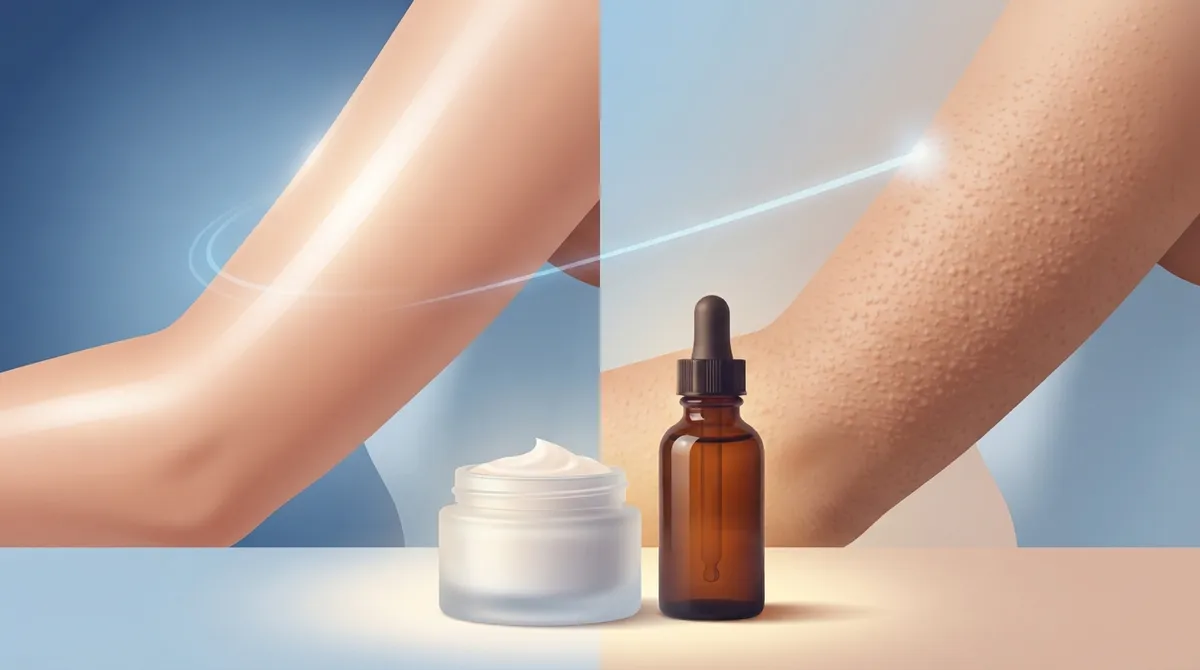
Key Takeaways
- Laser hair removal and laser treatment for KP are different procedures with different goals; confusing them can lead to disappointing results or unnecessary costs.
- A small Nd:YAG laser study showed only 12% improvement in skin roughness over 4 weeks with no long-term follow-up, making it impossible to know if results last months or years.
- Start with first-line treatments like daily moisturizing, gentle exfoliation, and topical keratolytics (lactic acid, urea, salicylic acid) before considering laser procedures with real side effects.
- People with darker skin tones face higher risks of pigment changes from laser treatment and need specific devices, lower settings, and individualized consultation before proceeding.
- Keratosis pilaris often improves naturally with age and lacks guaranteed long-term treatments; a primary care visit should confirm diagnosis and discuss options before pursuing expensive procedures.
- Evidence for laser treatment of KP remains limited with mixed results across different devices; no laser has been proven best, and rare side effects cannot be ruled out from small studies.
If you have small, rough bumps on your upper arms or thighs that never seem to smooth out, you may have keratosis pilaris. Many patients wonder if laser hair removal can fix this common skin condition once and for all. The answer is more complex than a quick spa treatment, and it deserves a clear, honest look before you spend your money or your time.
At InCare, we believe patients deserve straight answers backed by real evidence, not marketing hype. This guide breaks down what laser treatments can and cannot do for keratosis pilaris, what the research actually shows, and when a visit to primary care makes more sense than jumping straight to a cosmetic procedure. Whether you are a busy parent trying to fix your child's arm bumps or a young professional tired of rough skin before swimsuit season, this article gives you the facts you need.
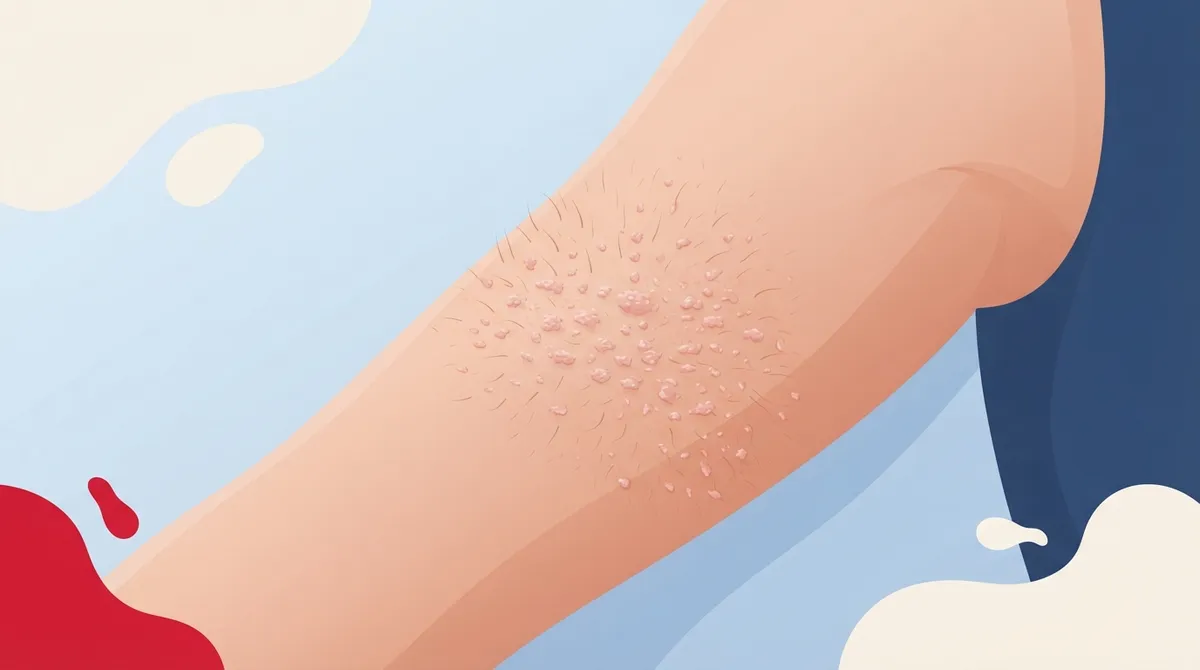
1. Keratosis Pilaris Is Common and Usually Harmless
Keratosis pilaris, often called KP, is a benign skin condition. It happens when dead skin cells clog hair follicles, creating small, rough bumps. Most people see it on the upper arms, thighs, or cheeks. It is not dangerous, but it can bother people for cosmetic reasons.
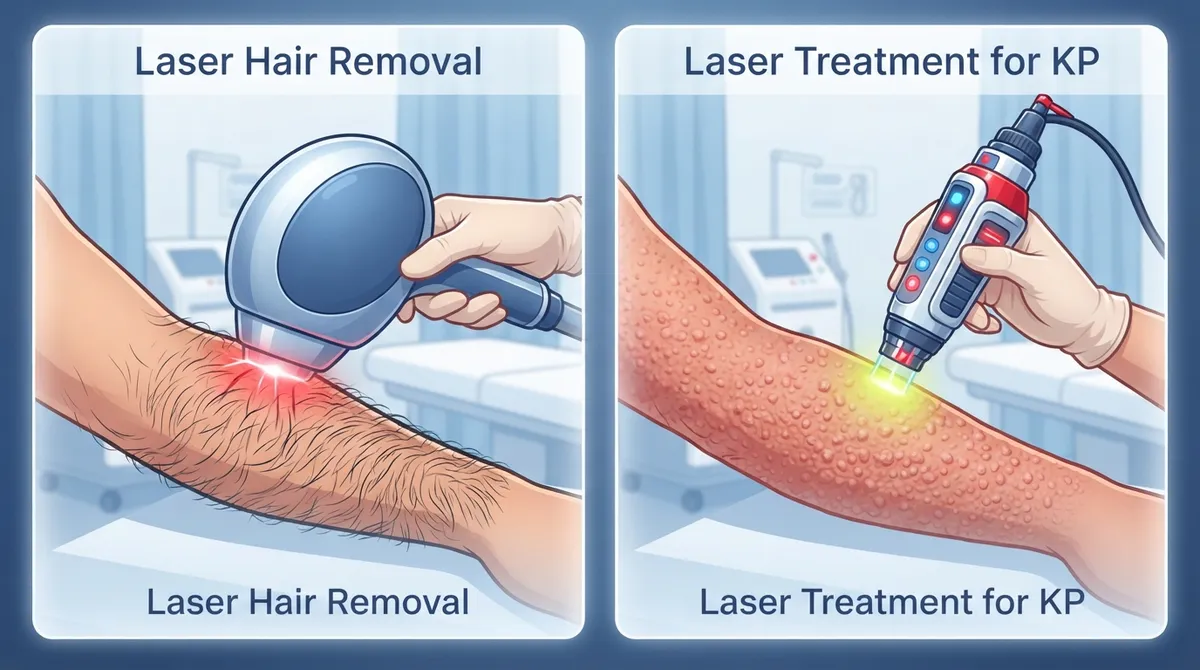
2. Laser Hair Removal and Laser Treatment for KP Are Not the Same Thing
This is the most important distinction to understand. Laser hair removal is designed to reduce hair growth by targeting hair follicles. Laser treatment for KP has a different goal: smoothing rough skin, calming redness, and improving the look of bumps. Some devices overlap, but the purpose and settings often differ. Confusing the two can lead to disappointing results or unnecessary costs.
3. Some Hair-Removal Lasers Have Been Studied for KP Symptoms
Researchers have tested a few laser types originally built for hair removal to see if they also help with keratosis pilaris bumps. These include long-pulsed Nd:YAG, alexandrite, and diode lasers. The idea is that heating the follicle may reduce inflammation and roughness, not just remove hair. Results have been promising in small studies, but the research base remains limited.
4. A Small Study Found Meaningful Improvement With Nd:YAG Laser
One randomized, sham-controlled study looked at 23 adults using a 1064-nm Nd:YAG laser. Participants received four monthly sessions. Researchers measured skin roughness before and after treatment. The treated areas showed about a 12% improvement in roughness compared to sham treatment, and this difference was statistically significant. No adverse events were reported during the study period.
5. The Study Had Real Limits Worth Understanding
While the Nd:YAG results sound encouraging, this study only followed patients for four weeks after their last session. That is not long enough to know if results last for months or years. The sample size was also small, just 23 people. A study this size cannot rule out rare side effects or predict how the treatment works across different skin tones and KP severity levels.
Key Facts From the Nd:YAG Study
|
Detail |
Finding |
|---|---|
|
Number of Participants |
23 adults |
|
Laser Type |
Long-pulsed 1064-nm Nd:YAG |
|
Treatment Sessions |
4 monthly sessions |
|
Roughness Improvement |
About 12% (P0.001) |
|
Follow-Up Period |
4 weeks after final session |
|
Reported Adverse Events |
None during study period |
6. Other Lasers Have Been Tested Too, With Mixed Evidence
A 2022 split-body trial looked at the long-pulsed 755-nm alexandrite laser for keratosis pilaris. While this study added to the growing interest in laser options, available data does not offer a clear, reliable effect size. Diode lasers at 810-nm have also been explored in smaller studies. The takeaway: results from one device or one study group should never be assumed to apply to everyone.
7. Hair Reduction Statistics Do Not Apply to KP Improvement
The American Academy of Dermatology notes that laser hair removal typically requires several sessions spaced four to six weeks apart. Patients often see 10% to 25% hair reduction after just one session. These numbers describe hair growth, not skin bump improvement. It is easy to see these statistics online and assume they apply to KP treatment, but that would be a mistake.
8. Side Effects Are a Real Consideration
Laser procedures are not risk-free. Possible side effects include:
- Temporary pain during treatment
- Redness or swelling after the session
- Burns in rare cases
- Scarring, especially with incorrect settings
- Light or dark spots on the skin
Pigment changes deserve special attention. People with darker skin tones face a higher risk of these changes. The right device, proper settings, and an experienced provider all matter greatly here.
9. Darker Skin Tones Need Extra Care and Planning
Laser energy interacts differently with melanin-rich skin. This means people with darker skin may need specific devices, lower settings, or more caution overall. Before considering any laser option, an honest conversation about skin type and risk is essential. This is exactly the kind of individualized assessment a trusted provider can offer.
10. First-Line Treatment Usually Starts With Simple Skin Care
Before jumping to lasers, most people benefit from basic care first. This includes:
- Daily moisturizing with thick, fragrance-free creams
- Gentle exfoliation, avoiding harsh scrubbing
- Lukewarm showers instead of hot water
- Topical keratolytics like lactic acid, urea, or salicylic acid
- Consistent use over weeks, not days, to see results
These options are simple, low-risk, and often effective for mild to moderate cases. They should always be tried before considering a procedure with real side effects and cost.
11. Topical Treatments Can Irritate Skin, So Guidance Matters
Even simple over-the-counter creams can cause irritation if used incorrectly. Lactic acid and salicylic acid can sting or redden skin, especially with frequent use. A clinician can help you build a plan that fits your skin type and sensitivity level. This kind of personalized guidance is part of what makes a wellness clinic visit valuable, even for something that seems minor like rough skin bumps.
12. Keratosis Pilaris Often Improves With Age, But Not Always
Many people notice their KP fades naturally as they get older. However, this is not guaranteed. Some people deal with bumps well into adulthood, and flare-ups can return during dry winter months or after hormonal changes. This unpredictability is another reason procedural treatments deserve careful thought rather than a quick decision.
13. Primary Care Can Help You Decide the Right Next Step
Most cases of keratosis pilaris can be evaluated during a regular visit with your primary care team. A clinician can confirm the diagnosis, rule out other skin conditions, and discuss basic treatment options. If your case is severe, uncertain, or you are seriously considering a laser procedure, a referral to dermatology may be the smarter path. At InCare, our providers like Naveen Paddu, MD and Pramjeet Ahluwalia, MD take time to listen and guide you toward the right care path, whether that means starting with skin care basics or getting a specialist referral.
14. Setting Realistic Expectations Protects Your Wallet and Your Skin
Laser treatment for KP is not a guaranteed fix, and it is not the same as a permanent cure. Even the most promising study only tracked results for four weeks. Nobody can honestly promise long-term results without more research. Going in with realistic expectations, understanding the real risks, and trying simpler treatments first will serve you better than chasing a quick fix.
Comparing Your Treatment Options
|
Treatment Option |
Typical Cost Level |
Evidence Strength |
Risk Level |
|---|---|---|---|
|
Daily Moisturizing |
Low |
Widely recommended |
Very Low |
|
Topical Keratolytics |
Low to Moderate |
Commonly used, some irritation risk |
Low |
|
Nd:YAG Laser |
Higher |
Small study, short follow-up |
Moderate |
|
Alexandrite/Diode Laser |
Higher |
Limited data available |
Moderate |
Whole-body wellness means paying attention to details like skin health, alongside bigger priorities like cancer screening and weight loss programs. Skin conditions like KP are a great example of how something that seems purely cosmetic can benefit from a medical perspective. A primary care visit does not just treat illness. It helps you make smart, informed choices about care you are considering for appearance and comfort too.
If you are curious about your options, or you want a professional opinion before booking a laser session, our team welcomes the conversation. We serve patients across Tampa and Riverview and understand the local climate can make dry, bumpy skin worse during certain seasons. You can also follow along with skin health tips and patient stories on our Facebook page, see real patient experiences on Instagram, or catch quick wellness tips on TikTok. For general skin condition education, resources from the American Academy of Dermatology and the National Institutes of Health can also offer helpful background.
Keratosis pilaris does not have to control how you feel about your skin. With the right guidance, you can choose a path that fits your goals, your budget, and your comfort level. Many patients also appreciate learning more through our annual wellness visit resources, which explain what a full checkup covers beyond just skin concerns.
Ready to talk through your skin concerns with a provider who listens? Schedule your appointment today and get a personalized plan built around your skin, your health, and your goals. You can also check out what our patients are saying by visiting us on Google — Visit us on Google — InCare, or simply reach out to our team with any questions before your visit.
FAQs
Q: Does laser hair removal get rid of keratosis pilaris?
A: Laser hair removal is not designed to treat keratosis pilaris directly, since its main purpose is reducing hair growth. Some hair-removal lasers, like Nd:YAG devices, have shown modest improvement in KP roughness in small studies, but this is a different application than standard hair reduction treatment. Results are not guaranteed and evidence remains limited.
Q: Which laser is best for treating keratosis pilaris?
A: No single laser has been proven best for keratosis pilaris. Long-pulsed 1064-nm Nd:YAG, 755-nm alexandrite, and 810-nm diode lasers have all been studied with varying results. The right choice depends on your skin tone, KP severity, and a provider's clinical judgment after an individual assessment.
Q: Is laser treatment for keratosis pilaris permanent?
A: No current evidence supports laser treatment as a permanent cure for keratosis pilaris. The most detailed study followed patients for only four weeks after treatment, so long-term results remain unknown. Many patients see KP naturally improve with age, but flare-ups can return regardless of past treatment.
Q: Is laser treatment safe for keratosis pilaris on darker skin?
A: Darker skin tones carry a higher risk of pigment changes from laser treatment, including light or dark spots. Safety depends heavily on device selection, proper settings, and operator experience. Anyone with darker skin considering laser treatment should have a thorough, individualized consultation first.
Q: What treatments can I try for keratosis pilaris before considering a laser?
A: Most people start with daily moisturizing, gentle exfoliation, and topical keratolytics like lactic acid, urea, or salicylic acid. These options are lower cost and lower risk than laser procedures. A primary care visit can help you build a proper skin care routine before considering anything more invasive.