
Key Takeaways
- KP-10 raises hormone levels temporarily but does not prove long-term symptom relief, pregnancy success, or sustained testosterone improvement—biological activity is not the same as real-world clinical benefit.
- KP-10 is not FDA-approved and has no standard dosing protocol; online products should never replace consultation with an endocrinologist or reproductive specialist in a monitored clinical setting.
- Most human KP-10 studies involve very small groups (as few as 6 people) with short follow-up periods, making it impossible to prove effectiveness for the general population or establish long-term safety.
- Tachyphylaxis (reduced response with repeated dosing) has been observed in some KP-10 research, meaning the body may become less sensitive over time, undermining its viability as a stable long-term therapy.
- KP-10 does not work equally for all patients; some forms of hormone dysfunction occur downstream of kisspeptin signaling, where KP-10 would be ineffective despite working well in other cases.
- Skipping medical evaluation while waiting for unproven peptide trends delays diagnosis and treatment of real hormone issues; personalized testing and proven therapies should be pursued immediately.
Interest in kisspeptin-10, often shortened to KP-10, has grown among people searching for new ways to support hormone health, fertility, and wellness. Social media buzz and small research studies have created excitement. But excitement can lead to mistakes. Many people misunderstand what KP-10 clinical efficacy actually means, and that confusion can lead to wasted money or unsafe choices. This guide breaks down 13 common mistakes people make when evaluating KP-10, using facts from real human studies. Whether you are a busy parent researching fertility options, a wellness seeker curious about hormone optimization, or someone exploring peptide trends online, understanding the real science matters. At InCare, our providers in Tampa and Riverview believe informed decisions start with clear, honest information. Let's look at what the evidence shows, and where confusion often begins.
What Is KP-10 and Why Does It Matter?
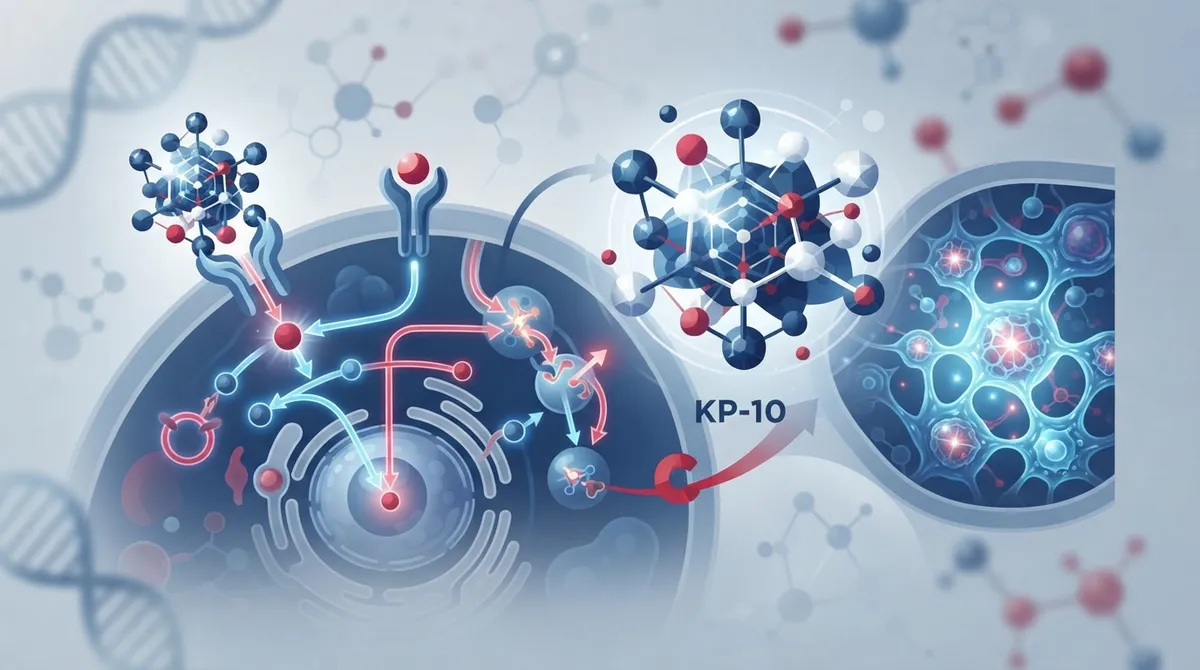
KP-10 stands for kisspeptin-10. It is a small peptide fragment that activates a receptor called KISS1R, also known as GPR54. This receptor sits in the brain's hypothalamus. When activated, it triggers release of gonadotropin-releasing hormone, or GnRH. That hormone then signals the pituitary gland to release luteinizing hormone, or LH, and to a smaller degree, follicle-stimulating hormone, or FSH.
In simple terms, KP-10 flips a switch that starts a chain reaction in the reproductive hormone system. In men, this chain reaction can temporarily raise testosterone. This basic biology is well documented. But biological activity is not the same as proven treatment benefit, and that gap is where most mistakes happen.

Mistake 1: Confusing Biological Activity With Real-World Benefit
The most common error is assuming that because KP-10 raises LH levels, it must also fix fertility problems, low testosterone, or low libido. Research clearly shows short-term hormone spikes. It does not clearly show long-term symptom relief, pregnancy success, or sustained testosterone improvement.
Short studies measure numbers on a lab report. They rarely measure whether a person feels better, has a baby, or maintains results for months. Mixing these two ideas up is the root of most misunderstandings about KP-10 clinical efficacy.
Mistake 2: Ignoring the Small Size of Human Studies
Much of the human research on KP-10 involves very small groups. According to a dose-titration study summarized by the Society for Endocrinology, one trial involved just six healthy men. Doses of 0.3 and 1 microgram per kilogram were found to be maximally stimulatory in that small group.
A study with six people can suggest a pattern. It cannot prove a treatment works for the general public. Larger, well-designed trials are needed before anyone can call KP-10 a proven therapy.
Key Numbers From Early Research
|
Study Detail |
Reported Finding |
|---|---|
|
12-hour infusion, healthy men |
Mean LH rose from about 5.2 to 14.1 IU/L |
|
LH pulse frequency |
Increased from about 0.7 to 1.0 pulses per hour |
|
Hypogonadal/type 2 diabetes setting |
LH rose from about 3.9 to 20.7 IU/L; testosterone from 8.5 to 11.4 nmol/L |
|
ClinicalTrials.gov NCT03771326 |
Target enrollment of only 14 participants, studied over a few hours |
These numbers show real acute hormone changes. They do not show proof of lasting treatment success.
Mistake 3: Assuming KP-10 Works the Same for Everyone
Not every person responds to KP-10 the same way. Some forms of hormone failure happen downstream of kisspeptin signaling. In these cases, KP-10 may do very little, even though it works well in other patients.
One clear example is certain forms of Kallmann syndrome. In these patients, the problem is not a lack of kisspeptin signal but a broken pathway further along. Giving KP-10 in these cases would likely not help, since the deeper hormone circuit is not responding properly.
Mistake 4: Overlooking Tachyphylaxis and Repeated Dosing Problems
Some research shows that continued or repeated KP-10 dosing can lead to a weaker response over time. This is called tachyphylaxis. The body seems to become less sensitive to the peptide with ongoing use.
This matters a lot for anyone thinking about long-term or daily use. A treatment that loses effectiveness with repeated dosing is not a stable, dependable therapy yet. More research is needed to understand safe dosing patterns, if any exist for regular use.
Mistake 5: Believing KP-10 Is FDA-Approved or Regulated Like a Prescription Drug
This is one of the most important mistakes to avoid. KP-10 is not an approved treatment for fertility, low testosterone, weight loss, or general wellness in the United States. No standard consumer dosing protocol exists.
Products marketed online for self-injection should not be treated as equal to regulated medical therapies. Any serious consideration of kisspeptin-based treatment should go through an endocrinologist, reproductive specialist, or a monitored clinical trial setting, not an unregulated online purchase.
Mistake 6: Skipping a Conversation With a Primary Care Provider
Many people research peptides online and never mention it to their doctor. This is risky. A primary care visit is the right place to discuss hormone symptoms, fertility concerns, or low energy before trying unproven treatments.
Your primary care team can order proper hormone testing, review your full health history, and recommend treatments supported by stronger evidence. This step often gets skipped by people chasing quick fixes.
Mistake 7: Misreading Study Design as Proof of Fertility Success
A small study on men with hypogonadotropic hypogonadism found that kisspeptin restored LH pulsatility in the group studied. That sounds promising. But the study size and short follow-up limit what conclusions can be drawn about actual fertility outcomes or live births.
Restoring a hormone pulse pattern is not the same as achieving pregnancy or improving sperm counts long-term. People researching fertility support should understand this distinction clearly before making decisions.
Mistake 8: Ignoring the Difference Between Diagnostic Use and Treatment Use
KP-10 has been studied as a diagnostic tool to test how well the hypothalamic-pituitary-gonadal axis is working. This is different from using it as an ongoing treatment. A diagnostic stimulation test measures a short-term response. It is not designed to be a repeated therapy.
Confusing these two uses can lead people to expect long-term benefits from what is really a one-time or occasional testing method still under study.
Ordered Steps to Evaluate Any Peptide Claim
- Check if the claim is based on animal studies or human studies.
- Look at how many people were in the human study.
- Check if the study measured symptoms or just lab numbers.
- See if results lasted weeks, months, or just hours.
- Confirm whether the product is FDA-approved or still experimental.
- Ask a licensed provider before starting any peptide.
Mistake 9: Trusting Marketing Claims Over Clinical Trial Data
Wellness marketing often uses exciting words like breakthrough or game-changer. Real clinical data is more careful and limited. Available clinical summaries reported no serious adverse events from KP-10 in short-term literature, but this limited safety signal cannot prove long-term safety.
Some reports mention mild, temporary side effects such as facial flushing. That is a far cry from a proven, safe, long-term wellness product. Reading actual study summaries, not just advertising copy, is essential.
Mistake 10: Overlooking How KP-10 Is Actually Administered in Research
In studies, KP-10 has been given through intravenous infusion or subcutaneous injection, usually in a monitored clinical setting. This is very different from unsupervised home use. Researchers track hormone levels closely during and after dosing.
People considering any peptide therapy should understand that research conditions are tightly controlled. Home use without monitoring removes the safety net that clinical trials provide.
Comparison: Research Setting vs Unsupervised Use
|
Factor |
Clinical Research Setting |
Unsupervised Home Use |
|---|---|---|
|
Dosing |
Carefully measured and titrated |
Often unclear or inconsistent |
|
Monitoring |
Frequent blood tests |
Usually none |
|
Product Source |
Verified, controlled supply |
Unregulated, quality unknown |
|
Medical Oversight |
Endocrinologist or specialist |
Often none |
Mistake 11: Assuming Weight Loss or General Wellness Benefits Are Proven
Some online sources suggest KP-10 might help with metabolic health or weight management. The truth is more limited. A ClinicalTrials.gov record, NCT03771326, looked at acute KP-10 effects on insulin secretion in normal-weight and obese men. The study only measured responses over a few hours in 14 people.
This tiny, short study does not establish a weight-management or diabetes treatment effect. If you are interested in medically supervised weight loss, working with a program built on stronger evidence, such as the Weight Loss services at InCare, is a safer and more proven path.
Mistake 12: Forgetting That Individual Health Conditions Change the Picture
Every patient's hormone system is different. Age, underlying medical conditions, and reproductive history all affect how a peptide like KP-10 might behave in the body. A treatment discussed in a research paper for one narrow patient group does not automatically apply to everyone else.
This is why personalized care matters so much. A tailored plan built around DNA gene testing or thorough body composition analysis can offer real, individualized insight instead of relying on a peptide with uncertain benefits for your specific situation.
Common Questions People Ask Before Trying KP-10
- Is KP-10 the same as testosterone therapy? No, it works upstream in the hormone chain.
- Can it replace fertility treatment? Not based on current evidence.
- Does it help with low energy? This has not been studied in a meaningful way.
- Is it legal to buy online? Regulatory status varies, and quality is not guaranteed.
- Should insurance cover it? It is not an approved treatment, so coverage is unlikely.
Mistake 13: Delaying a Real Medical Evaluation While Waiting on Peptide Trends
Perhaps the biggest mistake is waiting on trendy peptides instead of addressing symptoms now. Low energy, irregular periods, fertility struggles, or low testosterone symptoms deserve real medical attention, not a guessing game with unproven compounds.
A same-day or scheduled visit with a qualified provider can uncover the real cause of your symptoms. Many patients are surprised how much can be addressed through standard testing and proven treatment options already available today.
Why Personalized Primary Care Beats Guesswork
Hormone health is complex. Instead of relying on unregulated peptides with limited evidence, a personalized care plan built on real testing gives clearer answers. InCare combines advanced technology with hands-on medical expertise across locations in Tampa and Riverview, Florida.
Services like cancer screening, IV hydration and vitamin drips, and comprehensive wellness visits give patients real, measurable options. Our providers, including those featured on our Providers page, focus on evidence-based care rather than trends with thin research support.
Simple Steps for Better Hormone Health Today
- Schedule a wellness visit to check baseline hormone levels.
- Ask about proven treatment options for your specific symptoms.
- Discuss family planning goals openly with your provider.
- Consider metabolic testing if weight or energy is a concern.
- Avoid starting any unregulated peptide without medical guidance.
How InCare Supports Informed Wellness Decisions
Our team believes patients deserve honest answers, not hype. Many people follow health trends on platforms like Instagram and Tik Tok, where wellness topics spread quickly. We aim to bring balance by pairing that curiosity with real medical guidance.
You can also connect with our community and see patient experiences on Facebook, or read what current patients say by visiting our reviews. InCare holds a strong 4.8 out of 5 rating on Google, and you can visit us on Google — InCare to see recent patient feedback from our Tampa and Riverview locations.
Final Thoughts on KP-10 Clinical Efficacy
KP-10 is a fascinating research compound with real, measurable short-term effects on hormone levels. But clinical efficacy for fertility, testosterone support, weight management, or general wellness has not been established. Small studies, short follow-up periods, and inconsistent patient responses mean this peptide remains firmly in the research stage.
Avoiding the 13 mistakes above can protect your health, your wallet, and your peace of mind. Instead of chasing unproven peptide trends, work with a trusted primary care team that can test, diagnose, and treat your specific needs with proven methods.
Ready to get real answers about your hormone health, fertility questions, or wellness goals? Reach out to our team today or book your appointment now at InCare in Tampa or Riverview, Florida.
FAQs
Q: What is KP-10 or kisspeptin-10?
A: KP-10 is a small peptide fragment of kisspeptin that activates the KISS1 receptor in the brain, triggering release of hormones that regulate reproduction. It is studied for its role in the hypothalamic-pituitary-gonadal axis, but it is not an approved treatment.
Q: Does KP-10 increase testosterone in men?
A: Research shows KP-10 can raise luteinizing hormone quickly, which may lead to a temporary rise in testosterone in some men. These are short-term physiological responses, not proof of lasting testosterone improvement.
Q: Can kisspeptin-10 improve fertility or help with infertility?
A: Small studies suggest KP-10 can restore certain hormone pulse patterns linked to fertility, but study sizes are very small and follow-up periods are short. There is no strong evidence yet that it improves natural conception or live birth rates.
Q: Is KP-10 FDA-approved or available by prescription?
A: No, KP-10 is not FDA-approved as a treatment for fertility, testosterone support, weight loss, or wellness. It remains an investigational compound studied mainly in research and clinical trial settings.
Q: What are the possible side effects and risks of kisspeptin-10?
A: Short-term studies have reported no serious adverse events, though some participants experienced mild effects like facial flushing. Because research is limited, the long-term safety of repeated or unsupervised use remains unknown.