Key Takeaways
- GHK-Cu is not FDA-approved as a drug and can only be legally marketed as a cosmetic ingredient; topical use for photoaged or sun-damaged skin has limited small-sample human studies, so expectations should remain cosmetic, not medical.
- Injectable GHK-Cu lacks large human trials, standardized dosing, and quality assurance with documented concerns about impurities and immunogenicity risks, making it unsafe outside supervised clinical research settings.
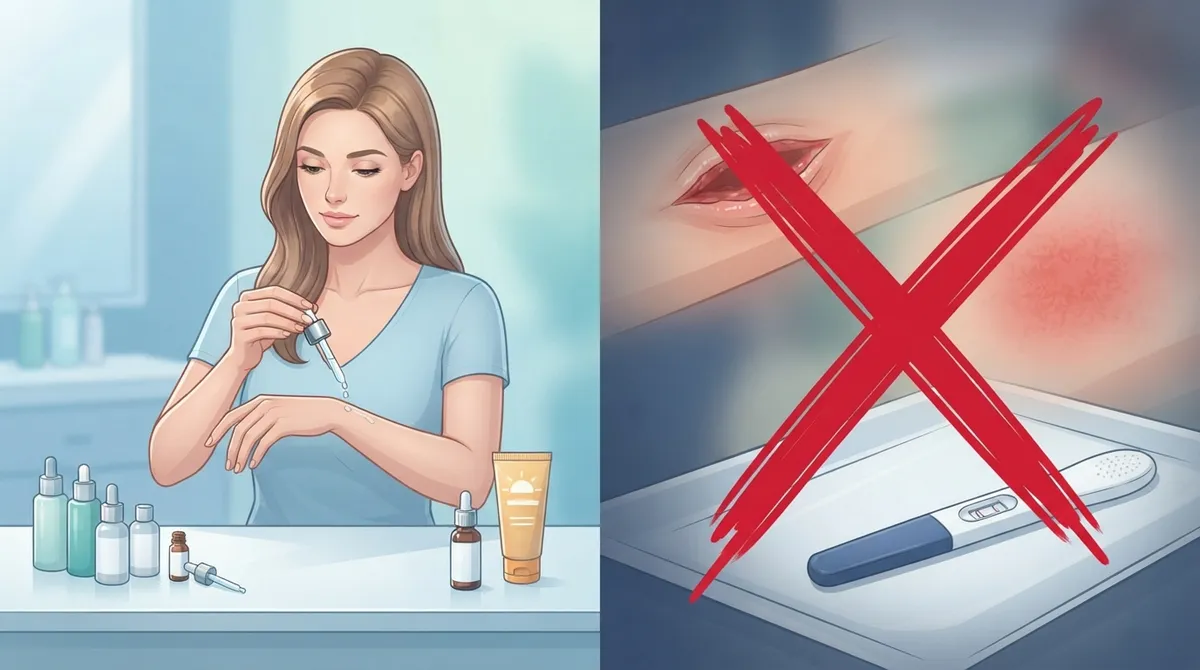
- Always patch test GHK-Cu on skin for 48 hours before full use, start with low concentration, pair with daily sunscreen, and stop immediately if irritation or contact dermatitis develops (reported in ~3% of users in studies).
- Skip GHK-Cu for nonhealing wounds, infections, pregnancy/breastfeeding, or diagnosed skin conditions like severe acne or dermatitis; these require evidence-based medical treatment, not cosmetic peptides.
- GHK-Cu works best as one component within a broader anti-aging skincare routine alongside sun protection, retinoids, or other actives rather than as a standalone product or miracle fix.
- Consult a clinician before using GHK-Cu if you have copper abnormalities, liver disease, significant skin allergies, planned procedures, or unexplained skin changes to rule out medical conditions requiring proper diagnosis.
GHK-Cu keeps showing up in skincare aisles and wellness clinic menus across Florida, but knowing when to actually use it takes more than reading a bottle label. This copper-binding peptide has real laboratory research behind it, yet the human evidence is much thinner than the marketing suggests. If you are considering GHK-Cu for skin repair, post-procedure recovery, or general wellness, understanding exactly when it makes sense—and when it does not—protects both your skin and your wallet.
This guide breaks down 12 practical scenarios where topical GHK-Cu may have a reasonable role, plus situations where you should skip it and see a clinician instead. Whether you are a busy parent squeezing in a skincare routine, a wellness-focused professional exploring DNA gene testing and other advanced options, or simply curious about this trending peptide, you will find clear, evidence-based guidance here.

What Is GHK-Cu, Exactly?
GHK-Cu, also known as copper tripeptide-1 or copper(II)-glycyl-L-histidyl-L-lysine, is a naturally occurring copper-binding peptide. Researchers have studied it for its potential effects on skin repair, collagen remodeling, inflammation, and extracellular-matrix activity. A 2018 review published in the International Journal of Molecular Sciences summarized decades of cell, animal, and human research, but the authors were clear: much of the evidence remains preclinical or mechanistic rather than proven in large clinical trials.
In the context of primary care and wellness, this distinction matters. GHK-Cu is not an FDA-approved drug for any medical condition. Cosmetic products containing copper tripeptide-1 exist legally, but they cannot make drug-level claims about treating wounds, arthritis, alopecia, or systemic inflammation. Understanding this regulatory reality helps set realistic expectations before you spend money on any GHK-Cu product.
12 Situations Where Topical GHK-Cu May Be Worth Considering
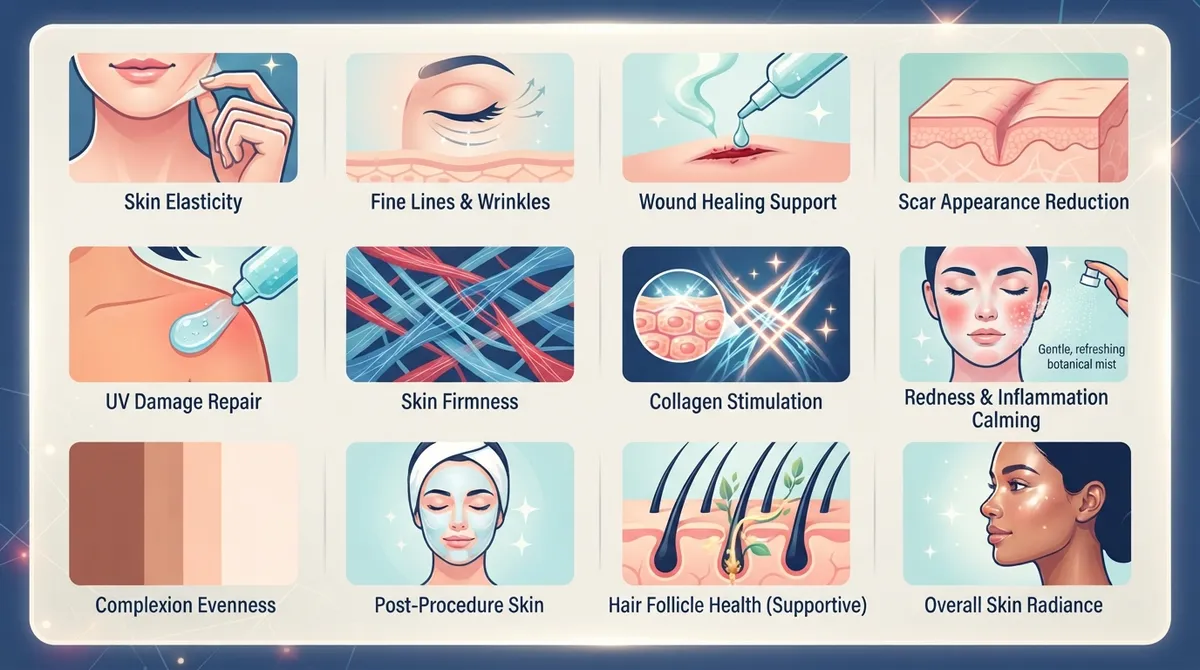
Below is a practical list of scenarios where topical GHK-Cu has the most defensible, evidence-informed use. These are cosmetic and dermatologic contexts, not treatments for diagnosed medical conditions.
1. Photoaged or Sun-Damaged Skin
Topical GHK-Cu is most commonly used as a cosmetic ingredient for skin that shows signs of sun damage, such as fine lines, rough texture, or uneven tone. Small studies suggest it may support the skin's natural repair processes, though results vary by individual and formulation.
2. As Part of a Broader Anti-Aging Skincare Routine
Some people layer GHK-Cu serums alongside other actives like vitamin C or peptides aimed at supporting collagen appearance. It works best as one component of a routine, not a standalone miracle fix.
3. After Certain In-Office Skin Procedures
Selected post-procedure skin recovery, such as after microneedling or light laser treatments, is an area of active investigation. A licensed clinician should always review whether a topical product is appropriate before or after any procedure.
4. When Skin Feels Dull or Texture Has Changed
Cosmetic users sometimes apply GHK-Cu serums to address dullness or uneven texture. This is a cosmetic goal, not a medical one, so expectations should stay modest.
5. As Part of a Preventive Skin Care Discussion With Your Doctor
If you are already seeing a primary care provider for annual wellness visits, it is reasonable to ask about topical skin ingredients like GHK-Cu during a routine primary care visit, especially if you have sensitive skin or existing conditions.
6. When You Want a Product With Some Published Human Data
Unlike many trending wellness ingredients, GHK-Cu has at least some small human studies behind it, even if short-term and limited in size. This puts it in a slightly different category than ingredients with zero human research.
7. For General Cosmetic Skin Maintenance
Some adults use low-concentration GHK-Cu serums simply as part of ongoing skin maintenance, similar to how they might use a basic moisturizer or sunscreen.
8. When Paired With Sun Protection
Any benefit from a repair-focused peptide is undermined without daily sun protection. GHK-Cu should be viewed as a complement to sunscreen, not a replacement for it.
9. As Part of a Supervised Wellness Program
Some wellness clinics incorporate topical peptides into broader skin health conversations alongside services like IV hydration and vitamin drips or body composition tracking. In these settings, a clinician can help you weigh realistic expectations.
10. When You Have Realistic, Cosmetic-Only Expectations
If your goal is subtle cosmetic support rather than a cure for a medical skin condition, GHK-Cu topical products may fit reasonably into that goal.
11. As an Alternative Discussion Point During a Skin Consultation
Bringing up GHK-Cu during a consultation with a primary care provider gives you a chance to compare it against other evidence-based options like retinoids or professional treatments.
12. When Sourced From a Reputable, Transparent Product
If you decide to try a topical GHK-Cu product, choosing one with clear ingredient labeling and transparent concentration reduces some of the uncertainty around formulation quality.
4 Situations Where You Should Skip GHK-Cu
Just as important as knowing when to use GHK-Cu is knowing when to avoid it and seek proper medical care instead.
- Persistent or infected wounds. Nonhealing, painful, enlarging, or infected wounds need standard medical evaluation, not a cosmetic peptide serum.
- Pregnancy or breastfeeding. Data on topical or systemic GHK-Cu use during pregnancy and breastfeeding is insufficient, so clinician guidance is essential.
- Injectable or systemic use for anti-aging or recovery. Injectable GHK-Cu lacks large human trials, standardized dosing, and quality assurance. Regulatory sources flag concerns about peptide impurities, aggregation, and immunogenicity.
- Diagnosed skin conditions like severe acne, dermatitis, or hair loss. These require evidence-based treatment plans, not substitution with an unproven peptide.
Topical vs. Injectable GHK-Cu: A Clear Comparison
Confusion between topical and injectable GHK-Cu is common. The table below outlines key differences based on available evidence.
|
Factor |
Topical GHK-Cu |
Injectable/Systemic GHK-Cu |
|---|---|---|
|
FDA Approval |
Not approved as a drug; used as cosmetic ingredient |
Not FDA-approved for any indication |
|
Human Evidence |
Small topical studies exist |
Insufficient completed human trials |
|
Primary Use Case |
Cosmetic skin appearance, photoaging |
Not established for primary care use |
|
Known Risks |
Local irritation, contact dermatitis |
Impurities, immunogenicity, sterility concerns |
|
Regulatory Status |
Legal as cosmetic ingredient with limits on claims |
Regulatory uncertainty around compounding |
What the Research Actually Shows
It helps to separate hype from documented findings. Here is a numbered summary of the most relevant data points.
- A 2018 review in the International Journal of Molecular Sciences (Pickart et al.) summarized cell, animal, and human research but stressed that much of the evidence base remains preclinical.
- A small 12-week topical study involving 67 participants using a 0.1% GHK-Cu serum found that about 3% developed contact dermatitis, with no serious adverse events reported.
- ClinicalTrials.gov lists a Phase 2 randomized, double-blind, vehicle-controlled study of topical GHK-Cu gel for acute skin wounds in healthy adults, showing this use is still under investigation.
- No large Phase 3 trial or FDA-approved prescribing label for GHK-Cu currently exists.
- Human evidence remains concentrated in short-term, small-sample topical studies rather than robust randomized controlled trials.
Signs You Should Talk to a Clinician First
Certain situations call for a conversation with a licensed provider before trying any topical peptide product.
- You have unexplained copper abnormalities or liver disease
- You have a history of significant skin allergies or contact dermatitis
- You are considering use on or near an open wound
- You are planning a laser treatment, microneedling session, or other cosmetic procedure
- You are pregnant, breastfeeding, or trying to conceive
- You have a diagnosed chronic skin condition requiring ongoing treatment
A quick visit to a urgent care or primary care office can help you determine whether a skin concern needs medical treatment before you try a cosmetic ingredient like GHK-Cu.
How to Approach GHK-Cu Safely if You Decide to Try It
If, after weighing the evidence, you still want to try a topical GHK-Cu product, a few simple steps can reduce risk.
- Patch test on a small area of skin for 48 hours before full use.
- Start with a low concentration and monitor for redness, stinging, or itching.
- Stop use immediately if irritation or contact dermatitis develops.
- Avoid combining with strong exfoliants or retinoids until you know how your skin reacts.
- Always pair with daily sunscreen for any meaningful cosmetic benefit.
- Review the full ingredient list, since irritation often comes from the formulation, not just the peptide.
Why a Whole-Body Approach Matters More Than Any Single Peptide
Skin health does not exist in isolation. Hydration, nutrition, sleep, and hormone balance all affect how your skin looks and repairs itself. This is why many wellness-focused patients pair topical skincare interest with broader services like body composition analysis, metabolic breath analysis, or hair restoration consultations at a comprehensive clinic.
At InCare, our providers—including Dr. Pramjeet Ahluwalia, Dr. Naveen Paddu, and Dr. Teshy John—focus on prevention and whole-body optimization rather than chasing single-ingredient trends. If you are curious about how GHK-Cu or other wellness ingredients fit into your overall health picture, a conversation during a comprehensive visit is a smart first step. Our Tampa and Riverview locations offer this kind of personalized guidance backed by real clinical expertise.
Common Mistakes People Make With GHK-Cu
Avoiding these missteps can save you money and protect your skin.
- Assuming FDA approval exists when it does not
- Using injectable or compounded GHK-Cu without medical supervision
- Applying it to infected or nonhealing wounds instead of seeking care
- Expecting dramatic results from short-term use
- Ignoring early signs of contact dermatitis
- Skipping sunscreen while relying solely on the peptide for skin repair
Many patients discover these products through social platforms. If you follow wellness trends on Instagram or TikTok, remember that viral claims often outpace the actual science. Cross-checking claims against peer-reviewed research or a clinician's advice is always worthwhile.
When to See a Doctor Instead of Trying a Peptide Serum
Some skin and health concerns are simply outside the scope of any cosmetic product. If you notice a wound that will not heal, a mole that has changed, or persistent skin irritation lasting more than two weeks, schedule an evaluation. Our team also offers cancer screening services for patients concerned about unusual skin changes, moles, or other early warning signs that deserve professional attention rather than a wait-and-see approach with topical products.
Final Thoughts on Timing Your GHK-Cu Use
GHK-Cu can be a reasonable addition to a cosmetic skincare routine for photoaged skin or general skin maintenance, provided you keep expectations realistic and monitor for irritation. It should never replace evaluation for wounds, infections, or diagnosed skin conditions, and injectable forms remain unproven and carry meaningful safety concerns. The smartest approach is pairing any interest in trending peptides with guidance from a clinician who understands your full health picture.
If you want a personalized conversation about GHK-Cu, skin health, or broader wellness goals, our team at InCare is ready to help. You can get in touch with our team to ask questions, or go ahead and schedule your appointment today at our Tampa or Riverview location. Patients who want to see what others are saying can also visit us on Google — InCare to read real reviews from our Tampa Bay community, or follow our updates on Facebook for more wellness tips.
FAQs
Q: What is GHK-Cu and what is it used for?
A: GHK-Cu, also called copper tripeptide-1, is a naturally occurring copper-binding peptide studied for effects on skin repair and collagen-related remodeling. In wellness settings, it is most often used as a topical cosmetic ingredient for photoaged or dull skin rather than as a treatment for diagnosed medical conditions.
Q: Is GHK-Cu FDA-approved?
A: No, GHK-Cu is not FDA-approved as a drug for any medical indication. It appears in some cosmetic products, but those products cannot legally claim to treat wounds, arthritis, or other medical conditions.
Q: When should I use topical GHK-Cu in a skincare routine?
A: Topical GHK-Cu may be reasonable for cosmetic support of photoaged or textured skin as part of a broader routine that includes sun protection. It works best when expectations stay realistic and any irritation is monitored closely.
Q: Is injectable GHK-Cu safe or effective for anti-aging and recovery?
A: Injectable or systemic GHK-Cu is not supported by large human trials and carries regulatory and quality concerns, including impurities and immunogenicity risks. It should not be treated as an established primary care therapy.
Q: What are the side effects and risks of topical GHK-Cu?
A: Topical GHK-Cu can cause local irritation, redness, stinging, or contact dermatitis in some users. One small study found about 3% of participants developed contact dermatitis, so patch testing before regular use is recommended.