
Key Takeaways
- BPC-157 is not FDA-approved, and the FDA has said there is not enough clinical safety information to describe its safety.
- A 2026 systematic review found only three small human studies with 30 participants total, rated as very low certainty evidence.
- Most BPC-157 research comes from rats, mice, and cell studies, which often do not predict results in people.
- Ask any clinic about regulatory status, who manufactures the product, what human studies support your use, and the clinician's credentials before paying.
If you search for a bpc-157 peptide tampa option, you will find many clinics promising faster healing, better recovery, and a healthier gut. The marketing is bold. The science behind it is much thinner than the ads suggest. In 2026, patients across Tampa and Riverview are asking smart questions about peptides, and they deserve clear answers before they spend money or take any risk.
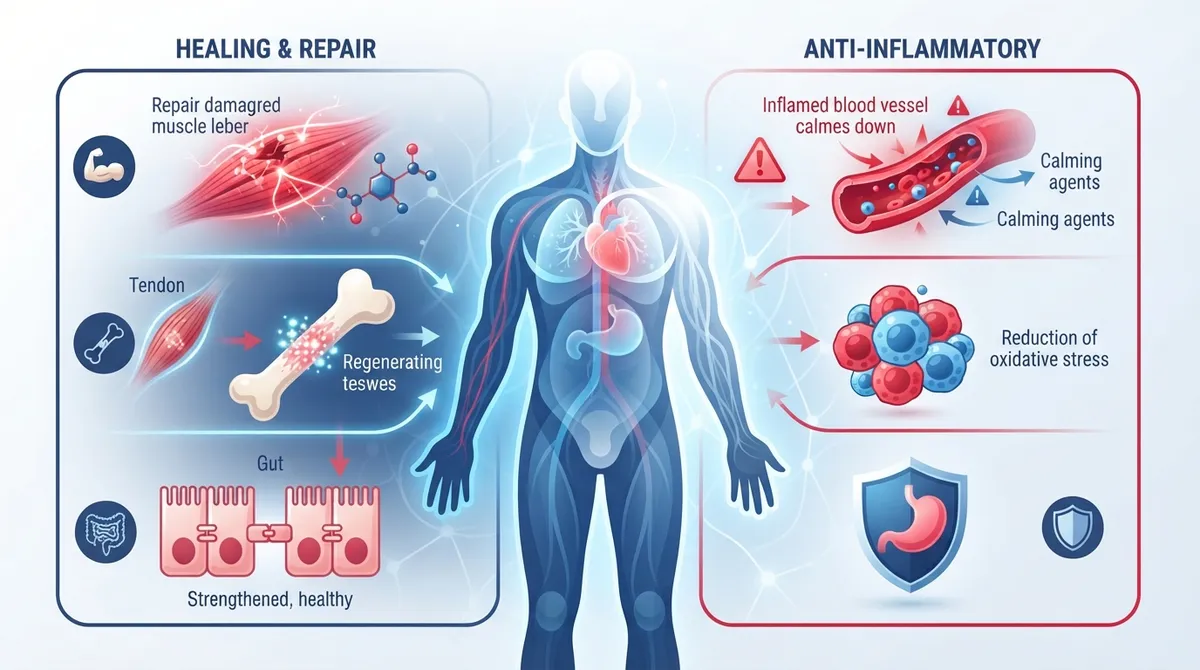
BPC-157, short for Body Protection Compound-157, is a lab-made peptide with 15 amino acids. Some wellness providers promote it for tendon injuries, joint pain, and digestive problems. But most of the research comes from lab and animal studies. Human evidence is extremely limited, and the FDA has not approved BPC-157 as a drug.
This guide walks you through 12 common mistakes people make when they consider BPC-157 in the Tampa area. You will learn what the evidence says, what the FDA has said, and which questions to ask any clinic. You can also read our related overview, BPC 157 Tampa: Does It Work?, for more background.
What BPC-157 Is and What It Is Claimed to Do
BPC-157 is a synthetic peptide. A peptide is a short chain of amino acids, the building blocks of proteins. Some providers market BPC-157 for injury recovery, tissue repair, and digestive support.
These are promotional or investigational uses. They are not established clinical benefits. A marketing claim is not the same as proof from well-run human trials.
Where the Hype Comes From
Most BPC-157 studies were done in rats, mice, and cell models. Animal results often do not carry over to people. Many treatments that looked promising in animals failed in human trials.
What the Human Evidence Actually Shows
A 2026 systematic review looked for human studies of BPC-157. It found only three small studies with a total of 30 participants. The review rated the quality of these studies as poor and the certainty of the evidence as very low.
|
Human Study Type |
Participants |
Focus |
|---|---|---|
|
Retrospective knee-pain study |
16 |
Knee pain |
|
Retrospective pilot |
12 |
Interstitial cystitis |
|
Prospective intravenous safety pilot |
2 |
Safety |
The review reported no treatment-related adverse events in these 30 people. That sounds reassuring, but the sample is tiny. It cannot rule out uncommon problems or long-term harm. The review advised against clinical use outside properly regulated trials.
12 BPC-157 Peptide Tampa Mistakes to Avoid
Use this list as a checklist before you book any peptide visit.
- Assuming it is FDA-approved. BPC-157 is not an ingredient in an FDA-approved drug. FDA materials say there is not enough clinical safety information to describe its safety.
- Treating a prescription as proof of safety. A prescription does not mean the FDA has reviewed the product. Compounded drugs are not FDA-approved finished products.
- Believing animal studies prove it works in people. Lab results are a starting point, not an answer.
- Trusting before-and-after stories. Testimonials are not controlled studies. They cannot separate the peptide from rest, time, or other treatment.
- Ignoring the regulatory history. The FDA proposed that BPC-157 free base and acetate not be placed on the 503A bulk drug substances list. The nominations were withdrawn, and the FDA said it was evaluating them. Check the latest status before you act.
- Skipping questions about the product source. Ask where the product is made and whether a licensed compounding pharmacy prepares it.
- Skipping a real diagnosis. Pain in a joint or tendon has a cause. A clinician should find it first.
- Expecting guaranteed healing. No responsible provider can promise results when human data are this limited.
- Assuming "natural" means safe. A lab-made peptide is still a drug-like substance with unknown long-term effects.
- Skipping your medication list. Always tell your doctor about every drug and supplement you take.
- Buying from online sellers. Products labeled "for research purposes only" have no quality guarantees.
- Overlooking proven options. Physical therapy, imaging, and medical care have solid evidence for many injuries.
FDA Status and Compounding: What Tampa Patients Should Know
The FDA does not review compounded drugs for safety, effectiveness, or manufacturing quality before they are sold. That is a key point for any bpc-157 peptide tampa listing you see online.
Some Tampa-area clinics advertise BPC-157 as part of peptide or wellness packages. That tells you the service is marketed locally. It does not tell you the treatment is evidence-based or right for you. Always confirm current services and clinician credentials directly with the clinic.
Questions to Ask Any Clinic
- Is this product FDA-approved? If not, what is its regulatory status?
- Who makes it, and can I see quality and testing records?
- What human studies support this use for my condition?
- What are the known risks, and what is unknown?
- What is the clinician's license and training?
- What happens if I have a reaction?
Safety: What Is Known and What Is Not
Safety is the biggest gap. The small number of human studies found no treatment-related adverse events, but 30 participants is far too few to draw firm conclusions. Rare side effects, long-term effects, and drug interactions are simply not well studied.
Contamination and dosing errors are also concerns with products that are not FDA-approved. You can learn more in our guide on whether BPC-157 is safe.
Evidence-Based Options for Tendon, Joint, and Digestive Problems
Many injuries and digestive problems respond well to established care. A primary care visit is often the best first step.
|
Concern |
Common Evidence-Based Starting Points |
|---|---|
|
Tendon or joint pain |
Exam, imaging when needed, physical therapy, activity changes, and pain management |
|
Slow recovery after injury |
Sleep, nutrition, graded exercise, and review of underlying conditions |
|
Digestive symptoms |
Medical history, lab testing, diet review, and condition-specific treatment |
|
Weight-related joint strain |
Supervised weight loss and metabolic assessment |
A good primary care doctor can rule out serious causes, order the right tests, and refer you to a specialist when needed. Our article on what primary care doctors can discuss about peptide therapy explains how these conversations work.
How to Approach Peptide Questions the Smart Way
Curiosity about peptides is normal. The goal is to stay informed and protected. Follow these steps:
- Write down your symptoms, when they started, and what has helped.
- Book a visit with a licensed primary care clinician.
- Bring a list of all medicines and supplements.
- Ask about proven treatments first.
- If you still want to discuss peptides, ask for the evidence in writing.
If you want a broader view, see our overview of peptide therapy in Tampa and our guide to what to look for in a peptide clinic.
Who Should Be Extra Careful
- People who are pregnant or breastfeeding
- People with a history of cancer or a strong family history
- Anyone taking blood thinners or several prescription drugs
- Athletes who are subject to drug testing
Because human safety data are so limited, these groups should talk with a licensed clinician before considering any unapproved peptide.
Why Primary Care Is a Smarter Starting Point
A primary care team looks at the whole picture. Pain, poor recovery, and gut trouble can come from sleep problems, hormone changes, thyroid issues, diabetes, or nutrition gaps. Treating the root cause usually beats chasing a single product.
InCare is a personalized healthcare clinic serving Tampa and Riverview. Our team combines modern technology with medical expertise, offering primary care, urgent care, DNA gene testing, and body composition analysis. You can meet our providers and find our locations online. Patients also share their experiences, and you can read InCare reviews on Google. We also share health tips on Instagram, Facebook, and TikTok.
Final Thoughts
Searching for a bpc-157 peptide tampa clinic is understandable, especially if you are dealing with pain or a slow recovery. But BPC-157 remains an investigational peptide. It is not FDA-approved, the human evidence is very low in quality, and long-term safety is unknown.
The safest path is to start with a licensed clinician who can diagnose the problem and offer proven care. Ask hard questions, demand evidence, and avoid anyone who promises guaranteed results.
Ready for a clear, honest conversation about your recovery goals? Book your appointment with InCare today, or contact our team with any questions.
FAQs
Q: Is BPC-157 FDA-approved in the United States?
A: No. BPC-157 is not an ingredient in an FDA-approved drug. FDA materials state there is insufficient clinical safety information to describe its safety, and compounded versions are not FDA-approved finished products.
Q: Is there human research showing that BPC-157 works?
A: Human evidence is extremely limited. A 2026 systematic review found only three small studies with 30 participants in total, rated the evidence as very low certainty, and advised against clinical use outside regulated trials.
Q: Can a Tampa clinic legally prescribe or compound BPC-157?
A: Regulatory status for BPC-157 has been in flux, and the FDA has proposed leaving it off the 503A bulk drug substances list. A clinic offering it does not mean the product is approved or proven safe, so ask the clinic directly and verify the latest FDA position.
Q: What should I ask a Tampa wellness clinic before considering peptide therapy?
A: Ask about the product's regulatory status, who manufactures it, what human studies support your specific use, known risks, and the clinician's credentials. A trustworthy clinic will answer clearly and will not promise guaranteed results.
Q: What evidence-based options exist for tendon, joint, or digestive problems?
A: A primary care clinician can evaluate the cause and recommend options such as physical therapy, imaging, medication review, nutrition changes, and specialist referral. These approaches have far stronger evidence than BPC-157.