
Key Takeaways
- MOTS-c is an experimental peptide lacking FDA approval for any human condition and without established safety data, while mitochondrial supplements like CoQ10 are regulated nutrients with decades of research—these are fundamentally different categories that should not be treated as interchangeable.
- Unregulated MOTS-c products carry real risks including uncertain purity, inaccurate dosing, and potential infections from unsterile injections, whereas FDA-regulated supplements have quality controls; always consult a licensed provider before trying peptide therapy.
- Most MOTS-c evidence comes from animal and cell studies, not human trials; human results remain preliminary and unknown for dosing, absorption, and long-term effects, making animal study results unreliable predictors of human safety and efficacy.
- Fatigue and low energy typically stem from common, treatable causes like poor sleep, thyroid issues, or anemia rather than true mitochondrial dysfunction, which is rare; get a proper diagnosis through primary care before spending money on trendy supplements or peptides.
Wellness trends move fast. One week it's NAD+ boosters. The next, it's a peptide called MOTS-c promising better energy and metabolism. If you've searched "mots-c vs mitochondrial supplements," you're likely trying to figure out which one actually helps your cells work better. This is a smart question to ask before spending money or trying something new.
Many people confuse MOTS-c with everyday supplements like CoQ10 or creatine. But these are very different categories. One is an experimental peptide with limited human safety data. The other is a group of nutrients with decades of research, though results still vary widely. Making the wrong choice can waste money, delay real answers, or even cause harm.
At InCare, our Tampa and Riverview teams see patients every week who want more energy, better metabolism, and healthy aging support. This guide breaks down 11 common mistakes people make when comparing MOTS-c to mitochondrial supplements. You'll learn what the science actually shows, what's still unproven, and how to make safer choices for your health.
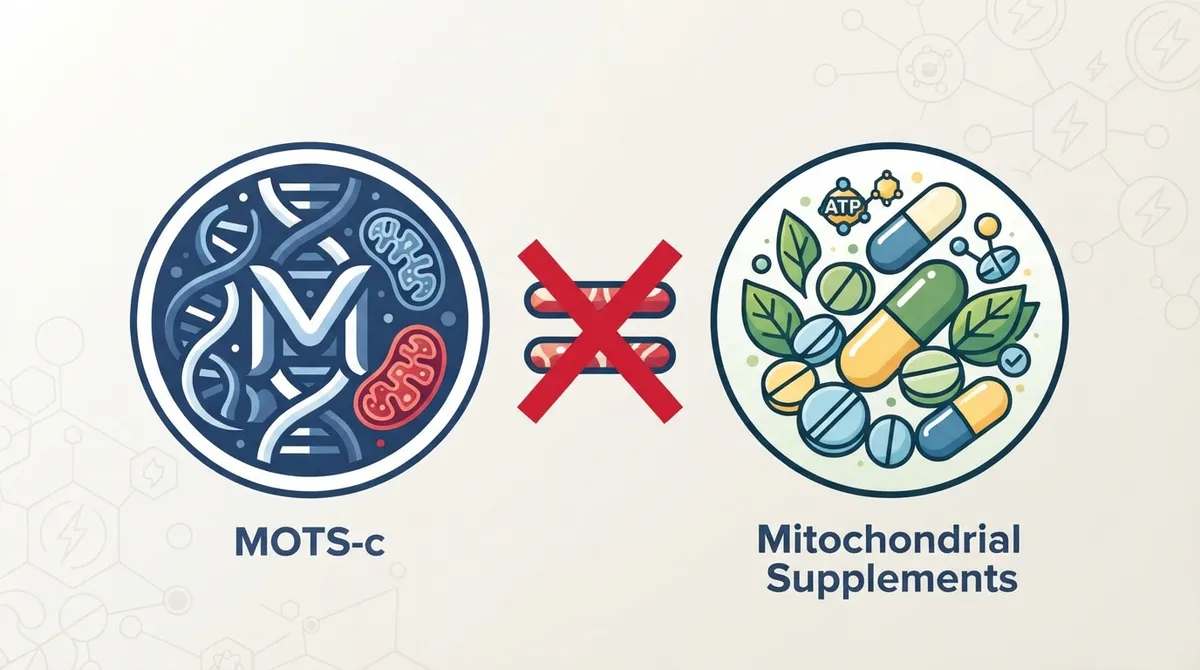
1. Assuming MOTS-c and Mitochondrial Supplements Are the Same Thing
MOTS-c is a peptide made from a tiny piece of your mitochondrial DNA. It was first described in 2015 by researchers publishing in Cell Metabolism. Mitochondrial supplements, on the other hand, include everyday nutrients like CoQ10, magnesium, and riboflavin.
These two categories work in completely different ways. Supplements are nutrients you get from food or pills. MOTS-c is an experimental peptide, often injected, that scientists are still studying in labs and animals. Treating them as interchangeable options is the first mistake many wellness seekers make.

2. Believing MOTS-c Is FDA-Approved for Human Use
This is one of the biggest misunderstandings. MOTS-c has no FDA-approved use for diabetes, weight loss, aging, fatigue, or any other condition. According to FDA Pharmacy Compounding Advisory Committee briefing materials, there is no USP or National Formulary monograph for MOTS-c. That means it lacks the standard quality framework required for approved medicines.
Some online sellers label MOTS-c products as "research use only." This label is a warning sign, not a marketing detail. It means the product hasn't gone through safety testing required for human treatments. If you're considering peptide therapy of any kind, it's worth discussing your goals with a licensed provider first through our peptide therapy program in Tampa.
3. Trusting Animal Studies as Proof It Works in Humans
Most MOTS-c research comes from mice and cell studies, not human trials. These early studies suggest MOTS-c may influence glucose metabolism, insulin sensitivity, and exercise adaptation. But animal results don't guarantee the same effects—or safety—in people.
Human biology is far more complex than a lab model. Dosing, absorption, and long-term effects in people remain largely unknown. A small number of early-phase human trials exist, including studies listed on ClinicalTrials.gov, but results are still preliminary.
4. Ignoring Product Quality Risks With Unregulated MOTS-c
Because MOTS-c isn't FDA-approved, it isn't manufactured under the same quality controls as prescription drugs. This creates real risks:
- Uncertain purity and sterility of the product
- Inaccurate dosing information
- Poor storage and handling standards
- No guarantee the product contains what the label claims
These risks matter more than most people realize. An unsterile injectable product can cause infection. Inaccurate dosing can lead to unpredictable effects. This is very different from picking up a bottle of CoQ10 at a pharmacy, though even supplements have their own quality concerns.
5. Assuming All Mitochondrial Supplements Have Equal Evidence
Not all mitochondrial supplements are created equal. Some have real clinical support. Others are backed mostly by marketing claims. Here's a simple breakdown:
|
Supplement |
Best-Supported Use |
Evidence Strength |
|---|---|---|
|
CoQ10 |
Certain primary mitochondrial disorders; possibly statin-related muscle symptoms |
Moderate, mixed results |
|
Creatine |
Specific diagnosed metabolic conditions, athletic performance |
Moderate to strong |
|
Riboflavin |
Diagnosed riboflavin-responsive conditions |
Moderate |
|
L-carnitine |
Documented carnitine deficiency |
Limited outside deficiency states |
|
Alpha-lipoic acid |
General antioxidant support |
Limited, inconsistent |
|
NAD precursors (NR, NMN) |
General wellness, aging support |
Early-stage, still developing |
For otherwise healthy adults, there isn't strong proof that these supplements reliably slow aging or prevent chronic disease. This doesn't mean they're useless, but expectations should stay realistic.
6. Overlooking the Rarity of True Mitochondrial Disease
Some wellness seekers assume they have "mitochondrial dysfunction" because they feel tired or sluggish. But primary mitochondrial diseases are actually rare, affecting roughly 1 in 4,000 people according to a widely cited review by Gorman and colleagues in Annals of Neurology.
Fatigue has many more common causes. Sleep problems, thyroid issues, anemia, medication side effects, and blood sugar imbalances are far more likely culprits. A proper evaluation through primary care services can help identify what's really going on before jumping to peptide therapy or supplement stacks.
7. Skipping a Proper Diagnosis Before Trying MOTS-c or Supplements
Jumping straight to a trendy peptide or supplement without diagnosis is a common and costly mistake. Fatigue, weight gain, and low energy can stem from many treatable conditions. A thorough workup should always come first.
Here's a smarter path to take:
- Schedule a comprehensive wellness visit to review symptoms and history
- Complete relevant blood work to rule out thyroid, anemia, or blood sugar issues
- Discuss sleep quality, stress levels, and daily habits with your provider
- Review current medications for possible side effects
- Consider advanced testing like DNA gene testing or metabolic breath analysis if appropriate
- Only then discuss whether any supplement or therapy fits your specific situation
This step-by-step approach protects your health and your wallet.
8. Forgetting About Drug Interactions and Health Conditions
Both MOTS-c and mitochondrial supplements can interact with medications or existing health conditions. People who are pregnant, breastfeeding, or taking anticoagulants and diabetes medicines need extra caution. The same goes for anyone undergoing cancer treatment or managing kidney or liver disease.
For example, high-dose CoQ10 may affect blood thinners like warfarin. Alpha-lipoic acid can lower blood sugar, which matters for people on diabetes medication. These interactions are easy to overlook when supplements are marketed as "natural" and automatically safe.
9. Believing Supplements Alone Can Fix Poor Lifestyle Habits
No pill or peptide replaces the basics. Sleep, movement, nutrition, and stress management have the strongest evidence for supporting mitochondrial health and overall energy. Supplements work best as a small piece of a larger picture, not a shortcut around foundational habits.
Consider these lifestyle factors before adding any supplement or peptide:
- Consistent, quality sleep of seven to nine hours nightly
- Regular physical activity, including both cardio and strength training
- A balanced diet with adequate protein, healthy fats, and micronutrients
- Limiting alcohol and avoiding smoking
- Managing chronic conditions like diabetes, high blood pressure, or thyroid disease
A personalized weight loss program or wellness plan often addresses these fundamentals more effectively than any single supplement.
10. Trusting Marketing Claims Over Peer-Reviewed Research
Bold claims about anti-aging breakthroughs or dramatic fat loss often outpace the actual science. Preclinical findings, small observational studies, and anecdotal reports get repackaged as proven results. This happens frequently with MOTS-c marketing online.
Before trusting a product claim, ask these questions:
- Is this based on human trials or only animal and cell studies?
- Who funded the research, and was it peer-reviewed?
- Are there independent, replicated studies supporting the claim?
- Does a licensed medical provider recommend this specific use?
Reliable sources like the Alzheimer's Drug Discovery Foundation's review of MOTS-c offer a more balanced, evidence-based look at what's known and unknown.
11. Not Consulting a Primary Care Provider Before Starting Either Option
The final and most important mistake is skipping professional guidance altogether. Primary care doctors can evaluate your full health picture, order appropriate testing, and help you avoid unnecessary risks. This applies whether you're curious about supplements, peptide therapy, or both.
Our physicians, including Dr. Naveen Paddu, Dr. Pramjeet Ahluwalia, and Dr. Teshy John, work with patients across Tampa and Riverview to build individualized wellness plans. You can review our full provider team or find a convenient location near you.
What This Means for Your Wellness Goals
MOTS-c remains an experimental compound with unresolved questions about human dosing, safety, and long-term effects. Mitochondrial supplements are a much broader category, with some options backed by real clinical evidence and others still unproven for general wellness use. Neither should be viewed as a guaranteed fix for fatigue, weight struggles, or aging.
The safest path forward starts with a proper diagnosis, not a trending product. Chronic fatigue, weight changes, and low energy often have identifiable, treatable causes. Working with a qualified clinician helps you avoid wasted money and unnecessary risk while targeting the root cause of your symptoms.
Many patients appreciate seeing real experiences before choosing a provider. You can visit us on Google — InCare to read reviews from patients across our Tampa and Riverview locations. We also share wellness updates and educational content on Facebook, Instagram, and TikTok for patients who want ongoing health tips.
If you're weighing MOTS-c against mitochondrial supplements, don't guess. Reach out to our care team to discuss your symptoms and goals, or schedule your visit today to get a personalized, evidence-based plan built around your health.
FAQs
Q: What is MOTS-c and how does it differ from mitochondrial supplements?
A: MOTS-c is an experimental peptide encoded within mitochondrial DNA, studied mainly in animal and cell research. Mitochondrial supplements, like CoQ10 or creatine, are nutritional products with varying levels of human clinical evidence. They are not interchangeable, and MOTS-c currently lacks FDA approval for any human condition.
Q: Is MOTS-c legal and FDA-approved in the United States?
A: MOTS-c is not FDA-approved as a treatment for any human condition, including diabetes, obesity, or aging. Products sold online are often labeled for research use only, meaning they haven't undergone the safety and quality testing required for approved medicines.
Q: Which mitochondrial supplements have the strongest scientific support?
A: CoQ10 has the most established clinical role in specific situations, such as certain primary mitochondrial disorders. Creatine and riboflavin may help in diagnosed metabolic conditions, but for generally healthy adults, evidence for anti-aging or energy benefits remains limited.
Q: Can mitochondrial supplements or MOTS-c cure fatigue or boost energy for everyone?
A: No single supplement or peptide is proven to reliably fix fatigue in all people. Common causes like poor sleep, thyroid issues, anemia, and medication side effects should be ruled out first through a proper primary care evaluation.
Q: Should I talk to a doctor before trying MOTS-c or mitochondrial supplements?
A: Yes, especially if you are pregnant, breastfeeding, taking anticoagulants or diabetes medication, or managing kidney, liver, or mitochondrial disease. A qualified clinician can identify interactions, order proper testing, and help you avoid unnecessary risks.