
Key Takeaways
- KP-10 (kisspeptin-10) is not approved by any health authority for fertility, testosterone, or wellness use and remains an investigational compound studied only in research settings.
- Human studies show KP-10 can briefly spike reproductive hormones (LH, GnRH, FSH) in short-term trials, but no large-scale clinical trial has proven it improves natural fertility outcomes.
- Most positive claims about KP-10 come from animal studies on rats, not human trials, and animal results do not reliably predict effects in people with fertility or hormone issues.
- Online and compounded KP-10 products lack third-party testing, standardized dosing, and medical oversight, creating risks including contamination, incorrect dosing, and unpredictable hormone disruptions.
- KP-10 is frequently confused with CoQ10 (a cellular energy supplement), but they serve completely different purposes and have different regulatory statuses and safety profiles.
- Anyone trying to conceive, pregnant, or managing thyroid, pituitary, or endocrine conditions should avoid self-administering KP-10 and discuss hormone concerns with a licensed provider instead.
Peptide trends move fast, and KP-10 (kisspeptin-10) has become one of the most searched compounds in wellness circles. People wonder if it can boost fertility, raise testosterone, or improve reproductive health. Before trying anything you find online, it helps to separate real science from marketing hype. This guide breaks down what KP-10 actually is, what the evidence shows, and why a conversation with a licensed clinician matters more than any product label.
At InCare, our providers in Tampa and Riverview see patients who bring in questions about peptides they discovered on social media or wellness forums. This article gives you a clear, fact-based answer using the latest research, so you can make an informed decision about your health.
1. What KP-10 Actually Means in Wellness Circles
KP-10 usually refers to kisspeptin-10, a small piece of the kisspeptin hormone. It is not the same as CoQ10 (coenzyme Q10), a completely different supplement often sold for heart and energy support. Confusing the two can lead to wasted money or unsafe assumptions about what a product does.
Kisspeptin-10 is a short fragment that activates a receptor called KISS1R. This receptor sits at the top of your reproductive hormone system. If you want a deeper explanation of how kisspeptin fits into fertility and hormone science, read our detailed guide on kisspeptin and the hormone peptide behind fertility.
How KP-10 Differs From CoQ10
- KP-10 is a reproductive hormone peptide; CoQ10 is a cellular energy supplement.
- KP-10 is investigational and not sold as an approved supplement for general use.
- CoQ10 has decades of consumer use and more established safety data.
- Mixing up the two terms online can lead to false claims about either substance.
2. Does KP-10 Work for Boosting Reproductive Hormones?
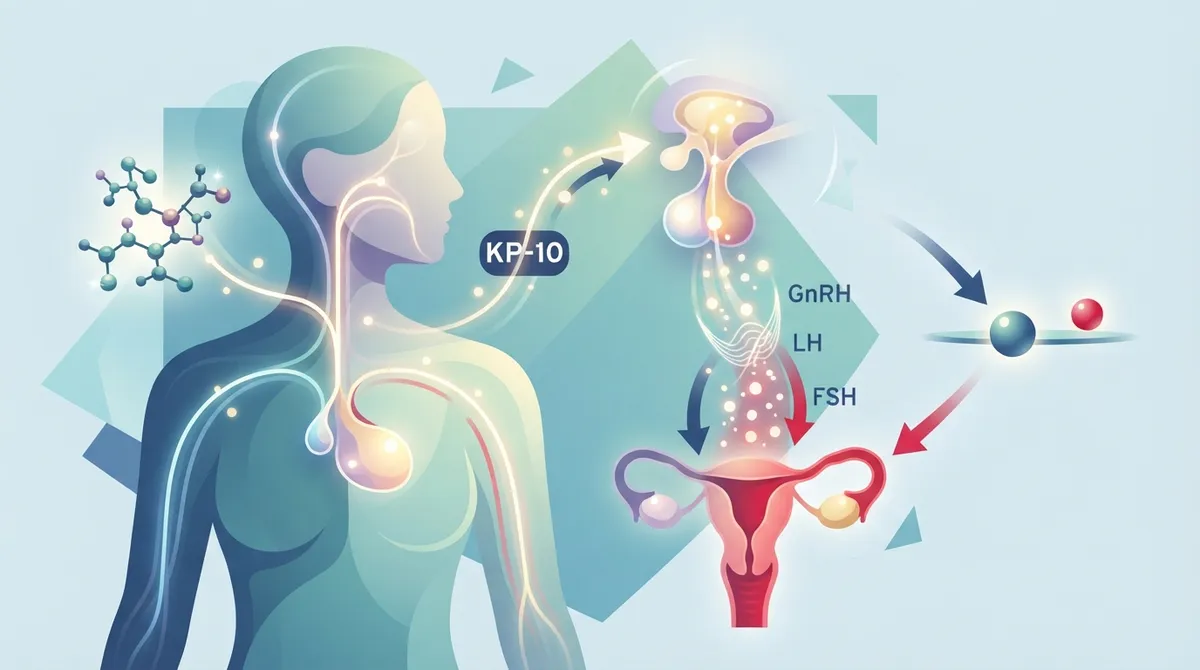
Kisspeptin-10 does have a real, measurable effect on the body. It stimulates the hypothalamus to release gonadotropin-releasing hormone (GnRH). This, in turn, raises luteinizing hormone (LH) and sometimes follicle-stimulating hormone (FSH). These are the same hormones that drive ovulation, sperm production, and testosterone levels.
A 2024 review in Endocrine Reviews described kisspeptin as a promising research target for reproductive, pregnancy, metabolic, liver, bone, and behavioral disorders. However, the reviewers were careful to note these uses remain under investigation, not confirmed for clinical practice.
What Human Studies Have Shown So Far
- Short-term studies show kisspeptin can trigger a spike in LH within minutes of administration.
- Some trials have used it as a diagnostic tool to test pituitary function, not as a treatment.
- Research on kisspeptin for fertility treatment support is still in early clinical trial stages.
- No large-scale trial has proven that self-administered KP-10 improves natural fertility outcomes.
- Dosing, timing, and delivery methods used in labs differ greatly from what online sellers offer.
3. Animal Research vs. Human Evidence
Most of the exciting claims about KP-10 come from animal studies, not human trials. This distinction matters because a rat's biology does not always predict what happens in a person.
A 2023 Scientific Reports study looked at hypothyroid male rats given Kp-10. Researchers found improved sperm morphology, better motility, and increased LH and testosterone. This is an interesting finding, but it cannot be assumed to apply to men with thyroid or fertility issues.
Key Animal Study Findings
- Improved sperm shape and movement in hypothyroid rats after Kp-10 treatment.
- Increased testosterone and LH levels in the same rodent study.
- A separate 2017 study found kisspeptin-10 altered heart tissue structure and blood metabolites in animals.
- Biological activity in animals does not confirm safety or benefit for humans.
|
Research Type |
What It Shows |
Can It Guide Human Use? |
|---|---|---|
|
Animal studies (rats) |
Improved sperm quality, raised testosterone in hypothyroid models |
No, results do not transfer directly to humans |
|
Short-term human trials |
Acute rise in LH and GnRH after dosing |
Limited, used mainly for diagnostic research |
|
Long-term human safety data |
Largely unavailable |
No, not enough data to confirm safety |
4. Is KP-10 Approved for Fertility or Wellness Treatment?
No. KP-10 is not approved by any major health authority for fertility treatment, testosterone support, weight loss, or general wellness. It remains an investigational compound studied mostly in academic and pharmaceutical research settings.
Products sold online as "KP-10" often come from compounding sources or unregulated peptide vendors. Purity, dosing accuracy, and manufacturing standards can vary widely. This creates real risk for anyone considering self-administration without medical guidance.
Why Regulatory Status Matters
- Unapproved products are not tested for consistent dosing or purity.
- There is no established safety profile for long-term or repeated use in humans.
- Legal peptide clinics working under physician supervision offer far more oversight than online sellers.
- Clinics like InCare can discuss which peptide therapy options in Tampa are appropriate and evidence-based for your goals.
5. Potential Side Effects and Safety Concerns
Because kisspeptin directly affects your reproductive hormone axis, unsupervised use carries real risks. These are not minor concerns; they touch on fertility, menstrual cycles, and pregnancy-related physiology.
Reported or Theoretical Risks
- Unpredictable shifts in LH and FSH that could disrupt normal cycles.
- Possible interference with fertility treatments already in progress.
- Mood changes linked to hormone fluctuations.
- Unknown interactions with thyroid, pituitary, or gonadal conditions.
- Contamination or incorrect dosing from unregulated peptide sources.
If you are managing a thyroid condition, pituitary disorder, or hormone imbalance, talk with your primary care provider before considering any peptide product. A quick visit can help you understand your baseline hormone levels first.
6. Can Women Use KP-10 for Ovulation or PCOS?
This is one of the most common questions we hear. Kisspeptin research does include studies on ovulation induction, particularly in fertility clinic settings using controlled, injectable formulations under close monitoring.
However, this is very different from buying a peptide online and self-injecting at home. Clinical kisspeptin trials use precise dosing, timing tied to the menstrual cycle, and lab monitoring of hormone levels. None of that oversight exists with unregulated products.
What Women Considering Fertility Support Should Know
- PCOS involves complex hormone imbalances that need individualized evaluation.
- Ovulation-focused kisspeptin research is still experimental, even in clinical settings.
- Self-treating PCOS symptoms with unverified peptides can mask underlying issues.
- A women's health visit can screen for thyroid, insulin, and hormone markers first.
Women without an established primary care relationship often delay these screenings. Our annual wellness visit guide explains what a comprehensive checkup includes, from hormone panels to preventive screenings.
7. Is KP-10 Safe During Pregnancy or While Trying to Conceive?
Kisspeptin naturally rises during pregnancy and plays a role in placental function. This does not mean supplementing with synthetic KP-10 is safe. Pregnancy involves a delicately balanced hormone environment, and introducing an unregulated peptide could disrupt that balance in ways researchers do not fully understand yet.
Guidance for Anyone Trying to Conceive
- Avoid self-administering any peptide without direct physician supervision.
- Discuss fertility goals openly with a provider before starting any new supplement.
- Ask about verified fertility testing rather than relying on unproven products.
- Consider a full DNA gene testing panel to understand inherited factors that may affect fertility.
8. How KP-10 Compares to CoQ10 for Wellness Goals
Since the two names sound alike, many people search for one and land on information about the other. If your actual interest is heart health, migraine prevention, or general cellular energy, CoQ10 is the relevant supplement, not KP-10.
|
Factor |
KP-10 (Kisspeptin-10) |
CoQ10 (Coenzyme Q10) |
|---|---|---|
|
Primary Function |
Stimulates reproductive hormones (GnRH, LH, FSH) |
Supports cellular energy production |
|
Evidence Level |
Early-stage human and animal research |
Established use with mixed but more extensive evidence |
|
Common Use |
Investigational fertility and hormone research |
Heart failure symptoms, migraine prevention |
|
Typical Dosing Studied |
Not standardized for consumer use |
60 mg to 1,200 mg daily in various trials |
|
Regulatory Status |
Not approved for general wellness use |
Sold as an over-the-counter dietary supplement |
Mayo Clinic's 2025 guidance notes that CoQ10 may help with congestive heart failure symptoms and migraine prevention, while evidence remains inconclusive for many other promoted uses. A 2018 review also referenced a Swedish elderly cohort taking 200 mg CoQ10 with selenium daily for four years, but that finding relates only to CoQ10, not kisspeptin.
9. Why Compounded or Online KP-10 Products Carry Risk
Many wellness seekers find KP-10 through online peptide vendors or compounding sources outside traditional pharmacies. These products often lack third-party testing, standardized dosing, or clear sourcing information.
Red Flags to Watch For
- No verifiable lab testing or certificate of analysis provided.
- Vague dosing instructions with no medical supervision offered.
- Claims of guaranteed fertility or testosterone results without supporting data.
- Pricing that seems too low for a properly manufactured peptide product.
- No licensed clinician available to answer safety questions before purchase.
Working with a licensed clinic changes this equation entirely. Providers who understand peptide science can explain realistic expectations and monitor your response through lab work rather than guesswork. Learn more about how legitimate peptide therapy fits into longevity and wellness planning.
10. What to Discuss With Your Doctor Before Considering KP-10
If you are curious about kisspeptin-based treatments, the smartest first step is a conversation with a primary care provider or fertility specialist. This protects your health and helps you avoid wasting money on unproven products.
Questions Worth Bringing to Your Appointment
- What does my current hormone panel show, and do I have any imbalances?
- Are there FDA-approved options that address my specific concern instead?
- What are the realistic risks of trying an unregulated peptide product?
- Should I be screened for thyroid, pituitary, or gonadal conditions first?
- How would this interact with medications or conditions I already manage?
The providers at InCare, including Dr. Pramjeet Ahluwalia and Dr. Teshy John, can walk you through your hormone health and help you understand which options, if any, make sense for your goals.
11. Making an Informed Decision About KP-10
So, does KP-10 work? The honest answer is: it depends on what you mean by "work." It does activate real hormone pathways in short-term research settings. It does not have enough clinical evidence to support self-administered use for fertility, testosterone, weight loss, or general wellness.
Bottom-Line Takeaways
- KP-10 is kisspeptin-10, not CoQ10, and the two serve completely different purposes.
- Human research shows short-term hormone effects, not proven long-term benefits.
- Most positive fertility and testosterone findings come from animal studies, not people.
- No major health authority currently approves KP-10 for consumer wellness use.
- Pregnant patients, those trying to conceive, and anyone with an endocrine condition should avoid self-administration.
- A licensed clinic offers safer, evidence-based alternatives and proper monitoring.
Our team of providers across our Tampa and Riverview locations can evaluate your hormone health, discuss fertility concerns, and explain which peptide or hormone therapies have real clinical support. If weight management is also part of your goals, our medical weight loss program uses proven, physician-guided approaches instead of unregulated peptides.
Many patients follow InCare on Facebook and Instagram to stay updated on new wellness services, and some even find quick tips on Tik Tok. You can also visit us on Google — InCare to read what our Tampa and Riverview patients say about their experience.
Curious peptides and hormone questions deserve real answers, not guesswork. Reach out to our care team today or book your appointment now to get personalized, evidence-based guidance on kisspeptin, hormone health, and safe wellness options.
FAQs
Q: What is KP-10 or kisspeptin-10?
A: KP-10 refers to kisspeptin-10, a short peptide fragment that activates the KISS1 receptor and stimulates the release of reproductive hormones like GnRH, LH, and FSH. It is not the same as CoQ10, a different supplement used for cellular energy support.
Q: Does kisspeptin-10 increase testosterone or fertility in humans?
A: Human studies show kisspeptin-10 can briefly raise LH and GnRH levels, which are linked to testosterone and fertility. However, there is not enough clinical evidence to confirm it reliably improves fertility or testosterone outcomes in everyday use.
Q: Is KP-10 approved for infertility treatment or general wellness?
A: No. KP-10 remains an investigational compound and is not approved by major health authorities for infertility treatment, testosterone support, or general wellness use. Most positive results come from animal studies rather than confirmed human trials.
Q: What are the side effects and risks of KP-10?
A: Potential risks include unpredictable hormone shifts, disrupted menstrual cycles, mood changes, and unknown interactions with thyroid or pituitary conditions. Products from unregulated online sources also carry risks related to purity and inconsistent dosing.
Q: Should I use an online or compounded KP-10 peptide without medical supervision?
A: This is not recommended. Unregulated peptide sources often lack proper testing, dosing accuracy, and safety oversight, so it is safer to discuss hormone or fertility concerns with a licensed primary care provider first.