
Key Takeaways
- MOTS-c activates AMPK through the folate-AICAR pathway to improve glucose uptake and fat burning, but this mechanism is proven only in animal studies, not large-scale human trials.
- Native MOTS-c has no FDA approval for any condition and products sold by wellness clinics are unregulated with unverified purity and dosing, making them experimental with unknown safety profiles.
- A phase 2a human trial is underway testing MOTS-c in 120 prediabetic adults, but completed peer-reviewed results are not yet available, so efficacy claims remain premature.
- MOTS-c differs fundamentally from approved GLP-1 medications like semaglutide, which have extensive clinical trial backing, making GLP-1s a more evidence-based option for metabolic health.
MOTS-c has become a buzzword in wellness circles across Tampa and Riverview. Patients ask about it after reading online forums or hearing about it from friends chasing better metabolism and energy. But before you consider this peptide, you need to understand what it actually does inside your body and why the science is still catching up to the hype.
This guide breaks down the MOTS-c mechanism of action in plain language. We will look at what current research shows, what remains unproven, and why a conversation with a primary care provider matters more than any online claim. At InCare, our team believes patients deserve honest, evidence-based information before making decisions about experimental therapies.
1. MOTS-c Is a Mitochondrial-Derived Peptide
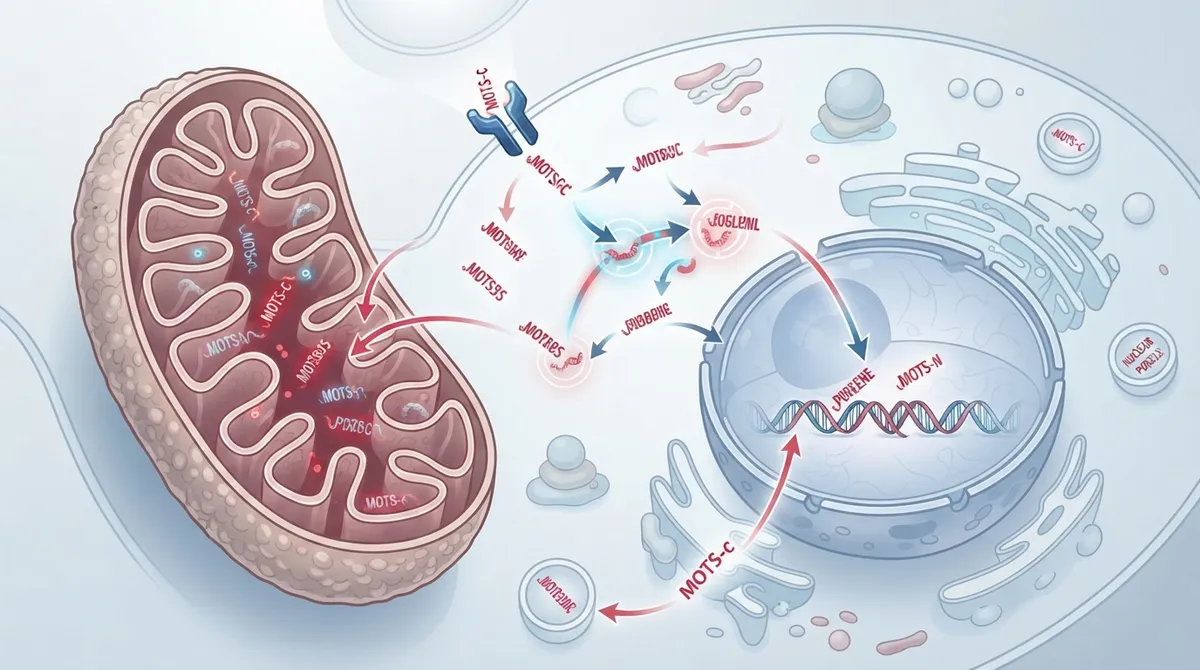
MOTS-c stands for mitochondrial open reading frame of the 12S rRNA-c. It is a small peptide made of just 16 amino acids. Scientists first described it in 2015, and it is unusual because it comes from mitochondrial DNA, not the nuclear genome most peptides originate from.
This distinction matters. Mitochondria are the energy factories in your cells. A peptide made directly from mitochondrial genetic material suggests a close link to how your body produces and uses energy. That link is the foundation of most MOTS-c research today.
2. The Folate-AICAR-AMPK Pathway Is the Leading Theory
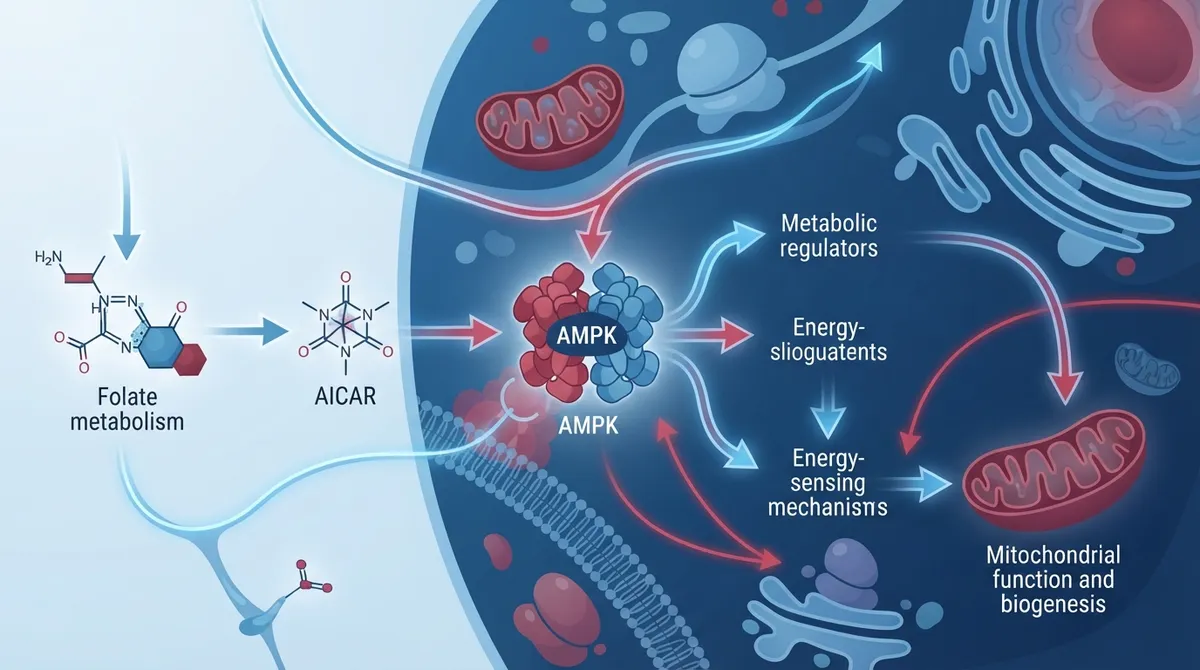
The best-studied mechanism involves a chain reaction inside cells. MOTS-c appears to block certain steps in folate-cycle metabolism. This slowdown increases a molecule called AICAR, which then activates an enzyme called AMPK.
AMPK is often called the body's energy sensor. When activated, it tells cells to burn fuel more efficiently and slow down energy-costly processes. This pathway is central to how MOTS-c is thought to influence metabolism, though most of this evidence comes from lab and animal studies, not large human trials.
3. AMPK Activation May Affect Blood Sugar and Fat Burning
Once AMPK is switched on, it may increase glucose uptake by cells and improve how the body burns fat for fuel. In skeletal muscle, this could support better metabolic flexibility, meaning cells switch more easily between burning sugar and fat.
Some researchers believe this involves insulin-independent glucose transport, including a process called GLUT4 translocation. In simple terms, this means glucose could enter muscle cells without needing as much insulin. This is an exciting area of research, but it has not been proven in large-scale human studies yet.
4. MOTS-c May Act as a Stress Signal Between Mitochondria and the Cell Nucleus
Beyond the AMPK pathway, MOTS-c is also thought to travel to the cell nucleus during stress, such as during intense exercise. Once there, it may influence genes tied to antioxidant defenses and cellular stress adaptation.
Researchers still do not fully understand the receptors or exact targets involved in this process. This mitochondrial-to-nuclear communication is a newer area of study, and much of the detail remains unclear even to specialists.
5. Animal Studies Show Promising but Preliminary Results
In the original 2015 study, MOTS-c increased the glucose infusion rate needed to maintain normal blood sugar by about 30% in animal models. This suggested improved insulin sensitivity in that specific experiment.
Other animal and cell studies have linked MOTS-c to:
- Better glucose handling under high-fat diet conditions
- Some protection against diet-related insulin resistance
- Changes in inflammation markers
- Effects on cellular aging and senescence
These findings are relevant to concerns like prediabetes and obesity, but animal results do not always translate to humans. This is a critical distinction anyone considering peptide therapy should understand.
6. Human Data Remains Limited and Mostly Observational
Human research on MOTS-c is still in early stages. Some studies show that circulating MOTS-c levels rise with exercise and shift based on lipid or insulin exposure. However, these are observational findings, not proof that supplemental MOTS-c treats any disease.
Exercise-related changes in MOTS-c levels tend to return toward baseline within a few hours. The exact response varies by workout intensity, age, sex, and even the lab methods used to measure it. None of this confirms that injecting MOTS-c produces the same benefits as your body's own natural process.
7. A Related Peptide Analogue Has Reached Early Human Trials
A modified version called CB4211 has been tested in a small phase 1b study. Roughly 20 participants with obesity and fatty liver disease received a 25 mg daily subcutaneous dose for 28 days.
This trial was designed to test safety and how the drug behaves in the body, not to prove it helps with weight loss or diabetes. Results from an analogue also cannot be assumed to apply directly to native MOTS-c. These are two different compounds with potentially different effects.
8. MOTS-c Has Not Been Approved by the FDA
This is one of the most important facts patients need to know. Native MOTS-c has no FDA approval for diabetes, obesity, anti-aging, or any other condition. Products sold by wellness clinics or online vendors should be viewed as experimental.
Because MOTS-c is unregulated in most retail markets, product purity, sterility, and dosing accuracy cannot be guaranteed. If you are considering peptide therapy of any kind, always ask your provider about sourcing, testing, and safety data before proceeding.
9. A Larger Human Trial Is Underway, But Results Are Not Final
A registered phase 2a study is examining MOTS-c in adults with prediabetes and overweight or obesity. It involves roughly 120 participants receiving daily subcutaneous doses for 12 weeks, tracking insulin sensitivity and safety outcomes.
Registration or ongoing recruitment does not mean the treatment works. Patients should wait for completed, peer-reviewed results before drawing conclusions. Anyone curious about study updates should verify details through official clinical trial registries rather than marketing claims.
10. How MOTS-c Differs From Approved Weight Loss Medications
Many patients confuse MOTS-c with GLP-1 medications like semaglutide. These are very different tools with different levels of evidence behind them.
|
Factor |
MOTS-c |
GLP-1 Medications (e.g., Semaglutide) |
|---|---|---|
|
FDA Approval |
Not approved |
Approved for weight loss and diabetes |
|
Human Clinical Trials |
Very limited, early-stage only |
Extensive, multi-year trials |
|
Mechanism |
Proposed AMPK activation via folate-AICAR pathway |
Mimics gut hormone to regulate appetite and blood sugar |
|
Availability |
Unregulated, experimental sourcing |
Prescription through licensed providers |
If you are exploring medically supervised options for weight loss, it helps to understand which treatments have real clinical backing versus those still in early research stages.
11. Talking to a Primary Care Provider Before Trying Peptide Therapy
Before considering any peptide, including MOTS-c, patients should ask their provider several questions:
- What clinical evidence supports this specific peptide for my health goal?
- Is this peptide FDA approved, and if not, what are the risks?
- How is the product sourced, tested, and verified for purity?
- What are the known side effects, even from limited studies?
- Are there proven alternatives, such as approved medications, that could achieve similar goals more safely?
A knowledgeable provider can walk you through these questions and help you make an informed choice. At InCare, our physicians in Tampa and Riverview take time to explain the science behind emerging treatments, including where the evidence is strong and where it remains uncertain. If you want to learn more about peptide therapy options in Tampa, our team can walk you through what is currently supported by research.
Why Evidence-Based Care Matters for Metabolic Health
Prediabetes, obesity, and metabolic dysfunction are real concerns that deserve real solutions. Instead of chasing unproven peptides, many patients benefit more from a combination of proven strategies, including body composition analysis, metabolic breath analysis, and DNA gene testing to understand your unique health profile.
These tools give your care team measurable data to build a personalized plan. Combined with FDA-approved medications when appropriate, lifestyle changes, and regular primary care visits, you get a strategy grounded in evidence rather than speculation.
According to the National Institutes of Health, ongoing research into mitochondrial peptides continues to expand, but experts caution that translating animal findings into human treatments takes years of careful study. The National Institute on Aging also emphasizes that metabolic health is best supported through a mix of proven medical care and lifestyle interventions rather than unregulated supplements.
What Patients in Tampa and Riverview Should Know
If you live in the Tampa Bay area and are curious about MOTS-c or other peptide therapies, your first step should always be a conversation with a licensed provider. InCare offers comprehensive consultations that combine advanced diagnostics with honest, science-based guidance.
Our patients consistently share positive experiences with our team's transparent approach to wellness. You can visit us on Google — InCare to see reviews from real patients who appreciate straightforward answers about emerging treatments. We also stay active on Facebook and Instagram, where we share updates on wellness research and clinic news. Follow us on Tik Tok for quick, digestible health tips as well.
Conclusion
MOTS-c represents an exciting area of scientific research, but it is not yet a proven treatment for diabetes, obesity, or healthy aging. The proposed mechanism involving AMPK activation and mitochondrial stress signaling is compelling, but most evidence remains preclinical. Patients deserve accurate information and personalized guidance before considering experimental peptides.
If you want to discuss metabolic health, weight management, or emerging wellness therapies with a knowledgeable primary care team, our providers in Tampa and Riverview are ready to help. Schedule your appointment today and get answers grounded in real science, not speculation.
FAQs
Q: What is MOTS-c and how does it work?
A: MOTS-c is a 16-amino-acid peptide made from mitochondrial DNA. Research suggests it activates AMPK, a cellular energy sensor, by disrupting the folate-AICAR pathway, which may improve glucose uptake and fat burning. Most evidence for this mechanism comes from animal and cell studies rather than large human trials.
Q: Does MOTS-c improve insulin sensitivity or blood sugar?
A: Animal studies suggest MOTS-c may improve insulin sensitivity through AMPK activation and insulin-independent glucose transport pathways. However, no completed, adequately powered human trials have confirmed these effects on blood sugar or HbA1c levels in people with diabetes or prediabetes.
Q: Is MOTS-c FDA approved or legal to prescribe?
A: No, native MOTS-c has not received FDA approval for any medical condition, including diabetes, obesity, or anti-aging. Products sold by clinics or online vendors are considered experimental, with uncertain purity, dosing, and long-term safety.
Q: How is MOTS-c different from GLP-1 medications like semaglutide?
A: GLP-1 medications like semaglutide are FDA-approved and backed by extensive clinical trials for weight loss and diabetes management. MOTS-c remains an experimental peptide with limited human data and no FDA approval, making it a very different category of treatment.
Q: Should people with prediabetes or diabetes use MOTS-c?
A: Given the lack of robust human clinical evidence and FDA approval, MOTS-c is not currently recommended as a treatment for prediabetes or diabetes. Patients should discuss proven, evidence-based options with a primary care provider before considering experimental peptide therapies.