
Searching for "KP-10 compared to" can lead you down two very different paths. Some people want to know how a $10 copay health plan stacks up against other coverage options. Others are asking about kisspeptin-10, a peptide being studied for its effects on reproductive hormones. Both meanings matter, and both deserve clear answers.
This confusion is common in primary care settings. Patients often use shorthand terms without realizing they carry more than one meaning. Getting the wrong information can lead to bad decisions about your health coverage or your hormone health. That is why we built this guide to walk through both interpretations, side by side, so you know exactly what you are dealing with.
At InCare, we serve patients across Tampa and Riverview who ask about KP-10 in both contexts almost every week. Below, we break down 10 key comparisons that separate insurance shorthand from investigational science, so you can make informed choices either way.
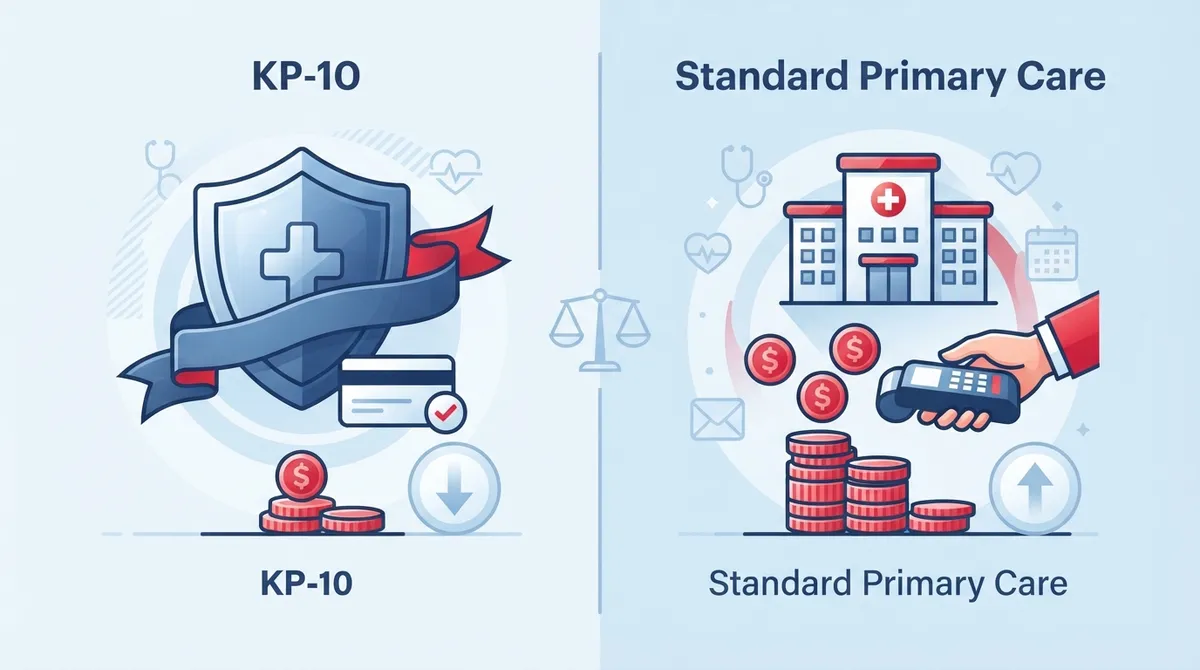
1. KP-10 as an Insurance Copay vs. Standard Primary Care Copays
KP-10 is often used casually to describe a health plan with a $10 copay for primary care visits. But this is not a standardized national plan name. It is more of an informal label people use for a certain benefit tier.
Compared to standard primary care copays, which can range anywhere from $15 to $50 depending on your plan, a $10 copay sounds appealing. However, the actual number depends entirely on your specific plan documents. Always check your Summary of Benefits and Coverage before assuming your copay matches this figure.
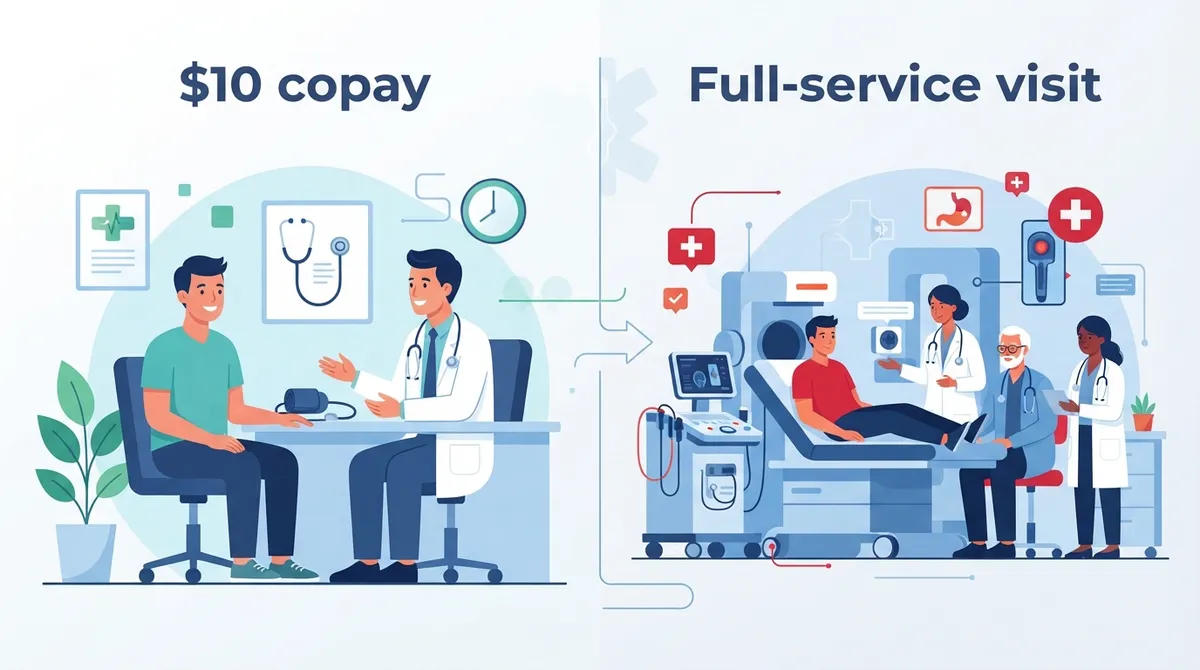
2. What a $10 Copay Actually Covers Compared to Full-Service Visits
A $10 copay usually applies to a basic primary care visit. It does not always cover lab work, specialist referrals, or advanced screenings.
Here is a simple breakdown of what might or might not be included:
- Standard office visit with your primary care provider
- Basic vital sign checks and simple consultations
- Preventive screenings (varies significantly by plan)
- Bloodwork or imaging (often billed separately)
- Specialist visits (usually a higher copay)
If you want a full picture of your coverage, our team can help you understand what services like cancer screening or urgent care might cost under your specific plan.
3. Insurance Networks Compared: In-Network vs. Out-of-Network Copays
Your copay amount can change drastically depending on whether your provider is in-network. Even if your plan advertises a KP-10-style copay, that rate typically only applies within your approved network.
Going out-of-network can mean paying full price upfront, then submitting for partial reimbursement. This is one reason patients in Tampa and Riverview often choose a clinic that accepts a wide range of insurance plans and offers transparent pricing for those who are uninsured or out-of-network.
4. Kisspeptin-10 Compared to Kisspeptin-54
Now let's shift to the second meaning. Kisspeptin-10 (KP-10) is a 10-amino-acid peptide fragment studied in reproductive endocrinology. It activates a receptor called KISS1R, also known as GPR54, which sits on or near GnRH neurons in the brain.
Compared to kisspeptin-54, a longer version of the same hormone family, KP-10 shows strong receptor activity in lab studies. However, kisspeptin-54 may produce more sustained effects when given outside the brain and may cross the blood-brain barrier more easily. According to the Society for Endocrinology, systemic kisspeptin-10 did not produce the same sustained LH release seen with kisspeptin-54 in certain experimental comparisons.
5. Laboratory Potency vs. Real-World Clinical Impact
Endocrine Abstracts research from 2019 found kisspeptin-10 was more potent than kisspeptin-54 in a lab-based calcium-mobilization assay. That sounds impressive, but the researchers noted the biological significance of this difference remained uncertain.
This is an important distinction. A peptide can show strong activity in a petri dish without translating into meaningful, lasting benefits for a real patient. This gap between lab potency and clinical outcome is one reason kisspeptin-10 is still investigational rather than approved for general use.
6. KP-10's Effect on LH and FSH Compared to Established Fertility Treatments
Human studies suggest kisspeptin-10 can acutely raise luteinizing hormone (LH) levels, and in some cases, downstream sex hormones too. This has made it a subject of interest in fertility research.
However, compared to established, FDA-approved fertility treatments, kisspeptin-10 has not been proven to deliver long-term benefits. Short-term hormone spikes do not equal a reliable treatment plan. If you are exploring fertility support, working with a provider who can review DNA gene testing and other diagnostic tools is a safer starting point.
7. Regulatory Status: KP-10 Compared to FDA-Approved Peptide Therapies
Kisspeptin-10 is not an FDA-approved treatment. It remains a research compound, meaning its long-term safety, correct dosing, and manufacturing standards are not fully established.
This puts it in a very different category compared to other peptide therapies that have gone through rigorous clinical trials. Products sold online as "research peptides" often carry uncertain identity, sterility, and concentration. Before considering any peptide therapy, it is worth discussing options with a licensed provider who understands the current science, such as those at our peptide therapy clinic in Tampa.
8. Self-Administration Risks Compared to Supervised Medical Care
Some online sellers market kisspeptin-10 as a wellness or anti-aging supplement. This is misleading. There is no solid evidence supporting its use for general wellness, weight management, or long-term testosterone optimization.
Self-administering an unregulated peptide carries real risks, including:
- Unknown purity and concentration levels in the product
- Improper storage that can degrade the compound
- No medical supervision to monitor hormone levels or side effects
- Potential interactions with existing medications or conditions
- Legal uncertainty around purchasing and using research chemicals
Compared to supervised medical care, where a provider tracks your bloodwork and adjusts treatment safely, self-administration offers no such safety net.
9. How to Decide Which KP-10 Meaning Applies to You
Since KP-10 has two very different meanings, it helps to ask yourself a few quick questions before searching further:
- Are you asking about insurance costs or a copay amount? If so, this is likely the health plan meaning.
- Are you asking about fertility, hormone levels, or reproductive health? If so, this points toward kisspeptin-10.
- Do you have a specific plan document in hand, or are you researching a peptide compound?
- Is your question about coverage limits, or about biological mechanisms in the body?
- Would your concern be better addressed by a benefits administrator or a medical provider?
Clarifying your intent early saves time and helps you get accurate answers faster, whether from your insurance company or from a primary care provider.
10. Why Professional Guidance Beats Guesswork for Both Meanings
Whether you are trying to understand your copay structure or considering a reproductive peptide, professional guidance matters. Insurance questions should go to your plan's benefits administrator, since coverage details vary widely between employers and states.
Reproductive hormone concerns deserve a proper medical evaluation, not a self-administered peptide from an unverified source. Our providers, including Dr. Pramjeet Ahluwalia and Dr. Naveen Paddu, can help you sort through symptoms, order appropriate testing, and build a safe plan forward.
Quick Comparison Table: The Two Meanings of KP-10
|
Aspect |
KP-10 (Insurance Copay) |
KP-10 (Kisspeptin-10) |
|---|---|---|
|
Definition |
Shorthand for a $10 primary care copay tier |
10-amino-acid reproductive neuropeptide |
|
Standardization |
Not a national standard; varies by plan |
Same receptor target (KISS1R/GPR54) across studies |
|
Verification Source |
Summary of Benefits and Coverage document |
Endocrinology research and clinical studies |
|
Who to Consult |
Insurance plan or benefits administrator |
Licensed medical provider |
|
Regulatory Status |
N/A (insurance terminology) |
Investigational; not FDA-approved |
Kisspeptin-10 vs. Kisspeptin-54: Key Differences
|
Factor |
Kisspeptin-10 |
Kisspeptin-54 |
|---|---|---|
|
Length |
10 amino acids |
54 amino acids |
|
Receptor Target |
KISS1R/GPR54 |
KISS1R/GPR54 (same receptor) |
|
Lab Potency |
Higher in some calcium-mobilization assays |
Lower potency in same assay type |
|
Sustained LH Release |
Less sustained after peripheral dosing |
May be more sustained |
|
Blood-Brain Barrier Crossing |
Less effective |
May cross more effectively |
Bringing It All Together
Understanding KP-10 means recognizing which version of the term applies to your situation. If you are managing insurance costs, the smartest move is reviewing your actual plan documents rather than relying on shorthand labels. If you are curious about kisspeptin-10 and reproductive hormones, remember that this remains an investigational compound, not an approved wellness treatment.
Our team at InCare regularly helps patients in Tampa and Riverview sort through confusing health terminology, whether it relates to coverage questions or peptide science. We also share simple health tips and clinic updates on Facebook, Instagram, and TikTok if you want to stay connected between visits.
Many patients also check out what others are saying before choosing a provider. You can visit us on Google — InCare to read real reviews from people who have used our primary care and wellness services.
If you have questions about your coverage, your hormone health, or which services fit your goals, our team is ready to help. Reach out to our care team today or schedule your appointment now to get clear, personalized answers instead of guesswork.
FAQs
Q: What does KP-10 mean in healthcare?
A: KP-10 can mean two different things. It is sometimes informal shorthand for a health plan with a $10 primary care copay, or it can refer to kisspeptin-10, a reproductive neuropeptide studied in endocrinology research. The correct meaning depends on the context of your question.
Q: Is KP-10 a Kaiser Permanente insurance plan with a $10 primary care copay?
A: KP-10 is not a standardized national plan name, even though some people use it informally to describe a $10 copay tier. Your actual copay, deductible, and coverage details must be confirmed in your Summary of Benefits and Coverage document.
Q: How does kisspeptin-10 compare with kisspeptin-54?
A: Both peptides activate the same KISS1R/GPR54 receptor, but they behave differently in studies. Kisspeptin-10 can show strong lab potency, while kisspeptin-54 may produce more sustained hormone release and cross the blood-brain barrier more effectively.
Q: Is kisspeptin-10 FDA approved?
A: No, kisspeptin-10 is investigational and not approved by the FDA as a general-purpose treatment or wellness supplement. Products sold online as research peptides often have uncertain purity, concentration, and legal status.
Q: Can kisspeptin-10 increase testosterone, estrogen, LH, or fertility?
A: Research shows kisspeptin-10 can acutely increase luteinizing hormone and sometimes downstream sex hormones. However, this short-term effect does not establish long-term benefits for fertility or hormone optimization, and it should not be self-administered.